Juicy chicken with a salty Parmesan crust and that familiar ranch-garlic punch is the kind of grill food that disappears fast. These skewers stay tender because the chicken gets coated in a seasoned ranch marinade before it ever hits the heat, which means the flavor goes all the way through instead of sitting only on the surface. The Parmesan helps the edges brown and cling in little savory bits that make each bite better than the last.
The trick here is balance. Ranch dressing brings tang and fat, while olive oil keeps the marinade loose enough to coat every piece of chicken evenly. Parmesan and ranch seasoning add enough salt and depth that you don’t need a long ingredient list to get a full, bold result. A short marinating time is enough to make a difference, but pushing it much past two hours can soften the chicken too much and make the seasoning taste muddy.
Below, I’ve included the part that matters most for getting these skewers off the grill juicy instead of dry, plus a few smart swaps if you want to change the cut, the seasoning, or the way you serve them.
The marinade clung to the chicken beautifully and the Parmesan got those golden crispy edges on the grill. I served them with extra ranch and there wasn’t a skewer left.
Save these Ranch Garlic Parmesan Chicken Skewers for the next time you want juicy grilled chicken with a crisp, cheesy coating.
The Part That Keeps These Skewers Juicy Instead of Dry
Chicken breast can dry out fast on a grill, especially when it’s cut into smaller pieces for skewers. The fix isn’t a longer marinade or a hotter fire. It’s getting the pieces close to the same size so they cook evenly, then pulling them the moment they hit 165°F in the thickest piece. If some chunks are much smaller than others, the little ones will overcook before the bigger ones are ready.
The ranch dressing and olive oil do double duty here. They help the seasoning stick, and they give the surface enough richness to brown instead of seizing up and turning pale. Parmesan adds flavor, but it also helps create those little crusty edges that make the skewers feel finished.
- Even chicken pieces — Cut the breast meat into similar-size chunks so every skewer finishes at the same time. Uneven pieces are the fastest way to end up with dry chicken and underdone spots on the same tray.
- Ranch dressing — Use a thick, full-fat dressing if you can. It coats better than a thin version and gives you more browning on the grill.
- Parmesan — Freshly grated Parmesan melts and clings better than the shelf-stable powdery kind. The pre-grated version will work in a pinch, but it won’t give you the same savory crust.
- Soaked skewers — Wooden skewers need enough soaking time to stay from scorching while the chicken cooks. About 20 to 30 minutes in water is enough.
What Each Ingredient Is Actually Doing in the Marinade
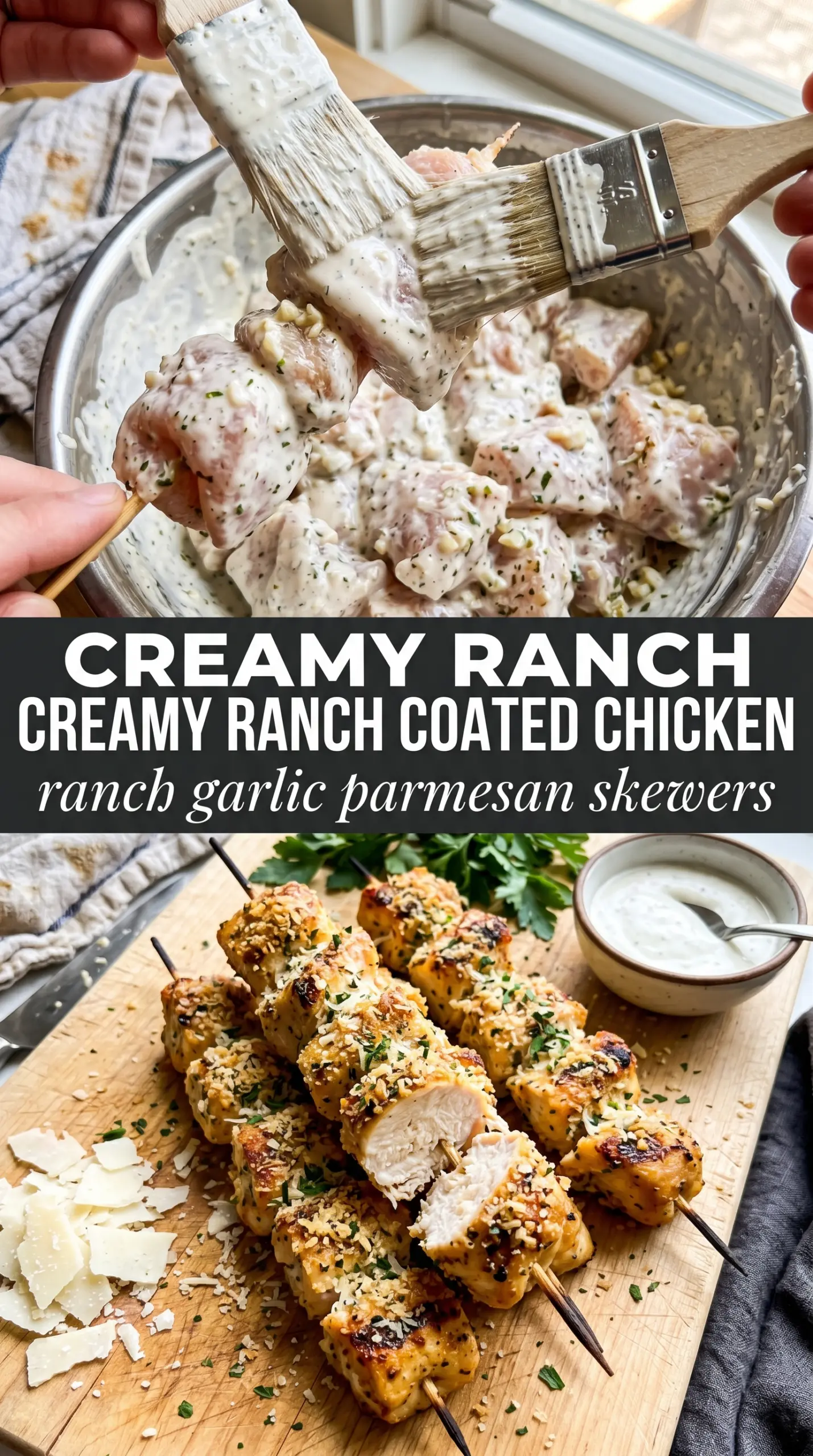
- Chicken breasts — Breasts keep this recipe lean and cook quickly on skewers. Chicken thighs can be swapped in if you want a richer, more forgiving result, but they’ll need a little more time on the grill.
- Ranch dressing and ranch seasoning — The dressing gives the chicken fat and tang, while the packet deepens the ranch flavor and seasons the meat more evenly than either one alone. If you only have one of the two, the flavor drops off fast.
- Olive oil — This loosens the marinade so it coats instead of clumping. It also helps the chicken brown instead of sticking to the grates.
- Parmesan cheese — Parmesan is the ingredient that gives these skewers their salty, savory finish. You want enough to taste it on the surface, not so much that it turns into a paste and falls off before grilling.
- Garlic and Italian seasoning — Garlic brings the sharp, savory edge, and Italian seasoning rounds it out with herbs that hold up to heat. Fresh garlic works best here because it mixes into the marinade cleanly and perfumes the chicken as it rests.
Getting the Coating to Cling and the Grill Marks to Stay
Building the Marinade
Mix the ranch dressing, olive oil, Parmesan, garlic, ranch seasoning, Italian seasoning, salt, and pepper until the mixture looks thick and speckled. You want every piece of chicken coated, not drowned. If the marinade looks too loose, it won’t cling well; if it’s too stiff, it won’t spread evenly. Add the chicken and stir until every surface is glossy.
Letting the Chicken Rest in the Seasoning
Thirty minutes is enough to give the chicken real flavor, and two hours is the upper limit I’d use for this one. Longer than that, the dairy and salt start to change the texture in a way that can make the outside a little soft instead of nicely seasoned. Keep the bowl covered in the fridge while it rests.
Threading and Grilling
Thread the chicken onto soaked skewers with a little space between pieces so the heat can move around them. Preheat the grill to medium-high and oil the grates if needed. Grill for 5 to 6 minutes per side, turning once, until the edges are browned and the thickest piece reads 165°F. If the chicken sticks, it usually means the grill wasn’t hot enough or the grates weren’t clean.
Serving at the Right Moment
Pull the skewers off the grill and let them sit for a few minutes before serving. That short rest keeps the juices inside the chicken instead of letting them run onto the plate the second you bite in. Serve with extra ranch for dipping while the edges are still warm and the Parmesan is set.
How to Change These Skewers Without Losing What Makes Them Good
Chicken thigh version for richer, juicier skewers
Swap the chicken breasts for boneless, skinless thighs if you want a more forgiving grill result. Thighs stay juicier and handle a little extra heat better, but they take a few minutes longer and won’t slice as cleanly into neat cubes.
Gluten-free version with the same seasoning punch
Use a gluten-free ranch dressing and check the ranch seasoning packet if you need to avoid gluten completely. The grilling method stays the same, and the chicken still gets that creamy, tangy coating with no texture penalty.
Oven-baked version when the grill isn’t an option
Bake the skewers on a lined sheet pan at 425°F, turning once halfway through, until the chicken reaches 165°F. You won’t get the same smoky char, but the Parmesan still browns and the ranch coating still clings well.
Storage and Reheating
- Refrigerator: Store leftovers in an airtight container for up to 3 days. The coating softens a bit as it sits, but the flavor holds up well.
- Freezer: Freeze the cooked chicken off the skewers for up to 2 months. Wrap it tightly and thaw in the fridge before reheating so the texture doesn’t turn rubbery.
- Reheating: Reheat gently in a 325°F oven or in a covered skillet over low heat until warmed through. High heat dries out the chicken fast, so don’t blast it in the microwave unless you’re only warming a single portion.
Answers to the Questions Worth Asking

Ranch Garlic Parmesan Chicken Skewers
Ingredients
Equipment
Method
- In a bowl, mix ranch dressing, olive oil, grated Parmesan, minced garlic, ranch seasoning mix, Italian seasoning, salt, and pepper until well combined.
- Add the chicken chunks and stir to coat every piece evenly with the ranch mixture.
- Cover and marinate the chicken for 30 minutes to 2 hours in the refrigerator so the flavors soak in.
- Thread the marinated chicken onto soaked wooden skewers, leaving a little space between pieces for even cooking.
- Preheat the grill to medium-high heat.
- Grill the skewers for 5-6 minutes per side, turning once, until the chicken reaches 165°F and the coating looks golden.
- Serve the skewers immediately with extra ranch for dipping, and if desired, add fresh herbs on top.