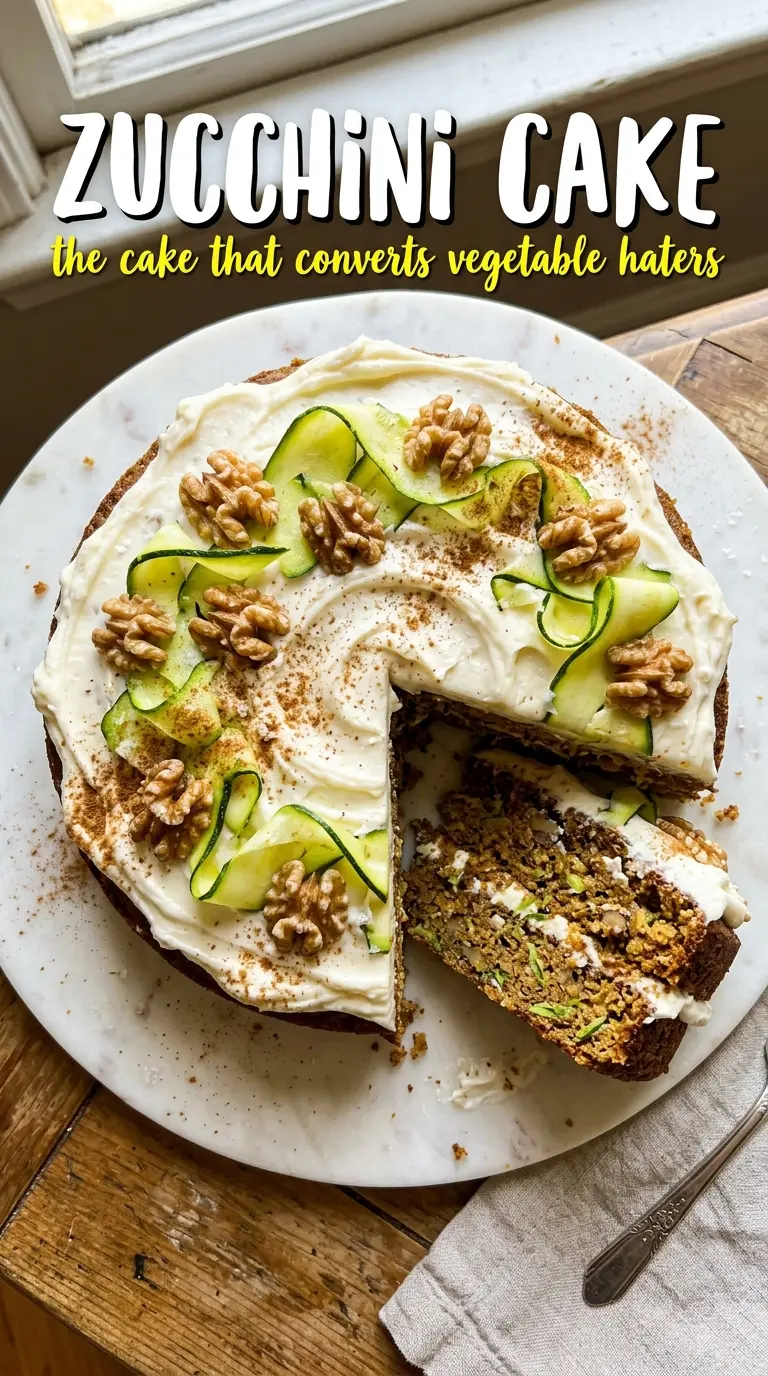
Moist, tender zucchini cake has a way of disappearing faster than people expect, especially when it’s baked in a sheet pan and covered with a thick layer of cream cheese frosting. The zucchini doesn’t make the cake taste like vegetables; it gives the crumb that soft, almost plush texture that keeps each square tasting fresh for days. The warm cinnamon and nutmeg lean carrot-cake-adjacent, but the flavor stays clean and straightforward enough that the frosting still gets the last word.
What makes this version work is that the zucchini gets squeezed dry before it goes into the batter. That keeps the cake from turning heavy or gummy, while still giving you all the moisture you want in a zucchini dessert. Oil does the same kind of work here that butter would in some cakes, but without needing to cream anything, and the eggs build enough structure to hold the crumb together. The frosting is the classic partner for a reason: tangy, sweet, and sturdy enough to spread into a thick blanket over a completely cooled cake.
Below, I’ve broken down the one step that matters most with zucchini, plus a few swaps and storage notes so you can bake it with confidence. If you’ve ever had a zucchini cake that baked up dense in the middle or slid apart under frosting, the details here will save you from that.
The cake came out unbelievably moist, and the cream cheese frosting spread like a dream once it was fully cool. I also liked that the zucchini disappeared into the crumb instead of making it soggy.
Save this zucchini sheet cake for the days when you want a soft spiced dessert with thick cream cheese frosting and no fuss.
The Step Most Zucchini Cakes Get Wrong: Too Much Moisture
Zucchini is the reason this cake stays tender, but it’s also the reason a lot of zucchini cakes bake up dense. If the grated zucchini goes in wet, that extra water has nowhere to go except into the batter, where it can leave the center heavy and pasty instead of soft and springy. Squeezing it dry first fixes that problem without taking away the texture you want.
The other mistake is overmixing once the flour goes in. This batter should look just combined, with no dry streaks, and then it should stop there. Overworking it tightens the crumb and can make the cake tougher than it should be. You’re aiming for a tender sheet cake that slices cleanly but still feels moist at the fork.
- Grated zucchini — Use the small holes on a box grater and squeeze the shreds in a clean kitchen towel until they feel damp, not wet. That step matters more than the exact size of the grate, because excess water is what ruins the crumb.
- Vegetable oil — Oil keeps the cake soft straight from the fridge and helps it stay that way longer than butter would. Any neutral oil works here, including canola or avocado oil.
- Cream cheese frosting — This cake needs the tang of cream cheese to balance the spice and sweetness. A buttercream will work in a pinch, but it tastes flatter and reads more like a standard snack cake.
What Each Ingredient Is Actually Doing in This Cake
- All-purpose flour — This gives the cake enough structure to hold a 9×13 pan slice without collapsing. Cake flour would make it a touch softer, but all-purpose is the most reliable choice.
- Cinnamon and nutmeg — These are the backbone of the flavor. The cake tastes warm and familiar without needing a heavy spice mix.
- Baking soda and baking powder — The zucchini cake gets lift from both. Baking soda works with the slight acidity in the batter, while baking powder helps it rise evenly.
- Eggs — They bind everything together and help the cake set in the center. Room-temperature eggs mix in more smoothly, but cold eggs will still work.
- Walnuts — Optional, but they add a little crunch and make the cake feel closer to a carrot cake-style dessert. Leave them out for a smoother crumb or swap in chopped pecans.
- Cream cheese, butter, and milk — Softened cream cheese and butter whip into a frosting that spreads cleanly and holds its shape. The milk is just there to loosen the frosting if it feels too stiff; add it a teaspoon at a time.
Mixing the Batter, Baking the Cake, and Frosting It at the Right Moment
Building the Batter
Whisk the dry ingredients together first so the cinnamon, leaveners, and salt are evenly distributed. In a second bowl, beat the sugar, oil, eggs, and vanilla until the mixture looks smooth and glossy. Stir in the zucchini next, then add the dry ingredients and stop mixing as soon as the flour disappears. If you keep stirring after that, the cake can turn tight instead of tender.
Watching for the Bake
Spread the batter into a greased 9×13 pan and bake at 350°F until the top springs back lightly and a toothpick comes out clean from the center. At 30 minutes, start checking; ovens vary more than recipe cards admit. If the top is set but the middle still looks shiny, give it a few more minutes and check again. You want a baked center, not a dry cake.
Cooling Before the Frosting Goes On
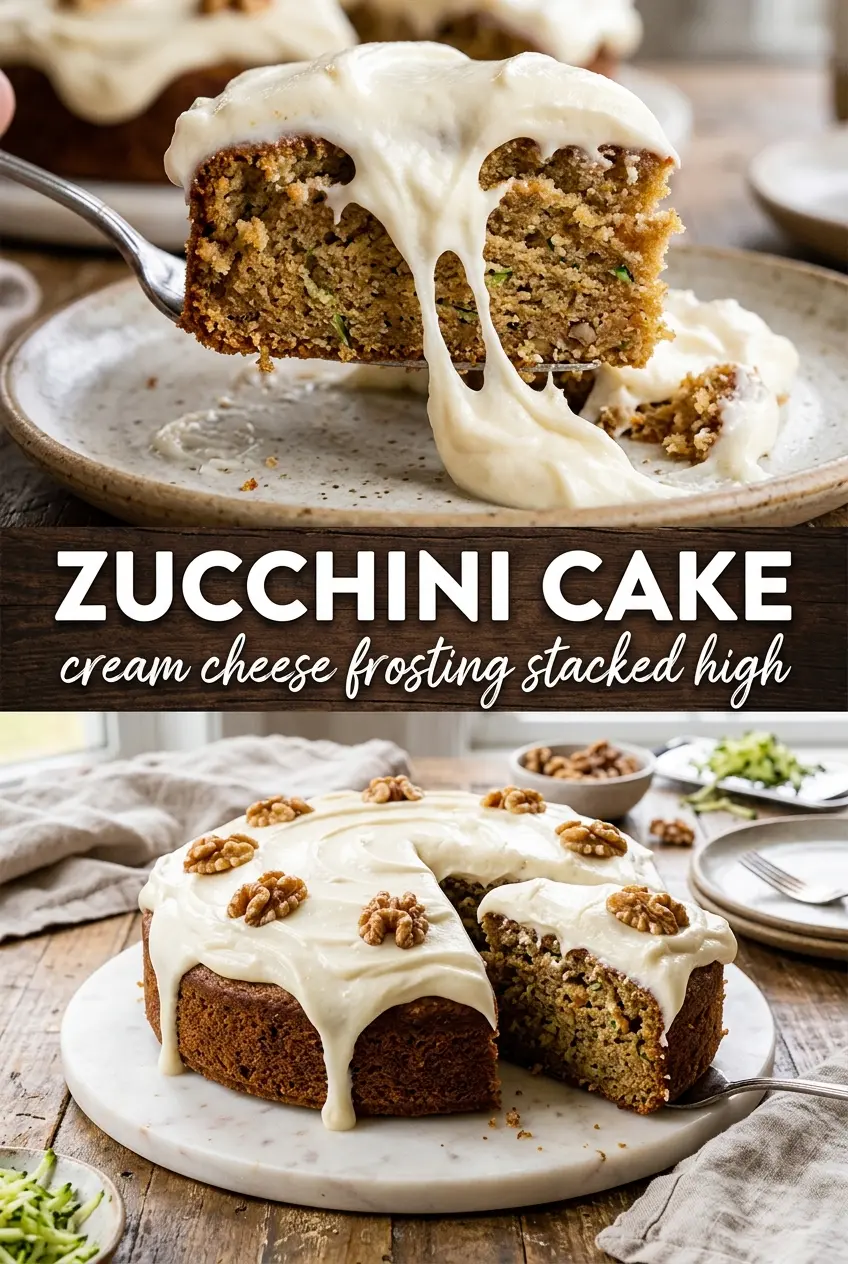
Let the cake cool completely before you even think about frosting it. If the cake is warm, the cream cheese frosting softens too fast and slides around instead of staying thick. Beat the frosting until it’s fluffy and spreadable, then cover the cake in a generous layer. That thick frosting against the spiced crumb is what makes each square taste finished.
How to Adapt This Zucchini Cake Without Losing the Good Part
Make It Nut-Free
Skip the walnuts entirely and the cake still bakes up soft and balanced. You’ll lose a little crunch, but the texture stays moist and the spice still carries the dessert.
Dairy-Free Frosting Swap
Use a dairy-free cream cheese and a plant-based butter in the frosting. The flavor will be a little less tangy and the texture may be softer, so chill it briefly before spreading if it seems loose.
Turn It Into Cupcakes
Divide the batter into lined muffin cups and bake until the tops spring back and a tester comes out clean, usually much sooner than the sheet cake. You’ll get the same spiced crumb, but the edges set faster and the frosting-to-cake ratio gets a little higher.
Storage and Reheating
- Refrigerator: Store covered for up to 5 days. The cake stays moist, though the frosting firms up a bit in the fridge.
- Freezer: Freeze unfrosted cake squares tightly wrapped for up to 2 months. Frosting can separate after thawing, so for best texture, frost after defrosting.
- Reheating: This cake is best served at room temperature. If it’s chilled, let slices sit out for 20 to 30 minutes so the frosting softens and the crumb tastes tender again.
Answers to the Questions Worth Asking
Zucchini Cake
Ingredients
Equipment
Method
- Preheat the oven to 350°F and grease a 9x13 baking pan.
- In a bowl, whisk together all-purpose flour, cinnamon, baking soda, baking powder, salt, and nutmeg until evenly combined.
- In a separate bowl, beat granulated sugar, vegetable oil, eggs, and vanilla extract until smooth and glossy.
- Stir in the grated zucchini that has been squeezed dry.
- Fold the dry ingredients into the wet ingredients until just combined, adding walnuts if using.
- Pour the batter into the prepared pan and bake for 30–35 minutes at 350°F, until a toothpick inserted in the center comes out clean.
- Cool the cake completely before frosting, about 30 minutes, so the frosting stays thick and spreadable.
- In a bowl, beat softened cream cheese, softened butter, powdered sugar, vanilla, and milk until light and fluffy.
- Spread the frosting over the cooled cake and swirl the top for a thick, even layer.