Grilled zucchini with a miso glaze turns from a plain side dish into something people keep picking at straight from the platter. The edges get charred and a little sticky, the centers stay tender, and the glaze lands somewhere between savory, sweet, and smoky with a deep umami finish. It’s the kind of vegetable dish that disappears fast because it tastes like more than the sum of its parts.
What makes this version work is the balance in the glaze and the way it’s handled on the grill. White or yellow miso gives salt and body without overpowering the zucchini, while mirin, soy sauce, and a touch of honey round out the sharp edges and help the surface caramelize instead of burning. The 20-minute rest matters, too. That short marinating window pulls flavor into the cut surface without turning the zucchini soft and watery before it ever hits the grill.
Below you’ll find the small details that keep the glaze glossy instead of scorched, plus a few smart swaps if you need them. The crosshatch scoring, the right grill heat, and the second brush of glaze after flipping all change the final result in a way you can taste.
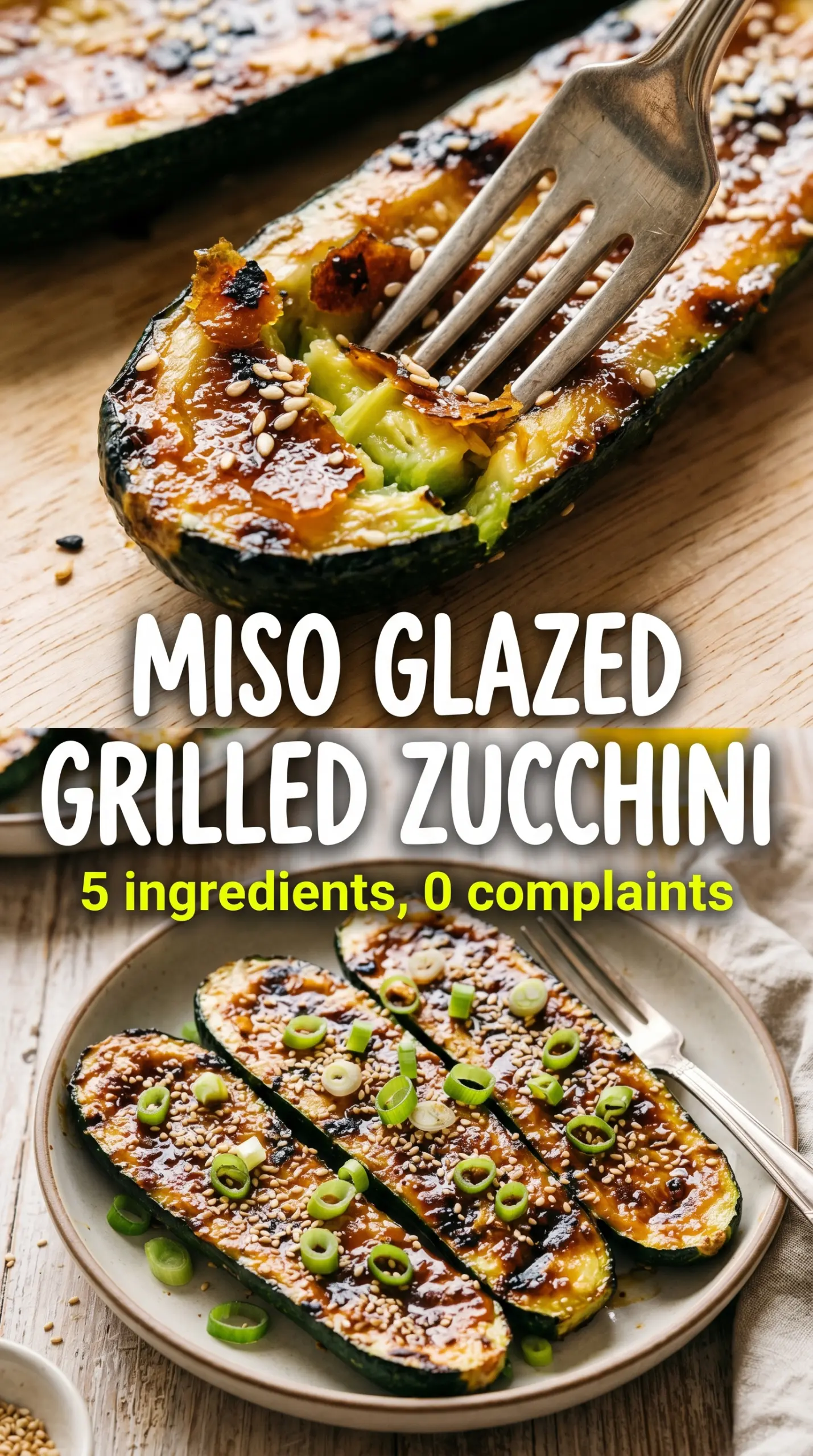
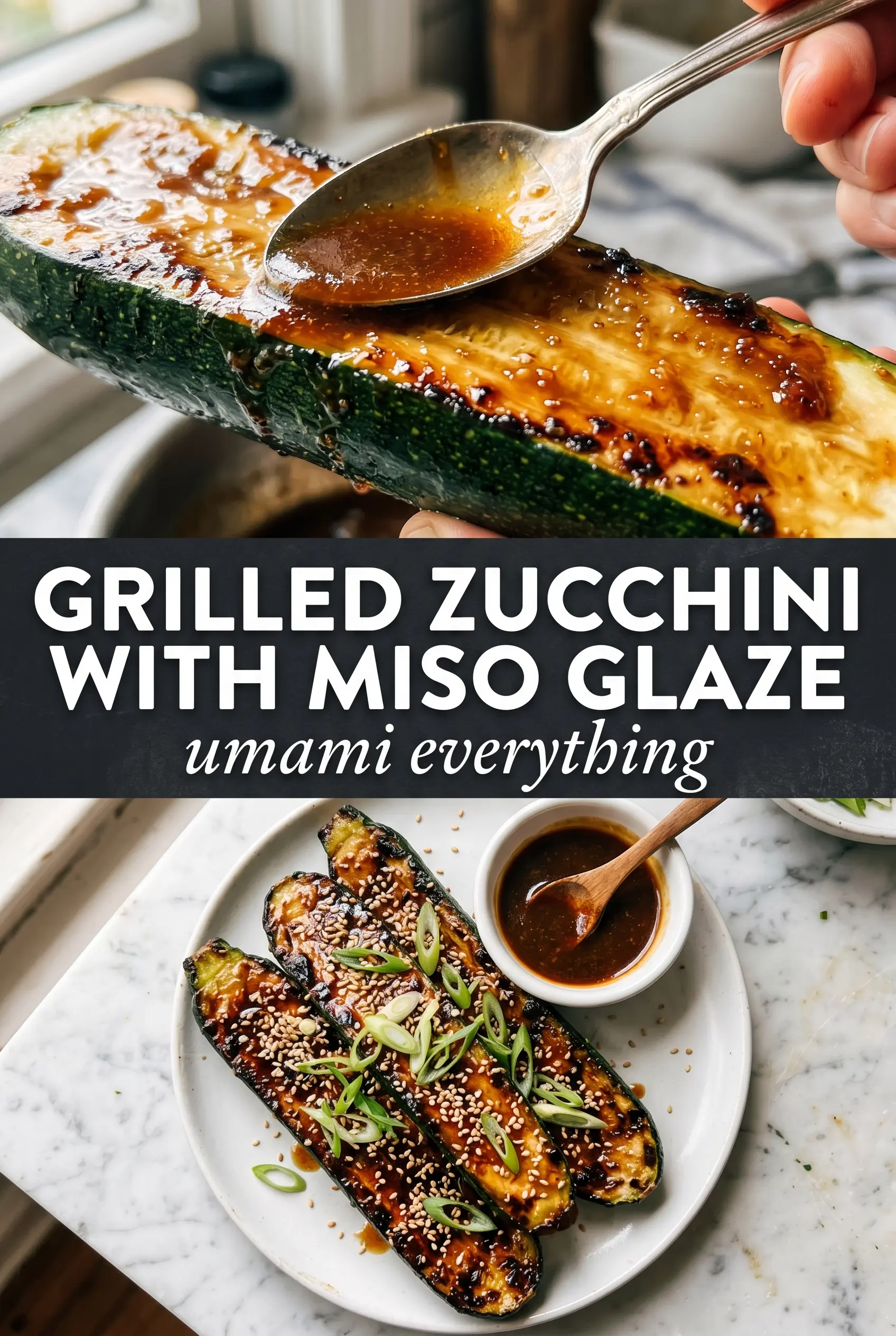
The miso glaze caramelized into this dark, shiny layer that clung to the zucchini instead of sliding off, and the crosshatch marks made every bite taste seasoned all the way through.
Pin these miso-grilled zucchini halves for the nights when you want a vegetable side with a glossy, caramelized glaze and almost no cleanup.
The Trick to Keeping Miso from Burning Before the Zucchini Is Done
Miso is what gives this dish its backbone, but it also browns fast. That’s why the glaze needs a little sugar or honey, enough to caramelize with the zucchini instead of flashing straight from glossy to bitter. The other mistake is grilling over heat that’s too high. You want medium-high, not raging-hot flames, because the glaze needs a minute to set and darken while the zucchini finishes softening underneath.
Scoring the cut side does two jobs at once. It gives the glaze more surface area to cling to, and it helps the zucchini cook more evenly so you don’t end up with a charred top and a raw middle. If you skip the rest after glazing, the flavor stays on the surface only. If you let it sit too long, though, the zucchini starts releasing water and the glaze thins out. Twenty minutes is the sweet spot.
What Each Ingredient Is Actually Doing in This Dish
- White or yellow miso paste — This is the main source of salt, savoriness, and body. White miso is milder and a little sweeter; yellow miso is deeper and saltier. Either one works, but red miso would overpower the zucchini and turn the glaze harsh before it caramelizes.
- Mirin — This adds sweetness and shine, and it helps the glaze brown evenly. If you don’t have it, use a dry white wine plus a small pinch of sugar, but the finished glaze won’t be quite as round or glossy.
- Soy sauce — It sharpens the miso and deepens the color. Use regular soy sauce here; low-sodium is fine if that’s what you keep, but the glaze will need a little more reduction on the grill to taste full.
- Sake or dry sherry — This brings a light, aromatic edge that keeps the glaze from tasting flat. If you’re out, use water in a pinch, but you’ll lose some complexity.
- Sesame oil — A small amount gives the glaze a nutty aroma that reads immediately once the zucchini hits heat. Don’t add more than the recipe calls for or it starts to taste heavy.
- Honey or brown sugar — This is the ingredient that helps the glaze turn lacquered instead of just salty. Honey gives a cleaner finish; brown sugar adds a deeper, molasses note and slightly thicker texture.
- Garlic and ginger — These wake everything up. Grate them finely so they melt into the glaze instead of staying in harsh little bits that can burn on the grill.
How to Grill the Zucchini So the Glaze Stays Glossy
Mix the glaze until it’s fully smooth
Whisk the miso glaze until every streak of paste disappears. If you see little clumps now, those clumps will scorch later. The finished glaze should look loose but cohesive, like a thin marinade that still coats a spoon. Taste it before it goes on the zucchini; it should lean a little bold because grilling softens the edges.
Score the zucchini and give it time to absorb
Cut a shallow crosshatch into the flesh side without cutting through the skin. That pattern helps the glaze settle into the surface and keeps the zucchini from shrinking unevenly on the grill. Brush it generously, then let it sit for 20 minutes. If you rush this part, the glaze sits on top instead of becoming part of the vegetable.
Build color over medium-high heat
Oil the grates and place the zucchini cut-side down without moving it. You’re listening for a steady sizzle, not aggressive popping. After 4 to 5 minutes, the glaze should look dark amber with a few charred spots and release more easily from the grates. If it sticks hard, give it another 30 seconds; pulling too early tears the surface.
Finish on the skin side and glaze once more
Flip the zucchini skin-side down, brush the top with the remaining glaze, and grill just until the flesh is tender but still holding its shape. This second coat gives you a shinier finish and a deeper layer of flavor. If the zucchini starts collapsing, the grill ran too hot or it stayed on too long. Pull it as soon as the edges soften and the center still has a little structure.
Three Ways to Make This Work for Different Tables
Dairy-Free and Naturally Vegetarian
This recipe already fits both of those lanes as written, which is part of why it works so well for a mixed crowd. The miso gives the same kind of savory depth you’d usually reach for cheese or butter to provide, without changing the texture of the zucchini.
Gluten-Free Adjustment
Use a certified gluten-free soy sauce or tamari. The rest of the recipe stays the same, but check your miso too, since some brands use barley. Tamari gives you the same dark, savory finish with a slightly rounder edge.
No Grill, Same Idea
A grill pan or broiler can stand in if you don’t have outdoor heat. Use the broiler on high and place the zucchini close to the element, watching it closely because the sugars in the glaze move fast. You’ll lose a little of the smoky edge, but you keep the caramelized surface and tender middle.
For a Sweeter, More Lacquered Finish
Use brown sugar instead of honey and add an extra teaspoon of mirin. That pushes the glaze toward a darker, stickier finish with a little more depth. It’s a good choice if you’re serving the zucchini alongside rice or grilled fish.
Storage and Reheating
- Refrigerator: Store leftovers in an airtight container for up to 3 days. The glaze softens a little, and the zucchini will release some moisture as it sits.
- Freezer: I don’t recommend freezing this dish. Zucchini turns watery and loose after thawing, and the glaze loses its glossy finish.
- Reheating: Warm it in a skillet over medium-low heat or in a 375°F oven just until heated through. High heat dries out the zucchini and can burn the sugars in the glaze before the center is warm.
Answers to the Questions Worth Asking
Grilled Zucchini with Miso Glaze
Ingredients
Equipment
Method
- Whisk together miso paste, mirin, soy sauce, sake or dry sherry, sesame oil, honey or brown sugar, grated garlic, and grated ginger until smooth.
- Score the cut surface of each zucchini half with a crosshatch pattern, taking care not to cut through the skin.
- Brush the cut surfaces generously with miso glaze and let sit for 20 minutes so the glaze clings and begins to soak in.
- Preheat the grill to medium-high and oil the grates.
- Place zucchini cut-side down and grill for 4–5 minutes without moving, until the glaze caramelizes and chars slightly.
- Flip zucchini skin-side down, brush the top with additional miso glaze, and grill for 3–4 minutes until glossy and lacquered.
- Finish with sesame seeds and sliced green onions, then serve immediately.