Banana cake gets its best texture when it stays tender without turning gummy, and this version lands right in that sweet spot. The crumb is soft and moist, the banana flavor is clear without being muddy, and the cream cheese frosting gives each bite that cool, tangy contrast that keeps you going back for another slice. It’s the kind of cake that feels casual enough for an afternoon snack but still looks like you meant to bring something special.
The trick here is using sour cream for richness and balance, then folding the dry ingredients and sour cream in alternately so the batter stays light instead of overworked. Ripe bananas do the heavy lifting on flavor, but they also add a lot of moisture, so the bake time matters. Pull it when the center is set and a tester comes out clean or with a few moist crumbs, not wet batter.
Below, I’ll walk through the one part that matters most with banana cake: how to keep the crumb soft without sinking in the middle. I’ve also included the swaps that work best if you want to bake it as a sheet cake, layer cake, or make it a little more nutty.
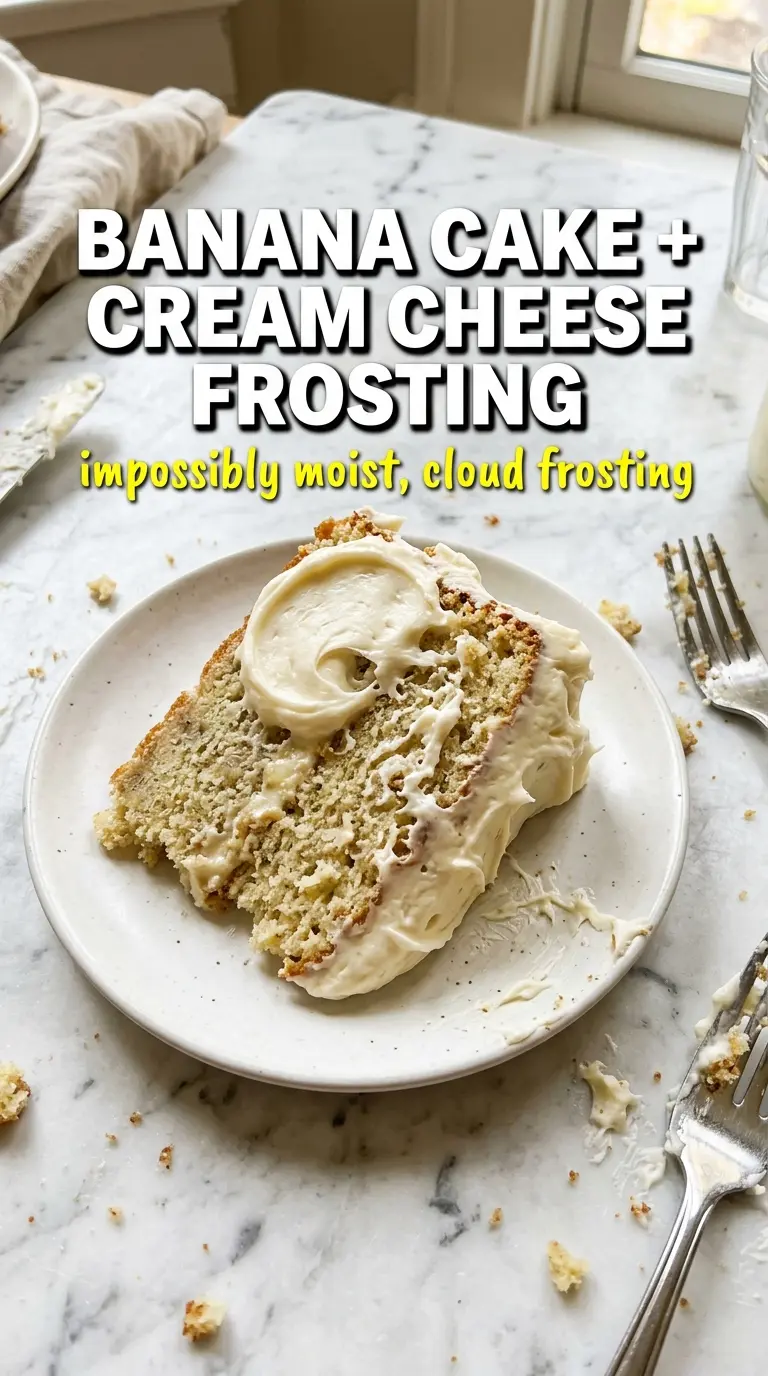
The cake stayed unbelievably moist for days, and the frosting was thick enough to swirl cleanly without sliding off the sides. I used very ripe bananas and the crumb came out soft, not dense at all.
Pin this banana cake with cream cheese frosting for a soft, moist sheet cake with thick tangy frosting and easy pantry ingredients.
The Quiet Reason Banana Cakes Turn Heavy
Banana cake goes wrong when the batter gets overloaded with banana or beaten after the flour goes in. Both mistakes push the crumb toward dense and sticky instead of soft and even. This recipe avoids that by using sour cream for moisture that doesn’t weigh the cake down, then mixing just until the flour disappears. That’s the difference between a cake that slices cleanly and one that sinks in the middle.
The other thing people miss is that bananas need to be ripe enough to mash easily and smell sweet at the stem. Green or barely speckled bananas won’t give you the flavor this cake needs, and overmashing into a watery puree can make the batter looser than it should be. You want mashed bananas with a little texture left, not banana soup.
- Ripe bananas — The darker the peel, the better the flavor. If yours are still stubbornly yellow, roast them in their skins at 300°F until the peels turn black and the flesh softens.
- Sour cream — This keeps the crumb plush and balances the sweetness. Plain full-fat Greek yogurt works too, but the cake will bake a little tighter.
- Butter and sugar — Cream them until the mixture looks pale and fluffy. That step traps air and helps the cake rise instead of baking up heavy.
- Cinnamon — It doesn’t make the cake taste spiced; it sharpens the banana flavor and keeps the sweetness from flattening out.
What Each Ingredient Is Actually Doing in This Cake
The flour here should be all-purpose, not cake flour. Cake flour can make the crumb a little too delicate once the bananas and sour cream go in. All-purpose gives the cake enough structure to hold a generous layer of frosting without collapsing when you slice it.
The cream cheese frosting depends on two things: softened cream cheese and softened butter. If either one is cold, you’ll get little lumps that never fully smooth out. Heavy cream is the control knob at the end — add just enough to make the frosting thick and spreadable, but stop before it turns loose.
- Bananas — Use very ripe bananas for the best flavor and natural sweetness. Three medium bananas is usually about right, but if yours are huge and especially wet, stop at a generous mash rather than packing in every last spoonful.
- Butter — Softened butter creams properly with the sugar and helps the cake rise. Melted butter won’t hold air the same way, and the texture suffers.
- Eggs — They bind the batter and add lift. Room-temperature eggs blend in more smoothly and help the batter stay emulsified.
- Sour cream — This is the moisture insurance. Yogurt can work in a pinch, but sour cream gives the cake a rounder, richer finish.
- Cream cheese — Use block-style cream cheese, not the spread in a tub. Tub cream cheese is too soft and the frosting won’t hold those billowy peaks.
Building the Batter So It Stays Soft
Start With the Butter and Sugar
Beat the butter and sugar until the mixture turns pale and looks fluffy around the edges. That’s not cosmetic — it’s the air that helps the cake rise. If you rush this part, the batter starts dense and stays that way even if the rest of the method is perfect.
Fold in the Dry Ingredients and Sour Cream in Turns
Add part of the flour mixture, then part of the sour cream, and repeat until everything is incorporated. The batter should look thick and smooth, not loose and glossy. Overmixing after the flour goes in will develop the gluten and make the cake chew instead of melt softly on the tongue.
Bake Until the Center Just Sets
Pour the batter into a greased 9×13 pan and bake until the top springs back lightly and a tester comes out clean or with a few moist crumbs. The middle should not wobble like raw batter. If you wait for the cake to look fully dry on top, it’s usually already gone too far and will bake up drier than you want.
Whip the Frosting Until It Holds a Soft Peak
Beat the cream cheese and butter together until completely smooth before adding the powdered sugar. If you dump the sugar in first, the frosting turns stubborn and grainy. Add the cream a little at a time until it spreads thickly and can be swooped into soft peaks with a spoon or offset spatula.
How to Adapt This Cake for Different Pans, Diets, and Toppings
Banana Sheet Cake With Extra Easy Slicing
Bake it exactly as written in a 9×13 pan and frost it right in the pan. You get the same moist crumb, but the edges stay a little more structured, which makes it the best version for potlucks, birthdays, and casual gatherings.
Turn It Into Banana Layer Cake
Divide the batter between two 8- or 9-inch round pans and start checking a few minutes early. The layers bake faster and feel a little more delicate, but the frosting sandwiches beautifully between them and gives you a more classic celebration cake.
Gluten-Free Version That Still Holds Together
Swap in a cup-for-cup gluten-free flour blend with xanthan gum already included. The cake will be a touch more tender, but it still slices well if you let it cool completely before frosting.
Walnut Topping or No-Nut Finish
Scatter chopped walnuts over the frosting for crunch and a little bitterness against the sweet bananas. If you skip them, the cake reads smoother and more classic; either way, the frosting carries the dessert.
Storage and Reheating
- Refrigerator: Store covered for 4 to 5 days. The frosting stays best chilled, though the cake crumb firms up a bit after day one.
- Freezer: Freeze unfrosted cake layers tightly wrapped for up to 2 months. Frosting can be frozen separately, but the texture is best when it’s made fresh.
- Reheating: Bring slices to room temperature before serving. Microwaving makes the frosting soft and can make the crumb feel gummy, so use only a few seconds if you want the chill off the cake.
Questions I Get Asked About This Banana Cake
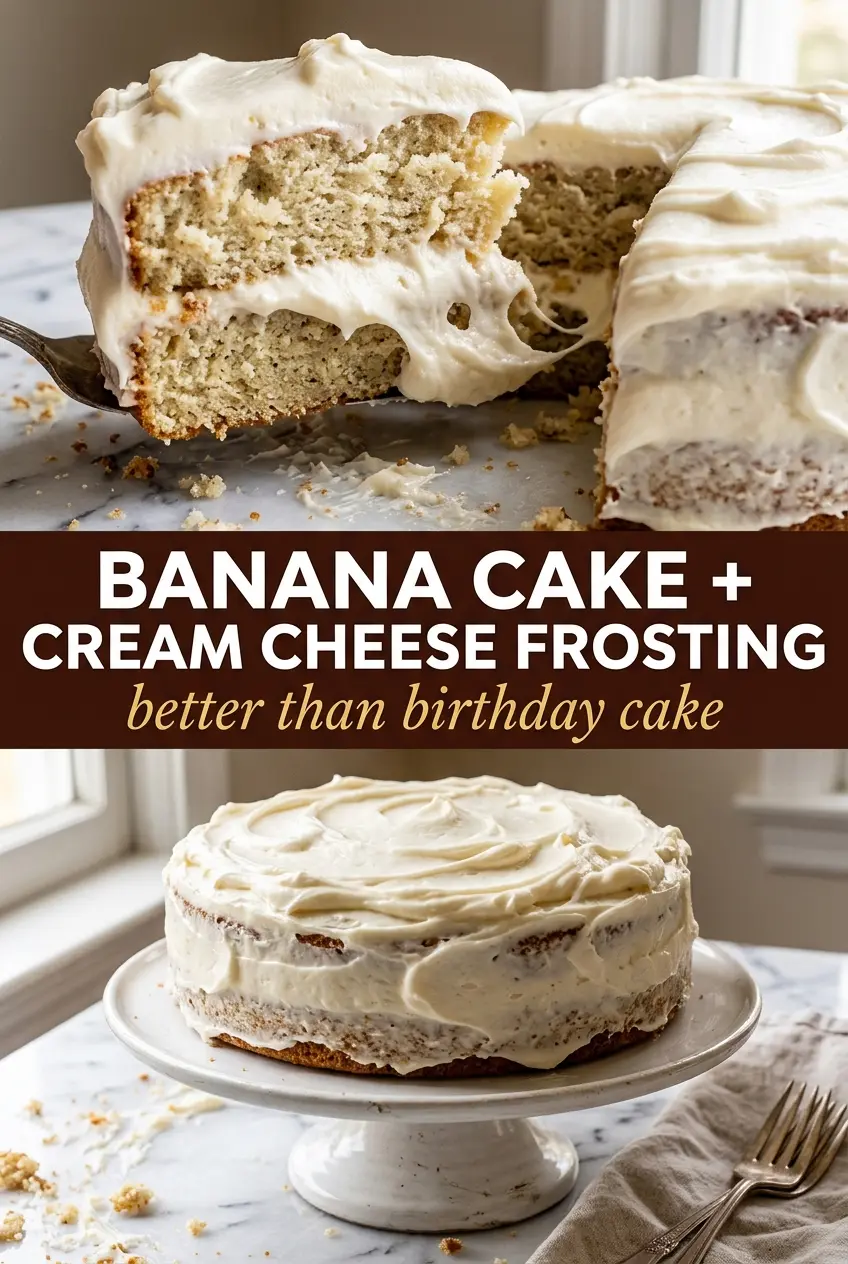
Banana Cake with Cream Cheese Frosting
Ingredients
Equipment
Method
- Preheat the oven to 350°F and grease a 9x13 pan.
- Beat the softened butter and sugar until fluffy, then add the eggs, vanilla, and mashed bananas and mix until combined.
- In another bowl, mix the flour, baking soda, baking powder, salt, and cinnamon to make the dry ingredients.
- Alternate folding in the flour mixture and the sour cream, beginning and ending with flour, until just combined.
- Pour the batter into the prepared 9x13 pan and bake for 30–35 minutes, until a toothpick comes out clean.
- Let the cake cool completely before frosting.
- Beat the softened cream cheese and butter until smooth.
- Gradually add the powdered sugar, then mix in the vanilla and heavy cream until thick and fluffy.
- Frost the completely cooled cake generously, spreading in billowing swooped waves across the entire surface.