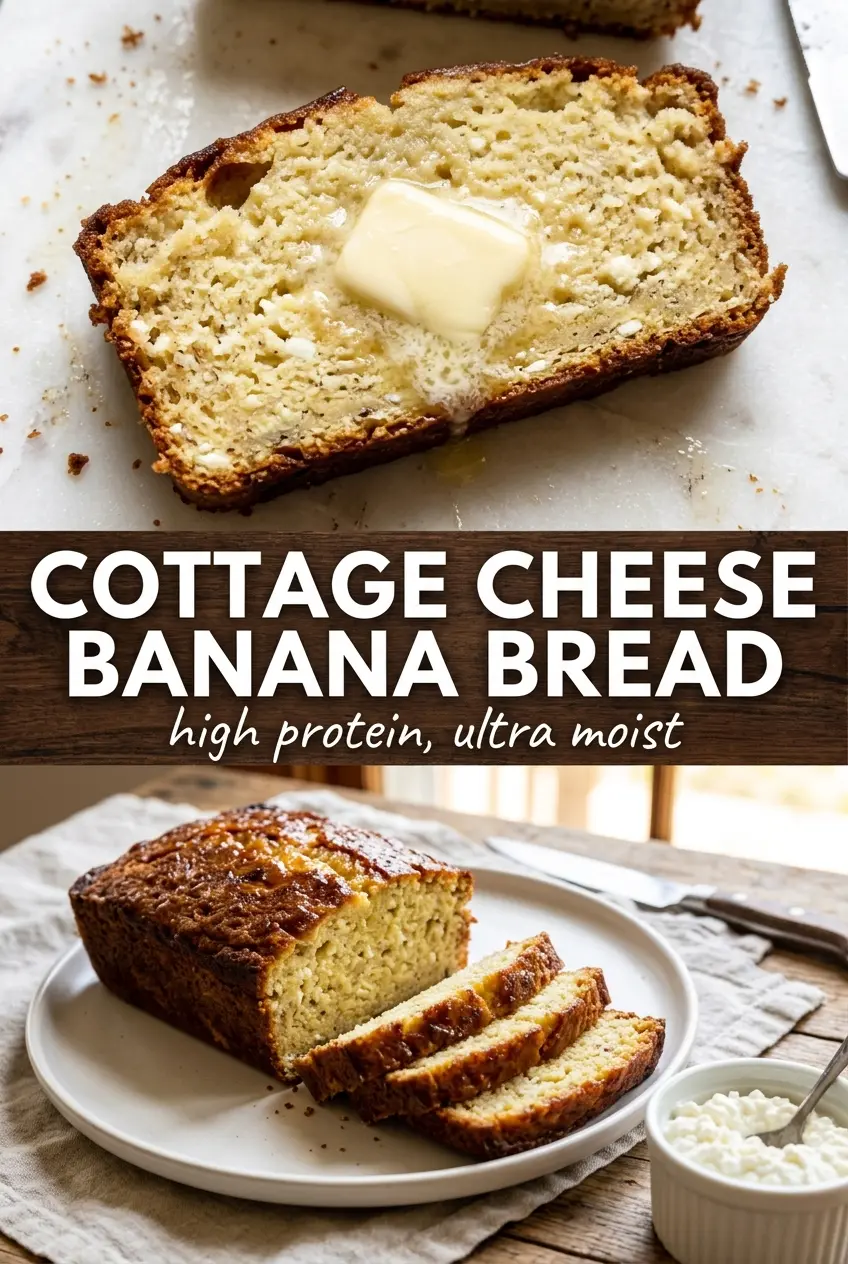
Golden banana bread with a tender, moist crumb and a little more body than the usual version earns its place fast. The cottage cheese disappears into the batter once it’s blended smooth, but it leaves behind a softer loaf that slices cleanly and stays moist for days. You still get the familiar banana-cinnamon comfort, just with a richer texture and a bit more staying power.
What makes this loaf work is simple: the cottage cheese adds protein and moisture without making the bread heavy or wet. Blending it first matters because leaving curds intact gives you little pockets in the crumb instead of that even, bakery-style slice you want. The bananas should be deeply ripe, with plenty of brown spots, because under-ripe bananas can’t carry the flavor here the way they need to.
Below, I’ll show you the exact texture cues to watch for in the batter and the bake, plus a few smart swaps if you need to work with what’s already in the kitchen.
The loaf came out so moist and the cottage cheese was completely undetectable except for how tender the crumb was. I baked it 64 minutes and the center set up perfectly without drying out the edges.
Save this cottage cheese banana bread for a loaf that bakes up moist, slices cleanly, and keeps its tender crumb all week.
The Reason This Banana Bread Stays Moist Without Turning Heavy
A lot of banana breads with add-ins end up either dry or gummy. The problem usually starts when the wet ingredients are mixed too aggressively or the loaf is pulled too early because the top looks done before the center is set. Cottage cheese changes the texture in a good way, but only if you treat it like part of the batter, not a shortcut ingredient that can cover up an underbaked loaf.
Blending the cottage cheese until smooth is what keeps the crumb even. If you skip that step, you’ll get little curds that can leave pockets in the loaf and make the texture feel uneven instead of tender. The other thing that matters here is the bake time window: this loaf needs enough time to turn deeply golden and fully set in the middle, even if that means the edges look finished first.
- Blended cottage cheese — This is the ingredient that gives the loaf its moisture and protein without making it taste cheesy. Full-fat cottage cheese works best because it gives a richer crumb, but low-fat will still work if that’s what you have.
- Very ripe bananas — Brown-spotted bananas bring the sweetness and banana flavor this bread needs. If yours are only yellow, the loaf will still bake, but it won’t taste as full or as naturally sweet.
- Honey or maple syrup — A small amount rounds out the banana flavor without making the loaf sugary. Either one works; honey gives a slightly warmer finish, while maple syrup tastes a little softer and more mellow.
- Butter — You only need a little, but it helps the crumb taste balanced and keeps the loaf from feeling too lean. Melted coconut oil can stand in if needed, though the flavor will shift slightly.
Building the Batter Without Beating the Moisture Out of It
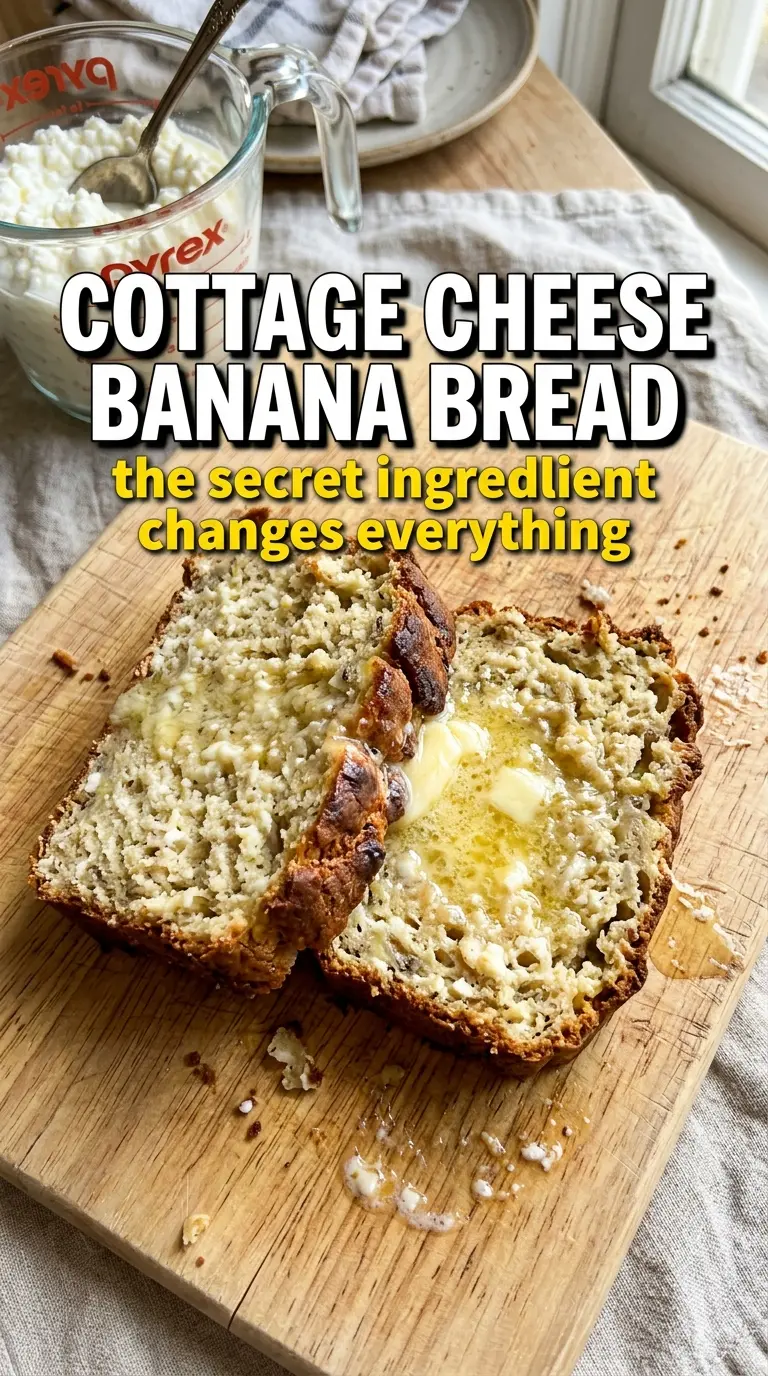
The batter comes together fast, and that’s part of the point. Once the cottage cheese is smooth and the bananas are mashed, whisk in the eggs, sweetener, butter, and vanilla until the mixture looks unified and glossy. If the cottage cheese isn’t fully blended, stop and smooth it out before you move on, because those little lumps don’t melt away in the oven.
When the flour goes in, fold just until the dry streaks disappear. Overmixing develops the flour and makes a tighter, tougher loaf, which is the opposite of what you want here. The batter should look thick but spoonable, with no dry pockets of flour and no need to beat it smooth.
Smoothing the Cottage Cheese
Blend the cottage cheese until it looks like a thick yogurt or loose sour cream. A few tiny flecks are fine, but you don’t want visible curds sitting in the batter. If you’re using a blender or food processor, scrape the sides once so everything finishes evenly. This one step is the difference between a fine, tender crumb and a loaf with uneven pockets.
Folding in the Dry Ingredients
Add the flour, baking soda, baking powder, cinnamon, and salt all at once, then fold with a spatula until just combined. The batter will still look a little rough, and that’s exactly right. Stop as soon as the flour disappears, because overworking it makes the loaf dense instead of moist. If you see a streak or two, give it one or two more folds and leave it alone.
Baking to the Center, Not the Top
Pour the batter into the prepared loaf pan and smooth the surface so it bakes evenly. The top should become deeply golden and the center should test clean with a toothpick, but don’t rely on color alone. A loaf like this can look finished while the middle is still soft, so the toothpick test matters more than the crust. Let it cool in the pan for 15 minutes before turning it out, then wait until it’s fully cool before slicing or the crumb will smear.
How to Adapt This Loaf When You Need a Different Finish
For a dairy-free version
Use a thick unsweetened dairy-free yogurt in place of the cottage cheese. The loaf will still be moist, but it won’t have quite the same protein boost or the same slightly rich, custardy texture that cottage cheese gives. Choose a plain variety so the banana flavor stays in charge.
For a less sweet breakfast loaf
Cut the honey or maple syrup back to 2 tablespoons. The bananas do most of the work here, so you can lower the added sweetener without hurting the structure. The loaf will taste a little more breakfast-like and less dessert-like.
For a gluten-free version
Swap the all-purpose flour for a 1:1 gluten-free baking blend that includes xanthan gum. The crumb will be a little more delicate and slightly less springy, but the loaf still slices well once fully cooled. Don’t use almond flour alone here; it changes the structure too much.
Storage and Reheating
- Refrigerator: Keep wrapped tightly for up to 5 days. The texture stays moist, though the crumb firms up a little once chilled.
- Freezer: This loaf freezes well. Wrap slices or the whole loaf tightly in plastic, then foil, and freeze for up to 3 months.
- Reheating: Warm slices in a toaster oven or microwave just until the center takes the chill off. If you heat it too long, the cottage cheese-based crumb can turn dry at the edges before the middle feels warm.
Answers to the Questions Worth Asking
Cottage Cheese Banana Bread
Ingredients
Equipment
Method
- Preheat the oven to 350°F and grease a 9x5 loaf pan, ensuring the corners are coated for easy release.
- Blend the cottage cheese until smooth, then whisk it with the mashed bananas, eggs, honey, melted butter, and vanilla until uniform.
- Fold in the all-purpose flour, baking soda, baking powder, cinnamon, and salt until just combined, stopping as soon as no dry streaks remain.
- Pour the batter into the prepared loaf pan and smooth the top so it bakes evenly.
- Bake at 350°F for 60–70 minutes, until the loaf is deeply golden and a toothpick inserted in the center comes out clean.
- Cool in the pan for 15 minutes before turning out, then cool fully before slicing to keep the crumb tender and cohesive.