Banana pound cake has a way of disappearing one slice at a time because it lands somewhere between bakery-worthy and comfort food. The crumb stays tight and velvety, but it doesn’t eat heavy or dry. You get buttery richness, deep banana flavor, and that golden crust that always seems to taste a little more caramelized than the rest of the cake.
The trick is treating it like a pound cake, not a quick bread. The butter and sugar need a long whip so the cake bakes up tender instead of dense in a heavy way, and the sour cream keeps the crumb moist without making it gummy. Bananas add flavor and softness, but too much banana can turn the texture loose, which is why this batter leans on structure from flour, eggs, and a careful bake.
Below you’ll find the small details that matter most: when to stop mixing, how to know the center is done without overbaking the edges, and why the glaze goes on only after the cake cools. That’s what keeps each slice clean and plush instead of sticky and collapsed.
The cake came out with that tight, buttery crumb I was hoping for, and the vanilla glaze settled into the top without making it soggy. I baked it in a Bundt pan and it released cleanly after 20 minutes, which was a relief.
Save this banana pound cake for the days when you want a rich, buttery dessert with a dense crumb and a simple vanilla glaze.
The Bake That Fails When You Rush the Butter
Banana pound cake can look done before the middle is actually set. The top turns deep gold and the edges pull from the pan, but that doesn’t mean the crumb has finished building structure. If you pull it too soon, the center sinks as it cools and the slices turn pasty instead of clean.
The other common mistake is treating the batter like a quick bread and mixing only until it comes together. This cake needs the butter and sugar whipped until pale and fluffy because that step traps air and gives the dense batter lift. The bananas add moisture and flavor, but the cake still depends on the creamed butter base to stay tender rather than heavy.
- Long creaming time — Five full minutes gives the cake its fine, plush crumb.
- Room-temperature eggs — Cold eggs can make the butter seize and the batter look curdled.
- Low oven temperature — 325°F lets the center bake through before the crust gets too dark.
- Cool time in the pan — Twenty minutes is enough for the cake to set without steaming itself soggy.
What Each Ingredient Is Actually Doing in This Cake
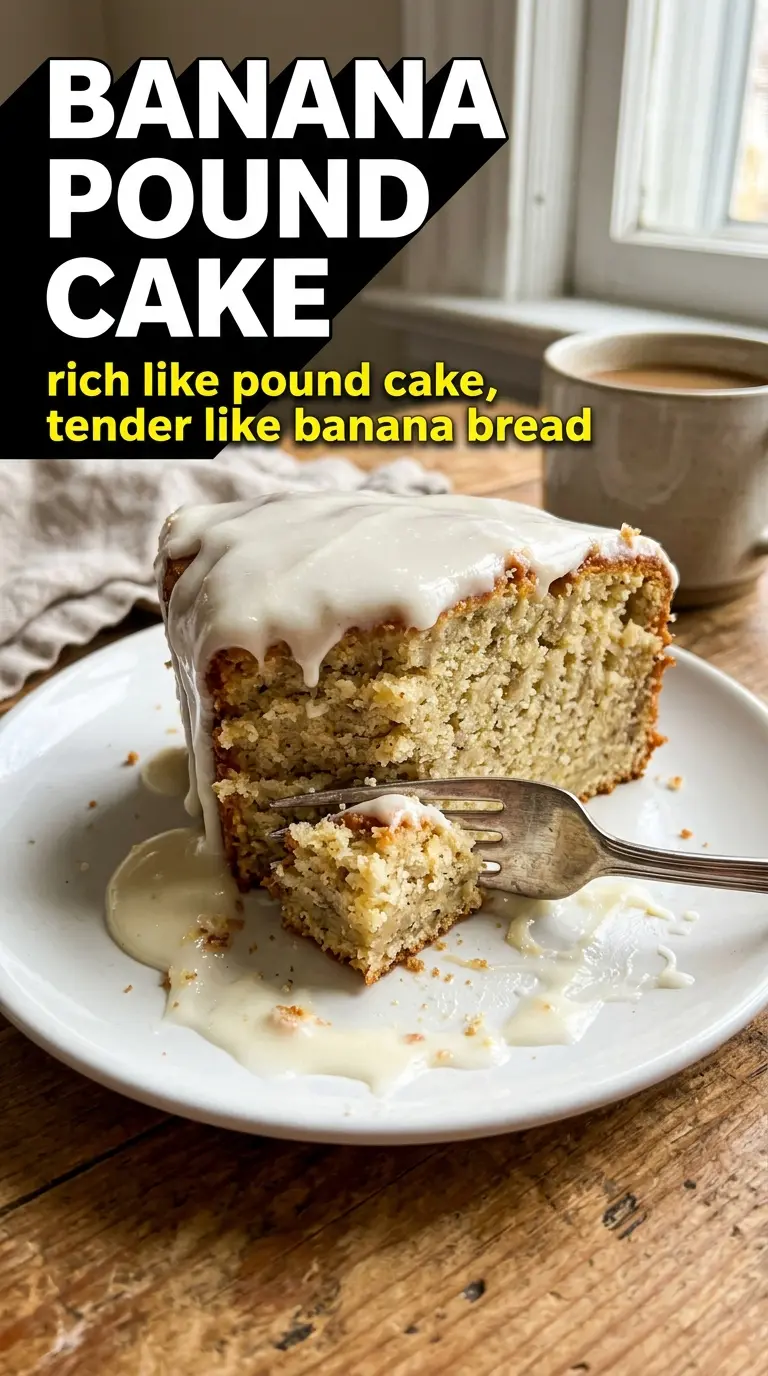
The bananas matter most when they’re ripe enough to mash easily and smell sweet, with plenty of brown spots on the peel. That’s where the strongest banana flavor lives. If your bananas are only yellow, the cake will still bake correctly, but the flavor will be milder and flatter.
Sour cream is the ingredient that keeps this from eating dry. It adds moisture and a little tang, which balances the sugar and butter. Full-fat plain Greek yogurt can step in here if needed, but the texture will be a touch less rich and the crumb a little less plush.
- Butter — Use real unsalted butter if you can. It gives the cake its clean, rich flavor and the right tender bite. Salted butter works in a pinch; just reduce the added salt slightly.
- Sour cream — This is what keeps the cake moist without loosening the batter too much. Plain full-fat yogurt is the closest swap.
- All-purpose flour — Bread flour makes the crumb too chewy, and cake flour makes it a little too fragile for this style of cake.
- Vanilla extract — It rounds out the banana flavor and makes the glaze taste like part of the cake instead of a separate topping.
How to Build the Batter So the Cake Stays Tight and Tender
Creaming the Butter and Sugar
Beat the butter and sugar together until the mixture looks pale, fluffy, and almost whipped. It should no longer feel gritty when you rub a little between your fingers. If you cut this short, the cake bakes up dense in the wrong way and loses that fine pound cake crumb.
Adding the Eggs and Bananas
Work in the eggs one at a time so the batter stays smooth and emulsified. After that, mix in the vanilla and mashed bananas until they’re just incorporated. If the batter looks slightly curdled at this stage, keep going through the next flour addition; it usually comes back together once the dry ingredients go in.
Folding in the Dry Ingredients and Sour Cream
Alternate the flour mixture and sour cream in three additions, ending with flour. Stir only until you stop seeing streaks of dry flour. Overmixing after the flour goes in tightens the crumb and can make the cake tough, especially with all the eggs already in the batter.
Baking Until the Center Sets
Pour the batter into a well-greased and floured loaf pan or Bundt pan and bake until the top is deeply golden. A toothpick should come out clean or with a few moist crumbs, not wet batter. If the top browns early, cover it loosely with foil for the last stretch so the center can finish without scorching the crust.
Cooling and Glazing
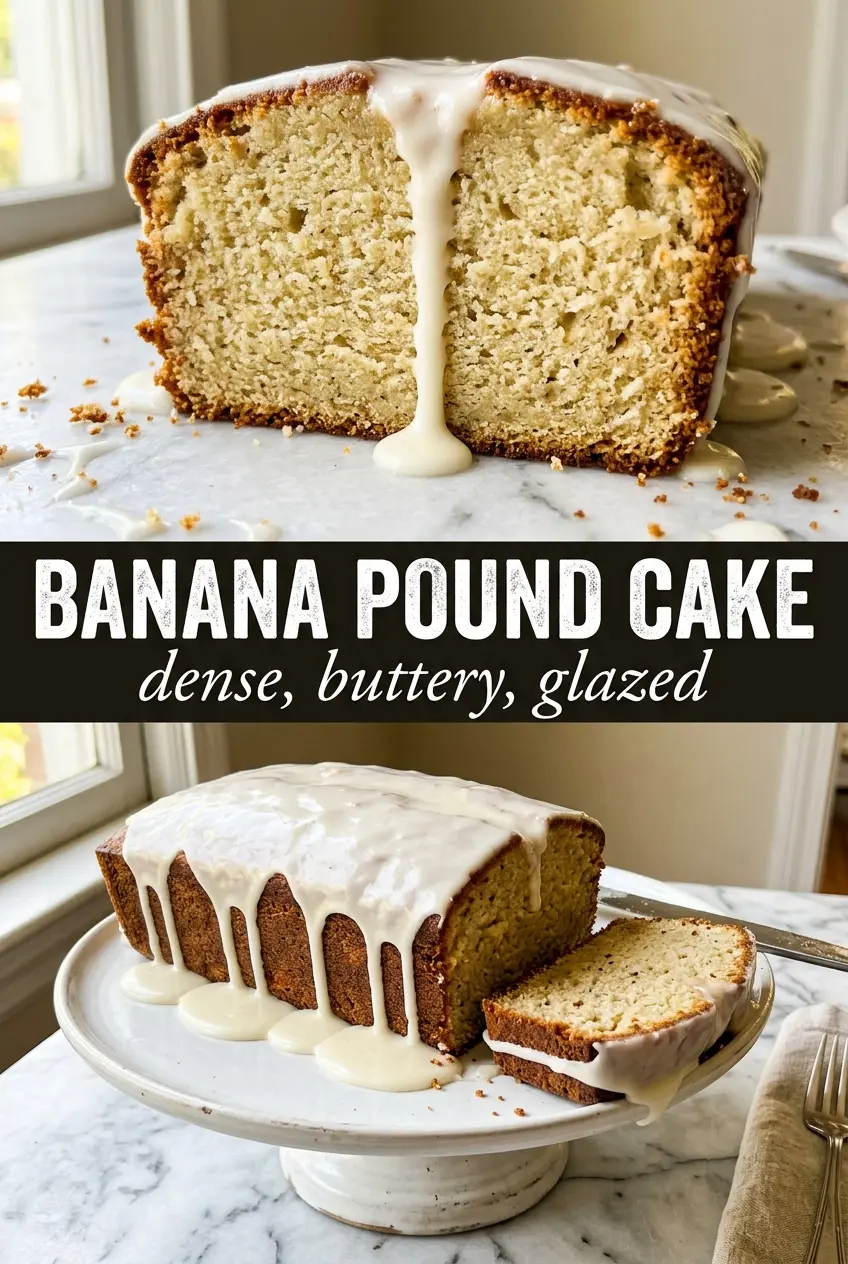
Let the cake rest in the pan for 20 minutes before turning it out. That pause helps it firm up enough to release cleanly. Wait until it’s fully cool before drizzling on the glaze, or it will run off the sides and disappear instead of sitting in those glossy ribbons you want.
Three Smart Ways to Work This Banana Pound Cake Into Your Kitchen
Make it dairy-free with the right swap
Use a good plant butter for the dairy butter and a thick unsweetened non-dairy yogurt in place of the sour cream. The cake will still be tender and banana-forward, but the flavor will be a little less rich and the crumb slightly less plush than the original.
Turn it into a loaf cake instead of a Bundt
A large loaf pan gives you a taller, more rustic slice and a little more crust per bite. Just watch the center carefully, because loaf pans often need the full bake time and sometimes a few extra minutes if your pan is deep.
Add chopped pecans for more texture
Fold in about 3/4 cup toasted pecans at the end if you want crunch against the soft crumb. Toasting matters here because raw nuts can taste dull in a cake this rich.
Storage and Reheating
- Refrigerator: Store covered for up to 5 days. The crumb firms up a little in the fridge, but the flavor stays good.
- Freezer: Freeze slices or the whole cake, well wrapped, for up to 2 months. Glaze after thawing for the best look and texture.
- Reheating: Warm slices for 10 to 15 seconds in the microwave or a few minutes in a low oven. Too much heat dries the crumb and makes the glaze sticky instead of glossy.
Answers to the Questions Worth Asking
Banana Pound Cake
Ingredients
Equipment
Method
- Preheat the oven to 325°F, then grease and flour a large loaf pan or bundt pan so the cake releases cleanly.
- Beat the butter and sugar together for 5 minutes until very light and fluffy, scraping the sides once if needed for even aeration.
- Add the eggs one at a time, beating well after each addition, then mix in the vanilla extract and mashed bananas.
- Alternate folding in the flour mixture (all-purpose flour mixed with baking soda, baking powder, and salt) and the sour cream in three additions until just combined.
- Pour the batter into the pan and bake for 65–75 minutes at 325°F until a toothpick comes out clean and the top is deeply golden.
- Cool the cake for 20 minutes in the pan before unmolding so it holds its dense crumb.
- Drizzle the vanilla glaze over the cooled cake so it runs slightly down the sides and sets on the golden crust.
- Whisk powdered sugar with 2–3 tablespoons milk and vanilla extract until smooth and thick enough to drizzle.