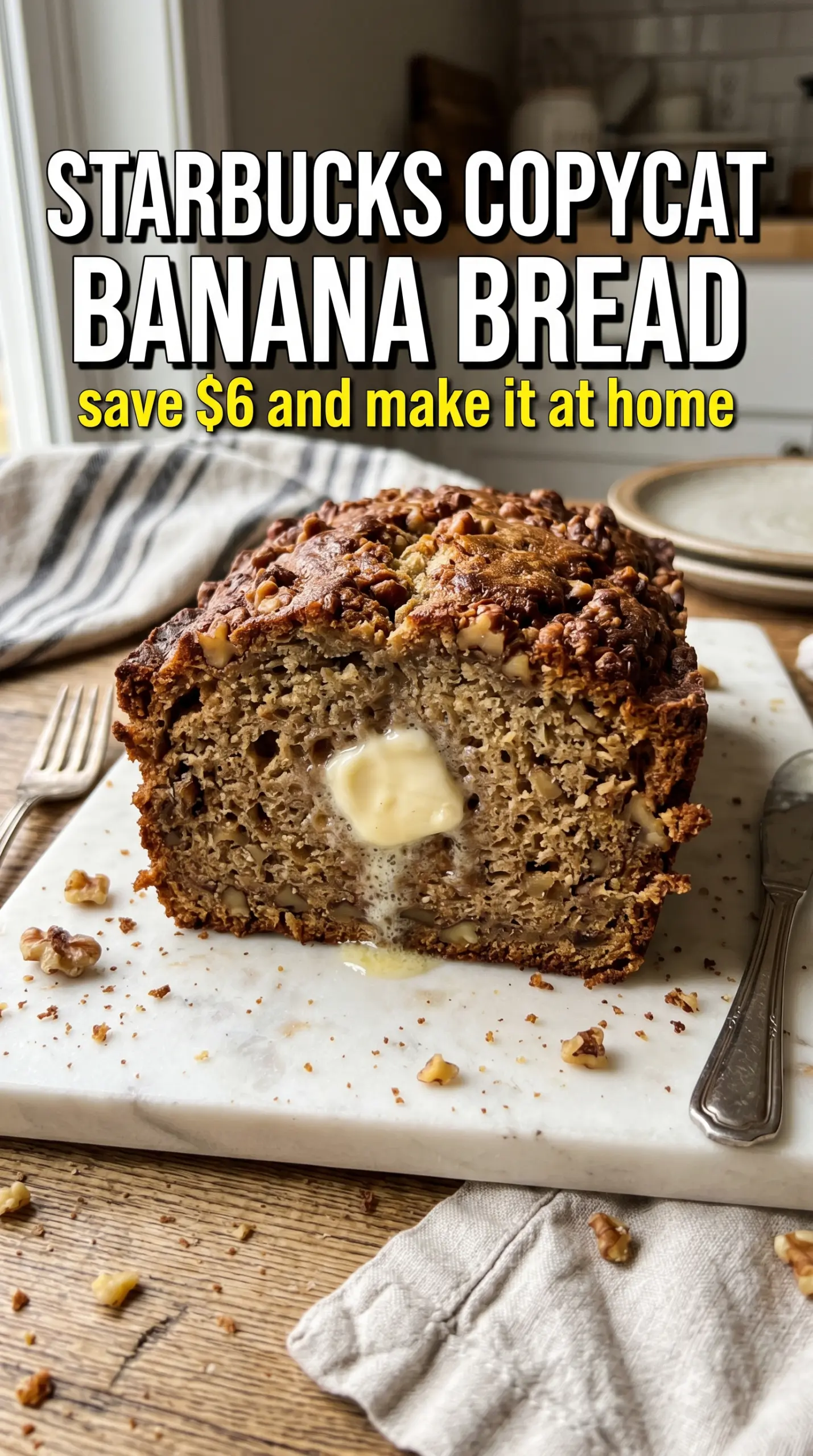
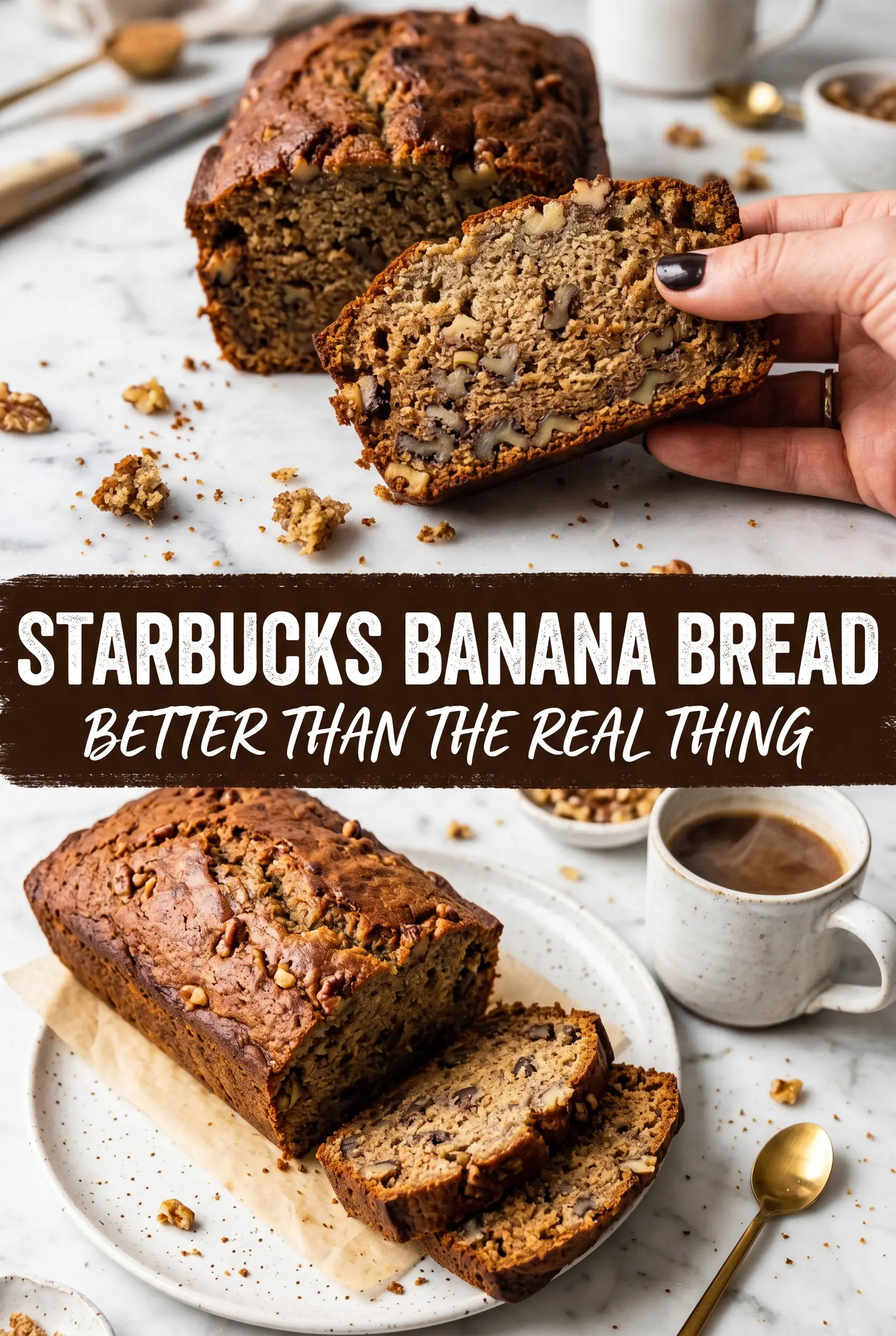
Starbucks-style banana bread has that specific bakery-loaf feel that keeps people coming back for another slice: dense in the best way, deeply golden on top, and full of walnut crunch from the first bite to the last. It’s not a fluffy quick bread that disappears into crumbs. It slices cleanly, holds together on the plate, and tastes even better the next day when the banana flavor settles in and the crust stays just a little caramelized.
The part that makes this version work is the lower baking temperature. A 325°F oven gives the loaf time to cook through without racing the outside into darkness before the center sets. That slower bake is what creates the tight, moist crumb that feels like it came from a coffee shop case instead of a home oven. The walnuts matter too: some go into the batter for texture, and the rest stay on top where they toast against the heat and add that classic bakery finish.
Below, you’ll find the small details that keep the loaf from turning gummy or dry, plus a few smart swaps if you want to adjust the nuts or make it work with what’s already in your kitchen.
The loaf came out just like the one I grab at Starbucks — dense, moist, and the walnuts on top got that perfect toasted crunch. I baked it to 65 minutes and the center set up beautifully without drying out.
Love the dense crumb and toasted walnut top on this Starbucks copycat banana bread? Save it to Pinterest for the mornings when you want that coffee-shop loaf without leaving home.
The Trick Behind That Coffee-Shop Crumb
The biggest mistake people make with banana bread like this is baking it too hot. A fast oven gives you a domed top and a raw center, or worse, a loaf that looks done on the outside and tastes wet and underbaked in the middle. Starbucks-style banana bread is denser than most home recipes, and it needs a slower bake so the structure can set without losing moisture.
The other thing that matters is how far you take the mixing. Once the flour goes in, stop when the dry streaks disappear. Overmixing builds gluten and turns the loaf springy instead of tender. You want a batter that looks thick and slightly rough, not polished and whipped. That’s what gives you the tight, bakery-style slice.
- 325°F oven — Lower heat protects the crumb and keeps the top from overbrowning before the center is cooked through.
- Ripe bananas — The darker and softer they are, the sweeter and more banana-forward the loaf will taste.
- Walnuts on top and inside — Splitting them this way gives you crunch in the batter and a toasted finish on the crust.
- Gentle folding — This keeps the loaf dense and tender instead of tough.
What Each Ingredient Is Actually Doing in This Loaf
The bananas are the backbone here, and the riper they are, the better the loaf tastes. You want bananas with brown speckles at minimum; if they’re nearly black, even better. They bring sweetness, moisture, and that soft, almost jammy texture that makes the bread feel bakery-made.
Butter gives this loaf its rich, rounded flavor and helps create that tender crumb Starbucks banana bread is known for. You can swap in neutral oil in a pinch, but the result will taste less like a coffee shop loaf and more like a standard quick bread. Sugar does more than sweeten here — it helps the top caramelize into that dark, glossy crust. The eggs add structure, so don’t skip the step of adding them one at a time and beating well between additions.
The walnuts are worth using in full measure if you want the classic copycat version. Roughly chopping them keeps the bites varied without turning the loaf sandy. Cinnamon and nutmeg are subtle, not loud; they warm the banana flavor without taking over. If your nutmeg is old and flat, leave it out rather than forcing it.
How to Bake It So the Center Sets Without Drying Out
Building the Batter
Cream the butter and sugar until the mixture looks lighter in color and a little fluffy around the edges. That step helps the loaf rise properly and gives the crumb a bit of lift before the bananas go in. Add the eggs one at a time so the batter stays smooth instead of looking curdled. Once the bananas and vanilla are mixed in, the batter will look loose and a little messy, and that’s exactly right.
Folding in the Dry Ingredients
Add the flour, baking soda, salt, cinnamon, and nutmeg all at once, then fold just until the dry flour disappears. If you keep stirring after that point, the loaf gets tougher and can bake up with tunnels through the center. Fold in half the walnuts last so they stay distributed without sinking. A few streaks are better than a batter that looks overworked.
Baking to Deep Gold
Scrape the batter into the loaf pan, scatter the remaining walnuts on top, and press them in lightly so they cling. Bake until the top is deeply golden and the center tests clean, which usually lands somewhere around 60 to 70 minutes. If the top gets dark before the middle is done, lay a loose piece of foil over it for the last part of baking. The loaf is ready when the crust looks nearly mahogany and a tester comes out with only a few moist crumbs.
How to Adapt This for Different Kitchens and Preferences
Walnut-Free Banana Bread
Leave the walnuts out entirely and bake the loaf as written. You’ll lose the crunchy coffee-shop texture, but the bread still turns out moist and flavorful. If you want some texture without nuts, add a handful of chocolate chips or leave the top plain for a softer crust.
Dairy-Free Version
Use a good plant-based butter in place of the unsalted butter. The loaf will still hold its shape and bake up with a tender crumb, though the flavor will be slightly less rich. Stick with a stick-style dairy-free butter so the fat content matches the original recipe closely.
Make It More Bakery-Style
If you want an even darker top, sprinkle a small spoonful of sugar over the walnut topping before baking. It helps the crust caramelize and gives you that shiny, coffee-shop finish. Don’t overdo it, or the top can turn sticky instead of crisp.
Storage and Reheating
- Refrigerator: Store slices in an airtight container for up to 5 days. The crumb stays moist, but the walnuts soften a little.
- Freezer: This loaf freezes well. Wrap the cooled loaf or individual slices tightly and freeze for up to 3 months.
- Reheating: Warm slices in a 300°F oven for 8 to 10 minutes or toast briefly. The common mistake is microwaving too long, which makes the bread rubbery and dulls the crust.
Answers to the Questions Worth Asking
Starbucks Copycat Banana Bread
Ingredients
Equipment
Method
- Preheat the oven to 325°F (lower and slower than typical) and grease a 9x5 loaf pan. Set the pan aside so it’s ready to fill.
- Beat the softened butter and sugar until light and fluffy. This should look paler and thicker than before.
- Add the eggs one at a time and beat well after each addition. Stop when the mixture looks smooth and fully combined.
- Stir in the mashed bananas and vanilla extract until fully incorporated. Scrape the bowl so there are no dry or streaky spots.
- Fold in the all-purpose flour, baking soda, salt, cinnamon, and nutmeg until just combined. Keep mixing minimal so the crumb stays dense.
- Fold in 1/2 cup of the walnuts. The batter should be evenly speckled but not overmixed.
- Pour the batter into the prepared loaf pan, then scatter the remaining walnuts across the top and press lightly. Arrange them so they’re visibly embedded in the surface.
- Bake for 60–70 minutes at 325°F until deeply golden, with a toothpick coming out clean. The top should be nearly mahogany in color.