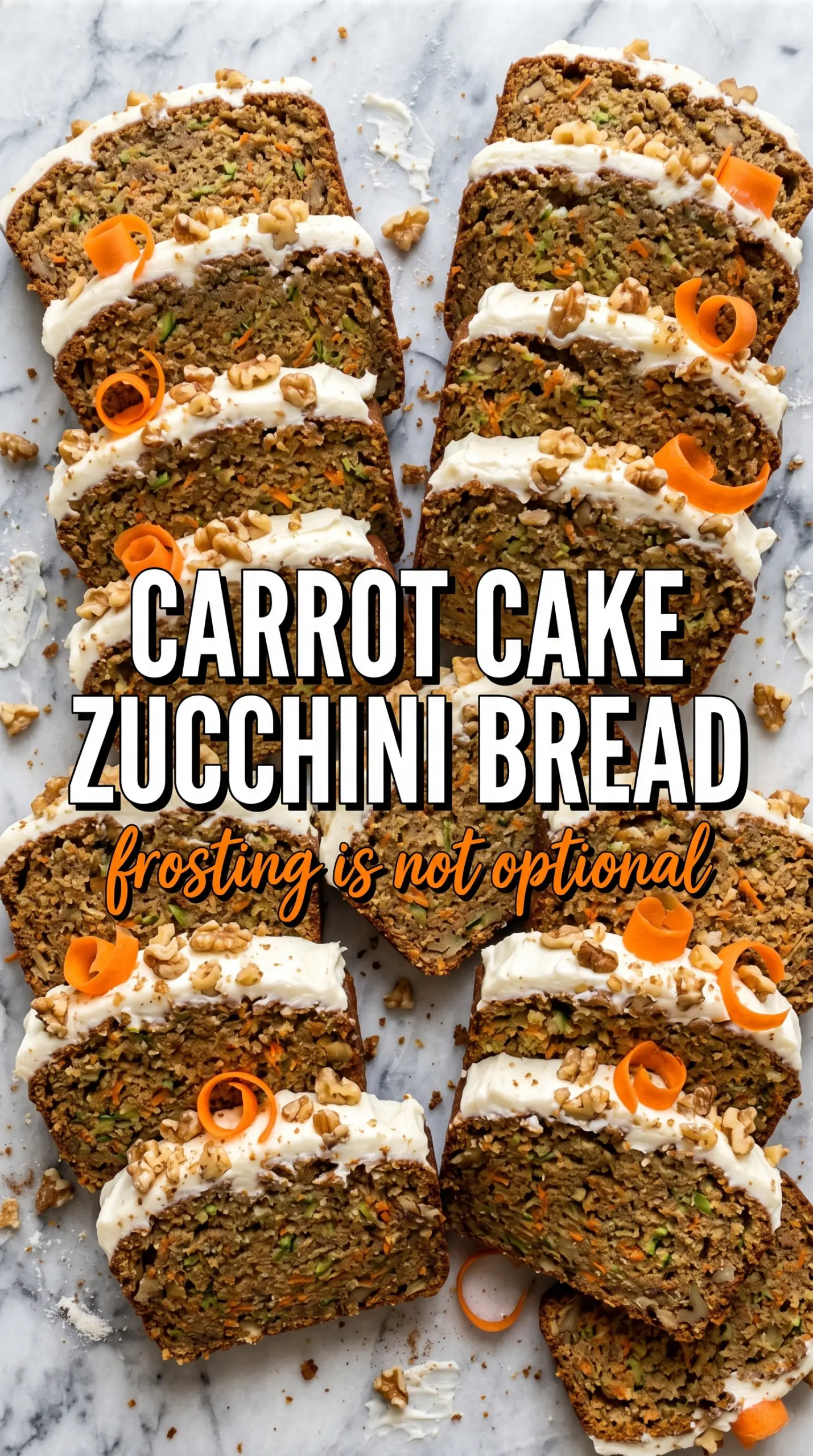
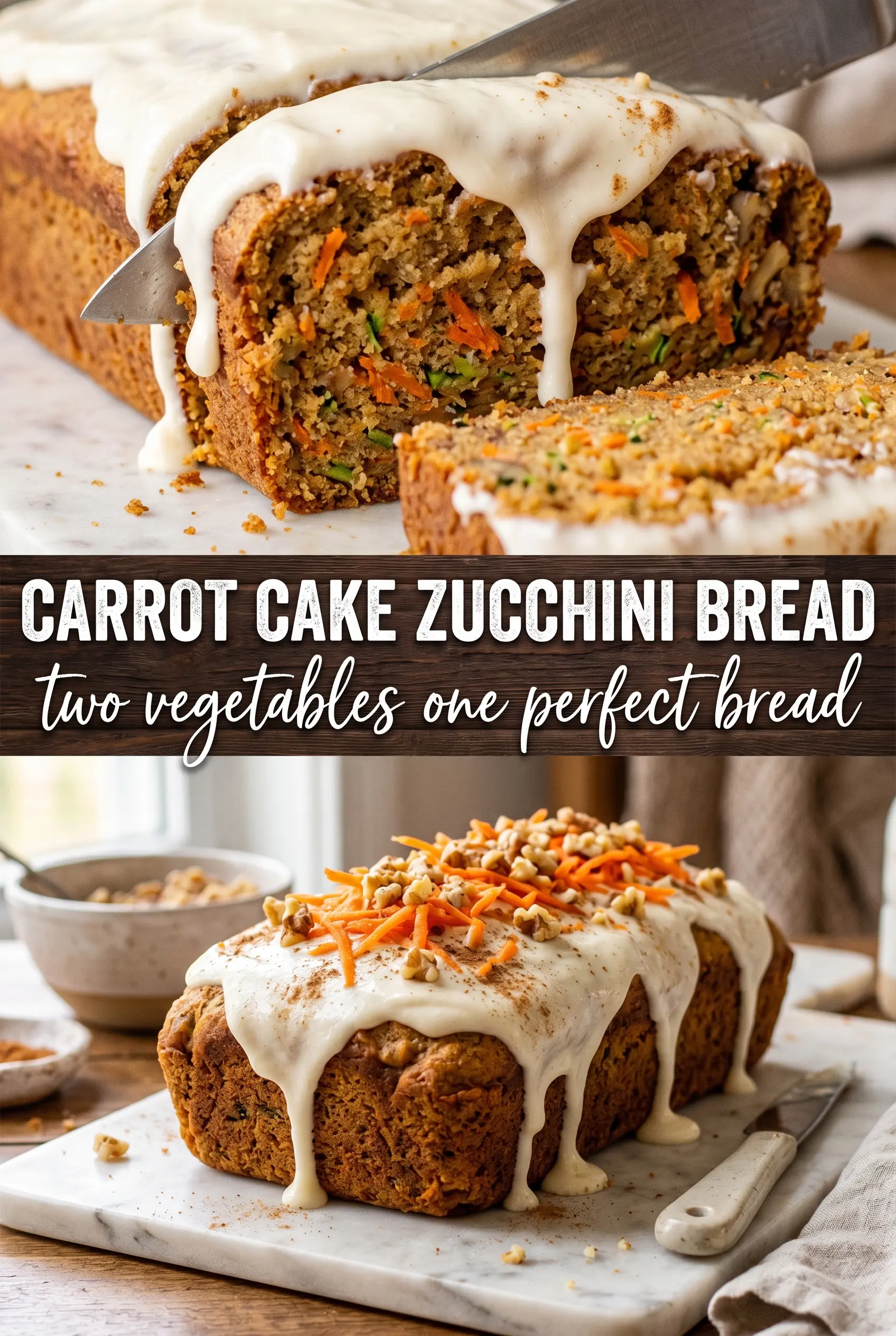
Carrot cake zucchini bread bakes up with a tender crumb, warm spice, and just enough moisture to stay soft for days without turning heavy. The shredded zucchini disappears into the batter, but it quietly keeps the loaf plush while the carrots bring sweetness, color, and that familiar carrot cake texture. With cream cheese frosting on top, it lands somewhere between breakfast bread and dessert, which is exactly why it disappears fast.
The trick here is treating the vegetables like part of the structure, not just add-ins. The zucchini needs to be grated fine and squeezed dry so it doesn’t water down the batter, while the carrots should be finely grated so they soften fully in the oven. Brown sugar gives the loaf a deeper, molasses note that plays well with cinnamon, ginger, and nutmeg, and the Greek yogurt adds a little tang and tenderness without making the crumb greasy.
Below you’ll find the small details that make this loaf bake evenly, plus a frosting that spreads smoothly instead of tearing into the bread. If you’ve had vegetable quick breads come out dense or gummy before, the process notes will help that stop happening.
The loaf stayed incredibly moist for three days, and the frosting set up thick instead of sliding off. I also loved that the zucchini completely disappeared into the crumb while the carrots gave it that classic carrot cake texture.
Like this carrot cake zucchini bread? Save it to Pinterest for the day you want a spiced loaf with cream cheese frosting and a soft, moist crumb.
The Real Reason This Loaf Stays Tender Instead of Heavy
Most vegetable quick breads go wrong for one of two reasons: the batter is overmixed, or the vegetables bring too much extra moisture into the pan. This loaf avoids both. The zucchini is squeezed dry before it goes in, and the batter is folded just until the flour disappears. That leaves the crumb soft and even instead of tight and gummy.
The other thing that matters here is balance. Brown sugar, oil, and Greek yogurt work together to keep the loaf moist without making it greasy. If you skip the yogurt or dump in the zucchini without draining it, the center can sink and stay damp long after the edges have set.
- Zucchini — Grate it fine and squeeze it in a clean towel or paper towels until it feels noticeably drier. You don’t want it bone dry; you just want to remove the water that would otherwise loosen the batter.
- Carrots — Use the fine side of a box grater so they soften while the bread bakes. Thick shreds can stay a little firm and make the slice less cohesive.
- Greek yogurt — This adds tang and a little extra body. Sour cream works too if that’s what you have, but plain yogurt keeps the crumb a little lighter.
- Brown sugar — The molasses note deepens the spice and gives the loaf a softer texture than white sugar would. Packed light or dark brown sugar both work here.
What Each Ingredient Is Actually Doing in This Loaf
- All-purpose flour — Gives the loaf its structure. Bread flour is too strong here and can make the crumb chewy instead of tender.
- Baking soda and baking powder — The combination gives a reliable rise and keeps the loaf from tasting flat. The yogurt helps activate the soda, so the bread lifts without needing a lot of extra leavening.
- Cinnamon, ginger, and nutmeg — These are what push the loaf into carrot cake territory. Cinnamon carries the flavor, while ginger and nutmeg keep it from tasting one-note.
- Vegetable oil — Oil keeps the bread soft even after refrigeration, which is especially useful once the frosting goes on. Melted coconut oil can work, but it may firm up a little more when chilled.
- Raisins or pecans — Both are optional, but they add contrast. Raisins give sweetness and chew; pecans add crunch and a toasty note.
- Cream cheese frosting — Softened cream cheese is nonnegotiable here, or you’ll end up with lumps that won’t smooth out. If the frosting looks too thick, add the milk a teaspoon at a time until it spreads cleanly.
How to Build the Batter and Bake It Through
Mix the dry ingredients first
Whisk the flour, leaveners, salt, and spices together until the color looks even and you don’t see any streaks of cinnamon or clumps of baking powder. That step matters more than it sounds, because it keeps the spice from concentrating in one bite and helps the loaf rise evenly. If the dry mix isn’t fully combined, you can end up with bitter little pockets or a lopsided dome.
Whip the wet base until it looks smooth
Beat the brown sugar, eggs, oil, yogurt, and vanilla together until the mixture looks glossy and thick, not separated. You’re not trying to whip in air like a cake batter; you’re trying to dissolve the sugar and create a base that will hold the vegetables evenly. If it looks curdled, keep mixing for another 15 to 20 seconds and it usually comes together.
Fold in the vegetables without crushing them
Stir in the zucchini and carrots first, then add the dry ingredients and fold just until no dry flour remains. Stop as soon as the batter looks combined. Overmixing is what turns quick bread rubbery, and it gets worse once the vegetables start releasing moisture in the oven.
Watch the center, not the clock
Bake at 350°F for 55 to 65 minutes, but start checking early if your pan runs hot. The top should be set and deeply golden, and a toothpick inserted in the center should come out clean or with a few dry crumbs. If the top browns too quickly while the middle is still loose, lay a piece of foil over it for the last 10 to 15 minutes.
Cool before frosting
Let the loaf cool completely before you spread on the cream cheese frosting. If the bread is even slightly warm, the frosting will melt and slide into the cracks instead of sitting on top in a thick layer. A fully cooled loaf also slices cleaner, which matters if you want those neat swirls on top to stay put.
How to Adapt This for Different Kitchens and Diets
Make it dairy-free
Swap the Greek yogurt for an equal amount of unsweetened dairy-free yogurt, and replace the cream cheese frosting with a dairy-free cream cheese alternative. The loaf itself stays moist, though the frosting may be a little softer and need a short chill before slicing.
Skip the frosting for breakfast
Leave off the frosting and you get a less-sweet loaf that works better for mornings. A dusting of powdered sugar or a thin vanilla glaze will give you a lighter finish without the full cream cheese topping.
Add pecans for more texture
Pecans bring crunch and a toasted, buttery note that fits the spice beautifully. Fold them in at the very end so they stay evenly distributed instead of sinking toward the bottom of the pan.
Make it ahead
Bake the loaf a day ahead and frost it once it’s fully cool. The flavor settles overnight, and the crumb slices a little cleaner the next day.
Storage and Reheating
- Refrigerator: Store covered for up to 5 days. The frosting stays firm and the crumb stays moist, though the loaf will taste best after sitting at room temperature for a few minutes.
- Freezer: Freeze the unfrosted loaf tightly wrapped for up to 2 months. Frost after thawing for the best texture, since cream cheese frosting doesn’t always thaw as neatly.
- Reheating: Warm slices briefly in the microwave for 10 to 15 seconds if you want them soft again. If the loaf is frosted, use short bursts so the topping doesn’t melt off the sides.
Questions I Get Asked About This Recipe
Carrot Cake Zucchini Bread
Ingredients
Equipment
Method
- Preheat the oven to 350°F and grease a 9x5 loaf pan. Set it up on a sheet pan for easier handling.
- Whisk all-purpose flour, baking soda, baking powder, salt, cinnamon, ginger, and nutmeg in a bowl until evenly combined. Stop when there are no visible spice clumps.
- Beat brown sugar, eggs, vegetable oil, Greek yogurt, and vanilla extract until smooth. Scrape down the sides as needed.
- Stir in zucchini and carrots until the batter looks evenly speckled. Press any excess moisture from zucchini out again if needed.
- Fold the dry ingredients into the wet ingredients until just combined. Fold in raisins or pecans if using and do not overmix.
- Bake at 350°F for 55–65 minutes, until a toothpick comes out clean. Use the center as the test spot.
- Cool the loaf completely before frosting, about 20 minutes. Wait for the loaf to be cool to the touch so the frosting stays thick.
- Beat cream cheese, powdered sugar, vanilla, and milk until smooth. Spread generously over the cooled loaf, leaving swirls on top.