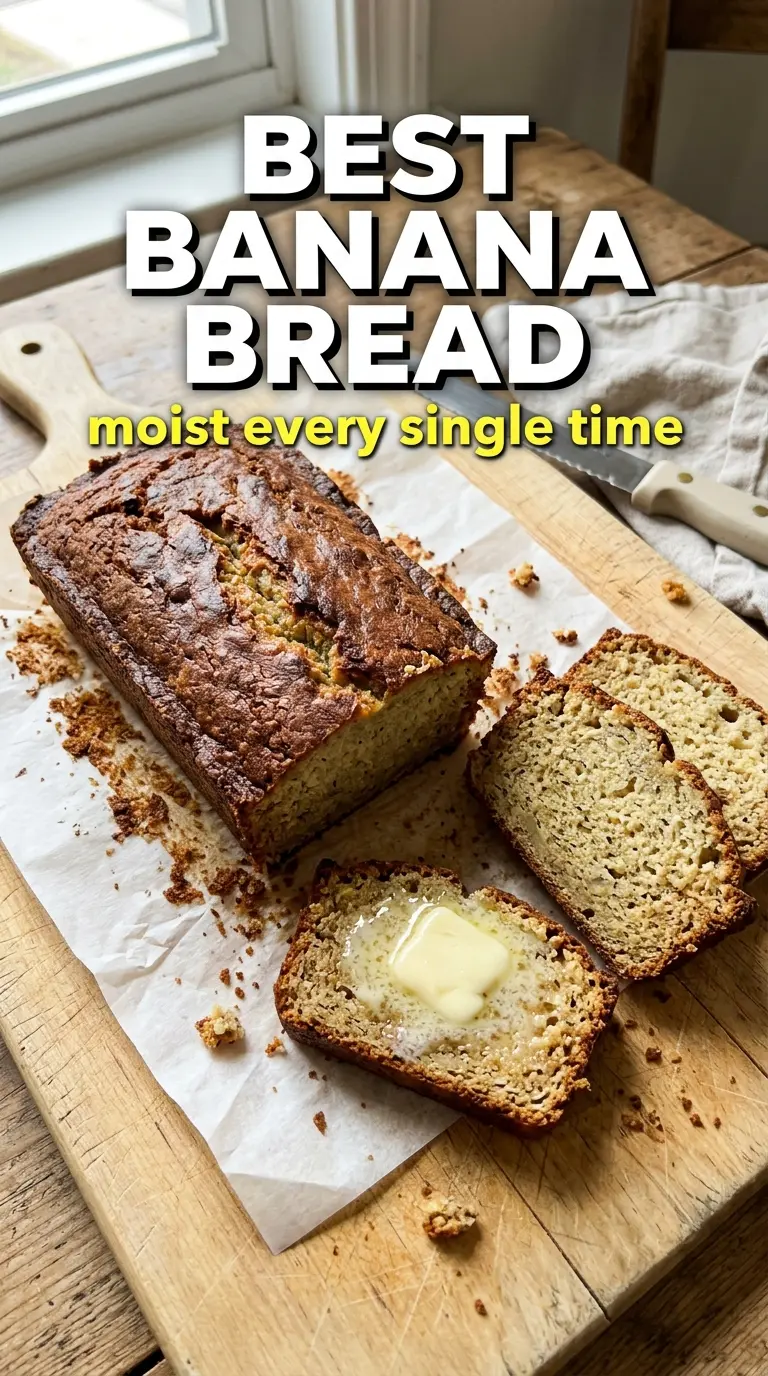
Banana bread earns its spot in the rotation when the crumb stays tender for days and the top bakes up dark golden with that thin, crackly crust every good loaf should have. The best versions taste like real banana first, not just sweetness and spice, and they slice cleanly once cooled without turning gummy in the middle.
The trick is using bananas that are past the point of eating plain — the skins should be heavily spotted or nearly black, because that extra ripeness gives you deeper banana flavor and natural moisture. Melted butter keeps the method simple and gives the loaf a richer, softer crumb than oil, while a small amount of cinnamon rounds out the banana without taking over.
Below, I’m walking through the small details that matter most: how to mix the batter without making it tough, how to tell when the center is actually baked through, and what to do if your bananas are ripe but not quite ripe enough yet.
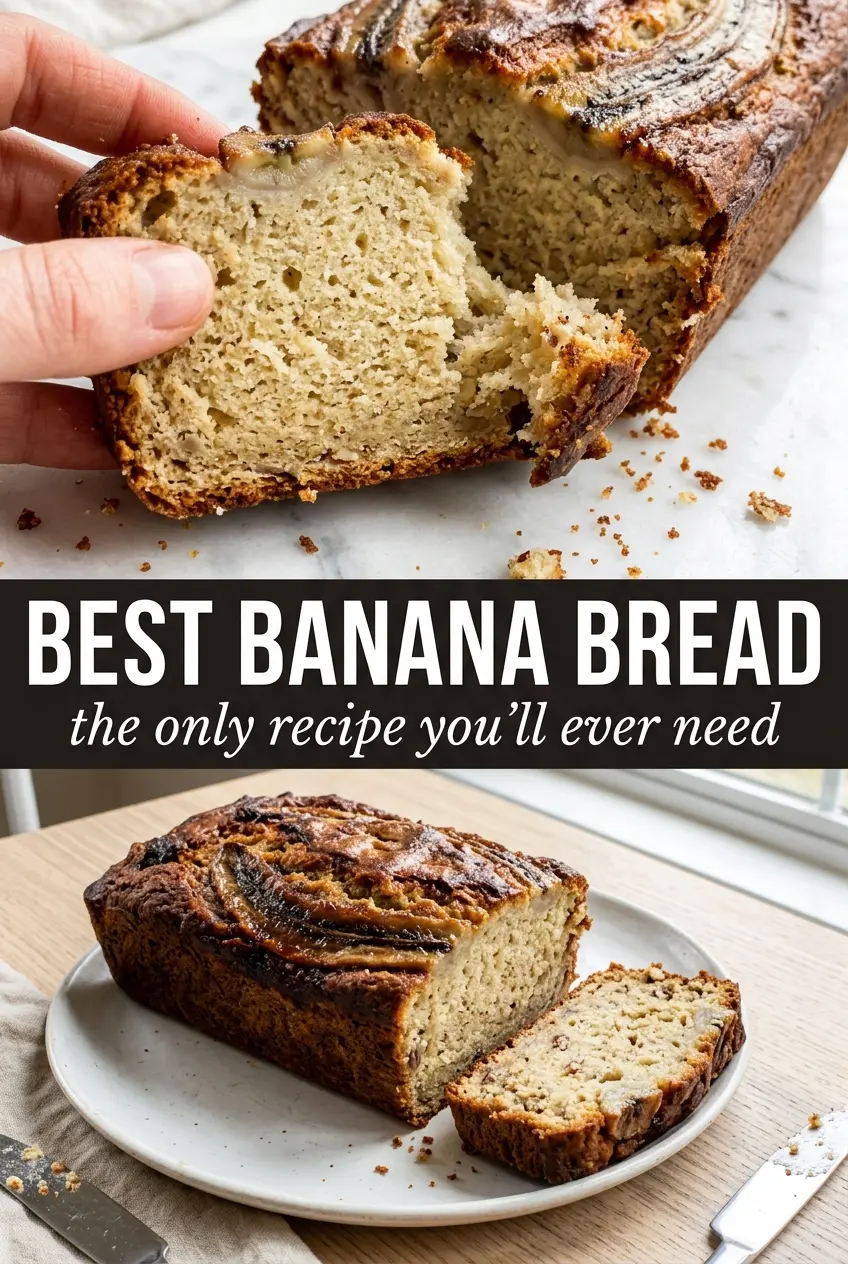
The loaf came out with a moist crumb and that deep caramelized top I always hope for. I baked it right at 65 minutes and the center was set without drying out, which never happens with my old banana bread recipe.
Classic banana bread with a moist, caramelized crumb — save this loaf for the mornings when you want something simple that still tastes bakery-worthy.
The Banana Ripeness Test That Makes or Breaks the Loaf
Banana bread gets blamed for being bland or dry when the real problem is usually the fruit. Yellow bananas with a few brown specks won’t give you the same depth as soft, heavily spotted bananas, because the starch hasn’t fully turned into sugar yet. The loaf will still bake, but the flavor lands flatter and the crumb can taste more starchy than plush.
This recipe also depends on a gentle mix. Once the flour goes in, stop as soon as the dry streaks disappear. If you beat the batter hard at that point, the loaf tightens up and bakes with tunnels instead of an even, tender crumb. A slightly shaggy batter is exactly what you want before it goes into the pan.
- Very ripe bananas — These carry the moisture and the deep banana flavor. If yours are only partly ripe, roast them in their peels at 300°F until the skins darken and the flesh softens, then cool before mashing.
- Melted butter — Butter gives the loaf a richer taste than oil and helps create that classic banana bread texture. Melt it first so it blends easily with the bananas instead of leaving little fat pockets in the batter.
- Cinnamon — This doesn’t make the loaf taste like spice cake. It just lifts the banana flavor and adds warmth to the crust.
- All-purpose flour — Plain flour is the right choice here because it keeps the crumb soft without becoming fragile. Bread flour makes the loaf chewier than it should be.
What Each Ingredient Is Actually Doing in This Banana Bread or Baked Good
- Bananas (the moisture and sweetness) — Use very ripe bananas for maximum sweetness. Overripe is actually better here.
- Flour (the structure base) — Don’t overmix or the baked good becomes tough. Mix just until dry ingredients are incorporated.
- Sugar (the sweetness) — Ripe bananas are already sweet, so adjust sugar slightly if desired. Don’t reduce too much or it becomes dry.
- Butter or oil (the richness) — This creates tender crumb. Oil makes moister baked goods; butter adds richness.
- Eggs (the binder and lift) — These hold everything together and help the baked good rise. Use room temperature eggs.
- Leavening (baking soda or powder) — This creates rise and light texture. Too much makes it taste bitter.
- Vanilla extract (the flavor enhancer) — This brings out banana flavor. Use quality vanilla extract.
- Optional mix-ins (nuts, chocolate, or dried fruit) — These add texture and prevent one-dimensional flavor.
Building the Batter Without Beating the Crumb Tight
Start with the Bananas and Butter
Mash the bananas in a large bowl until they’re mostly smooth but still have a few small lumps for texture. Whisk the melted butter straight into the bananas while it’s still warm, not piping hot, so it blends cleanly without cooking the fruit. The mixture should look glossy and loose before you add the sugar, egg, and vanilla.
Fold in the Dry Ingredients Last
Sprinkle the flour, baking soda, salt, and cinnamon over the wet mixture and fold with a spatula until the flour disappears. Stop the second you no longer see dry pockets. If you keep stirring after that point, the loaf bakes up tougher and the middle can turn dense instead of soft.
Bake Until the Center Has Just Set
Pour the batter into a greased 9×5 loaf pan and bake at 350°F until the top is deeply golden and the center tests clean with a toothpick. Start checking near the 60-minute mark, because oven heat and pan material can shift the timing. If the top browns too fast before the center is done, tent it loosely with foil for the last stretch.
Cool Before Slicing
Let the loaf rest in the pan for 10 minutes, then turn it onto a rack. The crumb is still finishing its set while it’s hot, so slicing too soon can make the middle collapse and look underbaked even when it isn’t. Wait until it’s just warm before cutting for the cleanest slices.
How to Tweak This Banana Bread Without Losing What Makes It Good
Make it dairy-free
Swap the butter for an equal amount of melted coconut oil or a neutral oil. Coconut oil keeps a richer feel, while neutral oil gives you the softest crumb, but neither will taste quite as buttery as the original loaf.
Add walnuts or chocolate chips
Fold in up to 3/4 cup of chopped walnuts or chocolate chips at the very end. Walnuts add crunch and a little bitterness that balances the sweetness, while chocolate turns the loaf into a more dessert-like slice.
Make it less sweet
Drop the sugar to 1/2 cup if your bananas are extremely ripe and you prefer a more breakfast-style loaf. The texture stays tender, but the top will brown a little less deeply and the flavor reads more banana-forward than dessert-like.
Storage and Reheating
- Refrigerator: Store tightly wrapped at room temperature for 3 days or in the fridge for up to 5 days. The crumb firms up a little in the fridge, but the flavor holds well.
- Freezer: Banana bread freezes beautifully. Wrap the whole loaf or individual slices in plastic, then foil, and freeze for up to 3 months.
- Reheating: Thaw at room temperature, then warm slices in a toaster oven or low oven for a few minutes. Microwaving works in a pinch, but long bursts make the crumb rubbery instead of soft.
Questions I Get Asked About This Recipe
Best Banana Bread
Ingredients
Equipment
Method
- Preheat the oven to 350°F and grease a 9x5 loaf pan. Position a rack in the middle so the loaf browns evenly.
- Melt the butter and whisk it directly into the mashed bananas in a large bowl. Stir until the mixture looks glossy and evenly colored.
- Stir in the sugar, egg, and vanilla until well combined. Mix just until smooth with no streaks of dry egg or vanilla.
- Sprinkle the flour, baking soda, salt, and cinnamon over the banana mixture and fold in. Stop when no dry streaks remain and the batter looks thick.
- Pour the batter into the prepared loaf pan and place it in the oven. Bake for 60–70 minutes, until the top is deeply golden and a toothpick comes out clean.
- Cool the loaf in the pan for 10 minutes. This firms the crumb so it releases cleanly without tearing.
- Turn the loaf out onto a rack and let it cool slightly before slicing. Wait until it’s cool enough that the crumb holds together when cut.