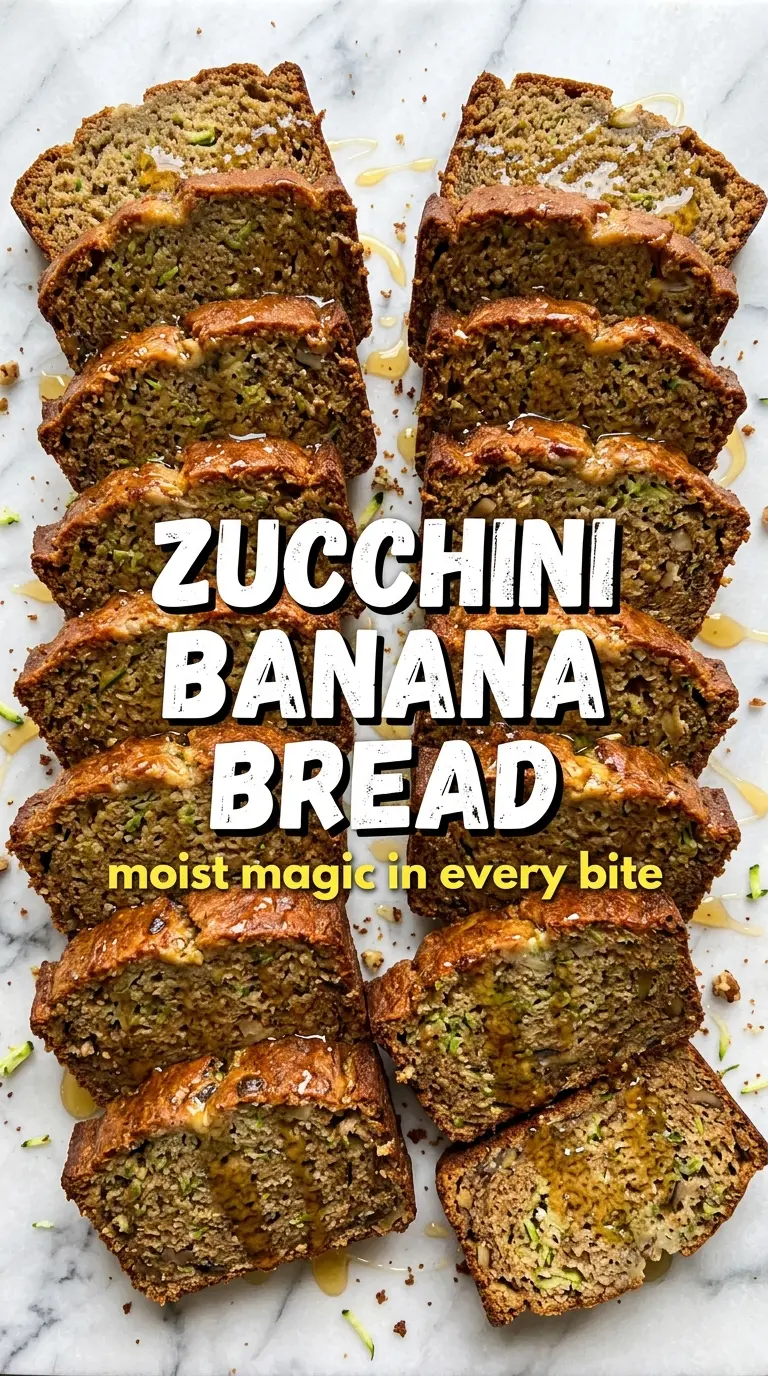
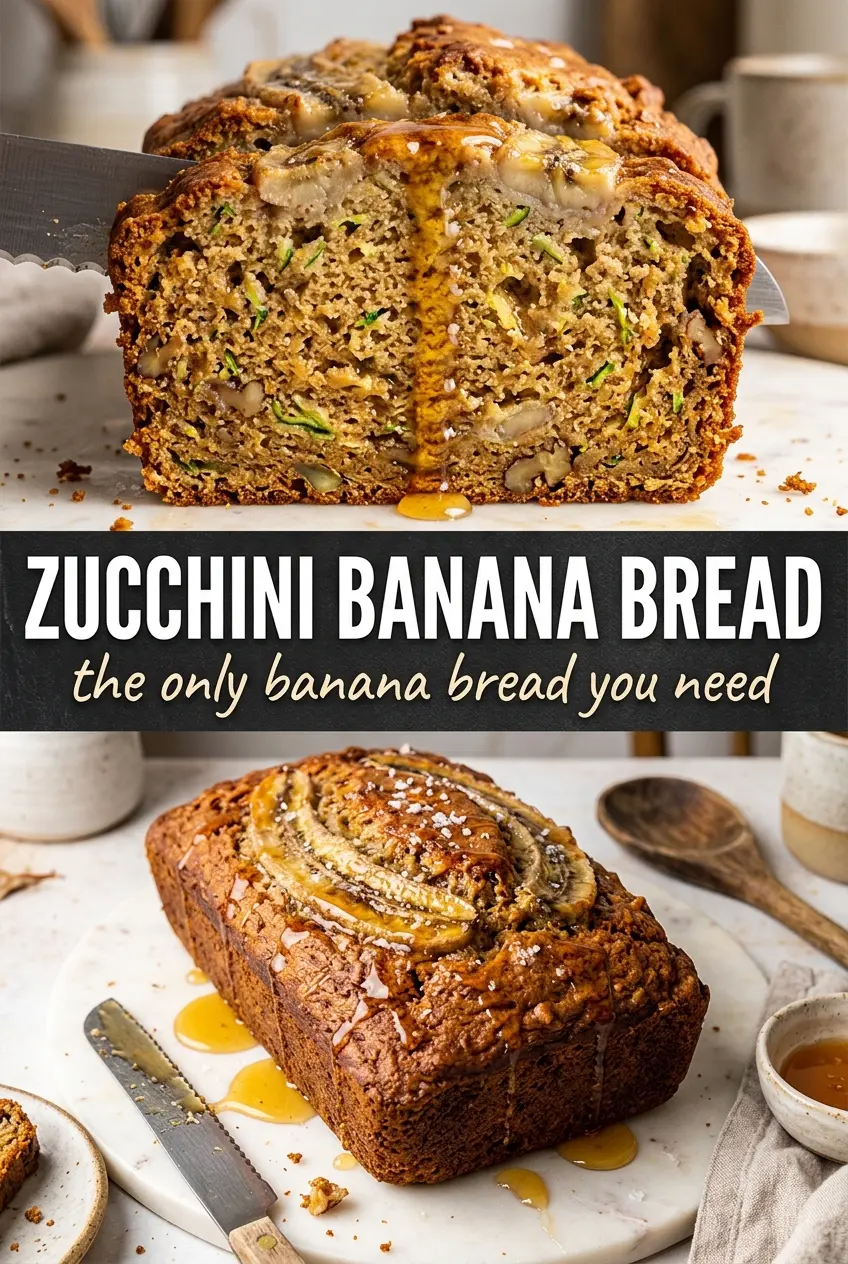
Big banana flavor, a tender crumb, and a loaf that stays moist for days — that’s what makes zucchini banana bread worth baking again and again. The zucchini doesn’t make it taste like vegetables; it melts into the batter and keeps the loaf soft without turning it heavy. What you get is classic banana bread with a little extra body and a crust that bakes up golden and fragrant.
The key is using bananas that are deeply spotted and squeezing the zucchini dry before it goes into the bowl. Bananas bring sweetness and flavor, while the zucchini brings moisture, but too much liquid from either one can push the loaf toward gummy. I also like a mix of granulated sugar and brown sugar here because the brown sugar adds a deeper, almost caramel note that plays well with the cinnamon.
Below, I’ve laid out the part that matters most: how to keep the loaf moist instead of wet, how to avoid overmixing, and how to adapt it if you want walnuts, chocolate chips, or a gluten-free version.
The loaf baked up with a perfect golden crust and stayed soft all the way through. I squeezed the zucchini dry like you said, and it sliced cleanly without getting dense or wet in the middle.
Pin this moist zucchini banana bread for the days when your bananas are too ripe to ignore and you want a soft, golden loaf that uses them up beautifully.
The Reason This Loaf Stays Moist Without Turning Dense
Quick breads usually go wrong in one of two ways: they bake up dry because there isn’t enough moisture, or they turn gummy because there’s too much and the batter was overworked. Zucchini banana bread sits right on that line. The bananas bring natural sweetness and softness, while the zucchini adds moisture without much flavor of its own, so the loaf tastes rich without feeling heavy.
The biggest fix is squeezing the zucchini dry before adding it. That step matters more than people think. A handful of extra water from the zucchini can keep the center from setting cleanly, especially in a standard 9×5 loaf pan where the middle already needs time to catch up with the edges. The other trap is mixing after the flour goes in. Stir only until the dry streaks disappear, because overmixing develops gluten and gives you a tight, rubbery loaf instead of a tender one.
- Very ripe bananas — Use bananas with deep brown speckles and soft spots. They mash more smoothly, taste sweeter, and bring the banana flavor that makes the loaf worth baking.
- Zucchini — Medium zucchini works best. Grate it finely, then squeeze it dry in a clean kitchen towel or a few layers of paper towels. You want moisture in the loaf, not water pooling in the batter.
- Brown sugar — This gives the bread a deeper flavor and helps the crumb stay soft. If you only have granulated sugar, the loaf still works, but it loses some of that warm, caramel edge.
- Oil — Oil keeps quick bread moist longer than butter does. Melted butter adds more flavor, but it sets firmer once cooled. Oil is the better choice if you want that soft, bendy crumb that still slices neatly.
- Walnuts or chocolate chips — These are optional, but they add texture. Walnuts bring crunch and a toasty note; chocolate chips lean dessert-like and melt into the batter. Fold them in at the very end so they don’t sink.
What Each Ingredient Is Actually Doing in This Banana Bread or Baked Good
- Bananas (the moisture and sweetness) — Use very ripe bananas for maximum sweetness. Overripe is actually better here.
- Flour (the structure base) — Don’t overmix or the baked good becomes tough. Mix just until dry ingredients are incorporated.
- Sugar (the sweetness) — Ripe bananas are already sweet, so adjust sugar slightly if desired. Don’t reduce too much or it becomes dry.
- Butter or oil (the richness) — This creates tender crumb. Oil makes moister baked goods; butter adds richness.
- Eggs (the binder and lift) — These hold everything together and help the baked good rise. Use room temperature eggs.
- Leavening (baking soda or powder) — This creates rise and light texture. Too much makes it taste bitter.
- Vanilla extract (the flavor enhancer) — This brings out banana flavor. Use quality vanilla extract.
- Optional mix-ins (nuts, chocolate, or dried fruit) — These add texture and prevent one-dimensional flavor.
Building the Batter So the Center Bakes Through
Mix the Dry Ingredients First
Whisk the flour, baking soda, baking powder, salt, and cinnamon together before they ever touch the wet ingredients. That gives you even lift and keeps you from biting into a pocket of baking soda. If your loaf ever tastes slightly metallic, unevenly mixed leaveners are usually the reason.
Start With the Bananas and Sugar
Mash the bananas until mostly smooth, then stir in the sugars, eggs, oil, and vanilla. The mixture should look glossy and loose, not fluffy. You’re building a wet base here, and that looseness helps the zucchini blend in without clumping.
Fold in the Zucchini, Then Stop Early
Once the zucchini goes in, stir just enough to distribute it. Add the dry ingredients next and fold until you no longer see flour, then stop. If you keep going, the batter tightens up fast and the finished loaf bakes up with a tougher crumb and a sunken center.
Watch the Loaf Pan, Not the Clock
Bake at 350°F until the top is deep golden and a toothpick in the center comes out clean or with a few moist crumbs. The middle should feel set when you press it lightly, but not hard. If the top browns too fast before the center cooks, lay a loose sheet of foil over the pan for the last 15 minutes.
Three Ways to Change the Loaf Without Losing What Makes It Work
Make It Gluten-Free With a 1:1 Baking Flour
A good cup-for-cup gluten-free flour blend works here because the loaf already has a soft, moist structure. Use the same amount by volume and don’t add extra liquid. The texture will be a little more delicate, but it still slices well once fully cooled.
Skip the Dairy and Keep It Dairy-Free
This recipe is already naturally dairy-free as written if you leave out the optional chocolate chips or use dairy-free chips. Oil does the moisture work that butter would usually do, so you don’t lose anything by keeping it this way. It’s one of the easier swaps because there’s nothing to compensate for.
Turn It Into a Dessert-Style Loaf
Use chocolate chips instead of walnuts and add an extra pinch of cinnamon. The chocolate softens into the crumb and makes the bread taste closer to a bakery-style treat than a breakfast loaf. Just keep the add-ins to about half a cup so the batter still bakes evenly.
Storage and Reheating
- Refrigerator: Store sliced or whole in an airtight container for up to 5 days. The crumb stays moist, but the texture firms up a bit in the fridge.
- Freezer: This freezes well. Wrap the cooled loaf or individual slices tightly, then freeze for up to 3 months. Slices thaw faster and keep the best texture.
- Reheating: Warm slices in the toaster oven or microwave just until barely heated. Don’t blast it for too long or the loaf turns dry at the edges while the center stays cold.
Questions I Get Asked About This Recipe
Zucchini Banana Bread
Ingredients
Equipment
Method
- Preheat oven to 350°F (175°C) and grease a 9x5 loaf pan.
- Position the rack in the center of the oven so the loaf bakes evenly.
- Whisk all-purpose flour, baking soda, baking powder, salt, and cinnamon together until evenly combined.
- Mash very ripe bananas until smooth in a large bowl.
- Stir in granulated sugar, brown sugar, eggs, vegetable oil, and vanilla extract until the mixture looks cohesive.
- Stir in grated, squeezed-dry zucchini until it is evenly distributed.
- Fold dry ingredients into the wet mixture just until no dry streaks remain.
- Fold in walnuts or chocolate chips if using.
- Pour the batter into the greased 9x5 loaf pan and level the top.
- Bake at 350°F (175°C) for 55–65 minutes, until deep golden and a toothpick in the center comes out clean.
- Cool in the pan for 15 minutes before slicing.
- Slice once slightly cooled so the tender crumb holds together.