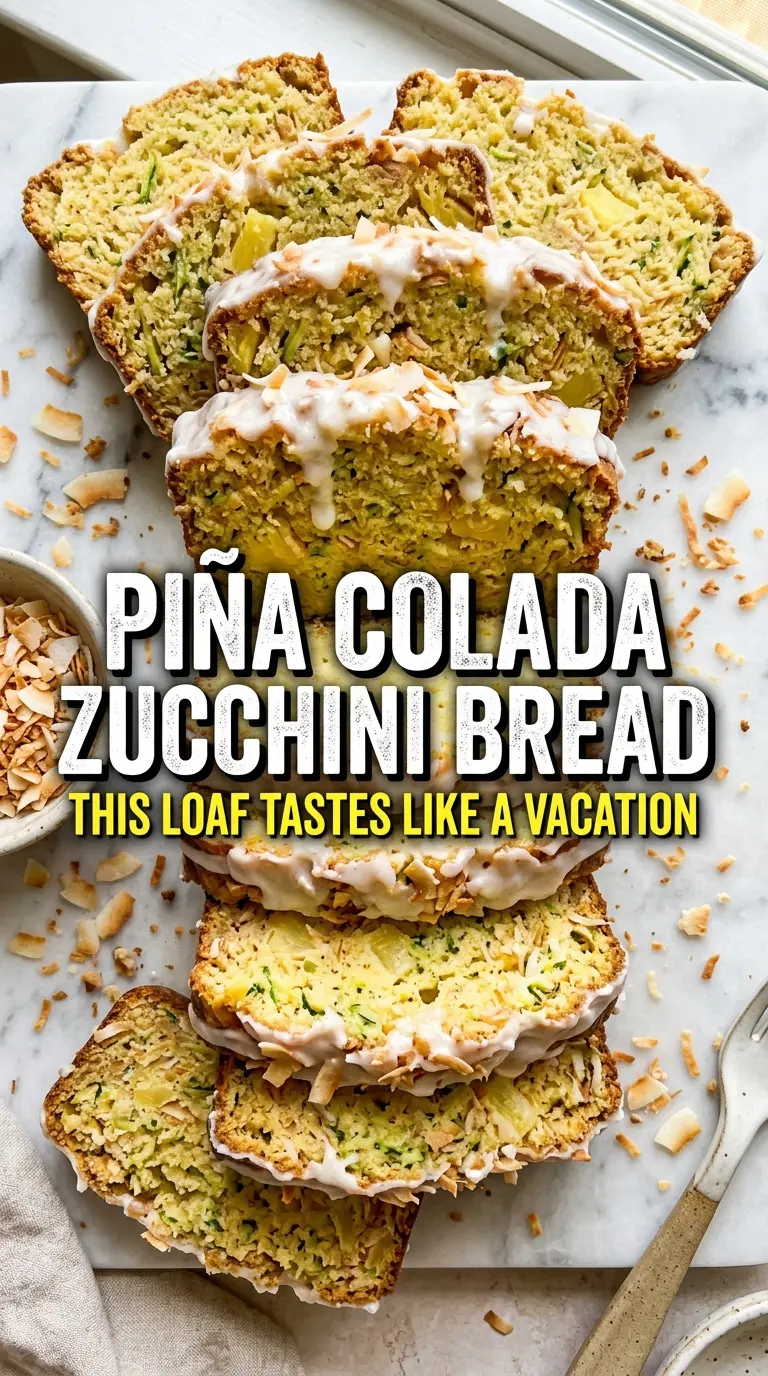
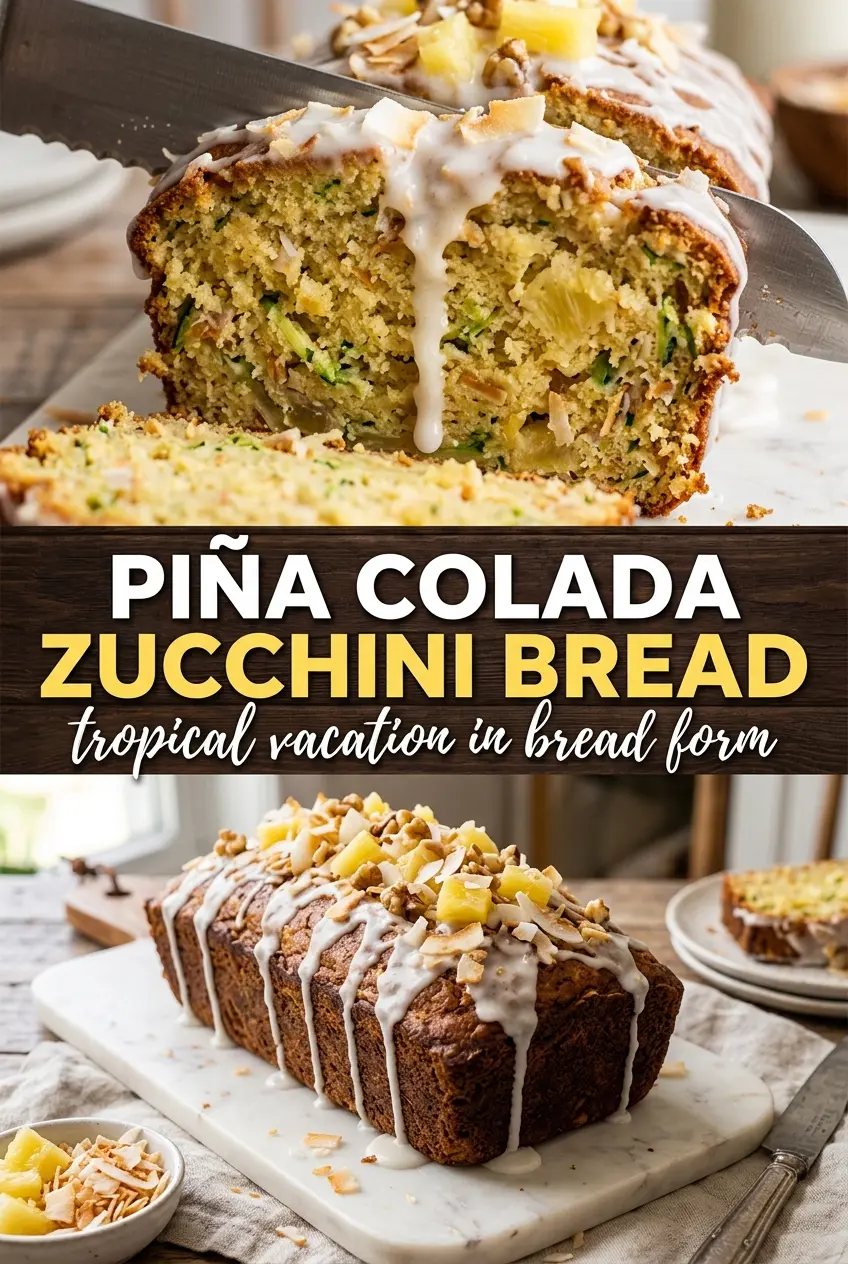
Piña colada zucchini bread bakes up with a soft, tender crumb, scattered pockets of pineapple, and a coconut glaze that settles into every slice. It tastes like a little vacation, but it still has the satisfying structure you want from a good quick bread: moist without being dense, sweet without turning cakey, and sturdy enough to slice cleanly once it cools.
The trick is balance. Zucchini brings moisture, but it needs to be squeezed dry so the loaf doesn’t turn heavy. Crushed pineapple adds bright sweetness and flavor, yet it also needs a thorough drain so the batter doesn’t get watery. Coconut oil, coconut cream, and coconut extract work together here, but each one has a job: oil keeps the crumb soft, cream adds richness, and extract pushes the tropical flavor without making the bread taste artificial.
Below you’ll find the little details that matter most, including how to keep the loaf from sinking in the center and how to get the glaze thick enough to drizzle instead of running off the sides.
The loaf stayed incredibly tender, and the pineapple was bright without making it soggy. I drained it like you said and the glaze set up perfectly after about 15 minutes.
Pin this piña colada zucchini bread for a tropical loaf with pineapple, coconut, and a drizzle of glaze that keeps every slice soft.
The Small Mistakes That Make Zucchini Bread Heavy Instead of Tender
Most zucchini breads go wrong in the same two places: too much moisture and too much mixing. Zucchini holds a lot of water, and pineapple holds even more, so if either one goes into the batter wet, the loaf can bake up gummy in the center even when the top looks done. Squeeze the zucchini until it stops dripping and drain the pineapple until it looks almost dry in the bowl. That step matters more here than any extra splash of liquid ever could.
The other trap is overworking the batter once the flour goes in. Quick bread batter should look a little rough when it enters the pan. Stir just until the dry bits disappear, then stop. That keeps the crumb soft and prevents the loaf from turning tight and bready instead of light and tender.
- Crushed pineapple — Use canned crushed pineapple for the right texture. Chunks leave big wet pockets, and pineapple packed in syrup can push the loaf too sweet. Drain it well in a fine strainer and press lightly with a spoon before it goes into the bowl.
- Zucchini — Grate it on the fine side of a box grater, then squeeze it in a clean kitchen towel or your hands. You want the moisture removed, not the vegetable dried out completely. Too much liquid here is the fastest route to a sunken middle.
- Coconut cream — This gives the loaf its plush texture and round coconut flavor. Coconut milk won’t quite deliver the same richness, but it can work in a pinch if you use the thickest part from the can and expect a slightly lighter crumb.
- Coconut extract — A small amount sharpens the tropical flavor without needing more sugar. Skip it and the bread still works, but it tastes flatter. If you don’t have it, add an extra tablespoon of shredded coconut and lean on vanilla for backup.
What Each Ingredient Is Actually Doing in This Zucchini Bread or Baked Good
- Zucchini (the moisture keeper) — Grate finely and squeeze out excess moisture. The remaining moisture adds tenderness without sogginess.
- Flour (the structure base) — Don’t overmix or the baked good becomes tough. Mix just until dry ingredients are incorporated.
- Sugar (the sweetness and browning) — This tenderizes and helps create browning. Adjust based on other ingredients.
- Oil or butter (the richness) — This creates tender crumb. Oil makes moister; butter makes richer.
- Eggs (the binder) — These hold everything together and add structure. Use room temperature eggs.
- Leavening (baking powder or soda) — This creates rise and light crumb. Too much makes it taste bitter.
- Spices (cinnamon, nutmeg, or allspice) — These warm up zucchini flavor. Layer so no single one overpowers.
- Optional mix-ins (nuts, chocolate, or dried fruit) — These add texture and prevent bland taste.
Building the Batter So the Loaf Rises Cleanly
Mix the dry ingredients first
Whisk the flour, baking soda, baking powder, and salt together before anything else touches the bowl. That spreads the leavening evenly so you don’t end up with bitter pockets or random tunnels in the crumb. If your baking soda is old, the loaf will lose lift and bake up heavier than it should.
Whip the wet ingredients until smooth
Beat the sugar, eggs, coconut oil, coconut cream, vanilla, and coconut extract until the mixture looks glossy and unified. The sugar should start dissolving into the eggs and the oil should no longer sit in slicks on top. If the coconut oil firms up from cold ingredients, warm the bowl for a minute over a barely warm water bath and keep going.
Fold in the fruit and zucchini, then stop early
Stir in the pineapple and zucchini first, then add the dry ingredients and fold just until the flour disappears. The batter will look thick and speckled, and that’s exactly what you want. Once the shredded coconut goes in, give it only a few turns so it stays evenly distributed instead of sinking to the bottom of the pan.
Bake until the center springs back
Scrape the batter into a greased 9×5 loaf pan and bake until the top is deeply golden and a tester comes out clean or with a few moist crumbs, about 55 to 65 minutes. If the top browns too quickly, lay a piece of foil loosely over it for the last 15 minutes. A wet tester at the center usually means the loaf still needs time, not that the recipe failed.
Make it dairy-free without losing the coconut flavor
This loaf already works without dairy as written, so the only thing to watch is the glaze. Coconut cream keeps it rich and thick, while coconut milk will make it thinner and a little less glossy. If you use coconut milk, start with less and add it slowly until the glaze drizzles in a ribbon.
Swap in a sharper pineapple-coconut balance
For a less sweet loaf, reduce the sugar by 2 to 3 tablespoons and toast the shredded coconut before adding it. Toasting deepens the coconut flavor and gives the bread a little more contrast against the pineapple. The crumb stays tender, but the finished loaf tastes more grown-up and less candy-like.
Turn it into muffins instead of a loaf
Bake the batter in a lined muffin tin at the same temperature for about 18 to 22 minutes. Muffins handle a little more moisture better than a loaf, so this is a smart move if your zucchini or pineapple was a touch wet. The glaze can still go on top once they cool, or you can skip it for a cleaner breakfast grab-and-go version.
Storage and Reheating
- Refrigerator: Store wrapped or in an airtight container for up to 4 days. The crumb stays moist, and the coconut glaze softens a little but still tastes good.
- Freezer: Freeze slices or the whole loaf, tightly wrapped, for up to 2 months. Skip the glaze before freezing if you want the neatest texture later.
- Reheating: Warm slices in a toaster oven or microwave just until the center is barely heated through. Overheating dries out quick bread fast, especially one with fruit mixed in.
Answers to the Questions Worth Asking
Piña Colada Zucchini Bread
Ingredients
Equipment
Method
- Preheat oven to 350°F and grease a 9x5 loaf pan.
- Whisk all-purpose flour, baking soda, baking powder, and salt together.
- Beat granulated sugar, eggs, coconut oil, coconut cream, vanilla extract, and coconut extract until smooth.
- Stir in well-drained crushed pineapple and grated squeezed zucchini.
- Fold in the dry ingredients just until combined, then fold in sweetened shredded coconut.
- Pour batter into the greased loaf pan and bake 55–65 minutes at 350°F until a toothpick comes out clean.
- Cool the loaf for 15 minutes in the pan.
- Mix powdered sugar, coconut cream, and coconut extract, then drizzle glaze over the loaf.
- Scatter toasted coconut on top for the piña colada finish.