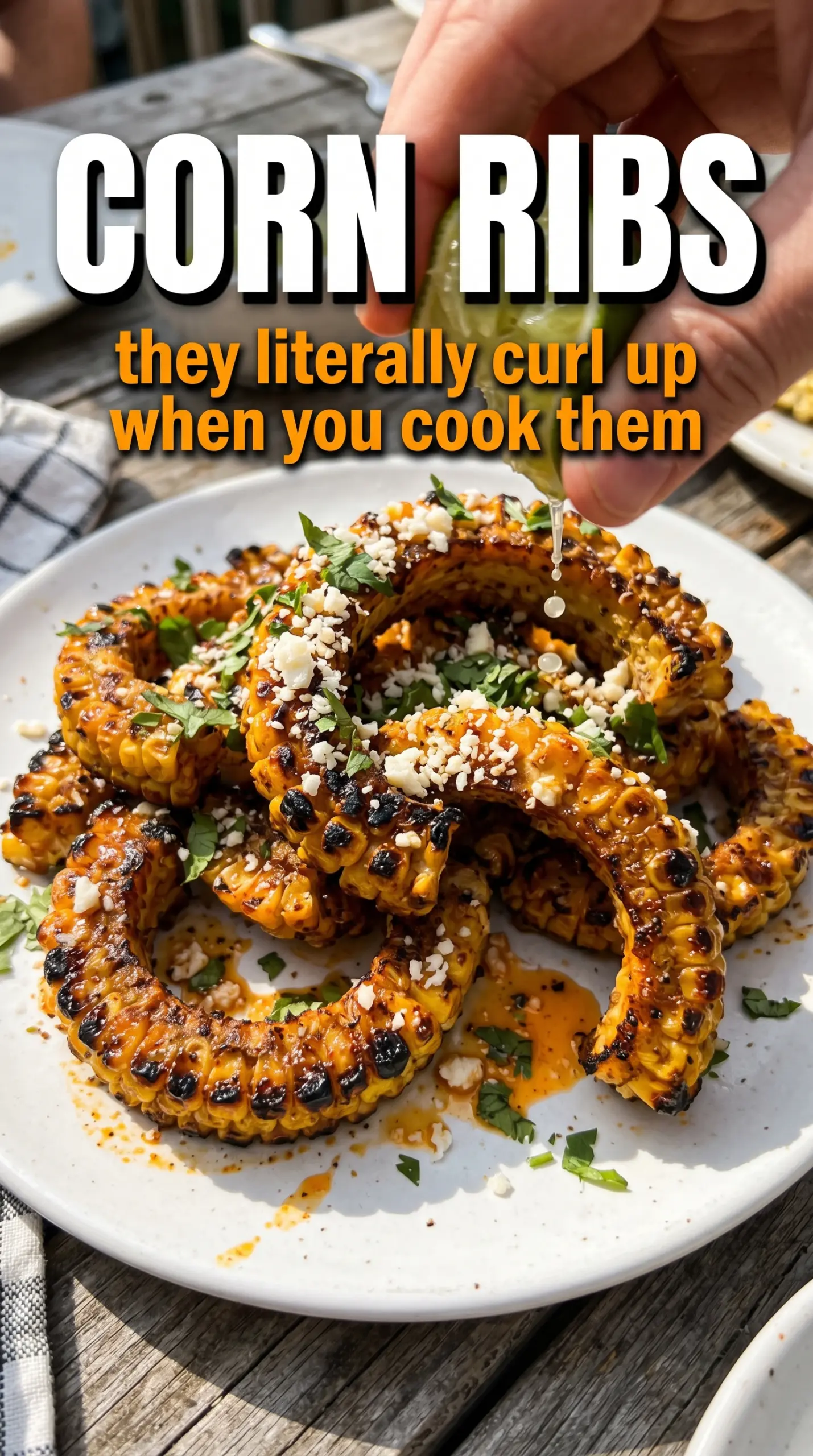
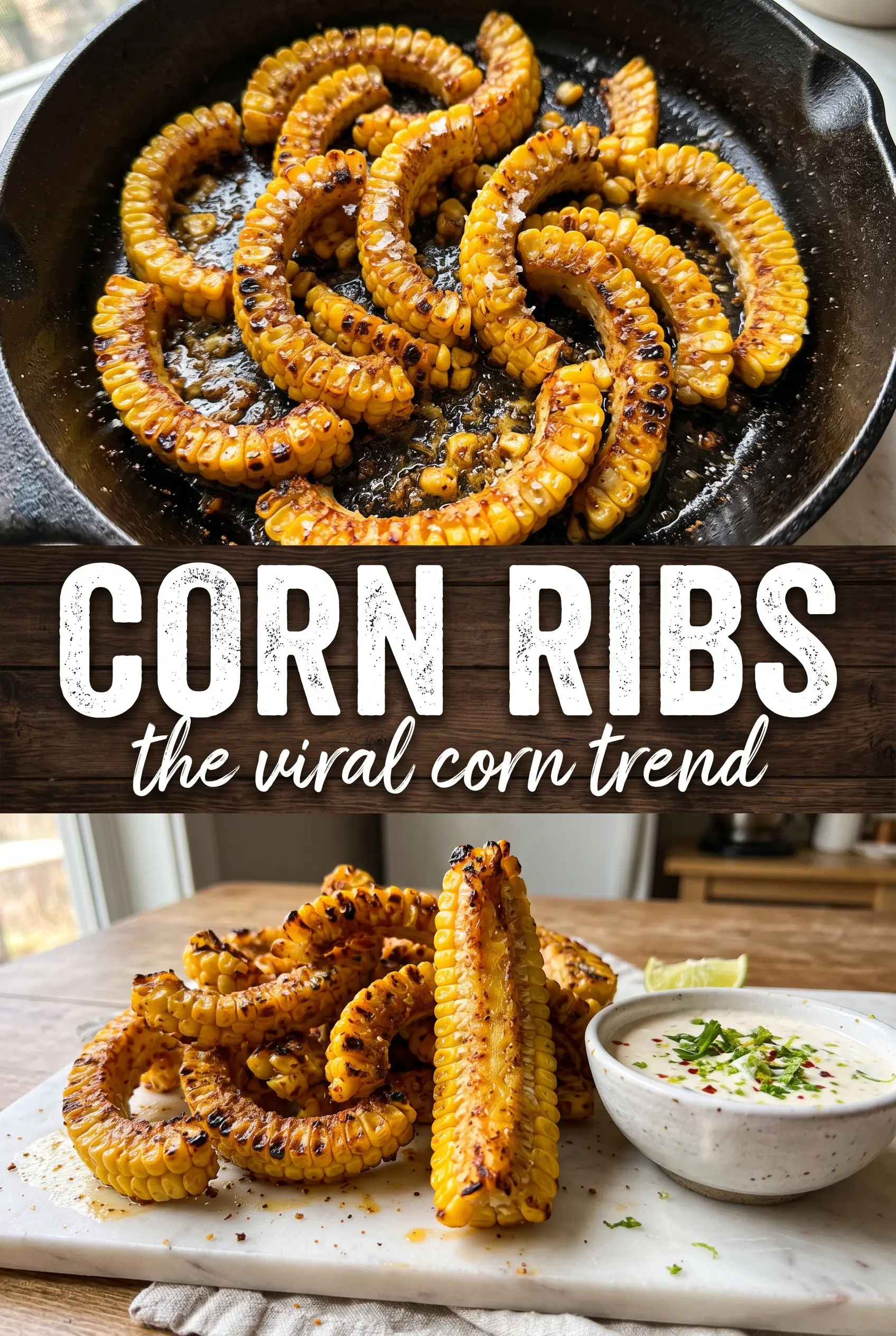
Corn ribs turn plain ears of corn into something that eats like a snack and looks like a party trick. The kernels get sweet and juicy, the edges char, and the strips curl as they cook so every piece has a mix of smoky seasoning, tender corn, and crisp little corners that catch the sauce. It’s the kind of side dish people reach for before the main course even hits the table.
The trick is cutting the corn safely and seasoning it well enough that the spices cling to every ridge. A light coat of oil helps the smoked paprika, cumin, chili powder, and garlic powder stick, and the high heat does the rest. You want heat strong enough to char the outside without drying out the centers, which is why this works on the grill or in a hot oven.
Below, I’ve included the safest way to cut the corn, what to look for as it cooks, and a couple of easy ways to change the finish depending on what you’re serving with it.
The corn curled up perfectly on the grill and the spice rub stuck to every strip. I finished it with lime and a little sour cream drizzle, and even my picky kid kept grabbing more.
Crispy, curled corn ribs with smoky seasoning and a limey finish
The Cut That Makes Corn Ribs Curl Instead of Splinter
Corn ribs only work when the corn is cut in a way that lets the heat travel through the core without forcing the strips apart. If the ear is too cold or your knife is dull, the kernels can crack and the cob can splinter before you even get it seasoned. Room-temperature corn and a sharp, sturdy knife make the whole job safer and cleaner.
The curl happens because the cut strips dry and contract a little at the edges while the kernels stay plump in the middle. That means high heat matters. Too low, and you get soft corn that stays flat. Too much oil or a crowded pan, and the corn steams instead of charring.
- Corn on the cob — Fresh ears give you the best structure for ribbing. Older corn can still work, but the kernels won’t be as juicy and the strips are more likely to crack when cut.
- Olive oil — This is what helps the spice rub cling and what keeps the kernels from drying out under high heat. Avocado oil also works because it handles the same temperature well.
- Smoked paprika, cumin, chili powder, garlic powder — This mix builds the smoky base that makes the corn taste grilled even if you finish it in the oven. If you only have regular paprika, add a little extra cumin to keep the seasoning from tasting flat.
- Cayenne — This adds a small kick without overpowering the sweetness of the corn. Leave it out if you want a milder side dish, or double it if you like a sharper finish.
- Lime, cilantro, and the drizzle — The acid and creamy topping matter more than they seem. They cut through the char and make the ribs taste finished instead of just seasoned.
What Each Ingredient Is Actually Doing in This Corn Dish
- Fresh corn (the star vegetable) — Use the freshest corn available. Peak season (summer) tastes best.
- Butter (the flavor carrier) — This clings to corn and carries seasonings. Room temperature spreads easier.
- Seasonings (salt, pepper, spices) — Apply generously. Build flavor boldly so it stands out.
- Optional cheese (cotija, parmesan, or cheddar) — This adds umami depth. Crumble for even distribution.
- Acid (lime juice or vinegar) — This prevents the dish from tasting one-dimensional. Essential for fresh flavor.
- Herbs and aromatics (cilantro, garlic, or chili powder) — These add personality. Balance so nothing overpowers.
- Proper cooking (gentle heat, don’t overboil) — Overcooked corn becomes mushy. Stop while still tender-crisp.
- Grilling or foil method (if using) — This adds flavor through caramelization. Creates smokiness and depth.
Getting the Corn Ribs Charred Before They Dry Out
Preheating the Heat Source
Get the grill or oven fully hot before the corn goes on. You want 425°F and you want it there before the first strip hits the heat, because the initial blast helps the edges blister and curl. If the heat is weak, the corn gives off moisture before it browns and you lose the rib effect.
Cutting the Ears Safely
Stand each ear upright on a stable cutting board and cut it in half crosswise first, which gives you shorter, safer pieces to work with. Then cut each half lengthwise into quarters. If the cob fights back, don’t force the knife through in one motion; steady pressure and a very sharp chef’s knife or cleaver is what gets clean strips instead of ragged breaks.
Coating Every Kernel
Toss the corn well with the oil and spices until the seasoning looks evenly dusty and the kernels are glossy. Dry spots don’t brown the same way, and uneven oil coverage leads to patchy charring. The ribs should look heavily coated, not drenched.
Roasting or Grilling to the Curl
Lay the ribs out with space around each piece so the edges can catch heat instead of steaming. Turn them once during cooking, then watch for the telltale curl and darkened corners. The corn is ready when the strips bend inward, the tips are deeply browned, and the kernels still look plump instead of wrinkled.
Make Them Dairy-Free Without Losing the Finish
Use a creamy drizzle made with dairy-free mayo or a thinned cashew cream instead of sour cream. You still get the cool contrast against the smoky corn, and the lime keeps it bright. The texture is a little lighter, but the corn ribs still feel finished.
Turn Up the Heat for a Spicier Version
Add an extra pinch of cayenne or a little chipotle powder to the rub. Chipotle brings smoke along with heat, which works especially well if you’re grilling. The only thing to watch is burning the spices before the corn has time to char, so keep the heat high but not furious.
Use the Oven When the Grill Isn’t an Option
A hot oven works well, especially on a heavy sheet pan that holds heat. You won’t get quite as much smoke, but the ribs will still curl and caramelize if they have enough room. Flip once so both sides catch color instead of leaving one side pale.
Storage and Reheating
- Refrigerator: Store leftovers in an airtight container for up to 3 days. The ribs soften as they sit, but the flavor holds.
- Freezer: Freezing isn’t ideal. The corn loses its crisp edges and the texture turns watery once thawed.
- Reheating: Reheat on a sheet pan in a 400°F oven or in the air fryer until hot and a little crisp at the edges. The mistake people make is microwaving them, which makes the ribs limp and kills the curl.
Questions I Get Asked About This Recipe
Corn Ribs
Ingredients
Equipment
Method
- Preheat your grill or oven to 425°F.
- Stand each ear of corn upright and cut in half crosswise, then cut each half into quarters lengthwise so you get 8 corn rib strips per ear.
- Toss the corn rib strips with olive oil, smoked paprika, garlic powder, cumin, chili powder, salt, black pepper, and cayenne until fully coated.
- Grill the corn ribs for 20–25 minutes, turning once, until the ribs curl and the edges are charred.
- For an oven option, roast on a sheet pan at 425°F for 25 minutes until the ribs curl and the edges char.
- Arrange the corn ribs on a board.
- Drizzle with sour cream or mayo, squeeze lime over the top, and scatter fresh cilantro.
- Serve immediately while hot and curled.