Pillowy banana cake has a way of disappearing fast, especially when the crumb stays tender for days and the frosting adds just enough tang to keep each bite from turning heavy. This version leans into that balance. The bananas bring deep, mellow sweetness, but the buttermilk keeps the cake light instead of dense, and the result lands somewhere between a snack cake and a proper birthday cake.
The trick is in the mixing. Creaming the butter and sugar until pale and fluffy gives the cake its lift, while alternating the dry ingredients with the buttermilk keeps the batter smooth without overworking the gluten. That matters here because overmixed banana cake turns tight and gummy fast. The frosting also earns its place: cream cheese gives it a clean tang, while a little heavy cream makes it spreadable without going slack.
Below, I’ve included the parts that matter most: how to keep the crumb soft, how to tell when the cake is done without drying it out, and a couple of smart swaps if you want to change the frosting or make the cake a little more your own.
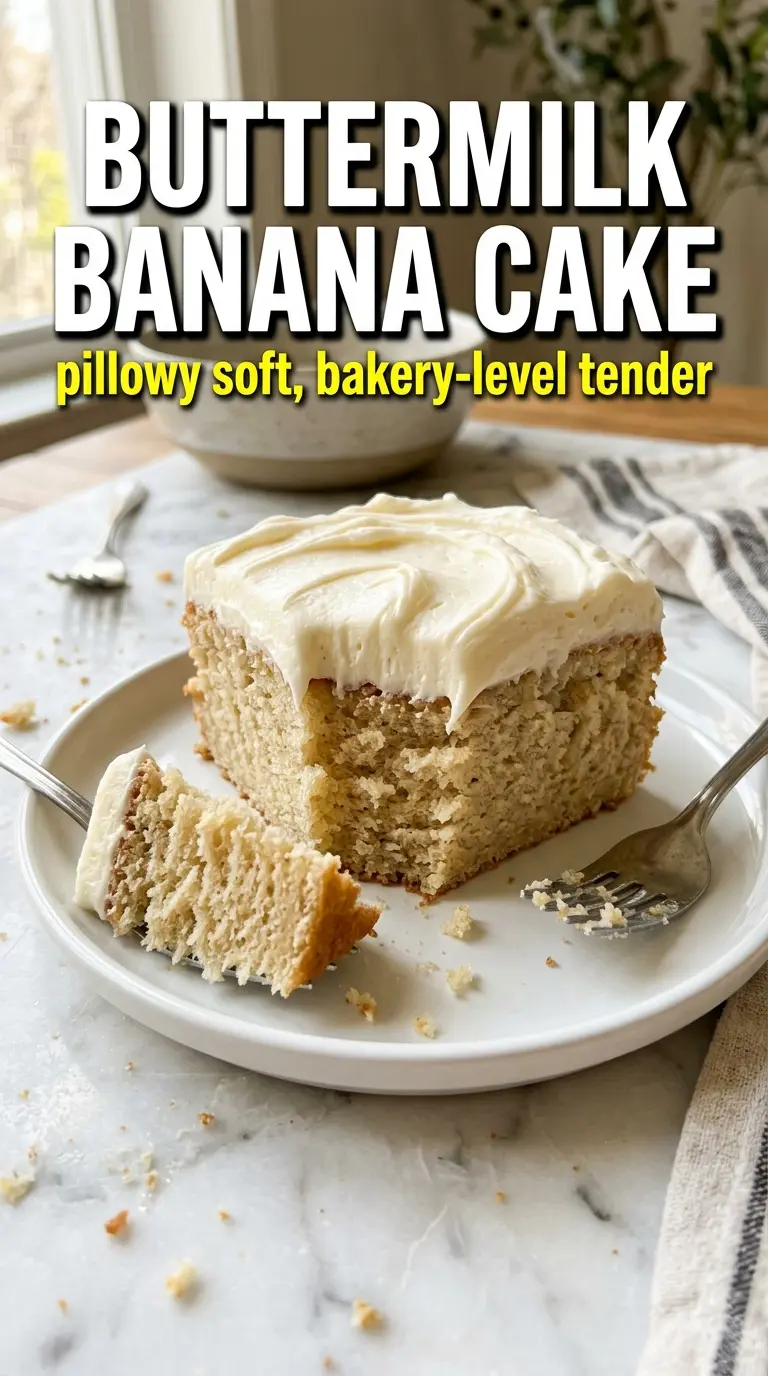
The cake stayed unbelievably moist for three days, and the cream cheese frosting set up thick enough to slice cleanly without squishing the crumb.
Save this buttermilk banana cake for the days when you want a soft, tangy sheet cake with cream cheese frosting that actually slices cleanly.
The Secret to Banana Cake That Stays Tender Instead of Heavy
Banana cake fails in one of two ways: it turns dense from too much banana or dry from too much flour. This version avoids both by using enough mashed banana for flavor, not so much that the batter gets pasty, and enough buttermilk to keep the crumb soft and fine. The cake should look slightly thick when it goes into the pan, but not stiff.
The other thing that matters is the butter-and-sugar step. If you stop too early, the cake bakes up flatter and tighter. Beat them until the mixture looks pale and almost whipped; that trapped air helps the cake rise into a lighter, more delicate crumb. Once the flour goes in, switch to a gentle hand and stop as soon as the batter comes together.
- Bananas — Use ripe bananas with plenty of brown freckles. They should mash easily and smell sweet, but they don’t need to be blackened or overripe to the point of leaking liquid.
- Buttermilk — This is what gives the cake its soft tang and keeps the texture from feeling one-note sweet. If you don’t have buttermilk, stir 1 tablespoon of lemon juice or vinegar into a scant 1 cup of milk and let it sit for 5 minutes.
- Butter — Softened butter creams properly and gives the cake a richer crumb than oil alone. If yours is too cold, the sugar won’t aerate it well and the cake will bake up tighter.
- Cream cheese — Full-fat cream cheese gives the frosting its structure and tang. Low-fat versions tend to loosen as they’re mixed, which can make the frosting soft and harder to spread.
- Powdered sugar — This thickens the frosting without grit. Add it gradually so the frosting doesn’t puff into a cloud of sugar and then turn sloppy once the cream goes in.
What Each Ingredient Is Actually Doing in This Banana Bread or Baked Good
- Bananas (the moisture and sweetness) — Use very ripe bananas for maximum sweetness. Overripe is actually better here.
- Flour (the structure base) — Don’t overmix or the baked good becomes tough. Mix just until dry ingredients are incorporated.
- Sugar (the sweetness) — Ripe bananas are already sweet, so adjust sugar slightly if desired. Don’t reduce too much or it becomes dry.
- Butter or oil (the richness) — This creates tender crumb. Oil makes moister baked goods; butter adds richness.
- Eggs (the binder and lift) — These hold everything together and help the baked good rise. Use room temperature eggs.
- Leavening (baking soda or powder) — This creates rise and light texture. Too much makes it taste bitter.
- Vanilla extract (the flavor enhancer) — This brings out banana flavor. Use quality vanilla extract.
- Optional mix-ins (nuts, chocolate, or dried fruit) — These add texture and prevent one-dimensional flavor.
Building the Batter So the Cake Stays Light
Creaming the Base
Beat the softened butter and sugar until the mixture turns noticeably lighter in color and looks fluffy around the edges of the bowl. That step is doing the work of a leavener here, so don’t rush it. Add the eggs one at a time so the batter stays smooth, then mix in the vanilla and mashed bananas. If the bananas are still in big lumps, press them down with the mixer or a fork first; large chunks can leave wet pockets in the finished cake.
Alternating the Dry Ingredients and Buttermilk
Mix the flour, baking soda, salt, and cinnamon separately, then add it in three additions with the buttermilk. This keeps the batter from tightening up and lets the dry ingredients absorb evenly. Stop mixing as soon as you don’t see dry flour anymore. If you beat the batter after that point, the cake can turn dense and slightly rubbery instead of soft and cakey.
Knowing When the Cake Is Done
Bake until the center springs back when pressed and a toothpick comes out clean or with a few moist crumbs. The top should be set and golden, with the edges just beginning to pull from the pan. If you wait until the middle looks completely dry, the cake has already gone past its best texture. Let it cool fully before frosting or the cream cheese frosting will melt into the surface and slide off.
How to Adapt This Cake for Different Frostings and Dietary Needs
Banana Buttercream Instead of Cream Cheese
Swap the cream cheese frosting for a simple buttercream if you want a sweeter, more classic birthday-cake finish. You can whisk in a spoonful of mashed banana or a little banana extract, but keep the amount small or the frosting will go loose and grainy.
Gluten-Free Version
Use a good 1:1 gluten-free baking flour in place of the all-purpose flour. The cake will still be soft, but it may need the full bake time, and it benefits from resting 10 to 15 minutes before slicing so the crumb sets fully.
Dairy-Free Version
Use a plant-based butter and a dairy-free buttermilk made with non-dairy milk plus lemon juice or vinegar. For the frosting, a dairy-free cream cheese alternative can work, though it usually makes a softer frosting, so chill it before spreading.
Storage and Reheating
- Refrigerator: Store covered for up to 5 days. The cake stays moist, but the frosting firms up cold, so let slices sit at room temperature before serving.
- Freezer: Freeze unfrosted cake tightly wrapped for up to 2 months. Cream cheese frosting doesn’t freeze as neatly, so frost after thawing for the cleanest texture.
- Reheating: For a warm slice, microwave just 10 to 15 seconds. Longer than that and the frosting will melt into the cake instead of sitting in soft swirls on top.
Questions I Get Asked About This Buttermilk Banana Cake
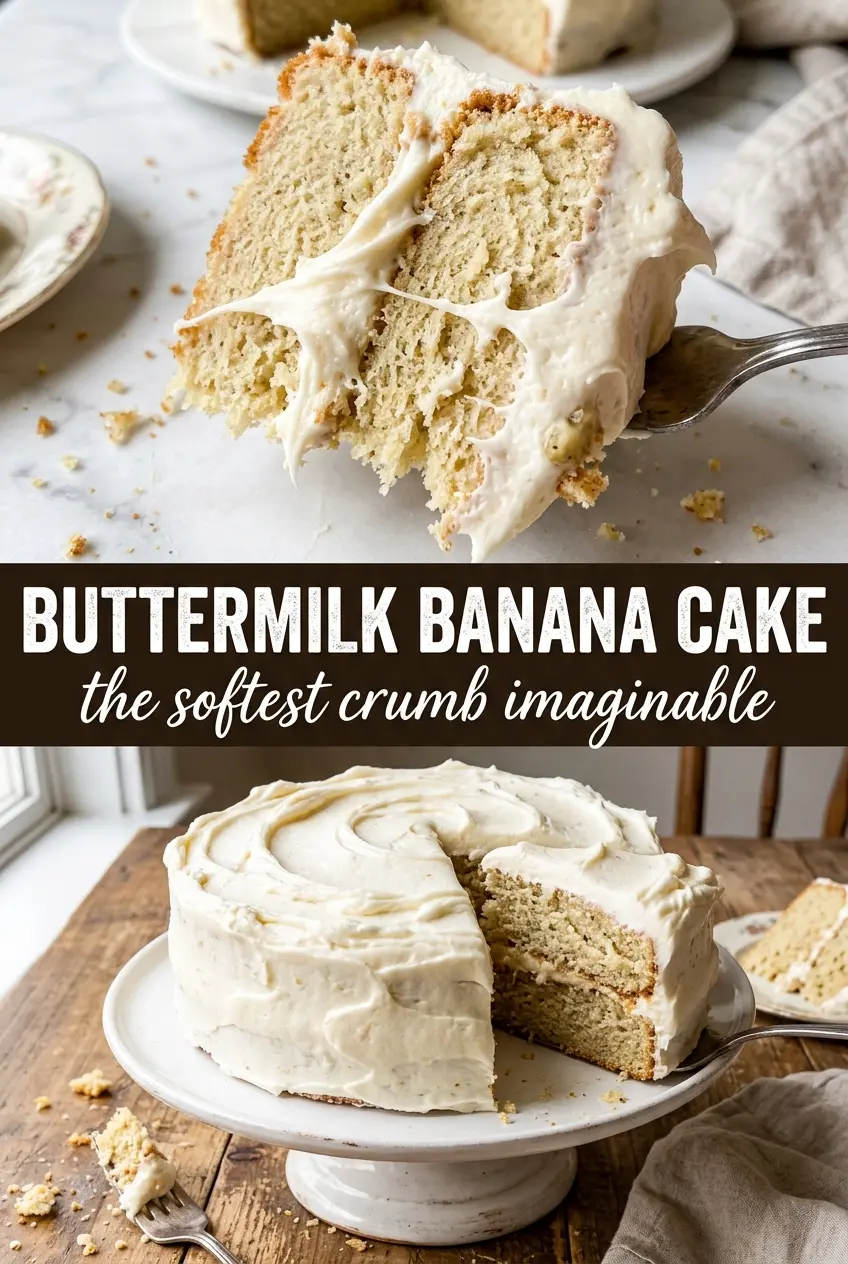
Buttermilk Banana Cake
Ingredients
Equipment
Method
- Preheat the oven to 350°F and grease a 9x13 pan. Make sure the pan is evenly coated so the cake releases cleanly.
- Beat the softened butter and sugar until very light and fluffy. Continue mixing until the texture looks pale and aerated.
- Add the eggs one at a time and mix well after each addition. Stir just until incorporated so the batter stays smooth.
- Mix in the vanilla extract and the mashed bananas. The batter should look thick and speckled with banana.
- Combine the all-purpose flour, baking soda, salt, and cinnamon. Whisk until the spices are evenly distributed.
- Alternate folding in the dry mixture and the buttermilk in three additions. Start and end with the flour mixture for the smoothest batter.
- Pour the batter into the prepared pan and spread it into an even layer. Tap the pan lightly to settle the surface.
- Bake for 30–35 minutes at 350°F until the center bounces back when pressed and a toothpick comes out clean. The edges should be golden and slightly pulling away from the pan.
- Beat the cream cheese, softened butter, powdered sugar, vanilla, and heavy cream until thick and fluffy. Stop to scrape the bowl so the frosting stays uniform.
- Frost the completely cooled cake generously. Use an offset spatula or spoon to swirl across the top in a smooth, even layer.