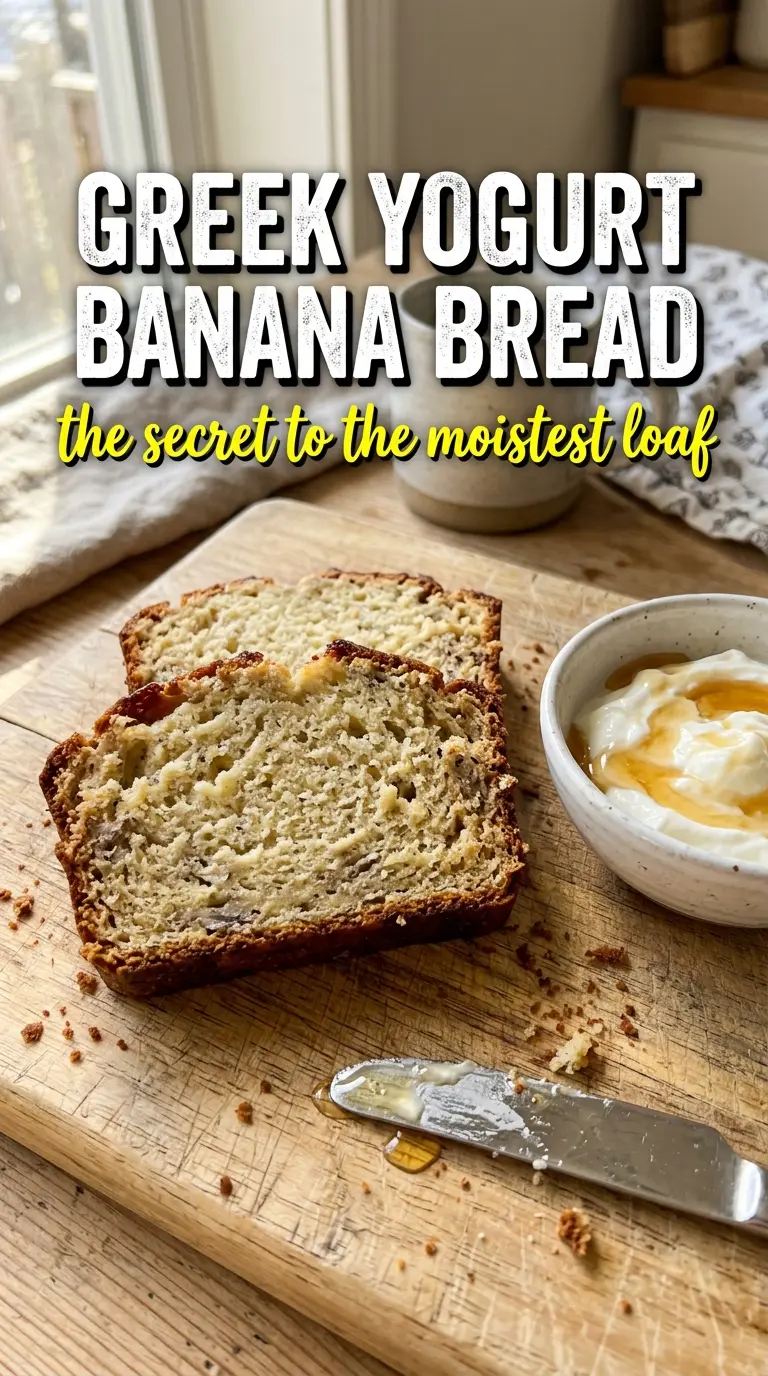
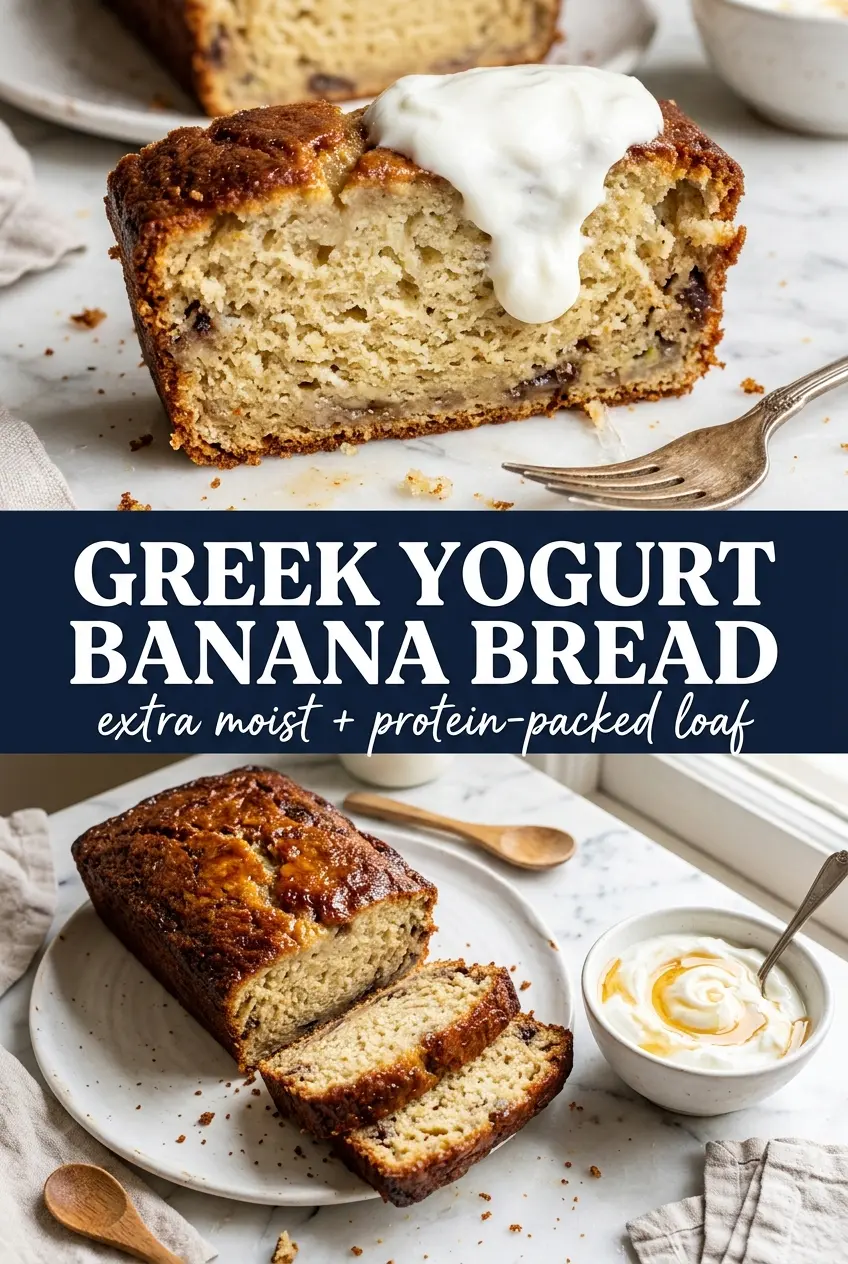
Greek yogurt banana bread bakes up with a moist, tender crumb and a golden top that slices cleanly instead of crumbling apart. The banana flavor stays front and center, but the yogurt adds a subtle tang and enough body to keep the loaf from tasting heavy or greasy. It’s the kind of banana bread that feels a little more substantial than the classic version without losing that soft, comforting texture people want from a good loaf.
The trick is balance. The bananas bring sweetness and moisture, the Greek yogurt adds protein and acidity, and the melted butter gives the loaf richness without making it dense. A small amount of baking powder alongside the baking soda helps the bread rise evenly, which matters when you’re working with a batter that starts out fairly thick. I’ve found that full-fat or 2% yogurt gives the best texture; nonfat can work, but the crumb is a little less plush.
Below, I’m walking through the parts that matter most: how to keep the loaf from sinking in the center, what the yogurt is actually doing in the batter, and a few simple swaps if you want to adjust the sweetness or make it a little more wholesome without losing that soft banana bread texture.
The loaf came out incredibly moist and the yogurt gave it this soft, almost cake-like crumb without making it heavy. Mine was done right at 64 minutes and sliced beautifully once it cooled.
Save this Greek yogurt banana bread for the kind of loaf that bakes up moist, slices neatly, and still feels light enough for breakfast.
The Yogurt Keeps the Crumb Tender Without Making the Loaf Heavy
Banana bread usually goes wrong in one of two ways: it turns dry, or it turns dense and gummy in the center. Greek yogurt helps with both problems, but only if the batter stays balanced. It adds moisture and a little acidity, which softens the crumb and works with the baking soda for lift, while the mashed bananas keep the flavor deep and familiar.
The other thing that matters here is mixing. Once the flour goes in, the batter should look just barely combined, with a few streaks still visible. Overmixing develops too much gluten and tightens the loaf, which is how you end up with banana bread that slices like a brick instead of bending softly under the knife.
- Very ripe bananas — The browner and softer they are, the better the flavor and sweetness. They also mash more smoothly, which helps the bread bake evenly.
- Greek yogurt — This is what makes the loaf moist without relying on extra oil. Full-fat or 2% gives the nicest texture; plain regular yogurt works in a pinch, but the loaf will be a little looser.
- Butter — Melted butter brings flavor and a tender bite. You can swap in neutral oil if you want a softer texture, but you’ll lose that classic banana bread richness.
- Baking soda plus baking powder — The soda reacts with the yogurt and bananas, while the baking powder gives the loaf a steadier rise. Using both keeps the center from sinking under its own weight.
What Each Ingredient Is Actually Doing in This Banana Bread or Baked Good
- Bananas (the moisture and sweetness) — Use very ripe bananas for maximum sweetness. Overripe is actually better here.
- Flour (the structure base) — Don’t overmix or the baked good becomes tough. Mix just until dry ingredients are incorporated.
- Sugar (the sweetness) — Ripe bananas are already sweet, so adjust sugar slightly if desired. Don’t reduce too much or it becomes dry.
- Butter or oil (the richness) — This creates tender crumb. Oil makes moister baked goods; butter adds richness.
- Eggs (the binder and lift) — These hold everything together and help the baked good rise. Use room temperature eggs.
- Leavening (baking soda or powder) — This creates rise and light texture. Too much makes it taste bitter.
- Vanilla extract (the flavor enhancer) — This brings out banana flavor. Use quality vanilla extract.
- Optional mix-ins (nuts, chocolate, or dried fruit) — These add texture and prevent one-dimensional flavor.
Mix the Batter Gently, Then Let the Oven Do the Work
Start with the wet ingredients
Mash the bananas first, then whisk in the melted butter, sugar, eggs, vanilla, and Greek yogurt until the mixture looks smooth and glossy. If the butter is too hot, it can lightly cook the eggs and leave little bits of scrambled egg in the batter, so let it cool for a minute before combining. The batter should look thick but loose enough to stir easily.
Fold in the dry ingredients just until the flour disappears
Add the flour, baking soda, baking powder, cinnamon, and salt all at once, then fold with a spatula until no dry patches remain. Stop as soon as the batter comes together. If you keep stirring after that point, the loaf will bake up tough instead of soft and tender.
Bake until the center is set, not just the top
Pour the batter into a greased 9×5 loaf pan and smooth the top so it bakes evenly. The loaf is done when the top is deeply golden and a toothpick inserted in the center comes out clean or with a few moist crumbs. If the top browns too quickly before the middle is ready, lay a loose piece of foil over it for the last 15 to 20 minutes.
Let it cool before slicing
Banana bread needs a short rest in the pan before it comes out. Those 10 minutes help it set so it doesn’t tear or collapse. After that, move it to a rack and wait until it’s just warm or fully cool before slicing for the neatest pieces and the best texture.
Three Ways to Adjust Greek Yogurt Banana Bread Without Ruining the Crumb
Make it dairy-free with one clean swap
Use a thick unsweetened dairy-free yogurt and replace the butter with melted coconut oil or neutral oil. The loaf will still stay moist, though it loses a little of the tangy, creamy finish that Greek yogurt gives. Look for a yogurt that’s not watery, or the batter can become too loose.
Cut the sugar a little if your bananas are very ripe
You can drop the sugar to 2/3 cup without hurting the structure of the loaf. The bananas still bring plenty of sweetness, and the bread will taste a little less dessert-like. Go too low, though, and the crumb can lose some tenderness because sugar helps hold moisture.
Add walnuts or chocolate chips without changing the bake
Fold in up to 3/4 cup of walnuts, chopped pecans, or chocolate chips at the very end. Nuts add crunch and keep the loaf from feeling too soft, while chocolate turns it into a more dessert-forward banana bread. Don’t overload the batter or the center can bake unevenly.
Storage and Reheating
- Refrigerator: Store in an airtight container for up to 5 days. The crumb gets a little firmer in the fridge, but the flavor stays good.
- Freezer: Freeze individual slices or the whole loaf tightly wrapped for up to 3 months. Slice before freezing if you want quick grab-and-go pieces.
- Reheating: Warm slices in the microwave for 10 to 15 seconds or toast gently. High heat dries banana bread out fast, so short bursts work better than trying to heat it all at once.
Questions I Get Asked About This Recipe
Greek Yogurt Banana Bread
Ingredients
Equipment
Method
- Preheat the oven to 350°F and grease a 9x5 loaf pan. Set up so the pan is ready before mixing.
- Whisk melted butter, sugar, eggs, vanilla extract, and Greek yogurt into the mashed bananas until smooth and well combined. Stop when the mixture looks uniform with no streaks.
- Fold in all-purpose flour, baking soda, baking powder, cinnamon, and salt until just combined. The batter should be thick and still look slightly lumpy.
- Pour the batter into the prepared pan and smooth the top. Level it so it bakes evenly.
- Bake at 350°F for 60–70 minutes until deeply golden on top. A toothpick inserted in the center should come out clean.
- Cool in the pan for 10 minutes before turning out onto a rack. The loaf will firm up and release more cleanly from the pan.