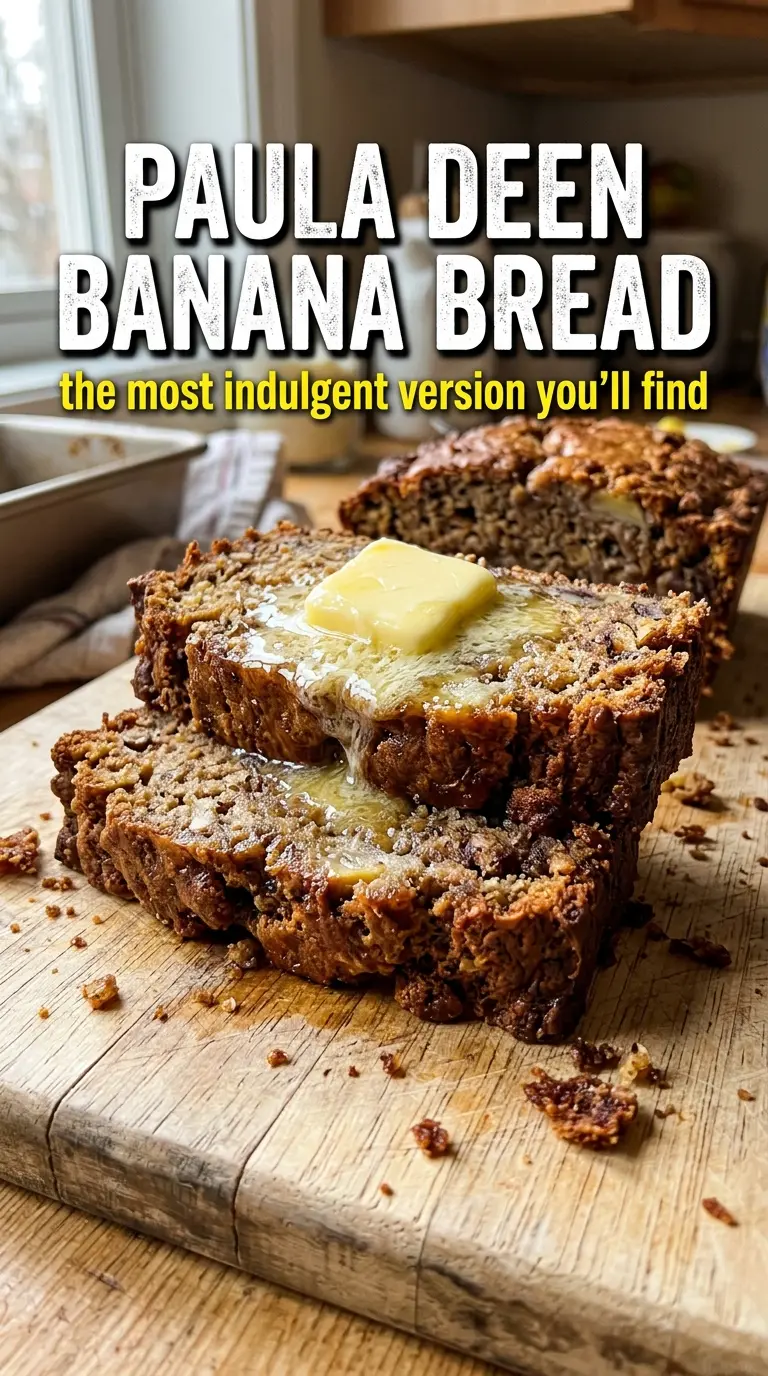
Paula Deen banana bread bakes up with the kind of rich, buttery crumb that sits somewhere between a quick bread and a slice of pound cake. The crust turns deeply golden, the center stays moist without feeling gummy, and every slice has that old-fashioned banana flavor that tastes even better the next day. It’s the kind of loaf people cut into “just a small piece” and then come back for another thick slice with butter melting right in.
What makes this version stand out is the way the butter and sugar are beaten until pale and fluffy before the bananas go in. That step gives the loaf a lighter structure than you’d expect from such a rich batter, while the bananas keep it soft and tender. It also uses a straightforward ingredient list, so the flavor comes from good ripeness, proper creaming, and not overworking the flour once it’s added.
Below, I’ve included the part that matters most when you want banana bread with a true Southern-baking feel: how to tell when the loaf is done in the center without drying out the edges, plus a few swaps that still keep the texture in the right lane.
The loaf came out with that tight, buttery crumb I always want in banana bread, and the pecans stayed crisp instead of getting soggy. I checked it at 60 minutes and it was perfect.
Paula Deen banana bread with that buttery pound-cake crumb belongs in your Pinterest baking board for slow mornings and extra-thick slices.
The Secret to a Banana Bread Loaf That Slices Cleanly
The mistake most banana breads make is packing in too much banana moisture without enough structure to hold it. This loaf avoids that by using just enough flour to set the crumb, then relying on the creamed butter and sugar to create lift before the bananas go in. That gives you a dense, tender slice instead of a heavy, wet center that sinks after cooling.
The other key is the bake time. Banana bread can look done on top while the middle still needs time, and pulling it too early gives you a gummy line through the center. You want a dark golden crust, a loaf that springs back lightly in the center, and a tester that comes out clean or with a few moist crumbs rather than wet batter.
- Butter — This is the flavor backbone. Softened butter creams into the sugar and gives the loaf that rich, Southern-style crumb you can’t get from oil.
- Bananas — Use very ripe bananas with brown speckles and a strong banana smell. Under-ripe fruit won’t mash smoothly or bring enough sweetness.
- Flour — All-purpose flour keeps the loaf sturdy enough to slice. Cake flour would make it too delicate, and too much flour will dry it out fast.
- Pecans — Optional, but they add a little crunch and a classic Southern finish. Toasting them first adds more depth if you’ve got an extra few minutes.
What Each Ingredient Is Actually Doing in This Banana Bread or Baked Good
- Bananas (the moisture and sweetness) — Use very ripe bananas for maximum sweetness. Overripe is actually better here.
- Flour (the structure base) — Don’t overmix or the baked good becomes tough. Mix just until dry ingredients are incorporated.
- Sugar (the sweetness) — Ripe bananas are already sweet, so adjust sugar slightly if desired. Don’t reduce too much or it becomes dry.
- Butter or oil (the richness) — This creates tender crumb. Oil makes moister baked goods; butter adds richness.
- Eggs (the binder and lift) — These hold everything together and help the baked good rise. Use room temperature eggs.
- Leavening (baking soda or powder) — This creates rise and light texture. Too much makes it taste bitter.
- Vanilla extract (the flavor enhancer) — This brings out banana flavor. Use quality vanilla extract.
- Optional mix-ins (nuts, chocolate, or dried fruit) — These add texture and prevent one-dimensional flavor.
The 4 Minutes That Build the Best Crumb
Creaming the Butter and Sugar
Beat the softened butter and sugar until the mixture turns noticeably paler and looks fluffy, not grainy. That usually takes about four minutes with a mixer, and it matters because this is where the loaf gets its lift. If the butter is too cold, the mixture stays dense and won’t trap air properly. If it’s melted, the bread will bake up heavier and greasy.
Bringing in the Bananas
Add the eggs one at a time, then stir in the mashed bananas and vanilla. The batter may look a little loose or slightly separated at this point, and that’s fine. The key is to mix just until everything is combined so you don’t knock out the air you just built. Use bananas that mash easily with a fork; if they’re still firm, the batter won’t have the soft, even texture this loaf needs.
Finishing the Batter Without Toughening It
Fold in the flour, baking soda, and salt gently until the dry streaks disappear. Overmixing here makes the loaf chewy in the wrong way and can create tunnels through the crumb. Once the pecans go in, stop stirring as soon as they’re distributed. A few lumps are better than a beaten-up batter.
Baking to a Deep Golden Center
Pour the batter into the greased loaf pan and bake until the top is deeply golden and a toothpick comes out clean from the center, usually 60 to 70 minutes. If the top browns before the middle is done, lay a loose piece of foil over the loaf for the last stretch of baking. Let it cool in the pan for 15 minutes so it firms up enough to release cleanly; unmolding too soon can cause the center to collapse.
Three Ways to Make This Loaf Fit What You’ve Got
Skip the Pecans for a Classic Soft Loaf
Leave them out if you want the purest buttery banana flavor and a tighter, smoother crumb. The bread still bakes up rich and full; you just lose the crunch and a little bit of Southern-style texture on top.
Make It Dairy-Free Without Losing the Banana Flavor
Use a good plant-based butter stick in place of the regular butter. You’ll lose a little of that classic dairy richness, but the loaf still keeps a tender crumb and slices cleanly if the substitute is firm, not tub-style spread.
Turn It Into Muffins for Faster Baking
Spoon the batter into a lined muffin pan and bake until the tops spring back and a tester comes out clean, usually around 18 to 22 minutes. Muffins lose some of the loaf’s deep, buttery center, but they’re handy when you want individual portions and a shorter bake time.
Storage and Reheating
- Refrigerator: Store tightly wrapped for up to 5 days. The crumb stays moist, though the butter flavor firms up when chilled.
- Freezer: Freezes well for up to 3 months. Wrap the cooled loaf or individual slices tightly in plastic, then foil, and thaw at room temperature.
- Reheating: Warm slices in a toaster oven or low oven for a few minutes. Microwaving too long can make the texture rubbery, so heat just until the butter starts to melt.
Questions I Get Asked About This Recipe
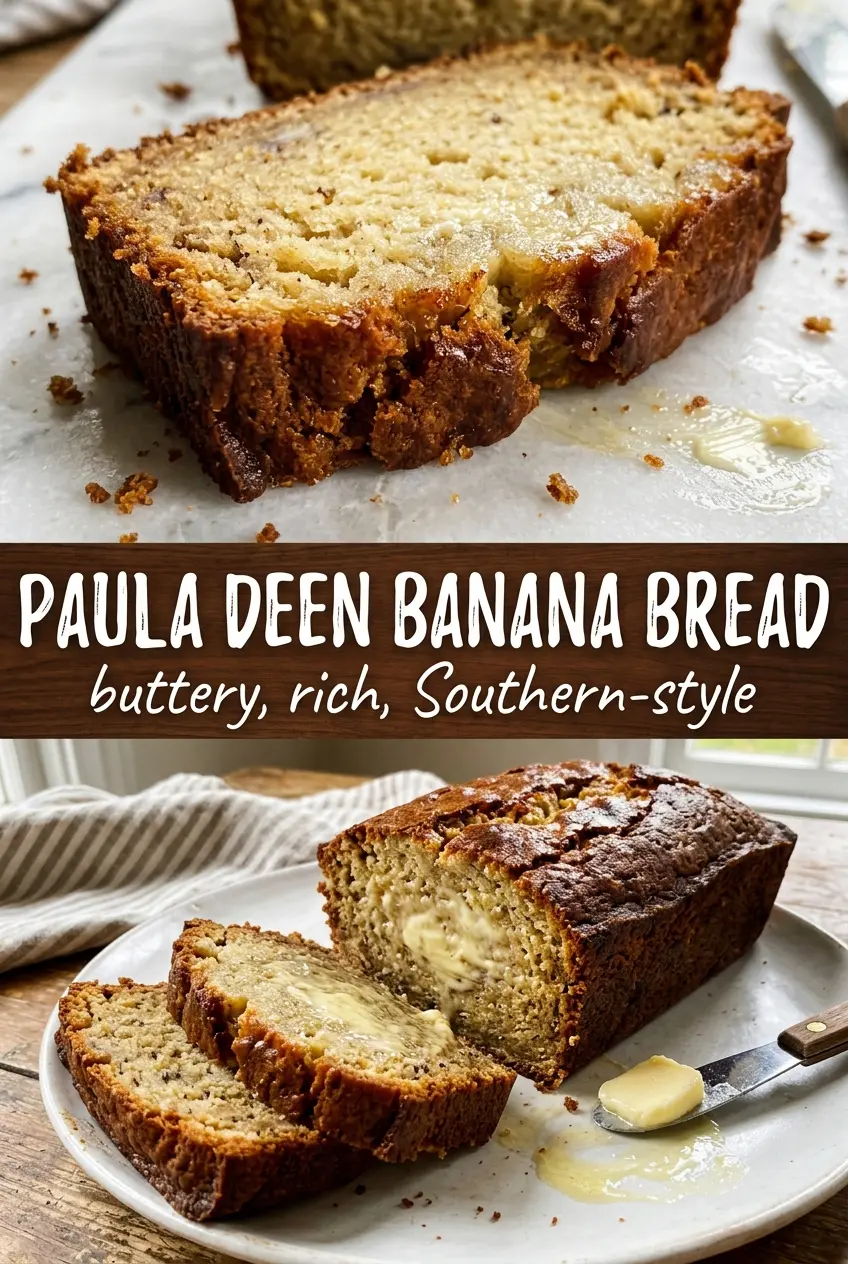
Paula Deen Banana Bread
Ingredients
Equipment
Method
- Preheat the oven to 350°F, then generously grease a 9x5 loaf pan. Make sure the oven is fully preheated for an even rise.
- Beat the softened butter and sugar together until very light and fluffy, about 4 minutes. Stop when the mixture looks pale and aerated.
- Beat in the eggs one at a time, then stir in the mashed bananas and vanilla. Mix just until the batter looks uniform.
- Fold in the all-purpose flour, baking soda, and salt until just combined. Stop as soon as no dry streaks remain to keep the crumb tight and moist.
- Fold in the chopped pecans if using. Distribute them evenly without overmixing.
- Pour the batter into the prepared pan and bake for 60–70 minutes until deeply golden. A toothpick inserted in the center should come out clean.
- Cool in the pan for 15 minutes before unmolding. Let it set until the loaf holds its shape when turned out.
- Serve the banana bread warm. Add extra butter for a richer, butter-forward finish in each slice.