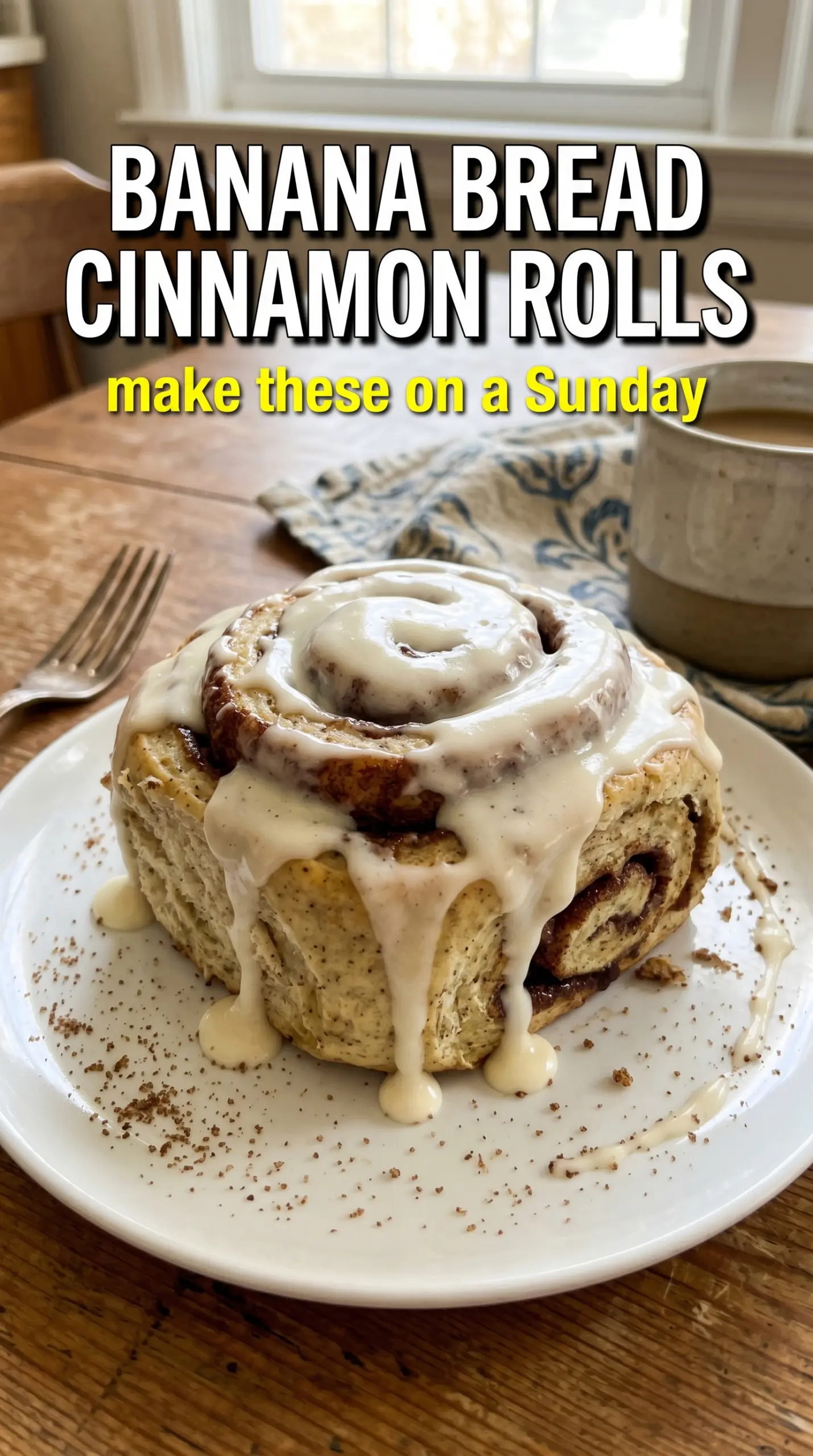
Pillowy cinnamon rolls with banana in the dough have a soft, almost custardy crumb that makes them feel a little richer than a standard pan of sweet rolls. The banana doesn’t just add flavor; it keeps the spirals tender and gives the baked rolls that banana-bread warmth people expect, while the brown butter cream cheese frosting melts into every ridge and catches in the swirls. The result is a pan that disappears fast, especially when the centers are still a little gooey and the edges have that light golden chew.
What makes this version work is balance. The dough has enough banana to taste like banana bread, but not so much that it turns sticky or heavy. Warm milk helps wake up the yeast without overheating it, and the dough should feel soft and slightly tacky after kneading, not dry. If you’ve ever ended up with rolls that bake up bready instead of fluffy, it’s usually because too much flour got added during mixing. Stop when the dough is smooth and elastic, then let the rise do its job.
Below, I’ve included the parts that matter most: how to keep the filling from leaking, why the brown butter frosting tastes deeper than plain cream cheese icing, and a few ways to adapt these rolls if you need to work around dairy or make them ahead.
The dough rose beautifully and baked up so soft, and the brown butter frosting took the banana flavor to another level. I followed the timing exactly and the centers stayed gooey without being underbaked.
Save these banana bread cinnamon rolls for the mornings when you want soft swirls, banana flavor, and that brown butter frosting melting into the pan.
The Dough Needs to Stay Soft, Not Stiff
Banana dough can trick people into adding too much flour because it starts out sticky and a little loose. That’s normal. Once the flour hydrates and the gluten develops, the dough becomes smooth and supple, and that softer texture is what gives these rolls their pull-apart crumb after baking.
The other common mistake is rushing the rise because the dough looks puffy after a short rest. Banana adds moisture and weight, so this dough needs the full hour to build enough structure. If the dough hasn’t doubled, the rolls will bake up dense and tight instead of light and pillowy.
- Bananas — Use ripe bananas with plenty of brown spots. They bring sweetness, moisture, and the banana bread flavor that defines the rolls. Under-ripe bananas taste flat and won’t mash smoothly.
- Instant yeast — This gets the dough moving quickly and reliably. If you only have active dry yeast, bloom it in the warm milk with the sugar for 5 to 10 minutes before continuing.
- All-purpose flour — This gives the rolls enough structure without making them chewy. Add it gradually and stop when the dough is soft and just slightly tacky; extra flour is the fastest way to lose the fluffy texture.
- Brown butter — It’s not just for the frosting’s flavor. Browning the butter adds a nutty depth that keeps the topping from tasting one-note against the sweet banana dough.
What Each Ingredient Is Actually Doing in This Banana Bread or Baked Good
- Bananas (the moisture and sweetness) — Use very ripe bananas for maximum sweetness. Overripe is actually better here.
- Flour (the structure base) — Don’t overmix or the baked good becomes tough. Mix just until dry ingredients are incorporated.
- Sugar (the sweetness) — Ripe bananas are already sweet, so adjust sugar slightly if desired. Don’t reduce too much or it becomes dry.
- Butter or oil (the richness) — This creates tender crumb. Oil makes moister baked goods; butter adds richness.
- Eggs (the binder and lift) — These hold everything together and help the baked good rise. Use room temperature eggs.
- Leavening (baking soda or powder) — This creates rise and light texture. Too much makes it taste bitter.
- Vanilla extract (the flavor enhancer) — This brings out banana flavor. Use quality vanilla extract.
- Optional mix-ins (nuts, chocolate, or dried fruit) — These add texture and prevent one-dimensional flavor.
The 20 Minutes That Actually Shape the Swirls
Building the Dough
Start by combining the warm milk, yeast, and sugar, then let it sit until foamy. That little bloom tells you the yeast is alive and ready. Stir in the mashed bananas, softened butter, egg, flour, and salt, then knead until the dough feels smooth and elastic. If it clings to the bowl a bit at the beginning, that’s fine; it should clean up as the gluten develops. Stop adding flour once the dough loses its wet shine and becomes soft enough to press with a finger.
Rolling and Filling the Sheet
Roll the dough into a neat 12×18 rectangle so the layers bake evenly. Spread the softened butter edge to edge, then sprinkle the brown sugar and cinnamon in a thin, even layer. If the filling piles up in patches, those spots will leak and burn in the pan instead of melting into the spirals. Press the sugar lightly into the butter so it stays put when you roll.
Cutting and Proofing
Roll the dough tightly from the long side to keep the spiral defined, then slice it into 12 even pieces with a sharp knife or unflavored dental floss. A squashed cut edge is a sign the roll was cut with too much pressure, which can pinch the layers together. Nestle the rolls into a greased 9×13 pan with a little space between them, then let them rise until puffy. They should look expanded and touch gently at the sides before they go into the oven.
Baking and Frosting Warm
Bake until the tops are golden and the centers look set when you nudge the pan. If the rolls brown too fast, tent them loosely with foil for the last few minutes. Beat the browned butter, cream cheese, powdered sugar, milk, and vanilla until smooth, then spread it over the rolls while they’re still warm. That’s when the frosting sinks into the cracks instead of sitting on top in a thick layer.
Three Ways to Make These Banana Cinnamon Rolls Work for Your Kitchen
Dairy-Free Banana Cinnamon Rolls
Use a plain unsweetened dairy-free milk and swap in a good plant-based butter for both the dough and filling. For the frosting, use a dairy-free cream cheese alternative and skip the browning step on the butter substitute unless the brand specifically browns well; otherwise, the frosting will still taste rich, just a little less nutty.
Make-Ahead Overnight Rolls
Shape the rolls and place them in the pan, then cover tightly and refrigerate overnight before the second rise. In the morning, let them sit at room temperature until noticeably puffy before baking. This keeps the texture light and saves you from mixing, kneading, and shaping before breakfast.
Extra Banana Flavor Without a Heavier Dough
If you want a stronger banana note, add a little more mashed banana only if your dough still feels manageable, and be prepared to use a touch more flour during kneading. Too much extra banana can make the rolls dense, so the safer move is to lean harder on ripe fruit and the frosting instead of overloading the dough.
How to Store the Baked Rolls
- Refrigerator: Store covered for up to 4 days. The rolls will firm up a little in the fridge because of the frosting, but they stay tender.
- Freezer: Freeze the baked rolls without frosting for the best texture, tightly wrapped for up to 2 months. Thaw overnight in the refrigerator, then warm and frost before serving.
- Reheating: Warm individual rolls in the microwave for 20 to 30 seconds or cover the pan with foil and heat in a 300°F oven until soft. Reheat gently; high heat dries the dough and makes the frosting separate.
Questions I Get Asked About This Recipe
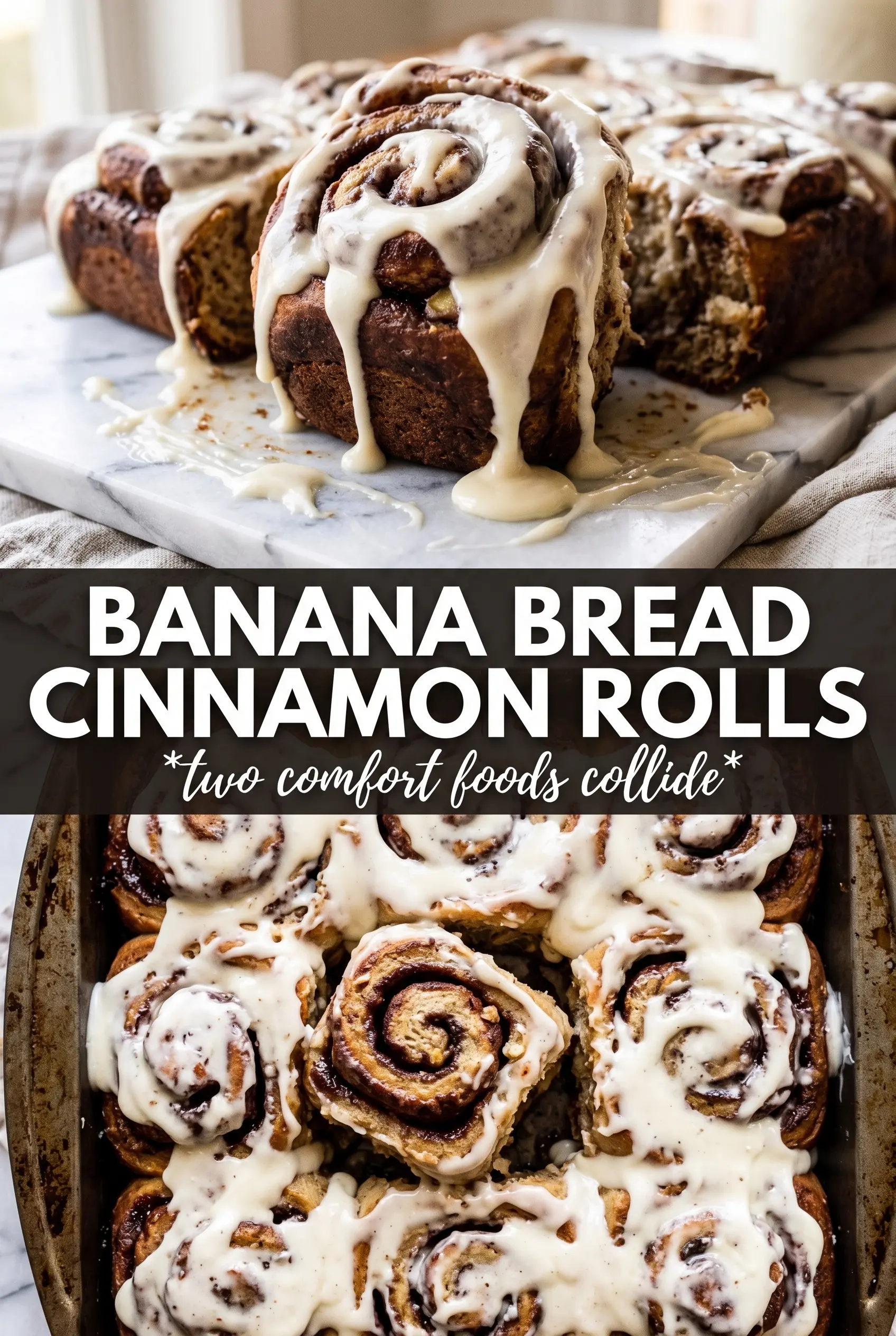
Banana Bread Cinnamon Rolls
Ingredients
Equipment
Method
- Mix the warm milk, instant yeast, and sugar, then let sit for 5 minutes until foamy with a visible yeast bloom.
- Add mashed bananas, softened butter, egg, flour, and salt, then knead until the dough is smooth and elastic.
- Cover the dough and let it rise for 1 hour, until it has doubled in size and looks puffy.
- Roll the dough into a 12x18 rectangle and spread with softened butter to coat the surface.
- Sprinkle brown sugar and cinnamon evenly over the buttered dough.
- Roll up tightly from the long edge to form a log, then slice into 12 rolls.
- Place rolls into a greased 9x13 pan and let rise for 30 minutes until noticeably puffy.
- Bake at 375°F for 20–25 minutes until the tops are golden and the rolls look set.
- Beat browned butter, cream cheese, powdered sugar, milk, and vanilla until smooth, then spread over the warm rolls immediately so the frosting melts into the swirls.