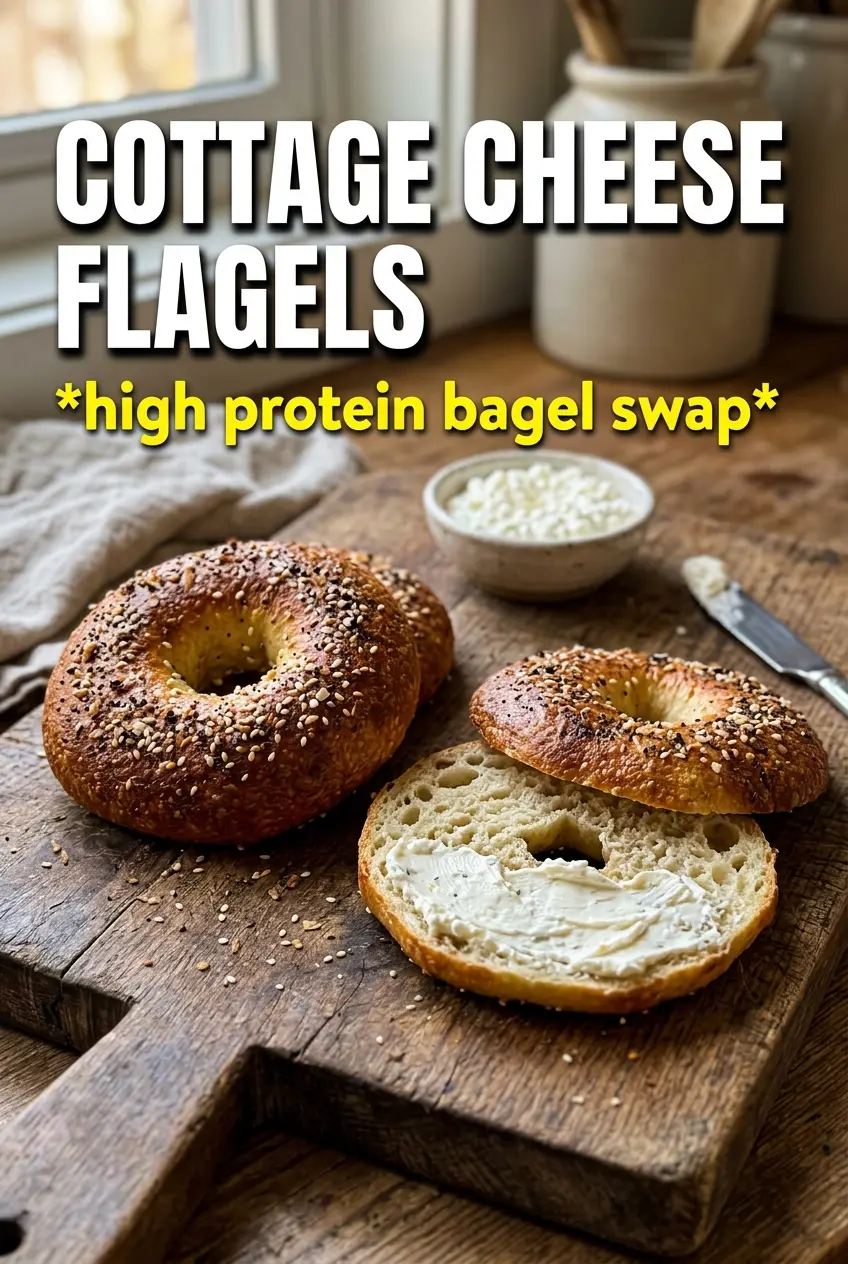
Golden cottage cheese flagels hit that sweet spot between a bagel and a biscuit: chewy on the outside, tender in the middle, and sturdy enough to split without crumbling. They bake up with a deep golden top and a dense, satisfying bite that feels a lot more substantial than a quick breakfast bread should. The best part is that you don’t need yeast, boiling water, or a long rise to get there.
The cottage cheese does two jobs here. It adds moisture and a little tang, and it keeps the interior soft while the flour gives the dough enough structure to hold its flat, bagel-like shape. Using self-rising flour keeps the ingredient list short, but the all-purpose flour substitution works just as well when you add the baking powder and salt in the right amounts. The dough should feel slightly sticky, not dry; that tackiness is what keeps the flagels from turning bready and dull.
Below, I’ve laid out the small details that matter most: how flat to shape them, why the egg wash helps the seasoning stick, and what to do if your dough feels too wet or too stiff. Those little adjustments are what turn a good shortcut breakfast into something you’ll make again.
The dough came together fast and baked up with that dense, chewy center I was hoping for. I used everything bagel seasoning and they crisped nicely on top without drying out inside.
Love these cottage cheese flagels? Save them to Pinterest for a fast, high-protein breakfast with a chewy bagel-style bite.
The Trick to Flat Bagels That Still Taste Chewy
The mistake with a lot of homemade bagel shortcuts is that they lean too far into bread. You get a puffed-up roll when what you wanted was a flagel: flatter, denser, and more bagel-like in the center. The fix is simple. Shape the dough into a thick disc, not a mound, and stop before it looks polished. A little roughness on top gives you that homemade texture after baking.
Another thing that matters here is moisture balance. Cottage cheese varies a lot by brand, and if yours is extra wet, the dough can spread too much and bake up gummy. If that happens, add a spoonful of flour at a time until the dough holds together and still feels tacky. If it feels dry and won’t come together, the cottage cheese was probably on the drier side or over-measured. A teaspoon of water or another small spoonful of cottage cheese usually brings it back.
What Each Ingredient Is Doing in These Cottage Cheese Flagels
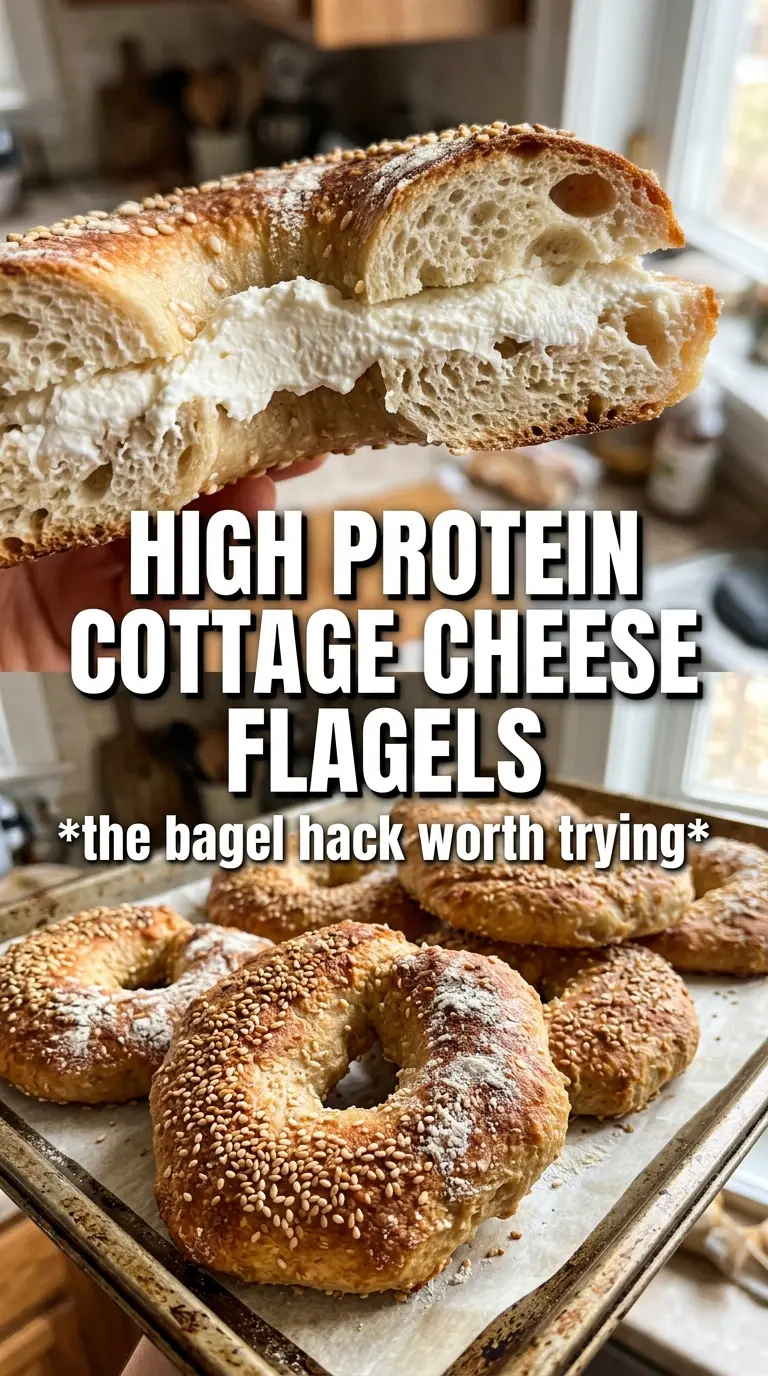
- Full-fat cottage cheese — This is the engine of the recipe. It adds moisture, protein, and a mild tang that keeps the flavor from tasting flat. Full-fat works best because it gives the dough a richer texture and a less dry crumb. If you only have low-fat, it will still work, but the interior can come out a little less tender.
- Self-rising flour — This gives the flagels their lift without turning them airy. It already contains leavening and salt, so the dough comes together fast and bakes into a chewy, structured bread instead of a dense puck. If you’re using all-purpose flour, add the baking powder and salt exactly as written so the rise stays balanced.
- Egg wash — The egg wash gives the tops that deep golden color and acts like glue for the seasoning. Without it, the seeds don’t cling as well and the top can bake up a little duller. Beat the egg until smooth and brush on a thin layer; heavy egg wash can pool at the edges and leave streaks.
- Everything bagel seasoning or sesame seeds — This is where the bagel-style flavor comes from. Everything seasoning gives you garlic, onion, and salt in one shot, while sesame seeds keep things simpler and a little nuttier. Press the topping lightly into the egg wash so it stays put in the oven.
Mix, Shape, and Bake Them Until the Tops Turn Deep Gold
Building the Dough
Stir the cottage cheese and flour together until the mixture looks shaggy and starts to come together in one mass. A spoon works, but clean hands finish the job fastest. The dough should feel slightly sticky and a little uneven, not dry and smooth like bread dough. If it’s crumbly, it needs another spoonful of cottage cheese or a few drops of water; if it’s loose and wet, dust in a little more flour.
Shaping the Flagels
Divide the dough into four equal pieces and flatten each one into a disc about 1/2 inch thick. That thickness is the sweet spot for a flagel: thin enough to bake through quickly, thick enough to stay chewy in the middle. If you shape them too tall, they bake like little rounds of bread instead of flat bagels. Keep the edges a little rustic rather than pinching them smooth; overworking the dough makes the texture tighter than it should be.
The Finish in the Oven
Brush the tops with beaten egg and scatter the seasoning generously over each one. Bake until the tops are glossy, deeply golden, and the bottoms lift cleanly from the parchment. If they’re pale, they’ll taste underbaked and doughy; if they’re too dark, the crust gets hard before the center finishes setting. Let them rest for a few minutes before slicing so the steam settles and the crumb firms up.
How to Adapt These Without Losing the Chewy Center
Gluten-Free Version
Use a 1:1 gluten-free flour blend that includes xanthan gum, then watch the dough texture closely. Gluten-free dough often feels softer and a little more fragile, so keep the discs thick enough to hold their shape and add a dusting of flour only if they’re too sticky to handle. The result is still satisfying, but the chew will be a little more tender and less springy.
Lower-Carb Approach
A low-carb flour substitute can work, but the texture changes more than it does with regular flour. Expect a more biscuit-like crumb and less of the classic bagel chew. If that tradeoff works for you, keep the shaping the same and bake until the tops are firm and golden rather than pale and soft.
Different Toppings
Everything seasoning gives the most classic bagel vibe, but sesame seeds, poppy seeds, or coarse flaky salt all work. A lighter topping changes the flavor balance and lets the cottage cheese come through more clearly. For a sweeter breakfast, skip the savory topping and serve the baked flagels with honey, fruit, or jam.
Storage and Reheating
- Refrigerator: Store in an airtight container for up to 4 days. The crust softens a bit in the fridge, but the centers stay pleasantly chewy.
- Freezer: These freeze well. Cool completely, wrap individually, and freeze for up to 2 months. Thaw at room temperature or toast straight from frozen.
- Reheating: The toaster or toaster oven is the best option. It brings the edges back to life without drying out the inside the way a microwave can.
Answers to the Questions Worth Asking
Cottage Cheese Flagels
Ingredients
Equipment
Method
- Preheat the oven to 400°F and line a sheet pan with parchment paper so the flagels bake evenly without sticking.
- Mix full-fat cottage cheese and self-rising flour until a dough forms and it is slightly sticky, then let it come together without overworking.
- Divide the dough into 4 equal pieces and shape each into a flat disc about 1/2 inch thick for a flagel shape with a chewy center.
- Place the flat discs on the prepared sheet pan, brush them with the beaten egg as an egg wash, and sprinkle generously with everything bagel seasoning or sesame seeds.
- Bake at 400°F for 22–25 minutes until golden and cooked through, with a slightly domed top and a set crust.
- Let the flagels cool briefly, then slice and serve with cream cheese, smoked salmon, or your favorite toppings.