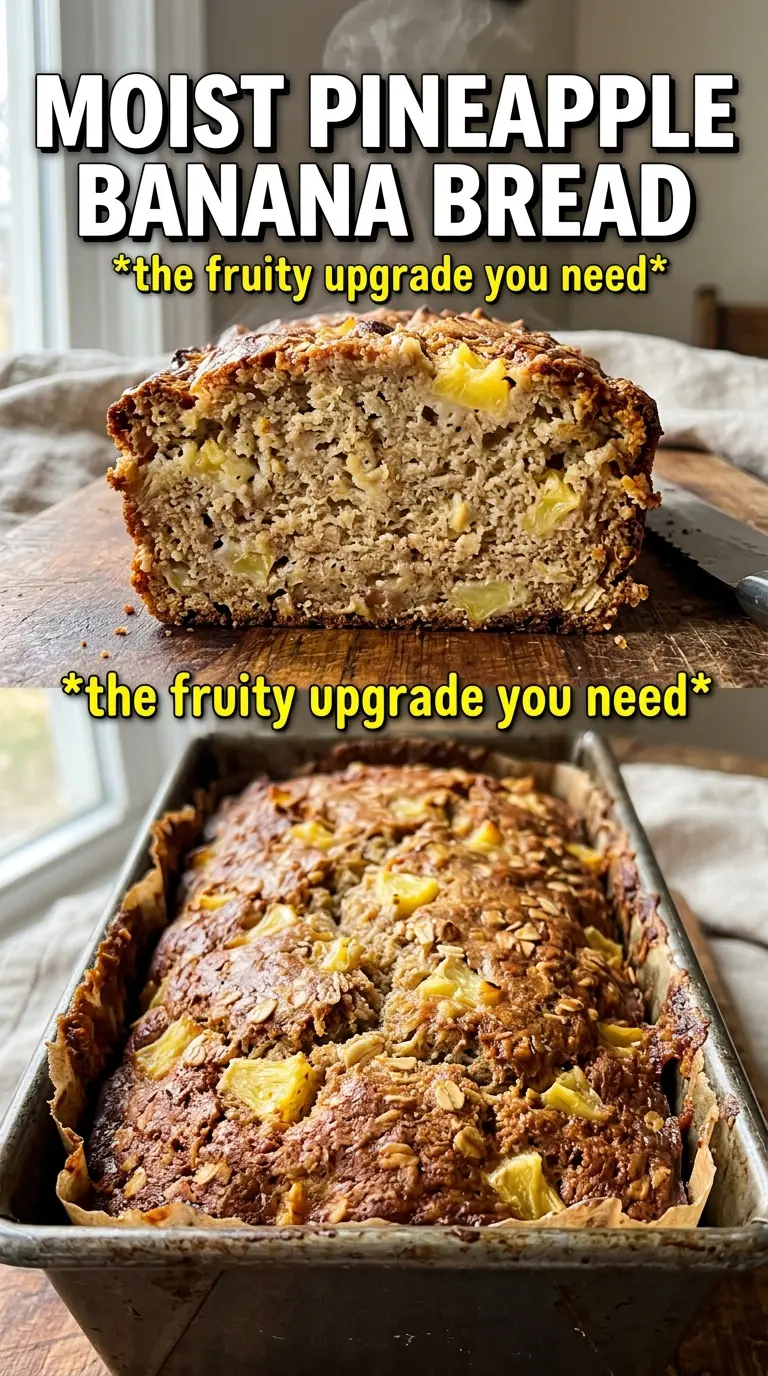
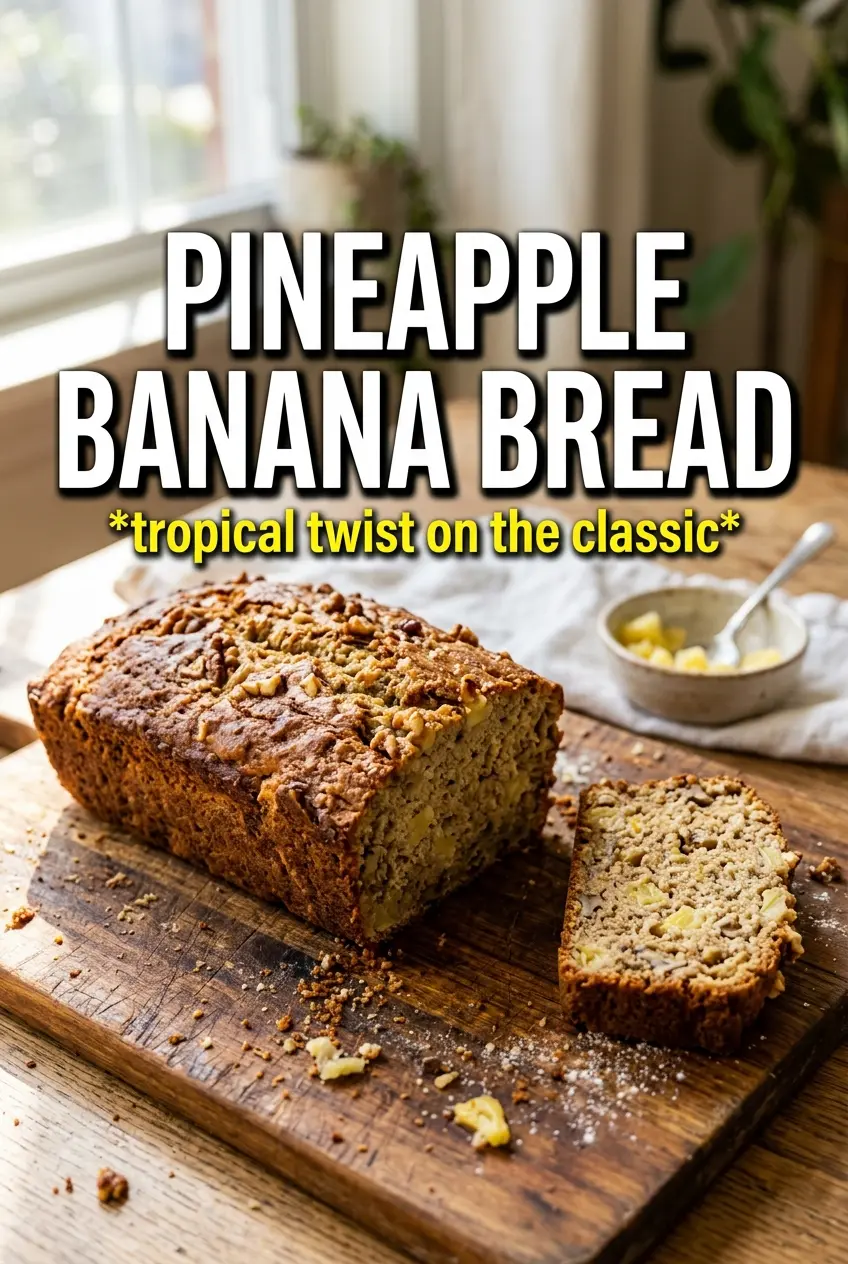
Crushed pineapple gives banana bread a softer, richer crumb and a brighter finish that keeps each slice from tasting flat. The loaf bakes up golden on the outside with a dense, jewel-like interior and just enough chew from the fruit to make every bite feel a little more interesting than standard banana bread.
The trick is keeping the pineapple in two forms: a little reserved juice goes into the batter for extra flavor, while the drained crushed pineapple stays in the loaf for moisture without making it soggy. That balance matters. Too much liquid and the center turns gummy; too little and the bread loses the tropical note that makes it special.
Below, I’ve included the one cooling step people skip and regret, plus a few smart swaps if you want to add coconut or nuts. The batter comes together fast, but the loaf needs a little patience at the end so the crumb sets cleanly.
The pineapple kept the loaf so moist, and the crumb set up perfectly after cooling for 15 minutes. Mine sliced cleanly the next day, and the coconut added just enough texture without overpowering the banana.
Save this pineapple banana bread for the next time you want a moist, tropical loaf with a clean slice and a soft, chewy crumb.
The Reason This Loaf Stays Moist Without Turning Gummy
Pineapple banana bread can go wrong fast if the fruit throws off the liquid balance. The loaf should taste lush and moist, not wet or sticky in the middle. That difference comes from draining the pineapple well and using only a little of the reserved juice in the batter. You get the flavor and softness without flooding the batter.
Another thing people miss is the way mashed bananas behave with fruit. Overmixed batter turns dense in a bad way, but a gently folded batter bakes into a tender loaf with a fine crumb. Once the flour goes in, stop stirring as soon as you no longer see dry streaks. A few small lumps are better than a tough loaf.
What the Pineapple, Banana, and Butter Are Each Doing Here
- Ripe bananas — These bring sweetness, body, and the classic banana bread flavor. They should be heavily speckled and soft enough to mash smoothly. If yours are under-ripe, the loaf will taste flatter and need more sugar to compensate.
- Crushed pineapple — This is the ingredient that changes the texture and keeps the crumb supple. Drain it well, then measure the reserved juice carefully so the batter stays balanced. Canned crushed pineapple works best here because it distributes evenly through the loaf.
- Melted butter — Butter gives the bread a richer, rounder flavor than oil and helps the loaf brown deeply. Melt it first so it blends easily with the eggs and sugar. If you swap in oil, the bread will stay moist, but you’ll lose some of that baked, buttery depth.
- All-purpose flour — This keeps the crumb soft without getting heavy. Spoon and level it instead of scooping, because packed flour can make this bread dense. For a slightly sturdier loaf, you can replace a small portion with whole wheat flour, but don’t push it too far or the texture gets tight.
- Shredded coconut or macadamia nuts — These are optional, but they add texture that plays well with the tropical flavor. Coconut makes the crumb a little more aromatic, while macadamias add a buttery crunch. Fold them in at the end so they stay evenly distributed.
Mixing the Batter, Baking the Loaf, and Knowing When It’s Done
Starting With the Wet Ingredients
Whisk the melted butter, sugar, eggs, vanilla, mashed bananas, and pineapple juice together until the mixture looks smooth and glossy. The sugar won’t dissolve completely yet, and that’s fine. What you want is a cohesive base before the pineapple goes in. If the butter is too hot, it can start cooking the eggs, so let it cool for a minute or two after melting.
Bringing in the Pineapple
Stir in the drained crushed pineapple before the flour touches the bowl. That keeps the fruit from clumping and helps it spread through the loaf instead of sinking to the bottom. If your pineapple still looks wet after draining, press it lightly in a strainer. A little juice clinging to it is fine; a puddle in the bowl is not.
Folding the Dry Ingredients
Add the flour, baking soda, baking powder, and salt, then fold just until the batter comes together. The batter will look thick and a little textured, and that’s what you want. Overmixing here builds gluten and makes the bread chewy in the wrong way. Stop as soon as the dry flour disappears, then fold in coconut or nuts if you’re using them.
Watching for the Center to Set
Pour the batter into a greased 9×5 loaf pan and bake until the top is deeply golden and a toothpick comes out clean from the center. The loaf may crack down the middle, which is normal for a quick bread this moist. If the top browns too fast before the center is done, lay a loose piece of foil over it for the last 10 to 15 minutes. Let it cool in the pan for 15 minutes before turning it out so the crumb can firm up.
Three Ways to Adjust This Loaf Without Losing the Tropical Flavor
Make it dairy-free
Swap the butter for melted coconut oil or a neutral oil. Coconut oil keeps the tropical note in the background and gives the loaf a slightly firmer bite once cooled, while neutral oil makes the texture softer but less flavorful. Use the same amount either way.
Turn it into coconut pineapple bread
Add the shredded coconut and toast it lightly first if you want a deeper, nuttier flavor. Toasted coconut gives the loaf a drier, more aromatic finish, while raw coconut stays softer and blends into the crumb. Either way, keep the amount at 1/2 cup so the loaf doesn’t get overloaded.
Skip the nuts and keep it smooth
Leave out the macadamias if you want a cleaner, more uniform crumb. The loaf will slice more neatly and feel a little softer overall. If you like contrast without crunch, add a tablespoon of toasted coconut on top before baking instead.
Storing leftovers for the best texture
- Refrigerator: Store in an airtight container for up to 4 days. The crumb gets a little denser in the fridge, but the flavor stays good.
- Freezer: Freezes well for up to 3 months. Wrap the cooled loaf or individual slices tightly, then place in a freezer bag so it doesn’t pick up freezer odors.
- Reheating: Warm slices in a toaster oven or microwave just until soft, not hot. Overheating dries out quick bread fast, especially one this moist, so short bursts work better than long reheats.
Questions I Get Asked About This Recipe
Pineapple Banana Bread
Ingredients
Equipment
Method
- Preheat the oven to 350°F and grease a 9x5 loaf pan.
- Reserve the drained pineapple juice for later measuring and set it aside.
- Whisk the melted butter, sugar, eggs, vanilla, and pineapple juice into the mashed bananas until combined.
- Stir in the drained crushed pineapple.
- Fold in the all-purpose flour, baking soda, baking powder, and salt until just combined; fold in shredded coconut or macadamia nuts if using.
- Pour the batter into the prepared pan and bake for 60–70 minutes until deeply golden and a toothpick comes out clean.
- Cool in the pan for 15 minutes before turning out to set so the loaf stays extra moist.