Thick brioche, a buttery caramel layer, and a custard that bakes up puffed and tender turn this overnight crème brûlée French toast into the kind of brunch dish people talk about before they’ve even finished the first serving. The bottom of the pan turns glossy and bubbling, then gets inverted under the bread so each slice carries that crackly, caramelized edge and soft custard middle. It eats like something from a hotel brunch spread, but it’s built from simple pantry ingredients and a loaf of good bread.
The trick is in the layering. The caramel base goes in first, where it melts into a deep, toffee-like sauce as the French toast bakes. Brioche works best because it’s rich enough to stand up to an overnight soak without collapsing, and its soft crumb catches the custard without turning soggy. Corn syrup may look minor, but it keeps the caramel smooth instead of grainy, which matters when you’re pouring it under the bread and baking everything together.
Below, I’ll walk through the small decisions that keep this from turning heavy or watery, plus a few ways to adapt it if you need a different bread or want to prep it farther ahead.
The caramel bubbled up through the bread just like you described, and the brioche stayed fluffy instead of mushy even after sitting overnight. My family kept sneaking pieces from the pan before I could even dust it with powdered sugar.
Save this caramel-bubbled brioche French toast for the brunch morning when you want a make-ahead dish that slices like custard and tastes like dessert.
The Overnight Soak That Keeps It Custardy, Not Soggy
The mistake with most baked French toast is rushing the soak or using bread that can’t hold its structure. If the custard barely touches the bread, the center bakes up dry. If the bread is too thin or too fresh, it collapses into a wet layer that never picks up enough body in the oven. Brioche solves most of that because it’s rich and sturdy, but it still needs a full night in the fridge so the custard reaches the center of each slice.
The other thing that matters here is the caramel base. It should be smooth before it goes into the pan, not grainy or half-melted. Once the butter, brown sugar, and corn syrup come together, the mixture should look glossy and pourable. That base is doing two jobs: sweetening the bread from underneath and creating the sauce that bubbles up through the finished casserole.
What Each Ingredient Is Actually Doing in This Dish
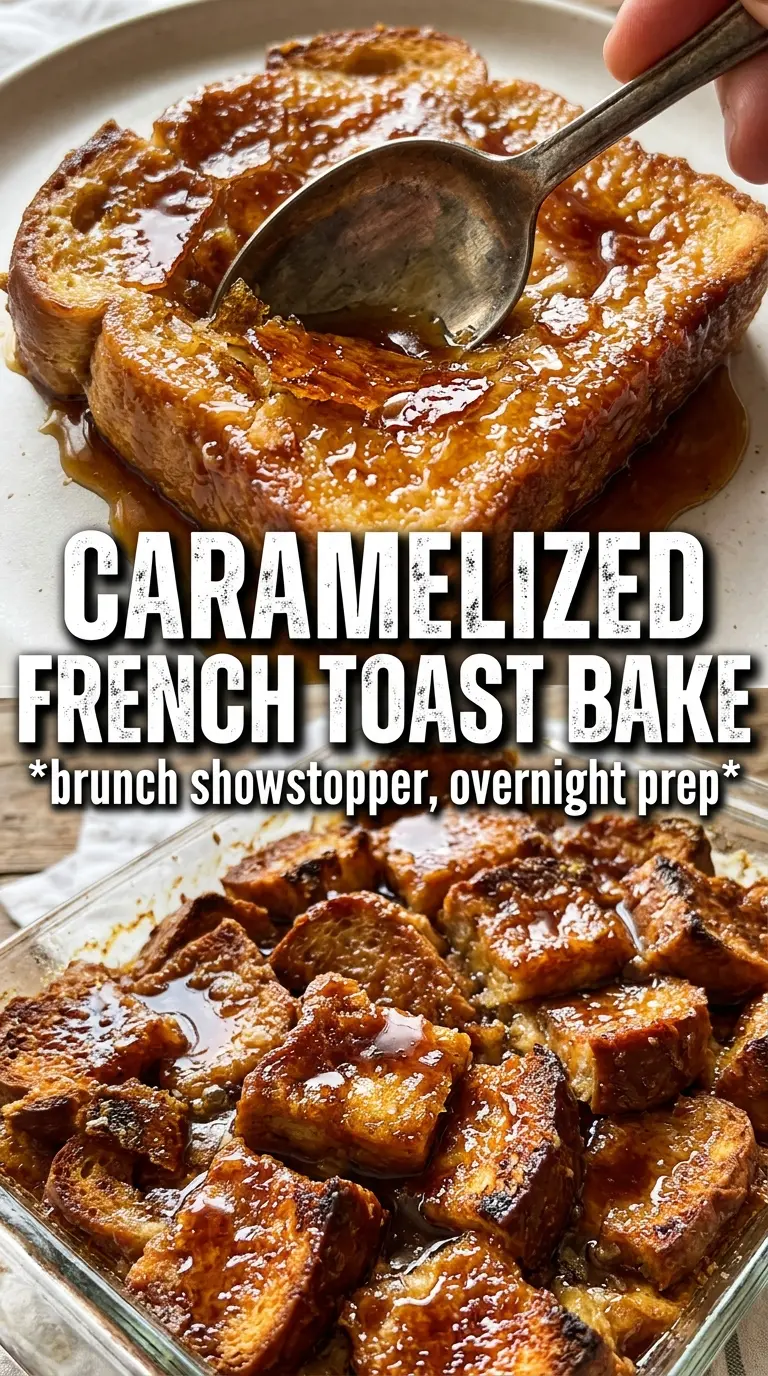
- Brioche bread — This is the backbone of the dish. Its buttery crumb soaks up the custard without turning flimsy, and thick slices hold their shape after baking. Challah works in a pinch, but skip soft sandwich bread; it breaks down too fast overnight.
- Brown sugar — This builds the caramel base with a deeper molasses note than white sugar would give you. Light brown sugar keeps the flavor balanced; dark brown sugar will push it farther toward toffee.
- Corn syrup — It keeps the caramel smooth and glossy, which matters because a grainy base won’t melt into that syrupy layer underneath the bread. If you don’t keep it on hand, you can leave it out, but the sauce is more likely to crystallize a little as it bakes.
- Heavy cream — This makes the custard rich enough to set softly instead of baking dry. Whole milk can work if that’s what you have, but the texture won’t be as plush.
- Eggs — They’re what turn the cream into a custard that actually holds together in the oven. Five large eggs give enough structure for a 9×13 pan without making the result rubbery.
- Vanilla and cinnamon — Vanilla rounds out the caramel, and cinnamon keeps the whole pan from tasting flat. Neither one should overpower the bread; they’re there to support the custard, not compete with it.
Building the Pan So the Caramel Ends Up on Top
Cook the caramel until it’s smooth, not dark
Melt the butter with the brown sugar and corn syrup in a saucepan over medium heat, stirring until the mixture turns smooth and glossy. You’re not trying to cook it into a hard candy stage; you just want everything melted together so it pours easily into the pan. If you stop too early, the sugar stays gritty and doesn’t form that clean sauce layer under the bread.
Arrange the brioche in a snug single layer
Lay the slices over the caramel so they overlap slightly and cover the dish from edge to edge. Gaps let the custard pool in one spot, which gives you uneven baking and a watery pocket at the center. Thick slices are important here because thin slices slump after soaking and don’t invert as cleanly.
Pour the custard slowly and let the bread drink it in
Whisk the eggs, cream, sugar, vanilla, and cinnamon until the mixture looks uniform, then pour it evenly over the bread. Press down gently on any floating corners so every slice gets coated. If the top still looks dry after a minute, let it sit; the bread needs time to absorb the liquid before the refrigerator does the rest of the work.
Bake until the center is set and the top is deeply golden
After an overnight rest, bake at 350°F until the top is puffed and golden and the middle no longer sloshes when you nudge the pan. A little wobble is fine; a wet center means the custard hasn’t finished setting. Let it rest a few minutes before serving so the caramel settles and the slices release in cleaner pieces.
How to Adapt This for Different Pans and Different Eatters
Gluten-Free Version With a Sturdier Bread
Use a gluten-free brioche-style loaf if you can find one, or another enriched loaf that slices thickly. The key is sturdiness; crumbly bread won’t survive the overnight soak. Expect a slightly softer set, but the caramel layer still bakes up beautifully.
Dairy-Free Swap Without Losing the Custard Feel
Replace the butter with a plant-based butter that melts cleanly and use full-fat coconut cream or another rich dairy-free cream in place of heavy cream. The result won’t taste exactly the same, but it will still bake into a soft custard with a good caramel base. Use a vanilla-forward dairy-free option to keep the flavor round.
Making It the Night Before for a Busy Morning
Assemble the whole pan, cover it tightly, and refrigerate it overnight without adding any extra liquid. That rest is what gives you the soft, custardy center and the finished caramel texture underneath. If you try to shorten the soak too much, the bread won’t absorb enough custard and the middle will taste dry.
Storage and Reheating
- Refrigerator: Store leftovers covered for up to 3 days. The bread firms up a bit, but the caramel layer stays rich.
- Freezer: This freezes better after baking than before. Wrap individual portions well and freeze for up to 2 months; the texture softens slightly after thawing, but it still reheats well.
- Reheating: Warm slices in a 325°F oven, covered loosely with foil, until hot through. The biggest mistake is microwaving too long, which turns the custard rubbery and makes the caramel separate.
Answers to the Questions Worth Asking
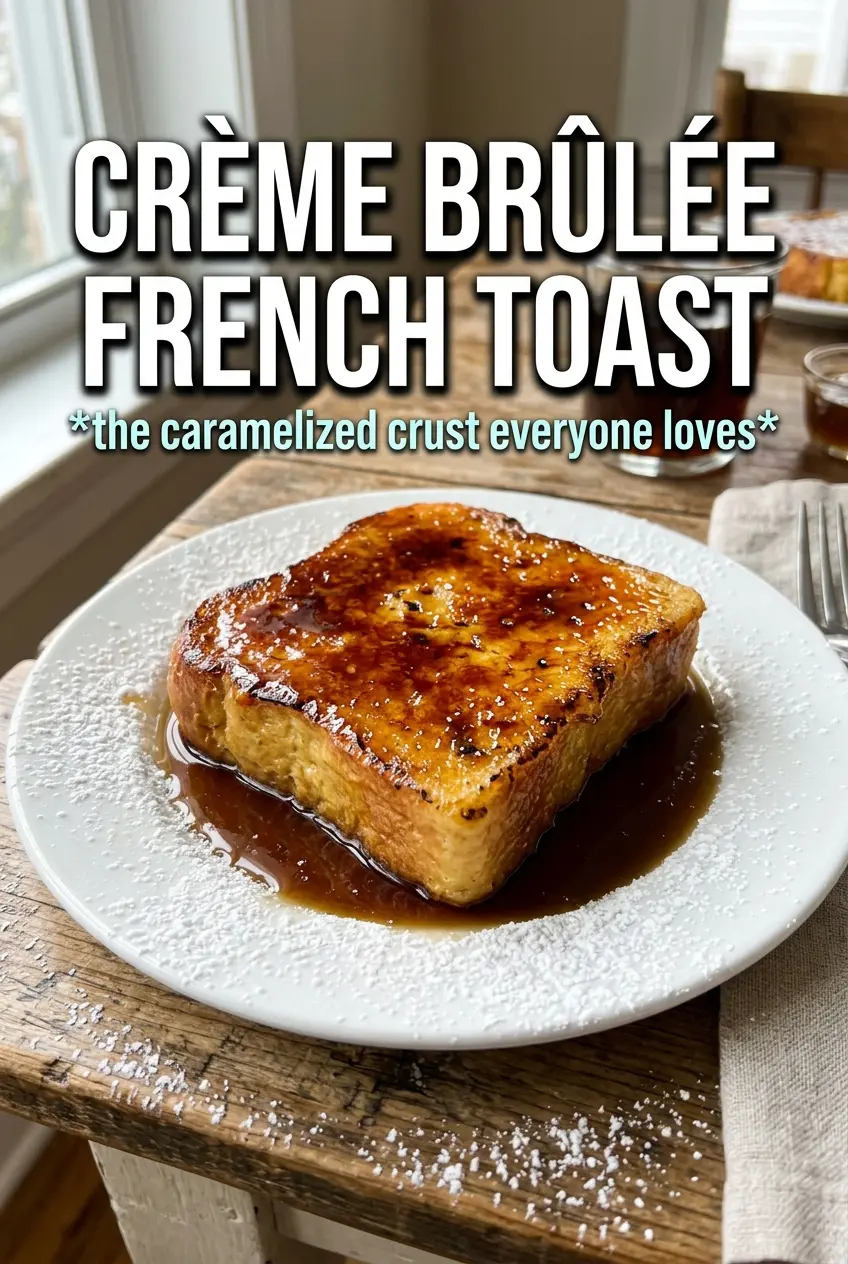
Overnight Crème Brûlée French Toast
Ingredients
Equipment
Method
- Melt the unsalted butter, brown sugar, and corn syrup in a saucepan over medium heat until smooth, about 5 to 7 minutes, watching for a glossy caramel color.
- Pour the caramel into a greased 9x13 baking dish and spread it to coat the bottom so it can bubble up through the bread.
- Arrange the brioche slices over the caramel in a single overlapping layer so every piece will be soaked by the custard.
- Whisk the eggs, heavy cream, sugar, vanilla extract, and cinnamon together until smooth, about 1 to 2 minutes.
- Pour the custard over the bread, ensuring every piece is soaked; let any dry spots get fully moistened.
- Cover and refrigerate overnight to allow the brioche to absorb the custard.
- Bake at 350°F for 40 to 45 minutes until the top is golden and puffed and the caramel has bubbled up through the bread.
- Dust with powdered sugar while warm so it melts slightly into the caramelized surface.
- Serve with maple syrup to pour over the caramel French toast bake.