Shakshuka is the kind of one-pan breakfast that turns a can of tomatoes into something people hover over at the table. The sauce cooks down until it’s thick and spoonable, the eggs settle right into the center, and each yolk turns into its own little sauce for bread. What you end up with is bright, smoky, and sturdy enough to serve straight from the skillet without ever feeling fussy.
The part that makes this version work is the way the tomato base is cooked before the eggs go in. Onion and bell pepper soften first, then the spices toast briefly in the oil so the cumin and paprika taste warm instead of flat. After that, the tomatoes simmer until the sauce loses its raw edge and thickens enough to hold those wells for the eggs. If the sauce is too loose, the whites drift and the yolks overcook before the dish has any real shape.
Below, I’ve included the exact signs to look for at each stage, plus a few ways to adjust the heat, make it dairy-free, or keep leftovers tasting good the next day.
The sauce thickened up beautifully before I added the eggs, so the whites stayed neat instead of disappearing into the tomatoes. I used feta and crusty bread, and my husband kept scraping the pan clean.
Shakshuka with runny yolks and smoky tomato sauce is worth keeping close for breakfast, brunch, or any night you want a pan of eggs and bread-dipping sauce.
The Sauce Has to Thicken Before the Eggs Go In
Shakshuka falls apart when the tomato base is too loose. The eggs need a saucy bed that holds their shape, not a soupy skillet where the whites feather out into the liquid and turn gray at the edges. A proper shakshuka sauce should look glossy, thick enough to leave a trail when you drag a spoon through it, and still soft enough to cradle the eggs without drying out.
The other thing people miss is how much flavor comes from reducing the tomatoes before the eggs are added. That 10-minute simmer cooks off the raw, tinny edge of canned tomatoes and concentrates the spices. If the sauce still looks watery after simmering, keep it on the heat a few minutes longer. The eggs cook fast, and once they’re in, there’s no fixing a thin base without overcooking them.
What Each Ingredient Is Actually Doing in This Dish

- Olive oil — This is the starting fat that carries the spices and keeps the onions from scorching. A good everyday olive oil works fine here because it’s doing cooking, not finishing.
- Onion and red bell pepper — These build sweetness and body in the sauce. Dice them small so they soften evenly and disappear into the tomato base instead of staying chunky and crunchy.
- Garlic — It only needs a minute. If it browns, it turns bitter fast, so it goes in after the vegetables have softened and just before the spices.
- Cumin, smoked paprika, chili powder, and cayenne — This is the backbone of the dish. Toasting them in oil wakes them up and makes the shakshuka taste layered instead of flat and one-note. If you want less heat, cut the cayenne back first; the smoked paprika is worth keeping.
- Crushed tomatoes plus diced tomatoes — The crushed tomatoes make the sauce thick and cohesive, while the diced tomatoes leave little pockets of texture. If you only have one type, use all crushed for a smoother skillet or all diced for a chunkier one.
- Feta — It adds salt and a creamy, tangy finish on top. Buy a block and crumble it yourself if you can; pre-crumbled feta is drier and doesn’t melt into the sauce as nicely.
Building the Skillet So the Eggs Stay Intact
Softening the Vegetables
Cook the onion and bell pepper over medium heat until they’re soft and losing their raw bite, about 6 minutes. You’re looking for the onions to turn translucent and the peppers to slacken without browning hard. If the pan is too hot, the vegetables will color before they soften, and the sauce will taste aggressive instead of rounded.
Waking Up the Spices
Add the garlic, then the spices, and stir them into the oil for just 30 seconds. The pan should smell warm and smoky almost immediately. If the garlic starts to brown, move on faster; burnt garlic will dominate the whole dish and there’s no fixing it later.
Reducing the Tomatoes
Pour in both cans of tomatoes, season them, and let the sauce simmer until it tightens up and starts to look saucy rather than watery. This is where the flavor deepens and the eggs get a proper nest. If you rush this part, the whites spread too far and the yolks cook before the sauce has any richness.
Poaching the Eggs in Place
Make shallow wells with the back of a spoon and crack each egg into its own space. Cover the skillet and keep the heat at medium-low so the whites set gently while the yolks stay runny. Pull the pan when the whites are opaque and the yolks still wobble, because carryover heat finishes the last bit of cooking fast.
Three Ways to Make This Recipe Your Own
Dairy-Free Shakshuka
Leave off the feta and finish with extra parsley or a drizzle of olive oil. The dish stays bold and satisfying without any cheese, and the tomato sauce becomes the main event instead of the topping.
Make It Milder or Hotter
For a softer version, skip the cayenne and cut the chili powder in half. For more heat, add a pinch of red pepper flakes with the spices or finish with hot sauce at the table so the whole pan doesn’t get overpowering.
Adding More Bulk for Brunch
Stir in a handful of spinach near the end or add a can of chickpeas with the tomatoes if you want a heartier pan. Spinach melts into the sauce, while chickpeas give it more substance and turn the dish into something closer to a full meal.
Stovetop to Oven Finish
If your skillet is oven-safe, you can move it under a broiler for a minute or two after adding the eggs to set the tops quickly. Watch it closely; the line between lightly set whites and overcooked yolks is short.
Storage and Reheating
- Refrigerator: Store leftovers for up to 3 days. The eggs will firm up and the yolks won’t stay runny, but the sauce holds up well.
- Freezer: The tomato sauce freezes well, but the eggs don’t. Freeze the sauce alone in portions, then reheat it and add fresh eggs when you’re ready to serve.
- Reheating: Warm leftovers gently in a skillet over low heat with a splash of water if needed. Microwaving at full power tends to overcook the eggs and make the sauce splashy instead of silky.
Answers to the Questions Worth Asking
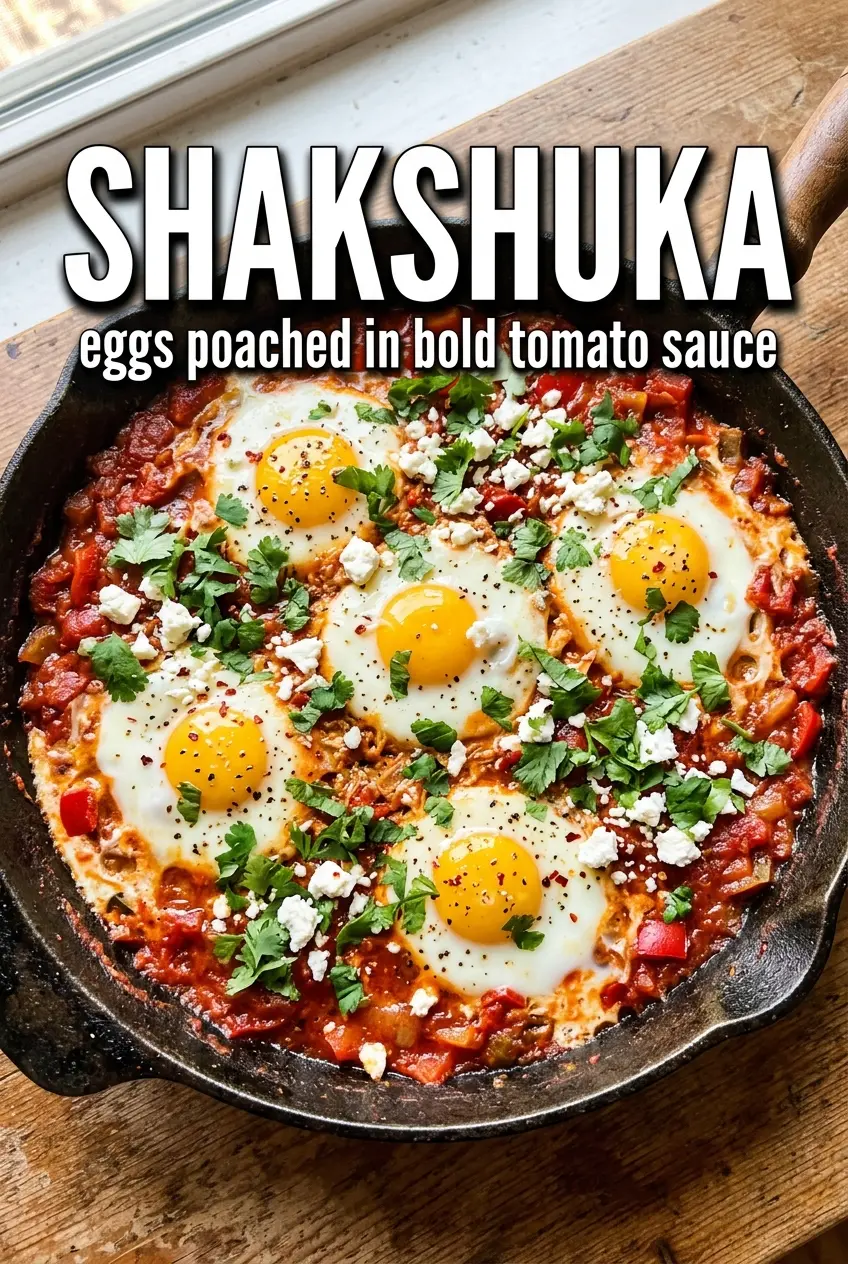
Shakshuka
Ingredients
Equipment
Method
- Heat olive oil in a large oven-safe skillet over medium heat, then add onion and bell pepper and cook for 6 minutes until soft, stirring occasionally for even cooking.
- Add garlic and cook for 1 minute, then stir in cumin, smoked paprika, chili powder, and cayenne and toast for 30 seconds until fragrant.
- Pour in crushed tomatoes and diced tomatoes, season with salt and pepper, and simmer for 10 minutes until the sauce thickens and looks vivid and bubbling.
- Use a spoon to make 6 wells in the sauce, then crack 1 egg into each well so they sit nestled in the tomato base.
- Cover and cook over medium-low heat for 8–10 minutes until the whites are set but the yolks are still runny, keeping the surface gently bubbling with minimal movement.
- Top with feta cheese and fresh parsley and serve directly from the pan with crusty bread or pita for dipping right away.