Orange French toast turns the usual custardy breakfast into something brighter, richer, and a little more special without adding much work. The bread still cooks up crisp at the edges and soft in the middle, but the orange zest and juice cut through the richness so every bite tastes fresh, not heavy. The syrup on top pulls everything together with a glossy, citrusy finish that tastes like it belongs on a plate of hot brioche.
The trick here is using enough orange flavor to notice it, but not so much juice that the custard turns thin or the bread goes soggy before it hits the pan. Brioche or challah works best because those soft, eggy loaves soak up the custard without falling apart, and they brown beautifully in butter. The cinnamon stays in the background where it should, just warming up the orange instead of competing with it.
Below, I’ll walk you through the timing that keeps the slices tender in the center and deeply golden on the outside, plus a few simple swaps if you need to work with what you already have in the kitchen.
The orange flavor came through beautifully without making the bread wet, and the syrup thickened just enough to coat the toast instead of running everywhere. My kids kept asking for the “orange syrup bread” again the next morning.
Save this orange French toast for the mornings when you want soft brioche, bright citrus, and that glossy orange syrup on top.
The Custard Needs Citrus, Not Just Orange Flavor
Orange French toast can go wrong when the custard tastes flat or when it turns the bread soft before it reaches the skillet. The orange juice brings brightness, but the zest is what makes the citrus flavor actually show up after the toast cooks. Without zest, the flavor gets muted by the eggs and milk.
The other mistake is rushing the soak. Thick brioche or challah needs a short dip, not a long bath. Thirty seconds per side gives you a tender center with enough structure left to brown in the pan. If the bread sits too long, it drinks up too much custard and turns heavy instead of plush.
What Each Ingredient Is Actually Doing in This Dish

- Brioche or challah — These breads are soft, sturdy, and rich enough to handle the orange custard. Fresh bread works, but slightly stale slices soak up better and brown more evenly.
- Orange juice and zest — Juice adds brightness to the custard and builds the syrup, while zest carries the stronger orange aroma. Use a fresh orange here; bottled juice won’t give you the same lift.
- Eggs — They set the custard and give the toast its creamy interior. Three eggs is the right balance for 8 slices; fewer and the coating turns thin, more and the toast tastes eggy.
- Whole milk — This loosens the custard just enough so it coats the bread instead of clumping. I wouldn’t swap in a thin milk alternative unless you need to; if you do, choose unsweetened oat milk for the closest texture.
- Butter — Butter gives the toast its caramelized edges and helps the syrup turn glossy. Use it in the skillet and again in the syrup for a rounder finish.
Cooking the Toast So It Browns Before It Turns Soft
Whisk the Custard Until the Eggs Disappear
Start by whisking the eggs, orange juice, zest, milk, sugar, vanilla, and cinnamon until the mixture looks smooth and even. You don’t want streaks of egg white floating around, because those cook into little bits on the bread and make the coating uneven. The custard should smell bright and fragrant, with the orange coming through before it even hits the pan.
Give the Bread a Quick, Even Soak
Dip each slice for about 30 seconds per side. Thick bread needs time to absorb, but not enough time to collapse. If the bread starts to bend or tear when you lift it, it’s gone too far; a good slice should look saturated but still hold its shape when you move it to the skillet.
Cook Over Medium Heat for a Deep Golden Crust
Melt the butter in a skillet and lay the slices in once the butter looks foamy, not browned. Medium heat is the sweet spot here because the sugar in the custard needs enough time to caramelize before the outside burns. If the pan is too hot, the toast darkens before the center sets. Flip when the first side is a deep golden color and releases cleanly.
Cook the Syrup Until It Naps the Spoon
For the orange syrup, simmer the orange juice, sugar, butter, and zest in a small saucepan for about 5 minutes. It should reduce slightly and look glossy, with tiny bubbles around the edges and a texture that lightly coats a spoon. If it stays watery, it will slide right off the toast; let it go another minute or two until it thickens just enough.
How to Adapt This for Different Kitchens and Different Mornings
Dairy-Free Orange French Toast
Swap the whole milk for unsweetened oat milk and use a dairy-free butter substitute for both the skillet and syrup. Oat milk keeps the custard creamy without thinning it out too much, and the toast still browns well. The flavor will be a little less rich, but the orange still carries the whole dish.
Make It With What You Have
If you don’t have brioche, use thick slices of Texas toast or a sturdy sandwich bread that’s a day old. It won’t be as plush or rich, but it still absorbs the custard well if you keep the soak brief. Thin bread is the wrong swap here; it tears before the pan can do its job.
Make It Brighter or More Warming
For a stronger citrus hit, add a little extra zest to the custard and keep the syrup as written. For a warmer finish, add a tiny pinch more cinnamon, but stop there or it starts to cover the orange. The balance in this recipe is what makes it taste polished instead of muddled.
Storage and Reheating
- Refrigerator: Store leftovers in an airtight container for up to 3 days. The bread softens a little as it sits, but the flavor stays good.
- Freezer: Freeze cooked slices in a single layer, then transfer to a bag for up to 2 months. Separate with parchment so they don’t stick together.
- Reheating: Warm in a 350°F oven or toaster oven until hot and lightly crisped. The microwave makes the slices rubbery and wipes out the nice edges, so skip it if you can.
Answers to the Questions Worth Asking
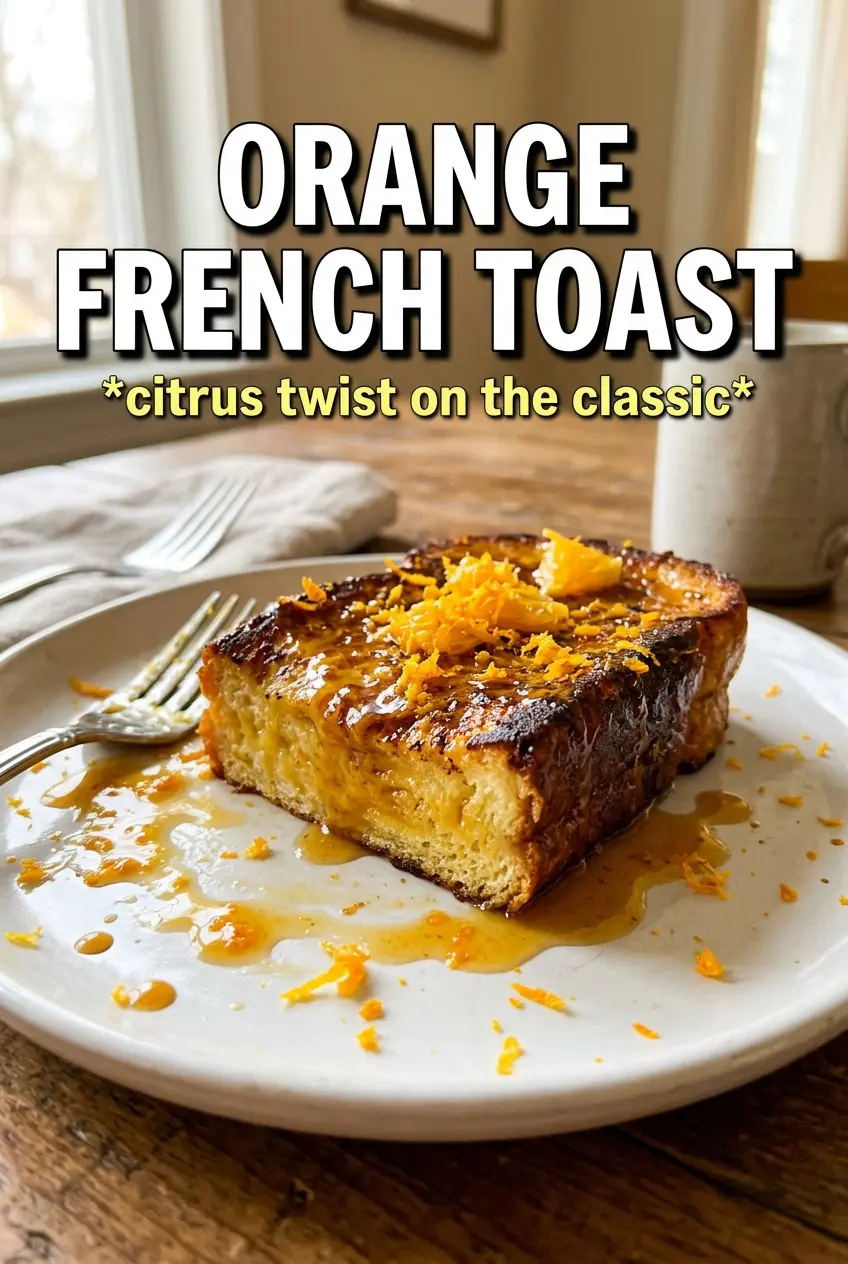
Orange French Toast
Ingredients
Equipment
Method
- Whisk together the eggs, orange juice, orange zest, milk, sugar, vanilla, and cinnamon until smooth and evenly combined.
- Dip each bread slice in the orange custard for 30 seconds per side so it absorbs but still holds its shape.
- Melt the butter in a skillet over medium heat, then cook a dipped slice for 3–4 minutes until the bottom is deeply golden and caramelized.
- Flip and cook the slice for another 3–4 minutes until the second side is deeply golden and caramelized.
- In a small saucepan, simmer the orange juice, sugar, butter, and zest for 5 minutes until slightly thickened and glossy.
- Serve the French toast dusted with powdered sugar and drizzle with orange syrup right before eating.