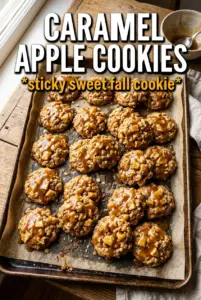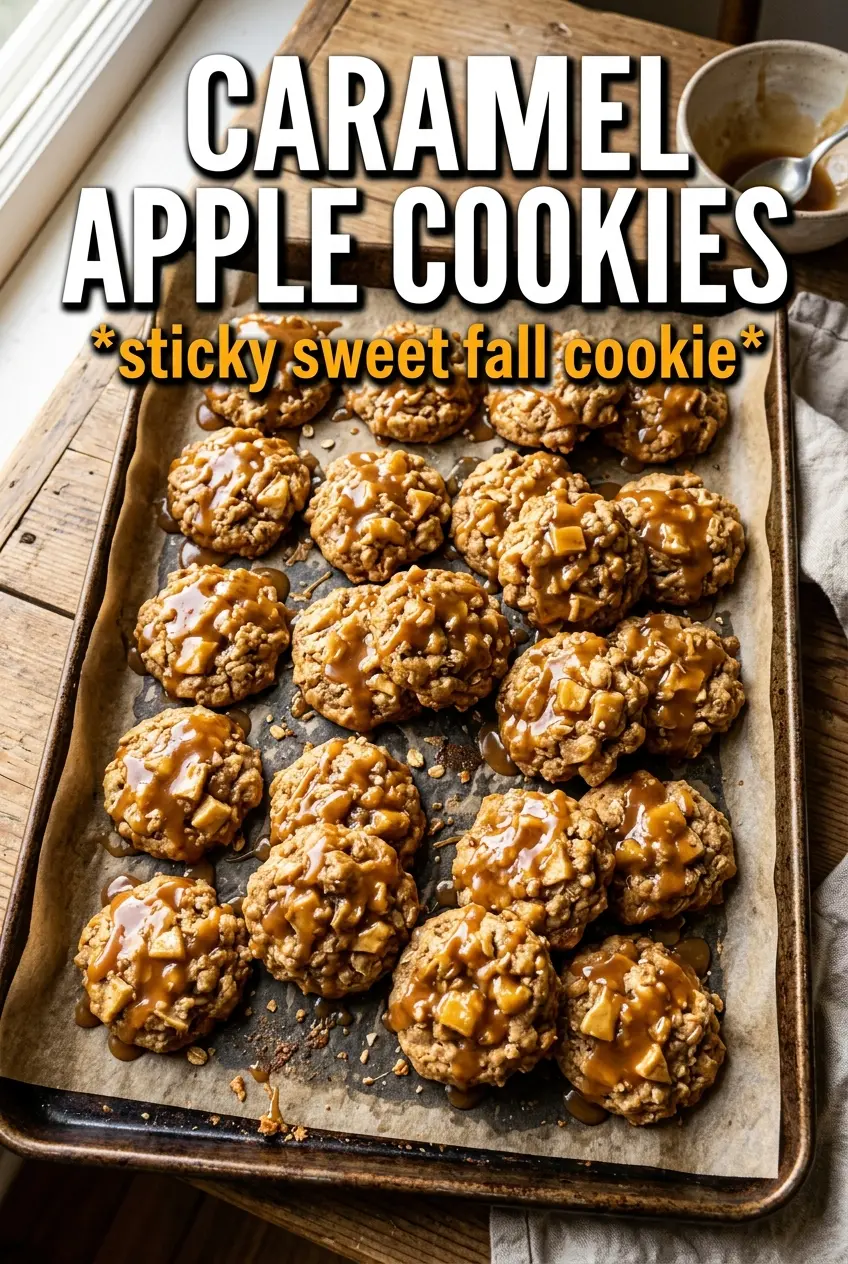
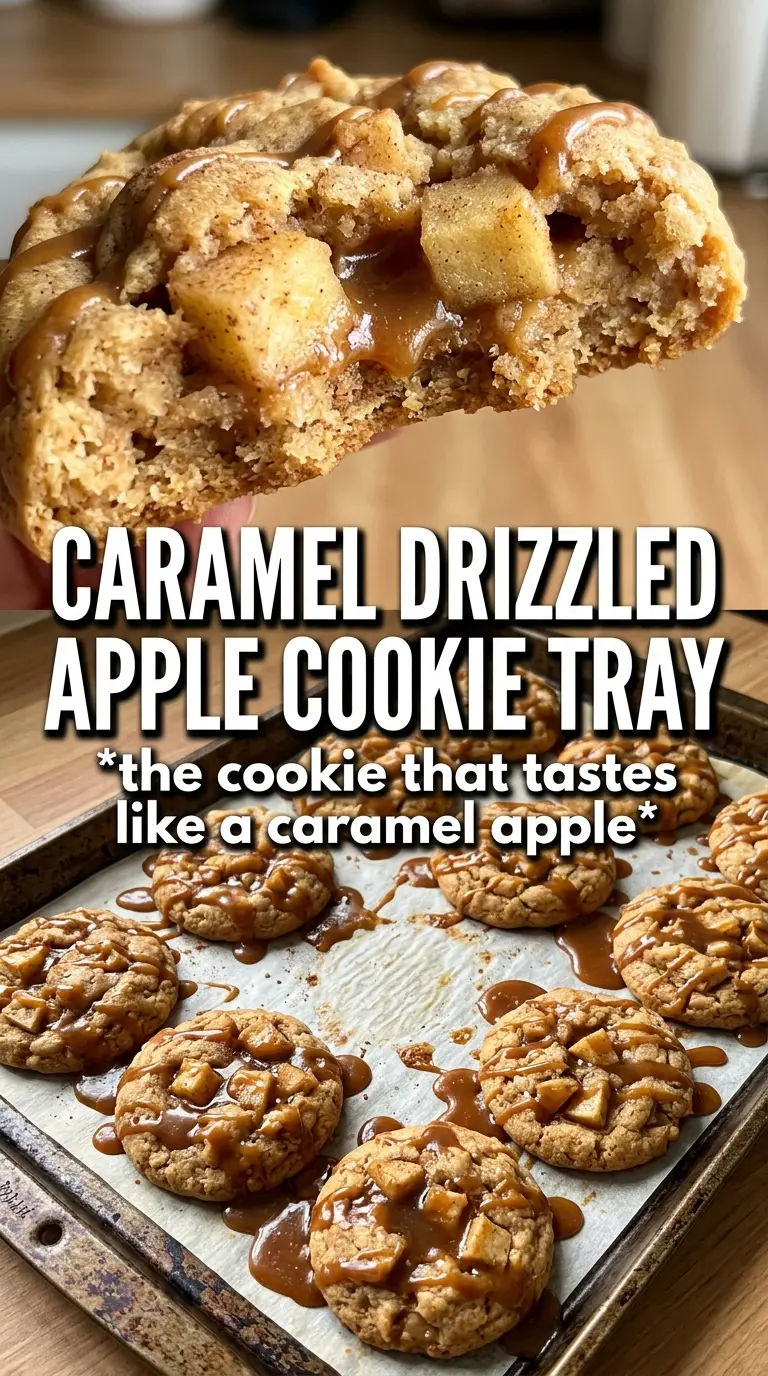
Soft, bakery-style caramel apple cookies hit that sweet spot between cozy and polished: tender centers, lightly golden edges, little pockets of melted caramel, and tiny apple bits that keep each bite from tasting flat. The best part is that they stay thick instead of spreading into thin puddles, so you get an actual cookie with structure, not just a sweet pan of cookie lace.
The trick is in the apple prep. Finely diced apples bring freshness and a little chew, but only if they’re patted completely dry first. That step keeps the dough from turning damp and prevents the cookies from baking up cakey or greasy. The warm spice mix does the heavy lifting too — cinnamon leads, while nutmeg and allspice stay in the background and give the cookies that just-baked apple pie feeling without overpowering the caramel.
Below you’ll find the little details that matter most: how to keep the caramel from disappearing into the dough, how to tell when the cookies are done, and a few easy ways to adapt them if you need to work with what’s already in your pantry.
The cookies baked up thick and soft, and the chopped caramel melted into those little pockets I was hoping for. I also loved that the apples stayed noticeable instead of disappearing into the dough.
Save these caramel apple cookies for the day you want soft centers, caramel pockets, and a crisp flaky-salt finish.
The Small Apple Prep That Keeps These Cookies Thick
The difference between a cookie that bakes up plush and one that turns wet in the middle usually comes down to the fruit. Apples release moisture fast, and once that moisture hits the dough, it changes the texture before the cookies even go into the oven. That’s why these work best with very finely diced apples that have been blotted dry until the paper towels stop picking up juice.
Finely diced apple gives you flavor in every bite without creating large wet pockets. Bigger chunks look appealing, but they tend to steam inside the cookie and leave little underbaked tunnels around the fruit. The dry apple pieces fold in more cleanly, and because the cookies are baked at a fairly hot 375°F, the edges set before the centers overspread.
- Apples — Use a firm baking apple if you can. Granny Smith keeps a little tartness, while Honeycrisp or Pink Lady brings more sweetness. Whatever you choose, peel and dice it small so it softens quickly without watering down the dough.
- Caramel bits or soft caramels — Caramel bits are the easiest option because they hold their shape in the bowl and melt into pockets in the oven. If you use soft caramels, chop them small and toss them with a spoonful of flour if your kitchen runs warm; that helps them distribute instead of clumping.
- Brown sugar — This is what gives the cookies their softness and a deeper caramel note. Light brown sugar works fine here. Dark brown sugar adds more molasses flavor, but it can make the spice blend feel heavier.
- Butter — Softened butter needs to be pliable, not oily. If it’s too warm, the dough will spread too much. If you can press it and leave a dent without it collapsing, you’re in the right range.
What Each Ingredient Is Actually Doing in This Recipe
- Primary ingredient (the star) — Quality matters most. Choose the best you can find.
- Cooking medium (oil, butter, or broth) — This carries flavors and prevents dryness.
- Seasonings (salt, pepper, spices, herbs) — Layer flavors so nothing overpowers. Build depth gradually.
- Aromatics (garlic, onion, herbs) — Cook with fat to bloom flavors. Become the foundation.
- Supporting ingredients — Complement the main ingredient without overpowering it.
- Sauce or liquid (if applicable) — Brings flavors together. Balance richness with acid.
- Acid (lemon, vinegar, wine, or other) — Brightens and prevents flat-tasting results.
- Final finish (garnish, glaze, or sauce) — Prevents one-dimensional taste and adds visual appeal.
Building the Dough So the Apples and Caramel Stay in Place
Mix the dry ingredients first
Whisk the flour, baking soda, cinnamon, nutmeg, allspice, and salt together before they ever touch the butter. That keeps the baking soda from clumping and spreads the spices evenly through the dough, so one cookie doesn’t end up with a harsh pocket of nutmeg. You want the mixture to look uniform and sandy, with no streaks of spice hiding at the bottom of the bowl.
Beat the butter and sugars until light
Mix the softened butter with both sugars until the mixture looks fluffy and a little paler. That step builds air into the dough, which helps the cookies rise instead of sinking into dense little rounds. Add the eggs and vanilla after that, and stop as soon as they’re combined. If the mixture looks broken for a moment, it will come back together once the flour goes in.
Fold in the fruit and caramel at the end
Stir in the flour mixture first, then fold in the dried apples and caramel bits last. Once the fruit is in, overmixing turns the dough sticky and smears the caramel through the batter instead of leaving distinct pockets. Scoop the dough right away; if it sits too long, the apples keep softening the dough and the cookies spread more than they should.
Three Ways to Make These Cookies Fit What’s in Your Kitchen
Dairy-Free Version
Swap the butter for a good plant-based baking stick, not spread-from-a-tub margarine. Baking sticks behave more like butter and keep the cookies from flattening out. The flavor stays rich, though you lose a little of the buttery finish, so a light extra pinch of salt on top helps bring it back.
Gluten-Free Adaptation
Use a 1:1 gluten-free baking flour that already includes xanthan gum. The cookies will still be soft and flavorful, but the texture is a little more delicate, so let them cool on the sheet pan before moving them. If your blend feels especially starchy, add the apples very gently so the dough doesn’t toughen.
Extra Caramel Finish
If you want a bakery-style finish, drizzle the cooled cookies with caramel sauce and add flaky sea salt while they’re still slightly warm. The drizzle gives you a glossy top note, while the salt keeps the sweetness from turning heavy. Warm cookies will soak up the caramel a bit, so wait just long enough for the tops to set before finishing them.
Storage and Reheating
- Refrigerator: Store in an airtight container for up to 4 days. The apple keeps the cookies softer than a standard drop cookie, so they stay pleasant, but the tops lose a little of their fresh-baked sheen after day one.
- Freezer: These freeze well. Freeze baked cookies in a single layer, then move them to a freezer bag for up to 2 months. You can also freeze scooped dough balls and bake from frozen; just add 1 to 2 minutes.
- Reheating: Warm a cookie in the microwave for 8 to 10 seconds, just until the caramel softens. Longer than that and the apple pieces can turn rubbery while the cookie goes limp.