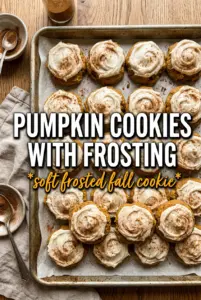
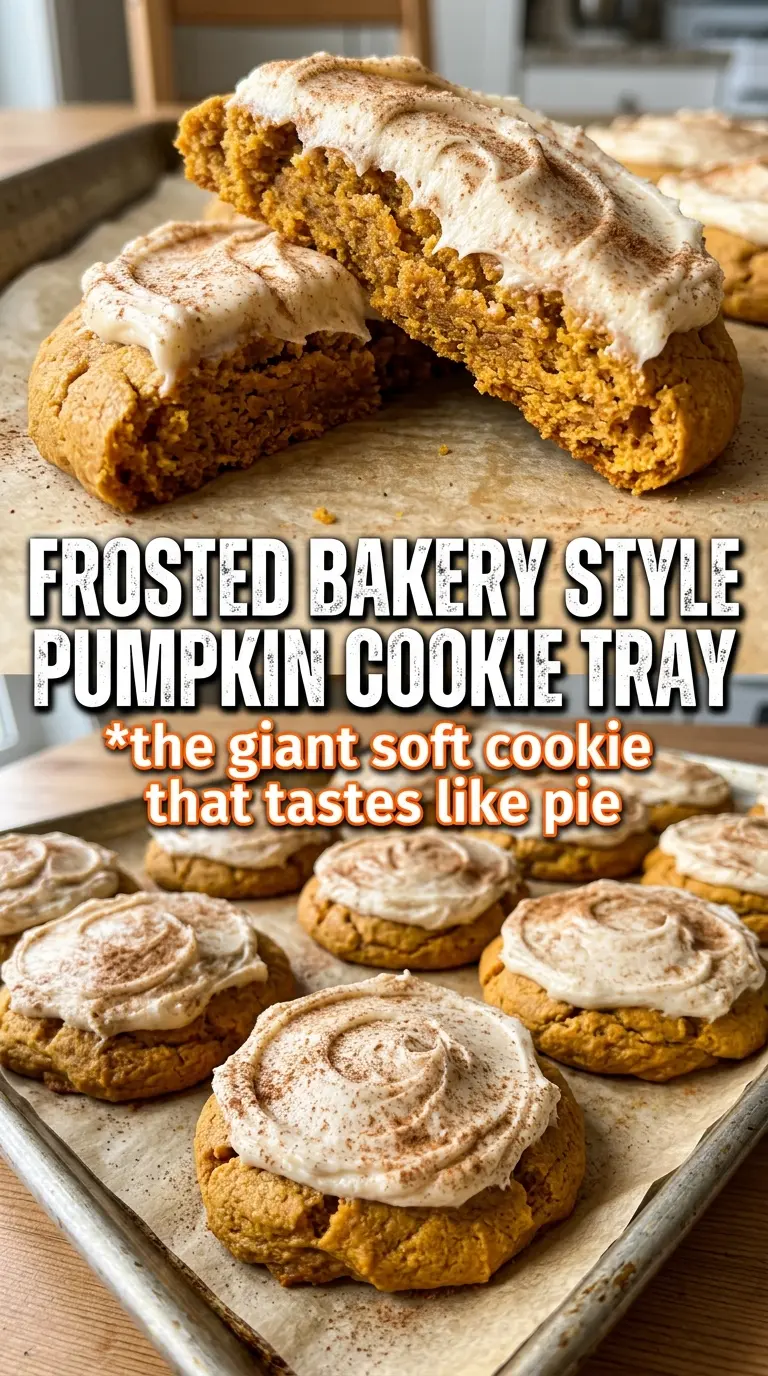
These oversized pumpkin pie cookies bake up thick and soft in the middle with just enough edge to hold a swirl of cream cheese frosting. The pumpkin spice comes through warmly, but the cookies stay in cookie territory instead of turning cakey, which is what makes this style so good. You get the comfort of pumpkin pie flavors without needing a fork or a pie plate.
The part that matters most is drying the pumpkin puree before it goes into the dough. Pumpkin carries a lot of water, and if you skip that step, the cookies spread too much and lose the dense, bakery-style bite that makes Crumbl cookies so recognizable. The other trick is pulling them from the oven while the centers still look soft; they finish setting as they cool, and that keeps them tender instead of dry.
Below, I’m walking through the few details that make the difference between a good pumpkin cookie and one that looks and tastes like the bakery version. The frosting is simple, but there’s a specific texture that pipes best, and I’ll point out exactly what to look for.
I followed the pumpkin drying step and the cookies stayed thick instead of puffing and collapsing. The frosting pipes beautifully, and the cinnamon on top makes them taste just like the bakery version my kids ask for every fall.
These Crumbl Pumpkin Pie Cookies stay thick, soft, and bakery-style with that swirl of cream cheese frosting on top.
The Real Secret to Thick Pumpkin Cookies Is Removing the Moisture First
Pumpkin cookies go wrong in one of two ways: they spread into pale puddles, or they bake up like little cakes. The reason this version holds its shape is simple. The pumpkin puree gets blotted dry before it ever hits the bowl, so you keep the pumpkin flavor without dumping extra water into the dough.
The second detail is the bake time. These cookies are supposed to look a little underdone in the center when they come out. If you wait until they look fully set in the oven, they’ll end up dry after cooling. The edges should be set, the tops should lose that raw sheen, and the middle should still look soft enough that you trust the carryover heat to finish the job.
- Pumpkin puree — Use plain pumpkin puree, not pumpkin pie filling. The filling has added sugar and spices, which throws off both the flavor balance and the texture. Blotting the puree on paper towels until it no longer looks wet is what keeps the cookies thick.
- Brown sugar — This adds a little moisture and a deeper molasses note that works with pumpkin pie spice. Light brown sugar is fine here. Dark brown sugar will make the cookies taste heavier and a little more caramel-forward.
- Butter — Softened butter creams properly with the sugars, which gives the dough a smoother structure. If the butter is melting at the edges, the cookies will spread too much. It should press easily with a finger but still hold its shape.
- Cream cheese — Full-fat cream cheese gives the frosting its tang and that thick, pipeable finish. Reduced-fat cream cheese tends to soften too much and makes a looser frosting. If you need a substitute, mascarpone works in a pinch, but it will taste milder and sweeter.
What Each Ingredient Is Actually Doing in This Recipe
- Primary ingredient (the star) — Quality matters most. Choose the best you can find.
- Cooking medium (oil, butter, or broth) — This carries flavors and prevents dryness.
- Seasonings (salt, pepper, spices, herbs) — Layer flavors so nothing overpowers. Build depth gradually.
- Aromatics (garlic, onion, herbs) — Cook with fat to bloom flavors. Become the foundation.
- Supporting ingredients — Complement the main ingredient without overpowering it.
- Sauce or liquid (if applicable) — Brings flavors together. Balance richness with acid.
- Acid (lemon, vinegar, wine, or other) — Brightens and prevents flat-tasting results.
- Final finish (garnish, glaze, or sauce) — Prevents one-dimensional taste and adds visual appeal.
How to Build the Dough So the Cookies Stay Thick and Soft
Starting With the Butter and Sugars
Beat the butter, granulated sugar, brown sugar, and blotted pumpkin until the mixture looks fluffy and a little lighter in color. That step gives the dough its structure and helps the sugar dissolve enough that the cookies bake with a smoother crumb. If the pumpkin still looks wet at this stage, stop and blot it again before going any further.
Bringing the Dry Ingredients In
Whisk the flour, baking powder, baking soda, salt, and pumpkin pie spice together before adding them to the bowl. Folding them in just until the flour disappears keeps the cookies tender instead of tough. If you keep mixing after the dough comes together, the finished cookies can turn bready and lose that soft, bakery-style middle.
Shaping for the Bakery Look
Scoop the dough into large 3-tablespoon portions and flatten them slightly on the parchment. That little press helps them spread into thick domes instead of staying too round in the oven. If the dough feels sticky, chill it for 15 to 20 minutes; that’s often enough to make scooping cleaner without changing the bake.
Frosting After Full Cooling
Let the cookies cool all the way before adding the frosting. Warm cookies melt cream cheese frosting into a slick layer instead of a swirl you can actually see. Beat the frosting until smooth and pipe it generously, then finish with cinnamon while the top is still fresh so the dusting sticks cleanly.
Three Ways to Make These Pumpkin Pie Cookies Fit What You Need
Dairy-Free Version
Swap the butter in both the cookies and frosting for a good plant-based butter block, not a tub spread. Use dairy-free cream cheese for the frosting. The texture will still be soft and pipeable, though the tang will be a little less sharp than the original.
Gluten-Free Adaptation
Use a 1:1 gluten-free baking flour that contains xanthan gum. The cookies will still spread a little, but they’ll hold together well and stay soft in the center. Don’t swap in almond flour alone; it won’t give you the same structure.
Smaller Cookie Size
If you want more cookies instead of giant bakery-style ones, scoop 2-tablespoon portions and cut the bake time by a few minutes. The centers should still look slightly soft when they come out. Smaller cookies lose heat faster, so watch them closely after the 10-minute mark.
Storage and Reheating
- Refrigerator: Store frosted cookies in an airtight container for up to 4 days. The frosting stays best chilled, but the cookie will soften a little more as it sits.
- Freezer: Freeze the unfrosted cookies for up to 2 months. Wrap them tightly and thaw at room temperature before frosting so the topping stays smooth.
- Reheating: These are best served at room temperature, not warmed. If you want the cookie base slightly softer, let it sit out for 20 to 30 minutes after chilling instead of microwaving it, which can melt the frosting and make the texture greasy.
Questions I Get Asked About This Recipe

Crumbl Pumpkin Pie Cookies
Ingredients
Equipment
Method
- Preheat oven to 350F and line baking sheets with parchment for easy release and clean edges.
- Blot pumpkin dry thoroughly, then beat butter, both sugars, and pumpkin until fluffy and lighter in color.
- Mix in egg and vanilla until the dough looks smooth and cohesive.
- Whisk flour, baking powder, baking soda, salt, and pumpkin pie spice, then fold into the butter mixture until no dry streaks remain.
- Scoop dough into large 3-tablespoon balls and press slightly flat on the parchment so they bake evenly.
- Bake 13-14 minutes at 350F until edges are set but centers still look soft, with lightly matte tops.
- Cool completely before frosting so the cookies keep their thick, tender centers.
- Beat cream cheese, butter, powdered sugar, vanilla, and cinnamon until smooth, thick, and pipeable.
- Pipe a generous swirl onto each cooled cookie, building a thick swirl that holds its shape.
- Dust with cinnamon for a warm pie-spice finish.