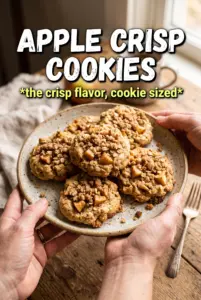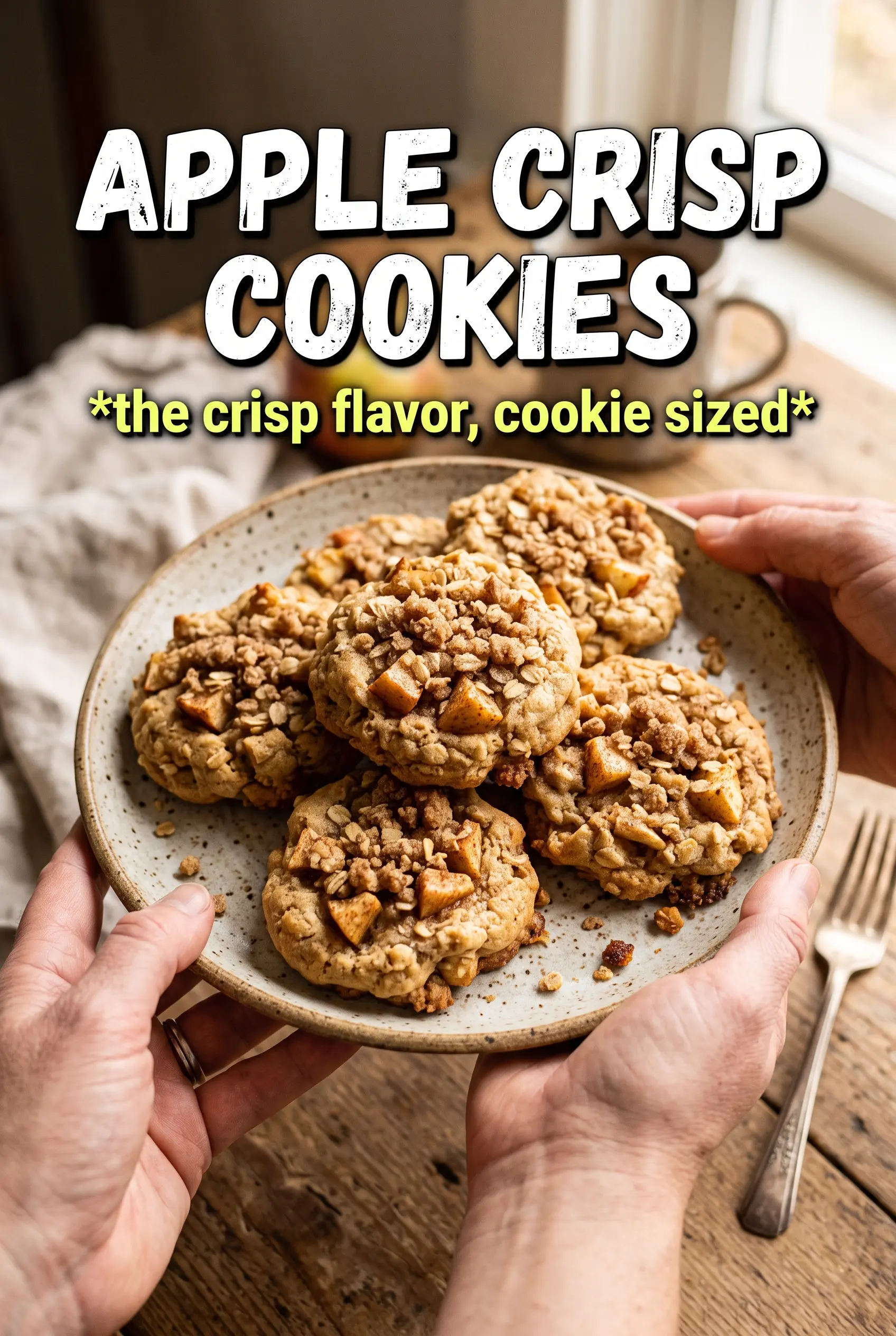
Apple crisp cookies hit that sweet spot between a chewy oatmeal cookie and the warm, buttery topping you usually want on a pan of baked apples. The edges bake up lightly crisp, the centers stay soft, and every bite gives you oat texture, cinnamon, and little pockets of apple and caramel. They disappear fast because they taste like a bakery cookie with the comfort of a crumble.
What makes this version work is the balance of moisture and texture. Dried apple pieces bring concentrated apple flavor without dumping extra liquid into the dough, which keeps the cookies thick instead of cakey. Rolled oats add chew and help the cookies hold their shape, while the cinnamon-sugar coating gives the tops that crisp, sparkly finish that makes them feel a little extra special right out of the oven.
Below, I’ll walk through the small details that matter most: how to keep the centers soft, why the apples should be chopped fine, and what to swap if you only have butterscotch chips or want a slightly different texture.
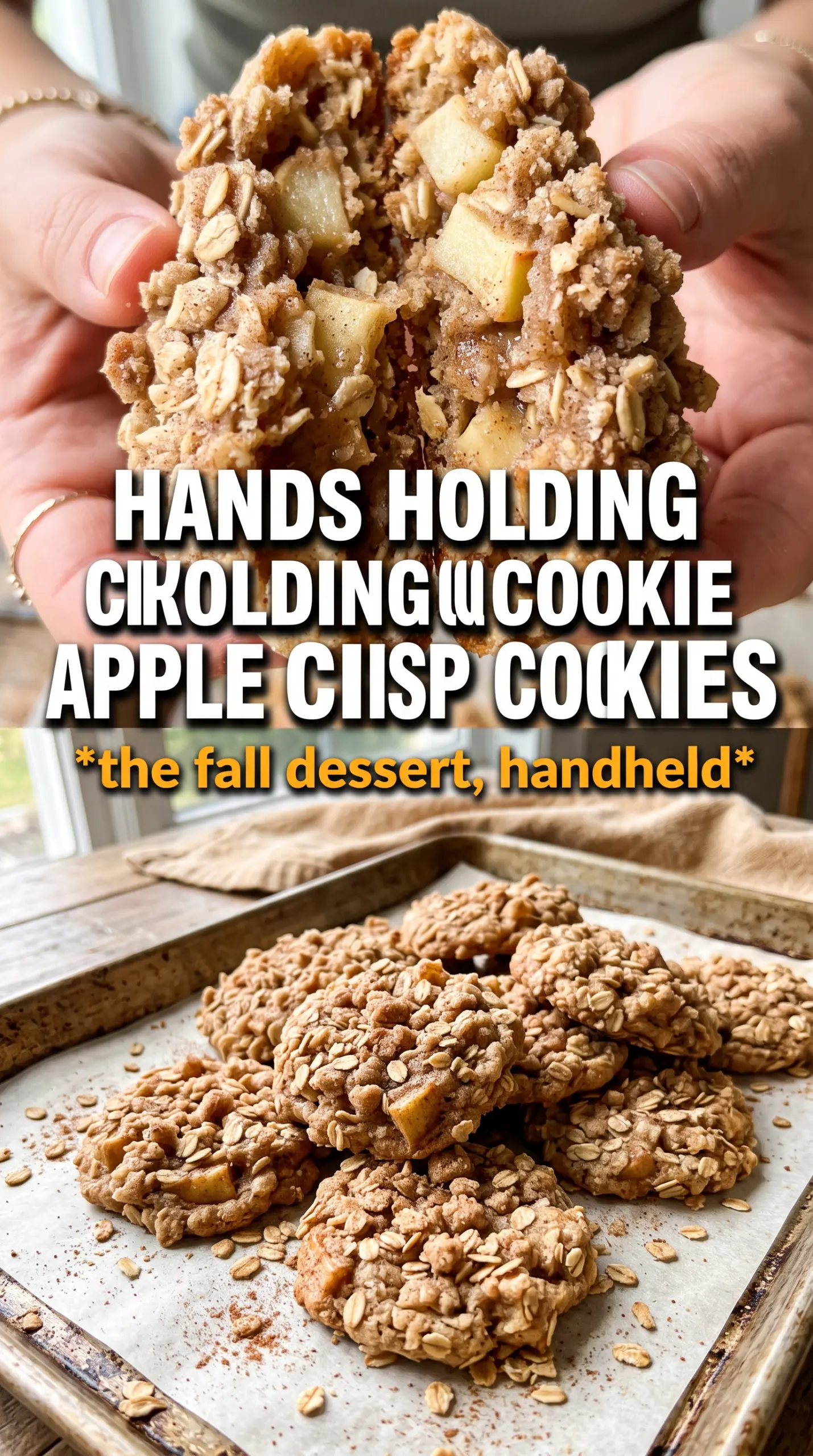
The cookies came out soft in the middle with those crisp cinnamon-sugar tops, and the chopped apple pieces stayed chewy instead of getting lost. My husband kept grabbing them off the tray before they even cooled.
Pin these apple crisp cookies for the chewy oat texture, cinnamon-sugar tops, and little pockets of apple and caramel.
The Secret to Keeping These Cookies Soft Instead of Dry and Crumbly
Apple crisp cookies can go wrong in one very common way: they bake up dry, dense, and a little sandy instead of chewy and tender. That usually happens when the dough is overloaded with flour or the cookies stay in the oven until the centers look fully done. These cookies should come out when the edges are set and golden and the middles still look slightly soft. They finish setting on the hot pan.
The other thing that matters here is the apple. Fresh apple pieces bring too much moisture and can make the dough uneven, while dried apple pieces give you concentrated flavor without turning the cookies into little puffs of steam. Chopping them finely helps the dough scoop cleanly and keeps the cookies from falling apart when you bite into one.
- Rolled oats — These give the cookies the crisp-chewy texture that makes them feel like apple crisp in cookie form. Quick oats can work in a pinch, but the texture will be tighter and less rustic.
- Dried apple pieces — This is the ingredient that carries the apple flavor without watering down the dough. Chop them small so they distribute evenly and don’t tear through the cookie as it bakes.
- Caramel chips or butterscotch chips — Either one adds sweetness and those little melty pockets that make the cookies feel bakery-style. If you only have one, use it; the recipe doesn’t depend on a specific brand or type.
- Cinnamon sugar for rolling — This is what gives the tops their crisp, sparkly finish. Skipping it won’t ruin the cookies, but you lose the best part of the texture contrast.
What Each Ingredient Is Actually Doing in This Recipe
- Primary ingredient (the star) — Quality matters most. Choose the best you can find.
- Cooking medium (oil, butter, or broth) — This carries flavors and prevents dryness.
- Seasonings (salt, pepper, spices, herbs) — Layer flavors so nothing overpowers. Build depth gradually.
- Aromatics (garlic, onion, herbs) — Cook with fat to bloom flavors. Become the foundation.
- Supporting ingredients — Complement the main ingredient without overpowering it.
- Sauce or liquid (if applicable) — Brings flavors together. Balance richness with acid.
- Acid (lemon, vinegar, wine, or other) — Brightens and prevents flat-tasting results.
- Final finish (garnish, glaze, or sauce) — Prevents one-dimensional taste and adds visual appeal.
Building the Dough So the Apples and Oats Stay Evenly Suspended
Start with the butter and sugars
Beat the softened butter with the brown sugar and granulated sugar until the mixture looks lighter and a little fluffy. That step traps air, which helps the cookies bake up with a soft center instead of a heavy one. If the butter is too cold, the mixture stays grainy; if it’s melted, the cookies spread too much and lose that crisp edge.
Mix the dry ingredients first
Whisk the flour, leaveners, spices, and salt together before they go into the bowl. That keeps the cinnamon, nutmeg, and allspice from clumping in one bite and helps the baking soda and baking powder distribute evenly. Add the dry mix just until the flour disappears, or the cookies turn tough.
Fold in the oats, apples, and chips last
Stir in the oats, chopped dried apples, and caramel chips by hand so they stay intact and spread through the dough evenly. The dough will be thick, almost scoopable like a soft drop cookie dough. If it feels sticky, let it rest for a few minutes; the oats will absorb some moisture and make scooping easier.
Bake until the centers still look a little underdone
Scoop the dough into 2-tablespoon rounds and roll the tops in cinnamon sugar before baking. Pull them when the edges are golden and the centers look just set, not matte and dry. If you wait for a fully baked center in the oven, the cookies will end up overdone by the time they cool.
Three Small Changes That Actually Work Here
Make them gluten-free with a 1:1 baking blend
Swap the all-purpose flour for a good 1:1 gluten-free baking flour that already contains xanthan gum. The oats still give these cookies their chew, so the texture stays close to the original. If your blend is on the drier side, stop mixing as soon as the flour disappears so the dough doesn’t get stiff.
Use butterscotch chips for a sweeter, deeper caramel note
Butterscotch chips lean a little sweeter and more molasses-like than classic caramel chips. They melt into soft pockets and pair especially well with the cinnamon and apple. If you want a less sweet cookie, cut the sugar rolling mixture back slightly or skip it on half the batch.
Add chopped toasted pecans for more crunch
A small handful of toasted pecans fits right in if you want these to lean closer to apple crisp topping. The nuts add a firmer bite and a little extra richness without changing the dough structure. Keep the pieces small so the cookies still scoop neatly.
Storage and Reheating
- Refrigerator: Store in an airtight container for up to 5 days. The oats soften a little by day two, but the cookies stay chewy.
- Freezer: These freeze well baked or unbaked. Freeze the dough balls on a tray, then move them to a bag and bake straight from frozen with 1 to 2 extra minutes.
- Reheating: Warm baked cookies in a 300F oven for 4 to 5 minutes or give one cookie 8 to 10 seconds in the microwave. Too much heat will dry out the edges and make the centers lose their chew.