Deep, wine-braised beef with bacon, carrots, mushrooms, and pearl onions is the kind of slow cooker meal that tastes like you spent all day tending a Dutch oven. The beef turns spoon-tender without falling apart into strings, the sauce takes on that dark, glossy edge from the wine and tomato paste, and the bacon gives the whole pot a savory backbone that keeps it from tasting flat. It’s rich, steady, and deeply satisfying in the way only a proper beef bourguignon can be.
What makes this version work is that a few small steps happen before the slow cooker ever comes out. Browning the beef in bacon fat builds flavor you can’t get from dumping everything in raw, and simmering the wine with the onion, garlic, and tomato paste cooks off the sharp edge so the stew tastes rounded instead of boozy. The mushrooms and pearl onions go in near the end so they keep their shape and stay distinct instead of disappearing into the gravy.
Below, I’ll walk through the part that matters most: how to build the sauce so it tastes like classic bourguignon instead of just beef in red liquid. There’s also a storage note that helps the leftovers taste even better the next day, which is one of the best things about this dish.
The beef got so tender it was cutting with a spoon, and the sauce thickened up beautifully after I stirred in the mushrooms and pearl onions at the end. My husband went back for seconds and asked if I could make it again next Sunday.
Love the slow-cooked beef, bacon, and red wine depth in this bourguignon? Save it to Pinterest for the kind of dinner that tastes even better the next day.
The Reason This Slow Cooker Bourguignon Still Tastes Braised, Not Boiled
The trap with slow cooker beef bourguignon is treating it like a dump-and-walk-away stew. When the beef goes in raw, the bacon stays limp, and the wine never gets a chance to lose its harsh edges, the final pot tastes one-note no matter how long it cooks. This version keeps the classic layers intact by building flavor in stages before the lid goes on.
Browning the beef matters more here than in a lot of slow cooker recipes because bourguignon depends on that dark, savory crust to give the sauce body. The flour on the beef does two jobs: it helps the meat brown a little better, and it gives the cooking liquid just enough structure to thicken into a proper stew instead of broth with add-ins. If your sauce ever turns thin in the slow cooker, it usually means the meat never got coated well or the wine mixture never reduced before it went in.
- Bacon fat — Don’t pour it all off after crisping the bacon. A couple tablespoons left in the pan carry the whole dish and help the beef pick up color fast.
- Dry red wine — Use something drinkable, not sweet. Cabernet, Merlot, or Pinot Noir all work; the wine reduces, so any harsh or jammy note gets louder, not softer.
- Cremini mushrooms — Add them at the end so they stay meaty instead of shrinking into the sauce. White mushrooms work in a pinch, but cremini bring a deeper flavor.
- Frozen pearl onions — These are worth using as written because they hold their shape and save a lot of peeling. Fresh pearl onions are fine if you have the patience, but they’re not necessary.
What Each Ingredient Is Doing in the Pot
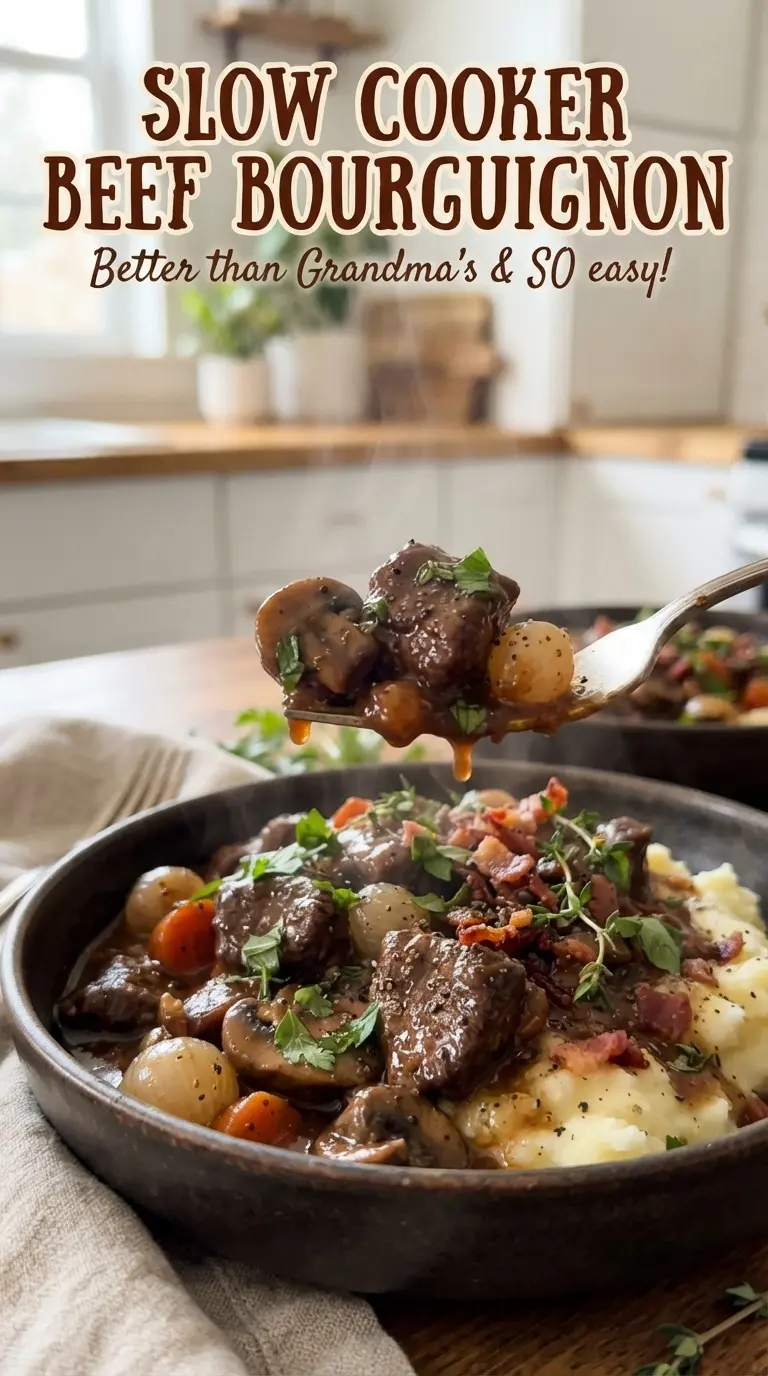
Beef chuck is the right cut because it has enough connective tissue to turn silky after hours of low heat. Lean stew meat can work, but it tends to dry out and taste tighter by the end of cooking. Cut it into larger chunks so it doesn’t shred before the sauce finishes.
Tomato paste doesn’t make this taste like tomato stew. It adds deep savoriness and helps the sauce look and taste darker once it’s cooked briefly with the onions and garlic. If you skip the step of cooking it for a minute or two, it can taste raw and metallic.
Thick-cut bacon brings salt, smoke, and fat. Thin bacon can disappear into the stew before the end, while thicker pieces leave little chewy bits that you actually notice. If you only have regular bacon, use it, but cut back on the salt a touch and keep an eye on it so it doesn’t burn while browning the beef.
Butter at the end is there for sheen and a rounder mouthfeel. It’s not just garnish; it smooths out the edges of the wine and broth right before serving.
Building the Sauce in the Right Order
Crisping the Bacon First
Cook the bacon until it’s crisp and the fat has rendered, then scoop the pieces into the slow cooker and leave the fat in the pan. That fat is where the first layer of flavor lives. If the bacon looks pale and chewy, it hasn’t given up enough fat yet, and the beef won’t brown as well in the next step.
Getting Color on the Beef
Toss the beef with salt, pepper, and flour, then brown it in batches. Crowding the pan is the easiest way to ruin this stage because the meat steams instead of searing. You want a deep brown crust on the outside, not a gray surface, even if that means working a little slower.
Cooking Down the Wine Base
After the onion, garlic, and tomato paste soften, pour in the wine and let it simmer for a few minutes, scraping up the browned bits from the pan. That reduction matters because it drives off the sharp alcohol note and pulls all the browned flavor into the sauce. If the pan still smells hot and boozy when you stop here, the sauce will taste thin later.
Finishing with the Vegetables
Add the broth, carrots, thyme, and bay leaves to the slow cooker, then cover and cook on LOW until the beef is tender. The carrots should still have shape but yield easily with a fork. Stir in the sautéed mushrooms and pearl onions near the end so they keep their texture and don’t turn watery.
How to Adapt This for a Few Different Kitchens
Gluten-Free Bourguignon
Swap the all-purpose flour for a gluten-free 1:1 blend or skip it entirely and thicken the sauce at the end with a cornstarch slurry. The flour in this recipe is mostly there for light body, not as the main structure, so the dish still works well without it.
No-Wine Version
Use an equal mix of extra beef broth and a tablespoon of red wine vinegar or balsamic to bring back some of the brightness wine usually adds. You’ll lose a little of the classic depth, but the stew will still be rich and savory.
Lighter, Less-Rich Serving Style
Serve the stew over mashed cauliflower or buttered noodles instead of mashed potatoes if you want something a little lighter. The sauce is still full-bodied, so you don’t lose the feeling of a full meal.
Storage and Reheating
- Refrigerator: Store covered for up to 4 days. The sauce usually thickens overnight, and the flavor gets deeper.
- Freezer: It freezes well for up to 3 months. Cool it completely first, then freeze in airtight containers with a little space at the top for expansion.
- Reheating: Reheat gently on the stove over low heat or in the microwave at medium power. High heat can make the beef stringy and can split the sauce if it was already thickened quite a bit.
Questions I Get Asked About This Recipe
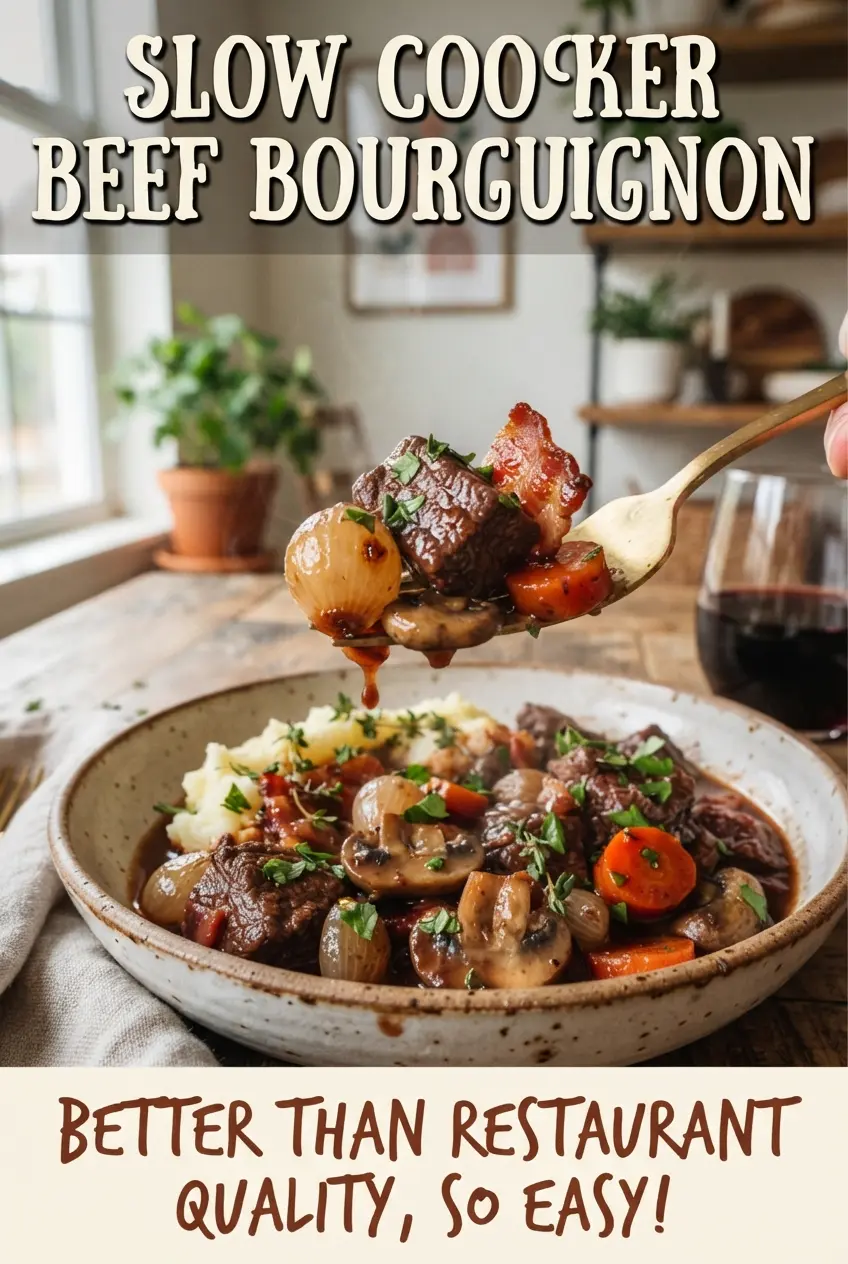
Slow Cooker Beef Bourguignon
Ingredients
Equipment
Method
- Cook the chopped thick-cut bacon in a cast iron skillet until crisp, then transfer the bacon to the slow cooker while leaving the bacon fat in the pan.
- Season the beef chuck cubes with salt and black pepper, then toss with all-purpose flour; brown the beef in batches in the bacon fat until well browned, and transfer to the slow cooker.
- Cook the diced onion, minced garlic, and tomato paste in the skillet for 3 minutes.
- Pour in the dry red wine, simmer for 3 minutes while scraping the pan to loosen browned bits, then pour the mixture into the slow cooker.
- Add the beef broth, sliced carrots, dried thyme, and bay leaves to the slow cooker, cover, and cook on LOW for 7-8 hours.
- Sauté the cremini mushrooms and frozen pearl onions in butter until golden.
- Stir the sautéed mushrooms and pearl onions into the stew, then cook until the last 30 minutes.
- Remove the bay leaves and serve the stew over mashed potatoes or egg noodles.