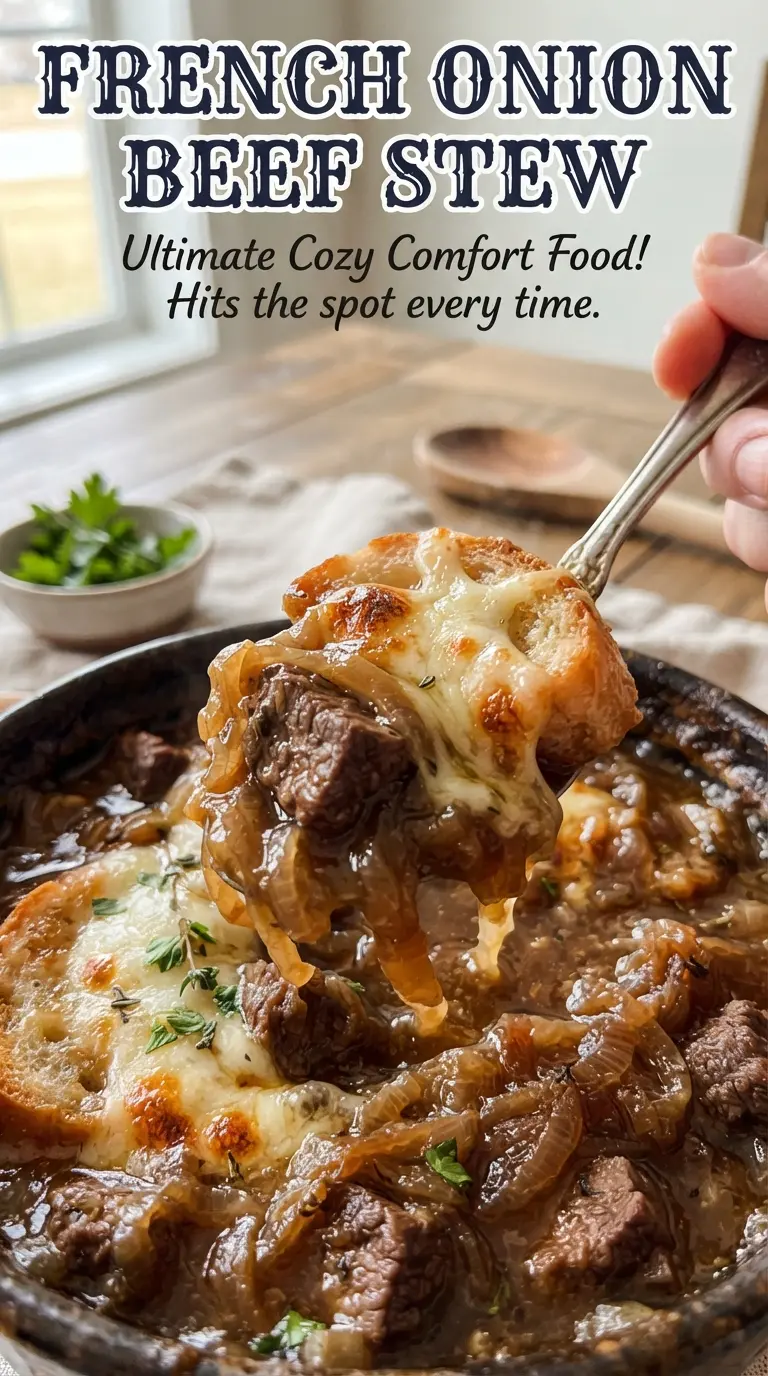
French onion beef stew lands in the bowl with the kind of deep, slow-cooked comfort that makes a regular dinner feel a little more special. The beef turns fork-tender in a broth that tastes like it spent all afternoon collecting every bit of caramelized onion sweetness, thyme, and browned beef flavor it could find. Then the toasted baguette and bubbling Gruyere go on top and turn the whole thing into something that eats like stew and French onion soup had the best possible kind of argument.
The onions matter most here. They need enough time to turn soft, sweet, and deeply golden before anything else goes in, because that long caramelization is what gives the broth its signature richness. Browning the beef in batches also earns its place; crowded meat steams, and steamed meat never gives you the same savory depth. The wine gets a quick scrape of the pan, which pulls up all the browned bits that would otherwise stay stuck to the bottom and waste their flavor.
Below, I’ve laid out the small details that keep this stew from tasting flat or muddy, plus the best way to broil the cheese without soaking the bread. There’s also a storage note that matters if you want to make it ahead, because this is one of those stews that tastes even better the next day.
The onions went almost jammy and the broth had that deep French onion flavor without being salty. I broiled the cheese for 2 minutes and the baguette stayed crisp under all that stew.
Love the rich onion gravy and cheesy baguette topping? Save this French Onion Beef Stew for the nights when you want something deeply savory and worth the simmer.
The Onions Are the Sauce, Not Just a Garnish
This stew only works if the onions are treated like the main event. Thirty minutes may feel long when you’re standing there stirring, but that time is what turns sharp raw onion into something sweet, soft, and dark enough to give the broth its French onion flavor. If they’re pale, the stew tastes thin. If they’re rushed, you get beef stew with onion pieces in it, not French onion beef stew.
The other mistake is dumping everything in too early and hoping the simmer fixes it. It doesn’t. Browning the beef first gives you the savory base, and cooking the flour for a minute before adding liquid keeps the broth from tasting pasty. When you add the wine, scrape the bottom until the pan looks clean again. Those browned bits are where the depth lives.
What Each Ingredient Is Actually Doing in This Stew
- Beef chuck — This cut has enough collagen to turn tender after a long simmer, which is what gives the stew its body. Leaner beef will dry out before the broth develops that rich, spoon-coating texture.
- Yellow onions — These are the backbone of the dish. They cook down into something sweet and jammy, and no substitute gives you quite the same depth.
- Dry white wine — The wine lifts the browned fond from the pot and adds a little acidity so the stew doesn’t taste heavy. If you don’t want to use wine, add extra broth plus a small splash of white wine vinegar at the end.
- Gruyere — Gruyere melts into a nutty, stretchy topping that fits this stew perfectly. Swiss cheese will work in a pinch, but Gruyere has a deeper, more distinct flavor.
- Baguette — The toasted bread gives you that classic French onion finish. Toast it well; soft bread turns soggy fast under the cheese and broth.
Building the Stew So the Broth Stays Deep and the Beef Stays Tender
Browning the Beef in Batches
Season the beef first, then brown it in hot olive oil in small batches. The pieces should develop a dark crust before you turn them, not just lose their raw color. If you crowd the pot, the meat steams and the fond never builds, which means the broth loses a lot of its flavor base. Set the beef aside once it’s browned; it goes back later after the liquid is in.
Caramelizing the Onions Properly
Melt the butter, add the onions, and give them time. The sugar helps the process along, but it does not replace patience, so keep stirring and let them turn deep golden and soft enough to collapse when pressed. If they start to catch on the bottom too hard, lower the heat and scrape more often. You’re looking for a thick, glossy onion mixture, not browned edges with raw centers.
Simmering Until the Beef Gives Way
After the flour cooks off for a minute, pour in the wine and scrape the pot clean, then add the broth, Worcestershire, thyme, bay leaf, and browned beef. Bring it to a gentle simmer and cover it. A hard boil tightens the meat and can make the broth cloudy, so keep the heat low enough that you only see an occasional lazy bubble. After about two hours, the beef should break apart with a fork and the onions should have melted into the broth.
The Broil That Finishes the Bowl
Ladle the stew into oven-safe bowls, top each one with toasted baguette, and pile on the Gruyere. Put the bowls under the broiler only long enough for the cheese to bubble and brown in spots. Walk away for a minute too long and the cheese goes from bronzed to bitter, so stay close and pull them the moment you see little browned blisters across the top.
How to Adapt This for a Different Kitchen or Diet
Make It Gluten-Free Without Losing Body
Swap the flour for a gluten-free all-purpose blend or thicken the finished stew with a cornstarch slurry near the end. The stew will still taste rich, but the texture will be a touch lighter than the flour-thickened version.
Go Dairy-Free With Olive Oil Alone
You can replace the butter with extra olive oil, but the onions will be a little less lush and slightly less rounded in flavor. The stew still works because the beef, wine, and onions do the heavy lifting.
Skip the Broiler Finish for a One-Pot Serving
If you don’t want to broil individual bowls, serve the stew with toasted baguette and shredded Gruyere on the side. You lose the dramatic bubbling top, but you also avoid overcooking the cheese while everyone is getting seated.
Storage and Reheating
- Refrigerator: Store the stew without the baguette and cheese for up to 4 days. The flavor deepens overnight, and the onions get even softer.
- Freezer: The stew freezes well for up to 3 months. Cool it completely first, then freeze it in airtight containers without the bread or cheese topping.
- Reheating: Warm it gently on the stove over low heat until hot through. A fast boil can toughen the beef, and the topping should always be added fresh after reheating.
Answers to the Questions Worth Asking

French Onion Beef Stew
Ingredients
Equipment
Method
- Season the beef cubes with salt and black pepper, then brown them in batches in the olive oil in a Dutch oven and set aside.
- Heat the olive oil over medium-high so the beef develops browned edges before removing it to keep the stew from steaming.
- Melt the butter in the Dutch oven and cook the onions with the sugar, stirring often, for 30-35 minutes until deep golden.
- Keep the heat at medium so the onions soften and caramelize rather than scorch.
- Add the minced garlic and flour and cook for 1 minute, then pour in the white wine and scrape the bottom to lift the browned bits.
- Simmer until the wine is mostly absorbed, about 1 minute, then proceed while the fond is incorporated.
- Add the beef broth, Worcestershire sauce, fresh thyme, bay leaf, and the reserved beef, then cover and simmer for 2 hours until the meat is tender.
- Check occasionally and keep a gentle simmer so the onions melt into the broth.
- Ladle the stew into oven-safe bowls and top each with a toasted baguette slice and a generous layer of Gruyere.
- Broil for 2-3 minutes until the cheese is bubbly and browned, watching closely to prevent burning.