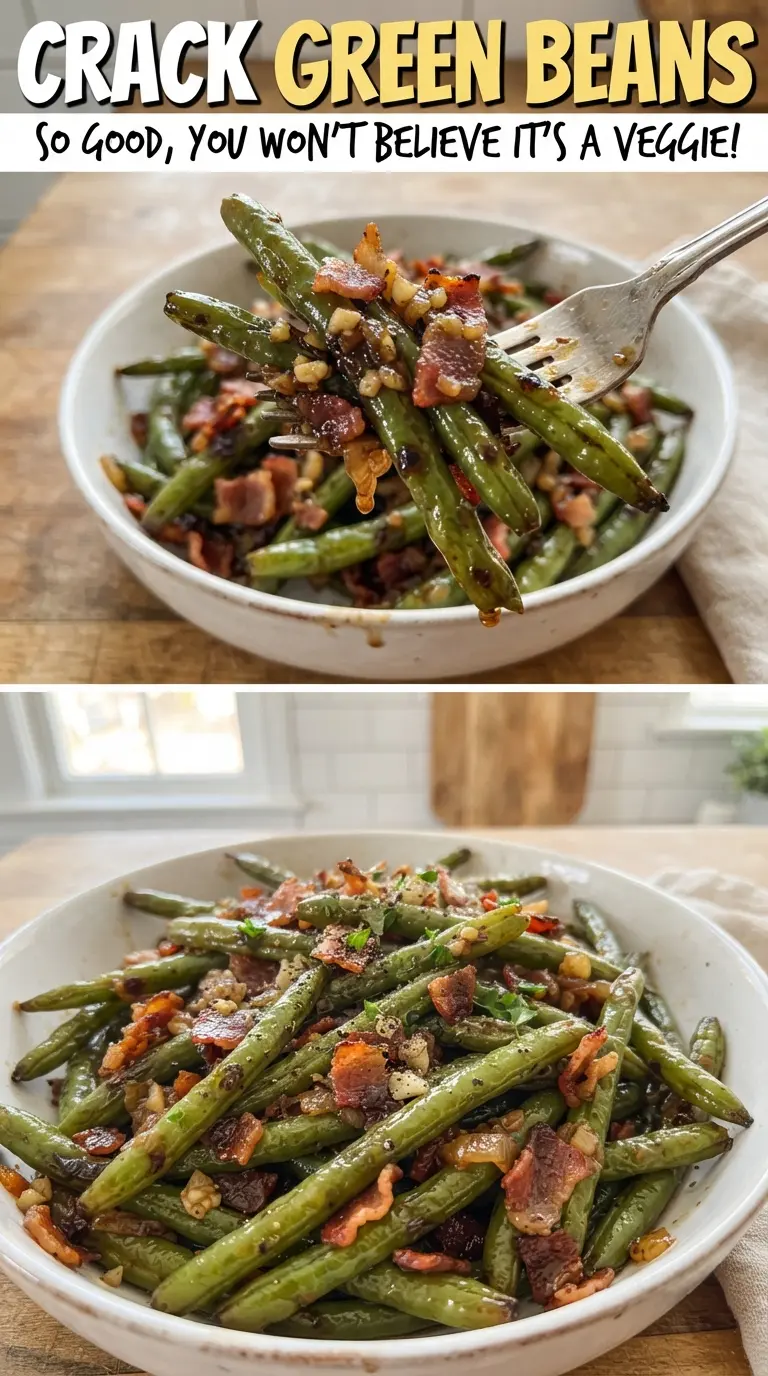
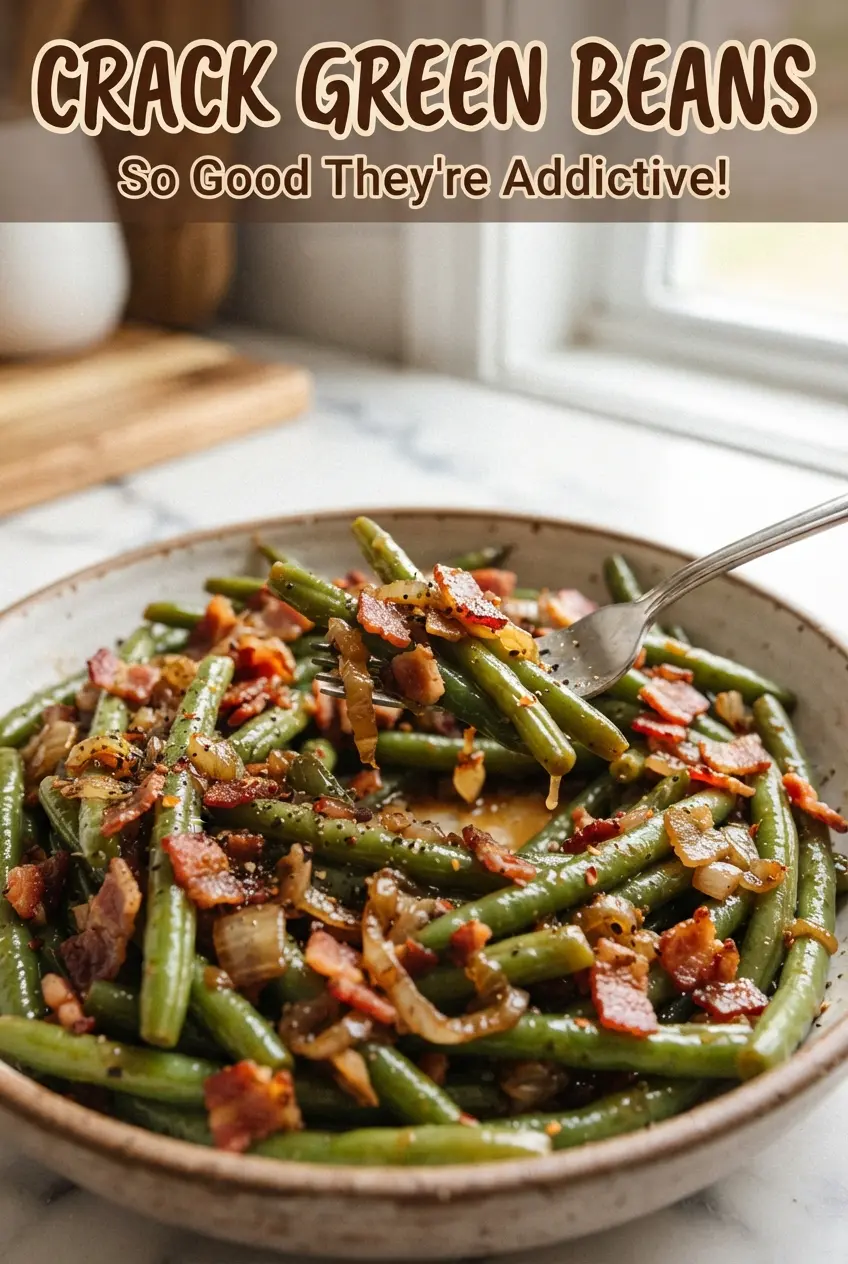
Sticky, glossy green beans with crisp bacon and a brown sugar soy glaze have a way of disappearing before the main dish hits the table. The beans stay tender but still hold their shape, the bacon turns salty and crisp around the edges, and the sauce bakes down into something that clings to every bite instead of pooling at the bottom of the pan.
What makes this version work is the balance: blanching the beans first keeps them bright and gives them a head start, while the oven finishes the job without turning them mushy. The glaze is built from butter, brown sugar, soy sauce, and garlic, which means it bakes into a sticky coating with just enough savory depth to keep the sweetness from taking over.
If you’ve ever had green bean casseroles that tasted flat or watery, this is the opposite of that. Below, I’ll walk through the part that keeps the beans from overcooking, the ingredient swaps that still work, and the small detail that helps the glaze tighten up in the oven.
The glaze turned sticky and glossy in the oven, and the beans stayed tender instead of getting soft. I stirred once like you said and the bacon stayed crisp enough to stand out.
Like this sweet-and-savory Crack Green Beans? Save it to Pinterest for the side dish that brings sticky glaze, bacon, and tender beans together in one pan.
The Step That Keeps the Beans Crisp Under the Glaze
The biggest mistake with baked green beans is starting with raw beans and hoping the oven will sort everything out. It won’t. By the time the glaze is sticky, the beans can be dull, soft, and waterlogged. A quick blanch gives them enough head start to finish tender without losing that fresh snap.
The other thing that matters is draining the beans well after boiling. Extra water thins the brown sugar sauce and keeps it from coating the beans evenly. You want the beans dry enough that the glaze can cling and caramelize instead of sliding to the bottom of the dish.
- Fresh green beans — Use trimmed fresh beans here, not canned. Fresh beans keep their texture through the bake and give you that clean bite under the sticky glaze.
- Bacon — Cook it until mostly crisp before it goes in. It finishes in the oven, and starting with crisp bacon keeps it from turning limp in the sauce.
- Brown sugar — This is what gives the glaze its sticky finish. Packed brown sugar melts into the butter and soy sauce, then reduces in the oven into a glossy coating.
- Soy sauce — It balances the sweetness and brings the savory depth. Use regular soy sauce for the classic version; low-sodium works if you want a little more control over the saltiness.
- Butter — Melted butter helps the glaze emulsify and keeps the sauce rich. There isn’t a perfect substitute if you want the same silky finish, though a neutral oil will work in a pinch with a lighter result.
- Garlic — Fresh minced garlic gives the glaze a sharp, savory edge that keeps the dish from tasting like candied vegetables. Garlic powder can work if that’s what you have, but the flavor won’t be as round.
What Each Ingredient Is Actually Doing in This Recipe
- Primary ingredient (the star) — Quality matters most. Choose the best you can find.
- Cooking medium (oil, butter, or broth) — This carries flavors and prevents dryness.
- Seasonings (salt, pepper, spices, herbs) — Layer flavors so nothing overpowers. Build depth gradually.
- Aromatics (garlic, onion, herbs) — Cook with fat to bloom flavors. Become the foundation.
- Supporting ingredients — Complement the main ingredient without overpowering it.
- Sauce or liquid (if applicable) — Brings flavors together. Balance richness with acid.
- Acid (lemon, vinegar, wine, or other) — Brightens and prevents flat-tasting results.
- Final finish (garnish, glaze, or sauce) — Prevents one-dimensional taste and adds visual appeal.
Building the Glaze So It Bakes, Not Burns
Blanch the Beans First
Bring a pot of water to a boil and cook the trimmed beans for just 3 minutes. They should turn bright green and still have a little firmness left in the center. Drain them well right away. If you skip this step, the beans can stay tough in the middle or overcook before the glaze ever thickens.
Cook the Bacon Until It’s Almost There
Fry the chopped bacon until it’s mostly crisp, not brittle. It will pick up a little more texture in the oven, and that final bit of cooking keeps the pieces from drying out. Drain it on paper towels so the extra grease doesn’t thin the glaze.
Let the Oven Finish the Work
Stir the beans, bacon, and glaze together in the baking dish, then bake uncovered at 350°F for 30 to 35 minutes. Stir once halfway through so the glaze coats everything evenly and doesn’t harden only at the edges. You’re looking for a sticky, caramelized finish and beans that are tender when pierced but still hold their shape.
Make It Meat-Free
Leave out the bacon and add a pinch of smoked paprika plus a little extra black pepper. You lose the salty crisp bites, but the glaze still gives you that sweet-savory contrast, and the smoked paprika brings back some of the depth bacon normally adds.
Lower-Sugar Version
Cut the brown sugar back to 1/3 cup if you want a glaze that’s less sweet and a little more savory. It will still thicken, but the finish will be lighter and less lacquered.
Gluten-Free Version
Use a gluten-free soy sauce or tamari. The texture stays the same, and the sauce still bakes down sticky and glossy without any other changes.
Storage and Reheating
- Refrigerator: Store leftovers in an airtight container for up to 4 days. The beans soften a bit as they sit, but the flavor holds well.
- Freezer: I don’t recommend freezing this one. The beans lose their texture and the glaze gets watery when thawed.
- Reheating: Warm leftovers in a 350°F oven until heated through, about 10 to 15 minutes. The microwave works in a pinch, but it softens the bacon and makes the beans limp faster.
Answers to the Questions Worth Asking
Crack Green Beans
Ingredients
Equipment
Method
- Preheat oven to 350F, and set out a 9x13-inch baking dish. Blanch the trimmed green beans in boiling water for 3 minutes, then drain.
- Cook the chopped bacon until mostly crisp, then drain on paper towels. Keep the bacon warm so it stays crisp.
- Place the blanched green beans in a 9x13-inch baking dish, then top with the bacon. Spread into an even layer so the glaze caramelizes across the surface.
- Whisk brown sugar, melted butter, soy sauce, minced garlic, and black pepper until smooth, then pour over the beans. Make sure most of the beans are coated for a sticky finish.
- Bake uncovered at 350F for 30-35 minutes, stirring once, until the glaze is sticky and caramelized. Serve hot straight from the dish.