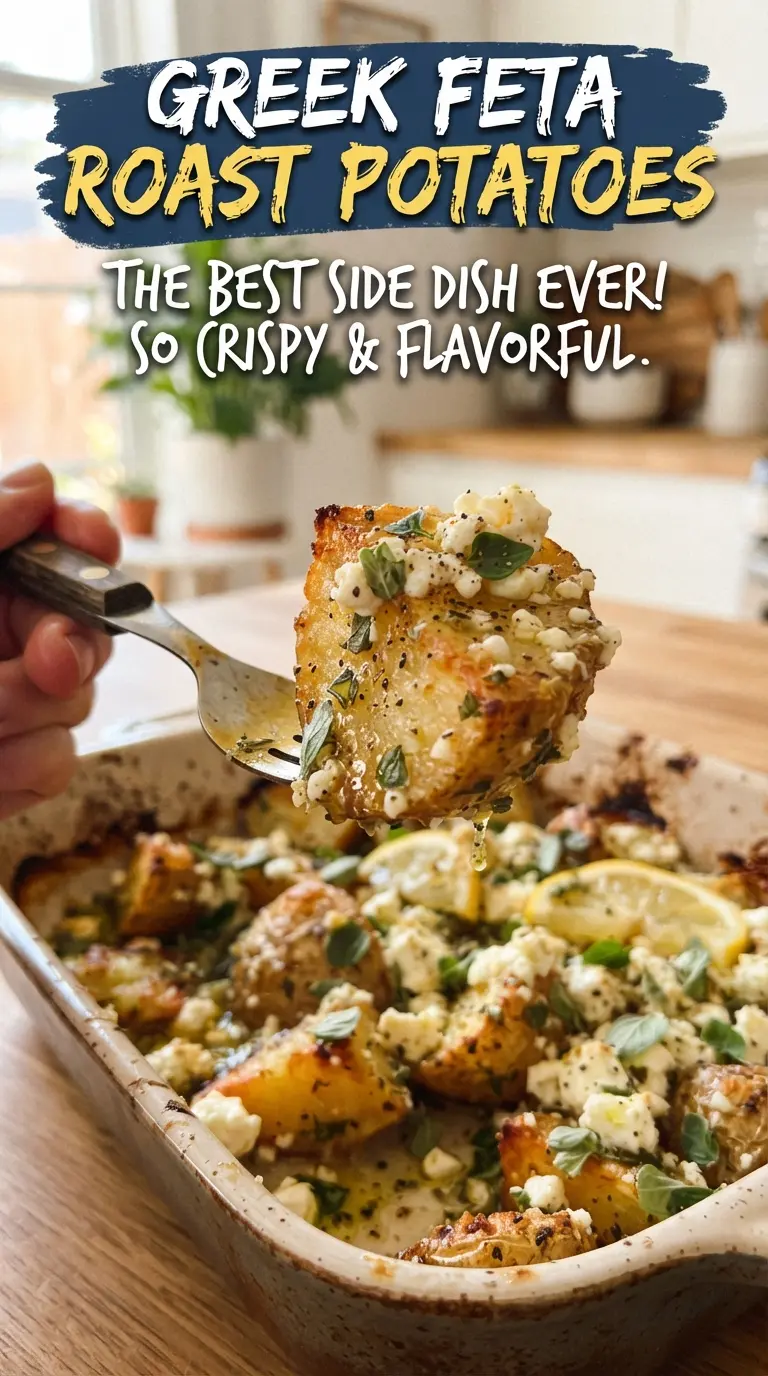
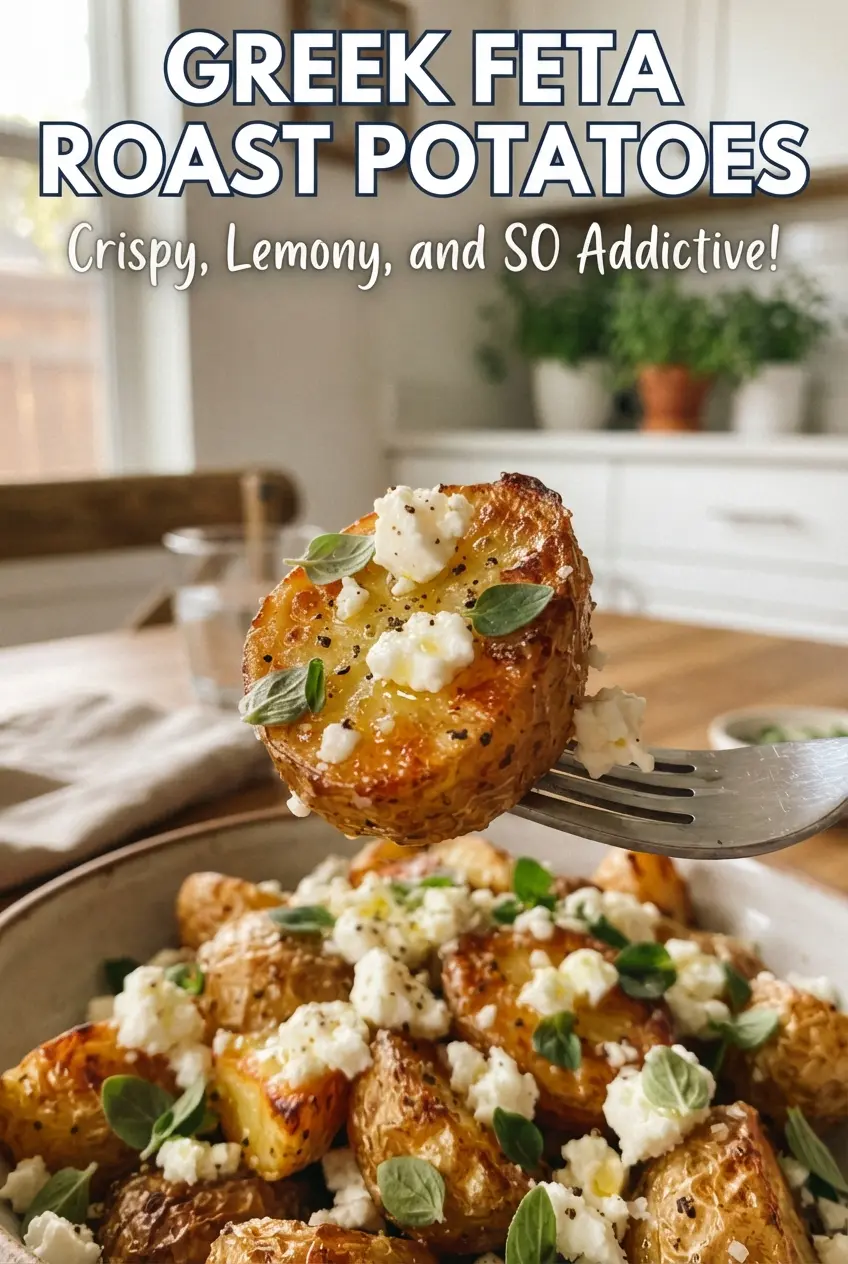
Crispy-edged, lemon-bright Greek feta roast potatoes are the kind of side dish that disappears before the main course gets a fair shot. The potatoes roast in their own seasoned bath, so the wedges turn tender inside while the exposed edges pick up deep color and a little crunch. Then the feta goes on at the end, where it softens just enough to cling to the potatoes without melting into the pan.
What makes this version work is the balance in the roasting liquid. Olive oil carries the heat and helps the potatoes brown, lemon juice keeps the flavor sharp, and chicken broth gives the wedges enough steam at the start to turn creamy in the center before the liquid cooks off. If the pan looks dry too early, the potatoes usually need a tighter layer or a hotter oven; if they sit in too much liquid at the end, they won’t crisp. The fix is all in the pan and the flip.
Below you’ll find the small details that matter here, from the best potato shape to use to the moment the feta and herbs should go on so they stay fresh and bright.
The potatoes got those crispy corners I was hoping for, and the lemony pan juices soaked into the wedges without making them soggy. I added the feta at the very end and it stayed creamy and salty on top instead of disappearing.
Craving these lemon-oregano roast potatoes? Save the feta-topped version to Pinterest for the nights when you want a side dish that cooks in one pan and still tastes layered.
The Reason These Potatoes Crisp Instead of Steaming
The mistake with roast potatoes is usually crowding them into a dry pan and hoping the oven does the rest. Here, the broth and lemon juice do an important job at the start: they keep the potatoes from drying out while the wedges cook through. Then the liquid has to vanish. That’s the turning point. Once the pan is nearly dry, the olive oil can finally work on the cut sides and edges, which is where the browning happens.
Yukon Gold potatoes are the right call because they hold their shape without going waxy or falling apart. Cut them into wedges that are close to the same size so they finish at the same time. If you slice some pieces thin and leave others chunky, the thin ones scorch before the thicker ones get tender.
- Potatoes: Yukon Golds give you a creamy middle and a surface that browns well. Russets can work, but they tend to go fluffier and a little more fragile once the lemon-broth mixture reduces.
- Lemon juice: Fresh lemon gives the dish its sharp finish. Bottled juice works in a pinch, but the flavor tastes flatter, so keep the amount the same and don’t add extra.
- Feta: Add it after roasting, not before. In the oven, it softens into the pan; at the end, it stays crumbly and salty on top of the potatoes where you want it.
- Fresh dill or parsley: Dill gives the most Greek-style finish. Parsley is the milder swap if you want the herbs to stay in the background instead of leading the dish.
What Each Ingredient Is Actually Doing in This Recipe
- Primary ingredient (the star) — Quality matters most. Choose the best you can find.
- Cooking medium (oil, butter, or broth) — This carries flavors and prevents dryness.
- Seasonings (salt, pepper, spices, herbs) — Layer flavors so nothing overpowers. Build depth gradually.
- Aromatics (garlic, onion, herbs) — Cook with fat to bloom flavors. Become the foundation.
- Supporting ingredients — Complement the main ingredient without overpowering it.
- Sauce or liquid (if applicable) — Brings flavors together. Balance richness with acid.
- Acid (lemon, vinegar, wine, or other) — Brightens and prevents flat-tasting results.
- Final finish (garnish, glaze, or sauce) — Prevents one-dimensional taste and adds visual appeal.
The 50 Minutes That Turn the Pan Golden
Coating the Wedges Evenly
Toss the potatoes with the olive oil, lemon juice, broth, garlic, oregano, salt, and pepper right in the roasting pan. That keeps the flavor where the potatoes are going to cook instead of dirtying an extra bowl, and it helps every wedge get coated in the same amount of acid and fat. Spread them into a single layer with some space between the pieces. If they pile up, the potatoes trap steam and soften instead of browning.
Roasting Until the Liquid Disappears
Slide the pan into a hot 425F oven and leave it alone long enough for the edges to start taking on color. Around the halfway mark, flip the wedges so the underside can meet the hot pan and brown too. The real cue is the pan itself: when the liquid is nearly gone and the bottoms look deeply golden at the edges, you’re on track. If there’s still a pool of liquid at the end, the potatoes need a few more minutes to dry out before they’ll crisp.
Finishing With Feta and Herbs
Take the pan out once the potatoes are crisp and tender. Sprinkle the feta over while the potatoes are hot so it softens slightly on contact, then finish with dill or parsley. That’s the moment when the sharp saltiness of the cheese and the fresh herbs wake the whole dish up. Serve it right away, while the edges are still crisp and the feta hasn’t had time to melt into the pan juices.
How to Adapt These Greek Feta Roast Potatoes
Make It Vegetarian
Swap the chicken broth for vegetable broth and everything else stays the same. The potatoes still roast up with the same tender center and crisp edges, and the lemon and oregano are strong enough that you won’t miss the chicken stock at all.
Dairy-Free Version
Leave off the feta or use a dairy-free feta-style cheese if you have one that crumbles well. The potatoes still taste complete because the lemon, garlic, oregano, and browned edges carry most of the character; what you lose is that creamy salty finish on top.
Use Russet Potatoes for a Fluffier Center
Russets turn softer inside and a little more crumbly around the edges, which some people love for a more classic roast potato feel. Cut them a little larger so they don’t fall apart before the liquid cooks down, and expect a drier, starchier bite than with Yukon Golds.
Storage and Reheating
- Refrigerator: Store leftovers in an airtight container for up to 4 days. The potatoes soften as they sit, but the flavor stays strong.
- Freezer: These freeze, but the texture gets mealy after thawing, so I don’t recommend it for the best result.
- Reheating: Reheat on a sheet pan in a 400F oven until hot and the edges crisp back up. The common mistake is microwaving them, which turns the exterior soft before the center warms through.
Answers to the Questions Worth Asking
Greek Feta Roast Potatoes
Ingredients
Equipment
Method
- Preheat the oven to 425F, and set a sheet pan inside while it heats. This helps the wedges start browning right away.
- Toss Yukon gold potatoes with olive oil, fresh lemon juice, chicken broth, minced garlic, dried oregano, salt, and black pepper in a roasting pan. Make sure every wedge is evenly coated in the lemon-oregano mixture.
- Spread the potatoes in a single layer on the hot sheet pan. Leave space between wedges so they crisp instead of steaming.
- Roast for 45-50 minutes, flipping halfway until the liquid is absorbed and the edges are crispy and golden. Look for deep golden browning and a drier pan as the broth cooks off.
- Top the hot roasted potatoes with crumbled feta and fresh dill or parsley. The feta should soften on contact and stay lightly crumbly.
- Serve hot straight from the pan. Garnish visible herbs on top for a fresh, bright finish.