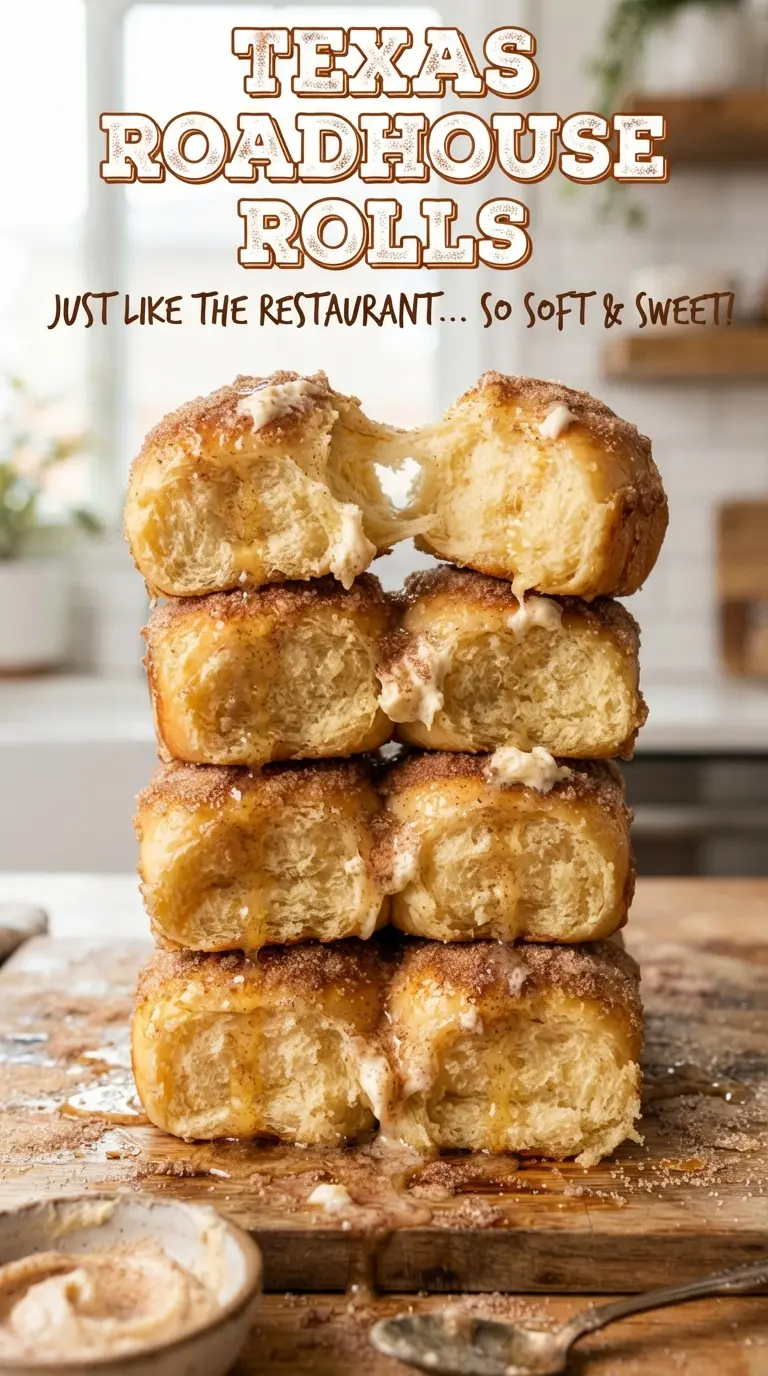
Soft, pillowy Texas Roadhouse rolls have that unmistakable pull-apart crumb that stays tender even after they cool, with a light sweetness that makes them dangerous to set on the table warm. The tops bake to a pale golden sheen, then get brushed with butter so they shine and stay soft instead of drying out at the edges.
What sets this version apart is the dough handling. The milk needs to be warm enough to wake up the yeast, but not hot enough to kill it, and the dough itself should finish soft and slightly tacky so the rolls bake up airy instead of dense. Folding the dough before cutting gives you those neat square rolls with a little extra height, which is exactly what you want for soaking up whipped cinnamon honey butter.
Below, I’ll walk through the small details that matter most: how to tell when the dough has risen enough, why the square shape helps these rolls bake evenly, and the fastest way to keep them soft from the oven all the way to the table.
The rolls came out super soft and fluffy, and the cinnamon honey butter was perfect on the warm centers. I let them rise until they looked puffy, not just by the clock, and that made all the difference.
Love these Texas Roadhouse rolls? Save the fluffy square rolls and cinnamon honey butter for your next bread basket night.
The Difference Between Puffy Rolls and Dense Bread
Most rolls turn heavy for one of two reasons: the yeast never fully wakes up, or the dough gets pushed too hard with extra flour. This dough should feel soft and a little elastic after kneading, not stiff. If it starts to look dry while you work, the rolls will bake up tight and bready instead of feather-light.
The second rise matters just as much as the first. These rolls need to look puffed and slightly joined at the edges before they go into the oven. If they go in too early, the oven spring won’t have enough lift to create that soft, shreddable center. If they overproof, they lose strength and can collapse into flat, pale rounds.
The last thing that keeps them close to the restaurant version is the butter brush at the end. It softens the crust the second it comes out of the oven and gives the rolls that glossy, tender finish instead of a dry bakery crust.
What Each Ingredient Is Actually Doing in These Rolls
- Whole milk — The milk gives the dough richness and helps the crumb stay soft. Warm it to about 110F so it encourages the yeast without scalding it; hot milk can slow or kill the rise.
- Active dry yeast — This is what gives the rolls their lift. If the mixture doesn’t look foamy after five minutes, the yeast may be old or the liquid may have been too hot or too cold.
- Butter — Melted butter goes into the dough for tenderness, while softened butter is for the cinnamon honey spread. That separate use matters: one builds the roll, the other makes the finish taste like the restaurant basket people remember.
- All-purpose flour — This is the structure here. Add just enough for a soft dough; too much flour is the fastest way to lose that cloud-like texture.
- Powdered sugar, honey, and cinnamon — Together they turn plain whipped butter into the sweet spread that makes these rolls feel finished. Whipping them until fluffy keeps the mixture light instead of greasy or grainy.
Building the Dough So the Rolls Stay Soft
Waking Up the Yeast
Stir the warm milk, water, yeast, and a spoonful of sugar together, then let it sit until the top looks foamy and slightly domed. That foam is your proof the yeast is alive and active. If the surface stays flat, don’t keep going and hope for the best; the rolls won’t rise properly. Starting with a healthy yeast mixture is the difference between airy rolls and squat little biscuits.
Kneading to the Right Feel
Once the flour goes in, knead until the dough turns smooth and springs back when pressed with a finger. It should be soft, not sticky enough to coat your hands, and not dry enough to crack at the seams. If you add too much flour because the dough looks tacky at first, it will tighten as it bakes. A soft dough is what gives these rolls their pillowy center.
Shaping for Even Rise
Roll the dough into a rectangle, fold it in half, and cut clean 2-inch squares. That fold gives the rolls a little extra lift and makes them rise upward instead of spreading flat. Place them close together on the pan so they support one another as they proof and bake. Leave them uncovered only long enough to work, then cover them so the tops don’t dry out.
Baking Until Just Set
Bake until the tops are lightly golden and the rolls sound hollow when you tap one. They should look finished but not deeply browned; overbaking is what steals the softness. Brush them with melted butter the second they come out, while the crust is still warm enough to absorb it. That last step keeps the rolls tender and gives them that soft bakery-style finish.
How to Adapt These Rolls for Different Needs
Dairy-Free Rolls
Swap the milk for an unsweetened plant milk with some body, like oat milk, and use a good dairy-free butter. The rolls will still rise and stay soft, but they won’t have quite the same rich flavor the whole milk brings. The cinnamon honey spread can be made with the same dairy-free butter swap.
Make the Rolls a Little Less Sweet
Cut the sugar in the dough back slightly if you want a more neutral dinner roll. The texture will stay soft, but the flavor shifts away from the signature copycat sweetness. Keep the honey butter as written if you still want that restaurant-style finish.
Freezer-Friendly Batch
Bake the rolls, cool them completely, and freeze them in a sealed bag. You can thaw at room temperature and warm them briefly in the oven wrapped in foil. Freezing after baking keeps the texture better than freezing the dough, which can sometimes weaken the rise.
Storage and Reheating
- Refrigerator: Store in an airtight container for up to 4 days. They’ll lose a little of their just-baked softness, but a quick warm-up brings them back.
- Freezer: Freeze baked rolls for up to 2 months. Wrap tightly so they don’t pick up freezer odors or dry edges.
- Reheating: Warm in a 300F oven, wrapped in foil, for about 8 to 10 minutes. Don’t microwave them too long or they turn chewy around the edges and stale in the middle.
Answers to the Questions Worth Asking
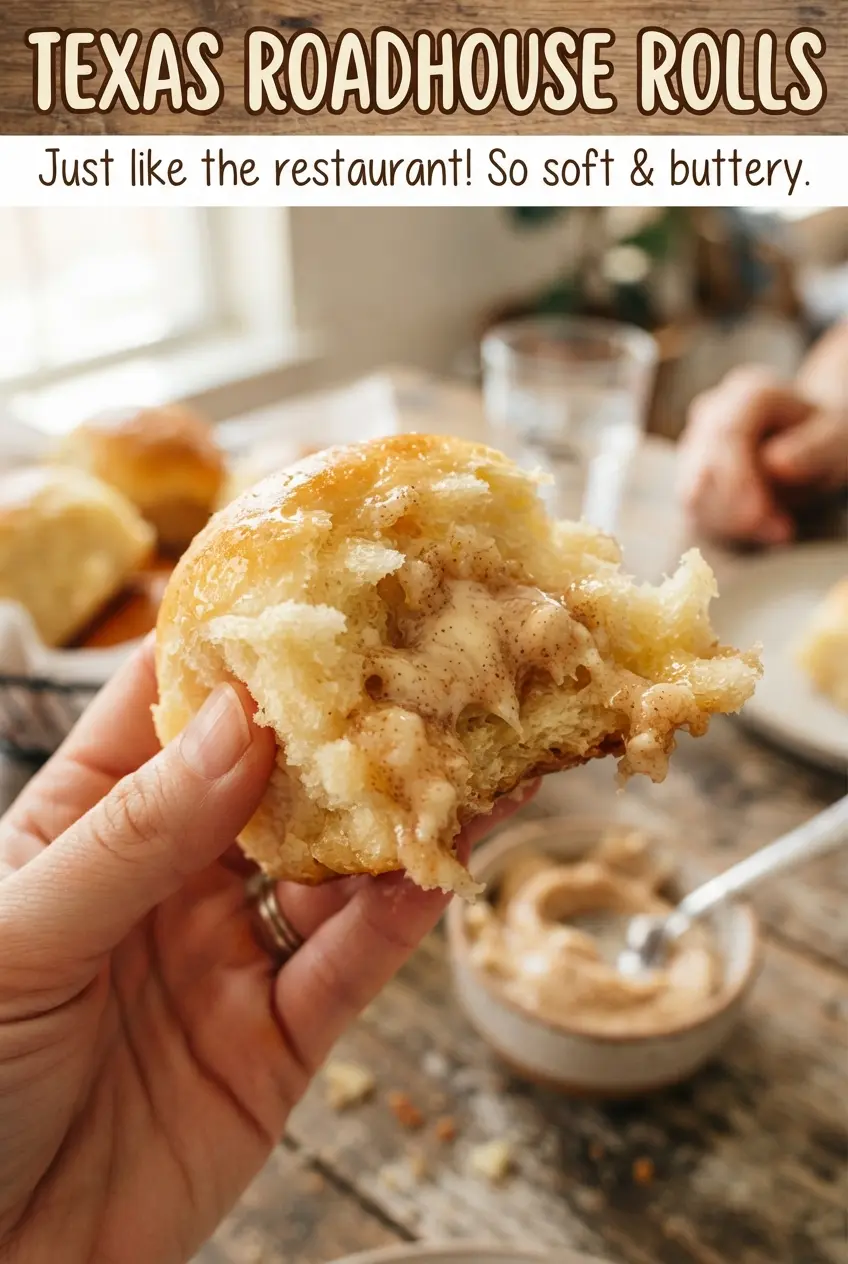
Texas Roadhouse Rolls
Ingredients
Equipment
Method
- Combine whole milk, warm water, active dry yeast, and 1 tbsp sugar in a bowl, then let stand 5 minutes until foamy.
- Add the remaining sugar, large egg, melted butter, salt, and all-purpose flour, and mix until a shaggy dough forms.
- Knead the dough for 8 minutes until soft and smooth.
- Cover the dough and let rise 1 hour until doubled in size.
- Roll the dough into a 1/2-inch thick rectangle, then fold in half and cut into 2-inch squares.
- Place the squares on a parchment-lined sheet pan, cover, and let rise 1 hour until puffy.
- Preheat the oven to 350F while the rolls finish rising.
- Bake for 12-15 minutes until golden, then brush with melted butter.
- Whip softened butter, powdered sugar, honey, and ground cinnamon until fluffy.
- Serve with the warm rolls so the butter melts into the center.