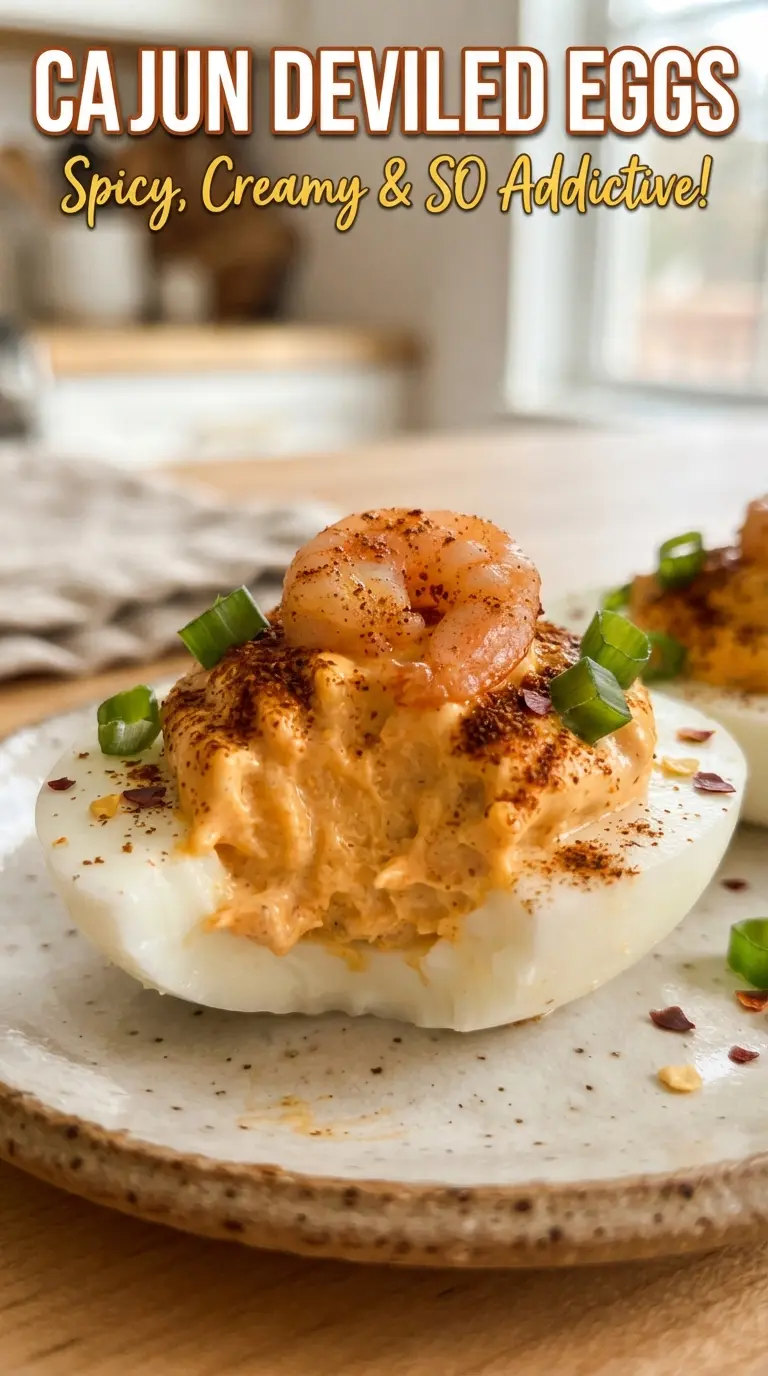
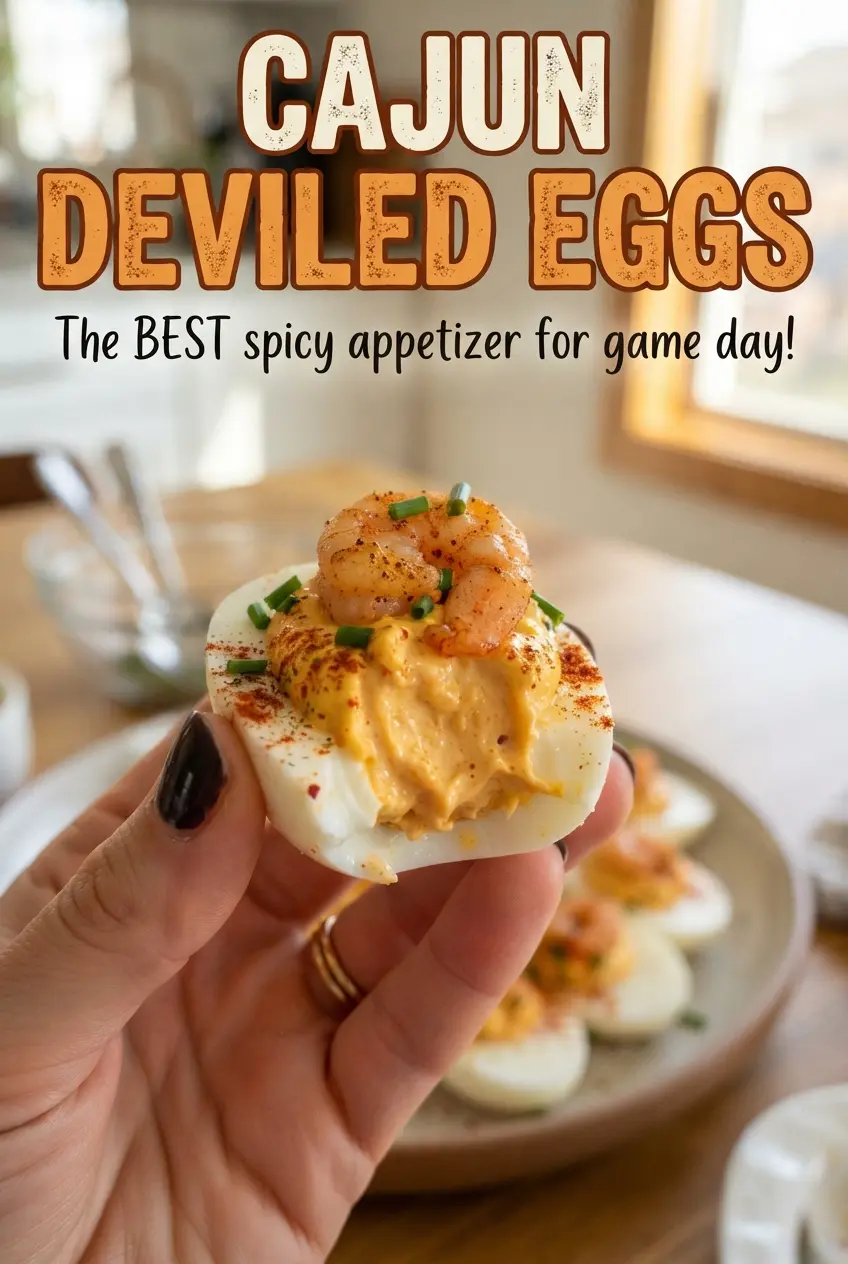
These Cajun deviled eggs disappear fast because they hit all the right notes at once: creamy, tangy filling, a little heat, and that buttery shrimp on top that makes each bite feel like a finished appetizer instead of a half-hearted snack. The seasoning doesn’t just sit on the surface here. It gets worked into the yolk mixture and wakes up the shrimp, so every layer tastes intentional.
The trick is keeping the filling smooth without drowning out the egg flavor. Creole mustard gives the filling a sharper edge than standard yellow mustard, while sweet pickle relish adds just enough sweetness to round out the heat. The shrimp only need a quick sear in butter, which keeps them tender and gives you that little browned edge that makes the topping taste special instead of boiled and plain.
Below, I’ll walk through the part that matters most: how to keep the yolks creamy, how long to sear the shrimp, and what to do if you want to make these ahead for a party.
The filling was smooth and piped nicely, and the shrimp took just a minute or two per side. I loved that the Cajun seasoning stayed balanced instead of taking over the whole egg.
Cajun deviled eggs with seared shrimp are the kind of appetizer people remember, so save this one for your next platter.
The Reason the Yolks Stay Creamy Instead of Grainy
The biggest mistake with deviled eggs is overworking the yolks or trying to force the filling smooth with too little fat. Once that happens, the texture turns chalky and the filling fights the piping bag. Here, mayonnaise does the heavy lifting, but the real payoff comes from mashing the yolks while they’re still just warm enough to break down easily after the ice bath.
Creole mustard gives you more depth than plain yellow mustard, and the hot sauce keeps the filling from tasting flat. The relish matters too. It softens the edges of the Cajun seasoning and keeps the whole bite from landing as salty and sharp. If your filling feels loose, it usually means the eggs were a little too warm or the mayo went in too fast.
What Each Ingredient Is Actually Doing in This Dish
- Eggs — The eggs need to be fully cooked but not overcooked, or you’ll get that green ring and a sulfur-heavy taste. The 12-minute covered rest followed by an ice bath gives you yolks that are set, rich, and easy to mash.
- Mayonnaise — This is what makes the filling pipeable and silky. Use a mayo you actually like, because there’s nowhere for a bad one to hide.
- Creole mustard — This brings sharper, more layered heat than yellow mustard. If you have to substitute, use Dijon, but the finished filling will be a little less bold and a touch less Southern in character.
- Sweet pickle relish — This adds a small sweet note and a little texture. Drain it well if it’s watery, or your filling will turn slack.
- Cajun seasoning — Split between the filling and the shrimp, it gives the dish its backbone. If your blend is very salty, ease up a bit and taste before adding more.
- Shrimp — Halving the shrimp lengthwise helps each egg get a neat, manageable topping instead of a bulky one. Small shrimp work too, but the halved medium shrimp look cleaner and eat better on a platter.
- Butter — Butter helps the shrimp brown quickly and adds a round finish that oil won’t give you. Since the shrimp cook fast, there’s no need for anything more complicated.
Building the Filling and Searing the Shrimp
Mash the Yolks Until the Mixture Turns Smooth
Scoop the yolks into a bowl and break them down first with a fork before adding the mayo, mustard, hot sauce, relish, and one teaspoon of Cajun seasoning. That order matters because it keeps you from chasing lumps around the bowl. Stop mixing once the filling looks creamy and holds its shape; if you keep mashing after it’s smooth, it can turn pasty.
Cook the Shrimp Fast and Pull Them Early
Toss the shrimp with the remaining Cajun seasoning, then lay them in the butter in a single layer. You’re looking for pink shrimp with lightly browned edges, not curled-up rubber bands. One to two minutes per side is enough for halved shrimp; if they stay in the pan too long, they tighten and dry out before you get them onto the eggs.
Pipe, Top, and Finish With Green Onion
Pipe or spoon the filling into the egg whites, then set a shrimp half on each one while the shrimp are still warm. A small strip of green onion adds freshness and a clean bite right at the end. If you’re serving these on a hot day or a crowded platter, chill the filled whites first and add the shrimp just before serving so they stay neat.
How to Adapt These for Different Crowds and Diets
Dairy-Free Without Losing the Creamy Filling
This recipe is already dairy-free as written if your mayonnaise is dairy-free, which most are. The texture stays just as creamy because the yolks and mayo do the work, and the butter only affects the shrimp sear. If you swap the butter for oil, the shrimp will still cook well, but you’ll lose a little of that rich finish.
Make It Less Spicy for a Mixed Crowd
Cut the hot sauce in half and use a mild Cajun seasoning blend, then taste the filling before piping. You still get the signature Cajun flavor, just without the sharper heat that can overpower the eggs for people who prefer a gentler bite.
Skip the Shrimp for a More Budget-Friendly Tray
The filling stands on its own if you want a classic Cajun deviled egg without the seafood topping. Add a little extra green onion and a dusting of Cajun seasoning on top, and you’ll still get the same bold look and flavor with less cost and less last-minute cooking.
Storage and Reheating
- Refrigerator: Store the egg whites and filling separately for up to 2 days. Once assembled, the eggs are best the same day because the shrimp and filling can soften the whites.
- Freezer: Don’t freeze these. Hard-cooked eggs turn rubbery and watery after thawing, and the shrimp topping loses its texture.
- Reheating: These aren’t meant to be reheated. If the shrimp were cooked ahead, bring them to cool room temperature before topping the eggs, and never microwave the assembled eggs or the filling will break and the whites will turn tough.
Answers to the Questions Worth Asking
Cajun Deviled Eggs
Ingredients
Equipment
Method
- Place 12 large eggs in a pot, cover with cold water, and bring to a boil; cover, remove from heat, and let stand 12 minutes. Visual cue: set the yolks after the stand time so they look fully set when sliced.
- Chill the eggs in an ice bath for 10 minutes, then peel and halve lengthwise. Visual cue: the whites should feel firm and cold, with clean halving surfaces.
- Mash the yolks with mayonnaise, Creole mustard, hot sauce, sweet pickle relish, and 1 teaspoon Cajun seasoning until smooth. Visual cue: the mixture should look glossy and thick enough to hold a piped shape.
- Toss shrimp with the remaining Cajun seasoning, then sear in butter for 1-2 minutes per side until pink. Visual cue: shrimp should curl and turn opaque with a lightly browned surface.
- Pipe the filling into the egg white halves. Visual cue: the tops should be level and neatly filled, not runny.
- Top each with a shrimp half and sliced green onions. Visual cue: finish with visible green onion rings on top of each deviled egg.