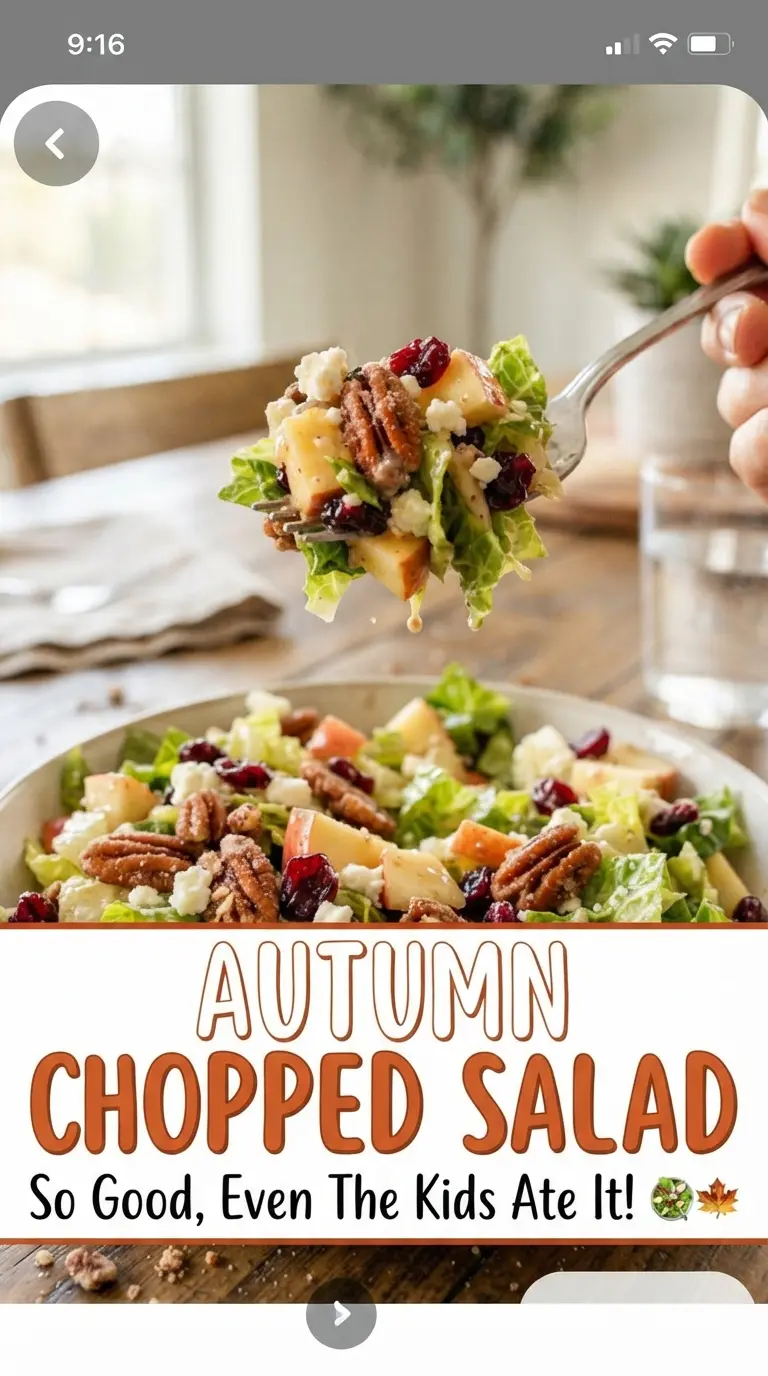
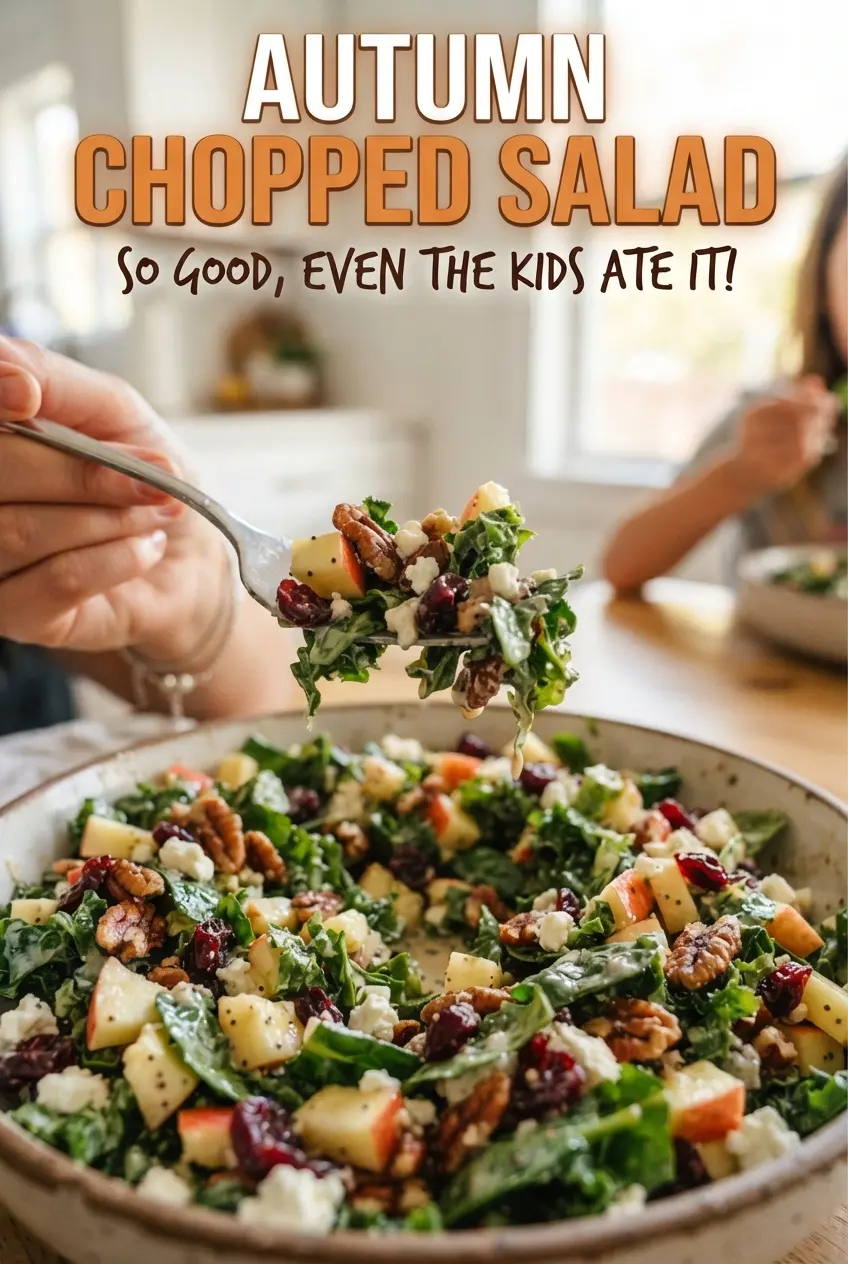
Finely chopped greens, crisp fruit, salty feta, and a maple vinaigrette give this autumn chopped salad the kind of contrast that keeps every bite interesting. It eats like a full salad, not a side dish pretending to be one: the kale softens just enough, the Brussels sprouts stay snappy, and the apples and pears bring a clean sweetness that plays well with the tangy dressing.
The trick is in the cut and the timing. When everything is chopped small and even, the dressing coats the leaves instead of sliding to the bottom of the bowl. A quick massage with a spoonful of vinaigrette takes the edge off the kale so it turns tender without losing structure, and that one step keeps the salad from eating tough or grassy.
Below, you’ll find the exact order that keeps the greens from getting soggy, plus a few useful swaps if you’re working with what you already have in the fridge. This is the kind of salad that looks carefully built but comes together fast enough for a weeknight dinner.
The kale softened just enough after the quick massage, and the maple dressing clung to every chopped piece instead of pooling at the bottom. I brought it to a potluck and there wasn’t a crumb left.
Save this autumn chopped salad for the nights when you want crisp apples, salty feta, and maple dressing in one bowl.
The Reason This Salad Stays Crisp Instead of Getting Watery
Chopped salads fail for one of two reasons: the greens are too bulky to hold the dressing, or the fruit sits in the bowl long enough to leak juice into everything else. This version avoids both problems by keeping the kale and Brussels sprouts finely cut, then dressing the kale first so it starts to soften before the rest of the ingredients go in. That small head start changes the texture in the bowl.
Another thing that matters here is balance. A salad with kale, Brussels sprouts, fruit, feta, pecans, and pepitas needs a dressing that can carry sweet, salty, and tangy notes at once. Maple syrup gives the vinaigrette enough roundness to match the apple and pear, while Dijon keeps it sharp enough that the bowl doesn’t taste flat.
- Kale — Use curly or lacinato kale, but chop it small. Large ribbons stay chewy even after dressing. The massage step matters here because it breaks down the tougher edges and turns the leaves more tender.
- Brussels sprouts — Shred them finely or buy them pre-shredded if you want to save time. Their mild bitterness is what keeps the salad from leaning too sweet.
- Apple and pear — Use firm fruit, not overripe fruit. You want diced pieces that stay crisp in the bowl. If you only have one, use two apples or two pears and keep the dice small so the texture stays even.
- Candied pecans and pepitas — The pecans bring sweetness and crunch, while the pepitas add a toasty, savory note. If you skip one, the salad loses some of its texture contrast, so I like to keep at least one crunchy element besides the greens.
- Feta — The salty crumble pulls the whole salad together. Goat cheese works in a pinch, but it softens the salad more and tastes tangier.
- Maple dressing — This is a simple vinaigrette, so the olive oil doesn’t need to be fancy, but the apple cider vinegar and Dijon need to taste bright. If your vinegar is harsh, add the maple syrup a little at a time until the dressing tastes balanced, not sugary.
What Each Ingredient Is Actually Doing in This Recipe
- Primary ingredient (the star) — Quality matters most. Choose the best you can find.
- Cooking medium (oil, butter, or broth) — This carries flavors and prevents dryness.
- Seasonings (salt, pepper, spices, herbs) — Layer flavors so nothing overpowers. Build depth gradually.
- Aromatics (garlic, onion, herbs) — Cook with fat to bloom flavors. Become the foundation.
- Supporting ingredients — Complement the main ingredient without overpowering it.
- Sauce or liquid (if applicable) — Brings flavors together. Balance richness with acid.
- Acid (lemon, vinegar, wine, or other) — Brightens and prevents flat-tasting results.
- Final finish (garnish, glaze, or sauce) — Prevents one-dimensional taste and adds visual appeal.
Building the Bowl in the Right Order
Whisk the dressing until it looks glossy
Start by whisking the olive oil, vinegar, maple syrup, Dijon, salt, and pepper until the dressing turns slightly thick and glossy. If the Dijon clumps, keep whisking; it should disappear into the dressing, not float in flecks. Taste it before you add it to the greens, because a bland dressing will stay bland no matter how many toppings you pile on top.
Massage the kale before anything else
Add just 1 tablespoon of the dressing to the chopped kale and work it in with your hands or a spoon for about a minute. The leaves should darken a shade, look softer, and lose that stiff, dry edge. If you skip this, the salad eats like a pile of rough greens instead of a cohesive chopped salad.
Layer in the crunch and fruit
Once the kale has softened, add the shredded Brussels sprouts, apple, pear, cranberries, pecans, feta, and pepitas. Toss gently so the diced fruit doesn’t turn mushy and the feta stays in visible crumbles. The goal is an even mix, not a crushed bowl of toppings, so stop as soon as everything looks coated and distributed.
Dress it at the end and serve with purpose
Pour over the remaining dressing and toss again until every piece glistens lightly. Serve it right away for the sharpest crunch, or chill it briefly if you want the flavors to settle together. If the bowl sits much longer than that, the fruit starts to soften the greens and the pecans lose their snap.
How to Adapt This for Different Tables and Different Fridges
Make it dairy-free without losing the salty finish
Leave out the feta and add a few extra pinches of salt to the dressing, or use a dairy-free feta if you have one that crumbles well. The salad will taste a little cleaner and less creamy, but the fruit, nuts, and mustard still carry plenty of flavor.
Swap the nuts for a nut-free crunch
If you need to skip the candied pecans, use extra pepitas or sunflower seeds instead. You lose the caramelized sweetness, so add a few more cranberries to keep that sweet-salty balance in place.
Turn it into a more substantial lunch
Add shredded rotisserie chicken, white beans, or chickpeas. Chicken keeps the salad feeling classic and light, while beans make it vegetarian and more filling without changing the texture much.
Storage and Reheating
- Refrigerator: Keep leftovers covered for up to 2 days. The kale holds up better than most greens, but the apple and pear will soften and the pecans lose some crunch.
- Freezer: Don’t freeze this salad. The greens, fruit, and feta all break down when thawed, and the texture won’t recover.
- Reheating: No reheating needed. If the salad has been chilled, let it sit at room temperature for 10 to 15 minutes so the dressing loosens up and the flavors come back forward.
Answers to the Questions Worth Asking
Autumn Chopped Salad
Ingredients
Method
- Whisk olive oil, apple cider vinegar, maple syrup, Dijon mustard, salt, and pepper until smooth.
- Massage the kale with 1 tablespoon of the dressing for 1 minute until slightly tender and glossy.
- Add Brussels sprouts, apple, pear, dried cranberries, candied pecans, feta, and pepitas to the bowl.
- Pour the remaining dressing over the salad and toss well to coat evenly, using a few quick turns so the toppings stay visible.
- Serve right away, or chill for up to 2 hours before serving.