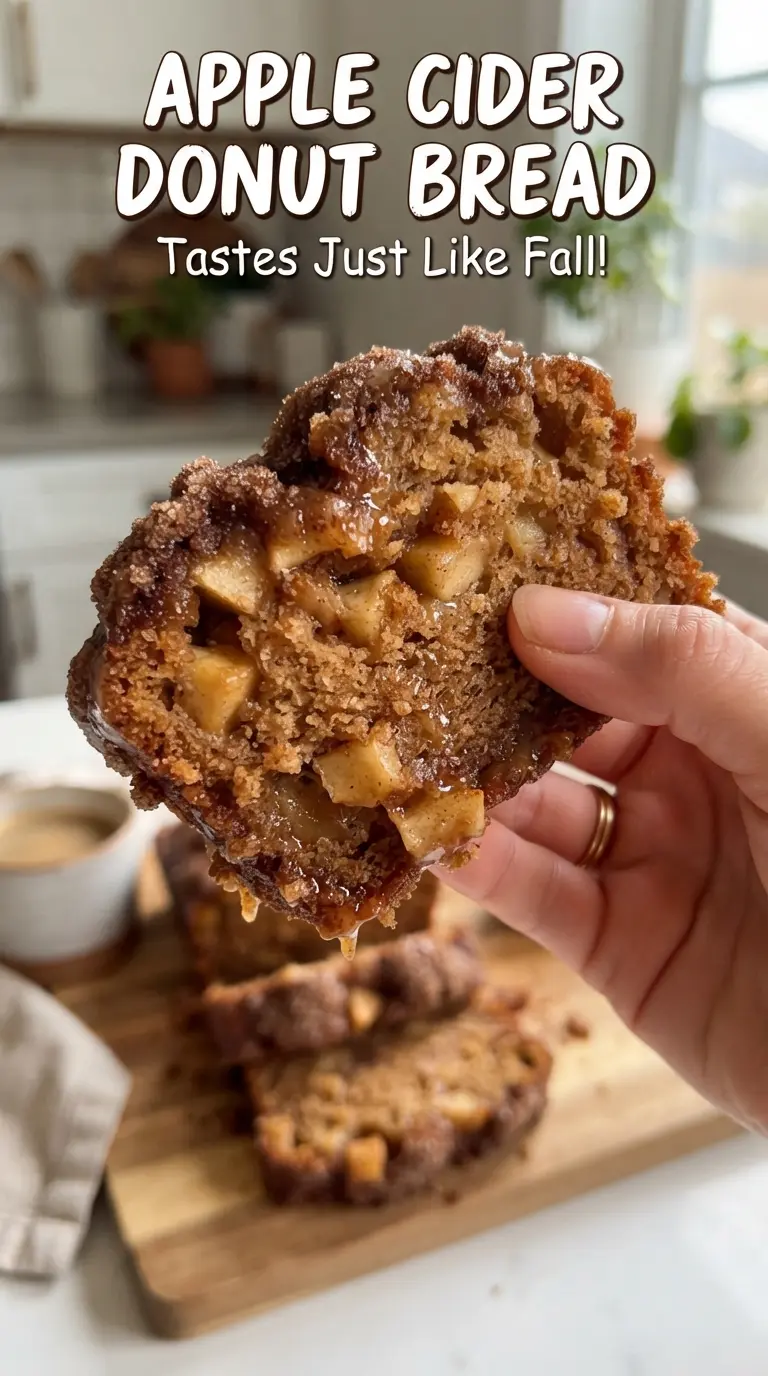
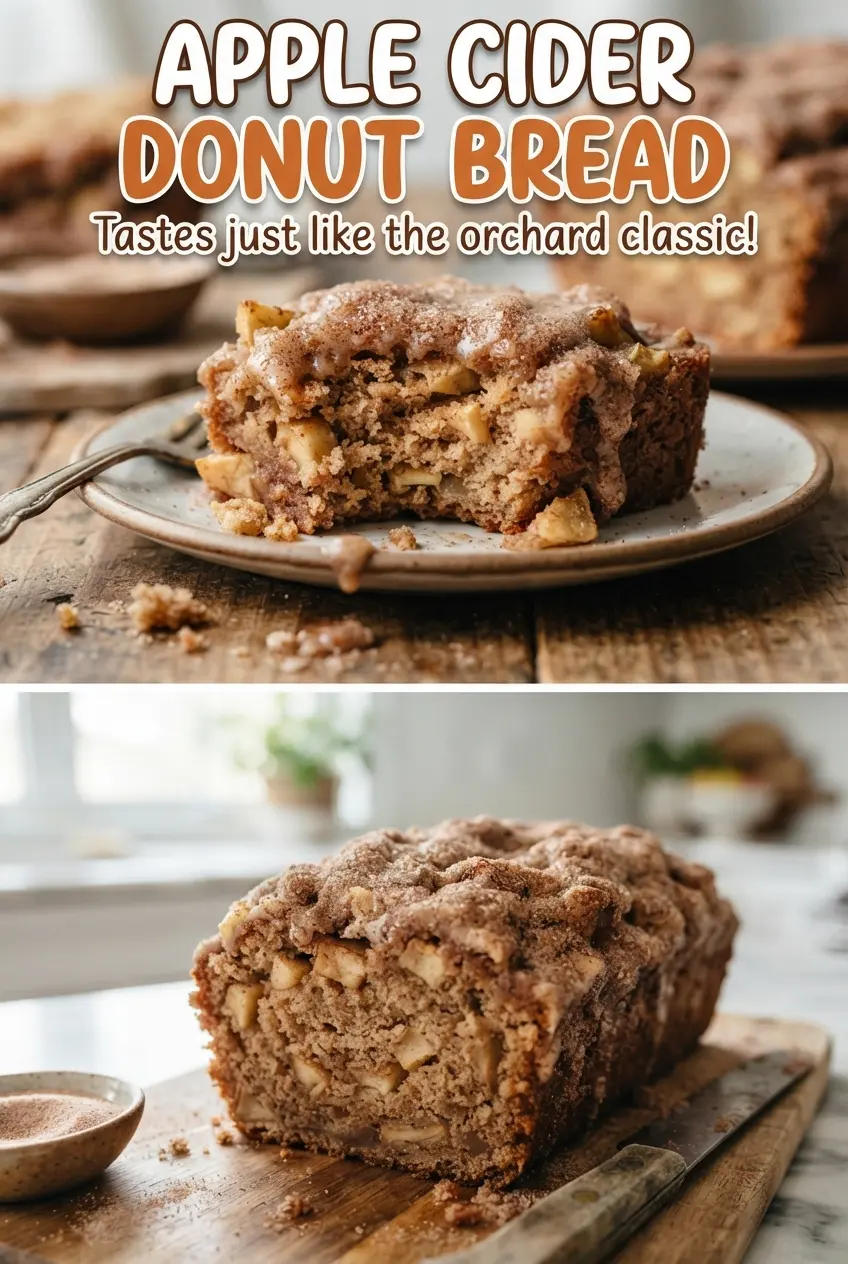
Apple cider donut bread bakes up with the same warm spice and bakery-style crunch people chase at the orchard, but in a loaf you can slice thick and serve all week. The crumb stays tender and moist, while the outside gets that buttery cinnamon-sugar finish that crackles a little when you cut into it. It tastes like a donut, but it eats like quick bread, which is exactly why it disappears fast.
The trick is reducing the cider before it goes into the batter. That concentrates the apple flavor and keeps the loaf from tasting flat or watery. Sour cream adds the soft, rich crumb you expect in a good loaf cake, and brushing the warm bread with melted butter before coating it in cinnamon sugar gives you that sticky, sandy crust that clings instead of sliding off.
Below, I’m walking through the one step that matters most, plus a few swaps that still keep the loaf in that sweet spot between breakfast bread and dessert. If you’ve ever had the topping fall off or the center bake up gummy, the notes here will save you from both.
I reduced the cider like you said and the flavor came through so much better. The cinnamon sugar actually stuck to the loaf, and the crust had that crackly donut feel instead of just melting away.
Love the crunchy cinnamon-sugar crust on this apple cider donut bread? Save it to Pinterest for the days when you want a tender spiced loaf with a bakery-style finish.
The Cider Reduction Is What Keeps This Loaf from Tasting Flat
Apple cider looks like it should bring plenty of flavor on its own, but in a loaf batter it can fade fast. Reducing it down to half a cup concentrates the apple notes and removes the extra water that would otherwise make the crumb loose or damp in the wrong way. That one move is what makes this bread taste like cider, not just sweet spice.
The other place people get tripped up is the topping. If the loaf is cool, the butter won’t soak into the surface and the cinnamon sugar won’t cling. If it’s too hot, the crust softens into a glaze. Warm is the sweet spot — just cool enough to handle, still warm enough for the butter to grab.
What Each Ingredient Is Actually Doing in This Loaf
- Apple cider — Reducing it first is nonnegotiable here. You can use store-bought cider or unfiltered cider; either works as long as you cook it down until you have a concentrated half cup.
- Butter and brown sugar — This is the flavor base for the loaf itself. Brown sugar brings a faint molasses note that fits the cider and spice better than white sugar would.
- Sour cream — It keeps the crumb soft and gives the bread enough richness to stay moist for days. Plain Greek yogurt can stand in if that’s what you have, but the texture will be a little less plush.
- Cinnamon and nutmeg — These are not background players. Nutmeg gives that donut-shop warmth, and cinnamon carries the crust and the crumb so the loaf tastes finished even before the topping goes on.
- Cinnamon-sugar topping — The sugar needs the melted butter to turn into that crackly, sandy shell. Don’t skip brushing the loaf while it’s still warm, or the coating won’t stay put.
Building the Batter So the Loaf Stays Tender
Reducing the Cider First
Pour the cider into a small saucepan and simmer it until it measures about half a cup. You want steady bubbles and steam, not a hard boil that scorches the edges before the liquid has time to concentrate. Cool it before it goes into the batter, or it can melt the butter in the mixing bowl and throw off the texture.
Mixing the Wet Ingredients
Beat the softened butter and brown sugar until the mixture looks lighter and a little fluffy. That adds air and gives the loaf a finer crumb. Add the eggs one at a time, then the sour cream, vanilla, and cooled cider. If the mixture looks slightly curdled at this point, that’s fine; the flour will pull it back together.
Finishing the Batter Without Overworking It
Whisk the dry ingredients in a separate bowl, then fold them into the wet mixture just until the flour disappears. Stop as soon as you don’t see dry streaks. Overmixing is what turns quick bread dense and chewy in the wrong way, especially after the cider has already done its job of adding moisture. Spread the batter evenly in the loaf pan so it bakes at the same rate from end to end.
The Butter-and-Sugar Finish
Bake until the top is set and a tester comes out clean from the center, then let the loaf rest for about 10 minutes. Brush the warm bread all over with melted butter, pressing into every side so the coating has something to stick to. Sprinkle or press on the cinnamon sugar while the surface is still tacky. That’s what gives you the donut-style crust instead of a loose dusting.
How to Adapt This for Different Pan Sizes and Dietary Swaps
Dairy-Free Version
Swap the butter for a neutral dairy-free baking stick and use a thick dairy-free yogurt in place of the sour cream. The loaf will still stay tender, though the topping won’t have quite the same buttery snap. Brush the warm loaf with the dairy-free butter while it’s still fluid so the cinnamon sugar clings properly.
Gluten-Free Swap
A 1:1 gluten-free baking flour works here as long as it contains xanthan gum. The crumb may be a touch more delicate, so let the loaf cool before slicing or it can crumble at the edges. The spice and cider flavor still come through clearly.
Turning It into Muffins
This batter can be baked in a lined muffin tin for about 18 to 22 minutes. You’ll lose a little of the dramatic loaf shape, but you gain more cinnamon-sugar coating per bite and a faster bake. Dip the tops in butter and sugar while they’re warm, just like the loaf.
Storage and Reheating
- Refrigerator: Keeps well for 4 days, wrapped tightly. The crust softens a bit, but the crumb stays moist.
- Freezer: Freezes well without the topping, wrapped tightly for up to 2 months. Thaw at room temperature, then brush with butter and add fresh cinnamon sugar if you want the crust to taste newly made.
- Reheating: Warm slices in a toaster oven or low oven for a few minutes. Microwaving softens the crust and can make the sugar coating sticky instead of crisp.
Answers to the Questions Worth Asking
Apple Cider Donut Bread
Ingredients
Equipment
Method
- Simmer apple cider for 15-20 minutes until reduced to 1/2 cup, then cool.
- Set the reduced cider aside until room temperature so it doesn’t scramble the eggs.
- Preheat the oven to 350°F, then grease and line a 9x5-inch loaf pan.
- Line a sheet pan under the loaf pan in case of any overflow during baking.
- Whisk together all-purpose flour, baking powder, baking soda, salt, ground cinnamon, and nutmeg.
- Beat softened butter and brown sugar until fluffy.
- Beat in eggs, sour cream, vanilla extract, and the reduced cider until smooth.
- Fold the dry ingredients into the wet just until combined, then spread the batter into the loaf pan.
- Bake for 50-55 minutes, until a toothpick comes out clean.
- Cool the loaf for 10 minutes in the pan.
- Brush the warm loaf all over with melted butter.
- Press the cinnamon sugar topping (sugar mixed with cinnamon) onto the buttered loaf.