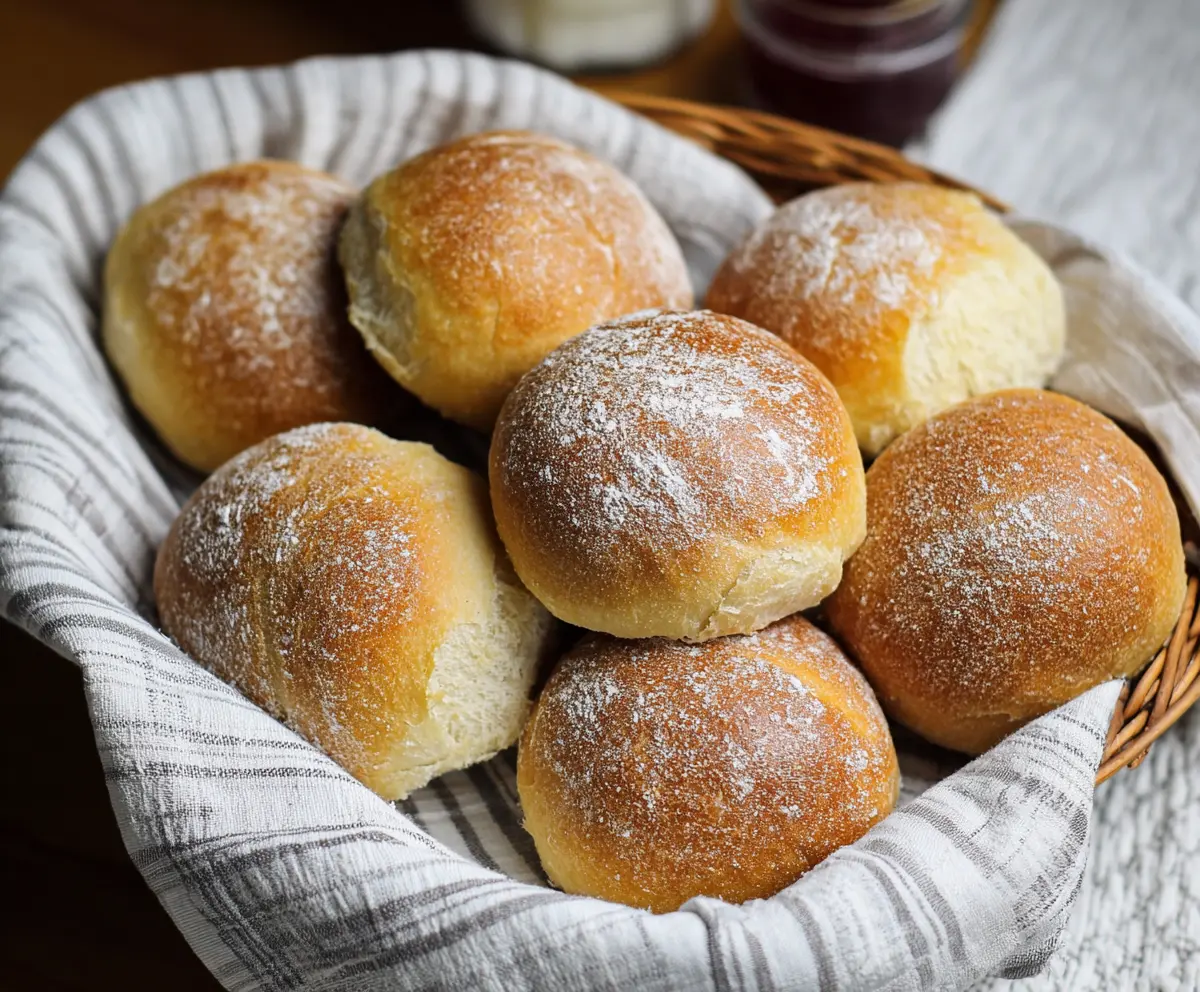
These crusty sourdough dinner rolls are warm, fluffy, and a perfect addition to any meal. Their crispy outside and soft inside will make everyone at the table smile!
Honestly, there’s nothing like the smell of fresh bread baking. I love serving these rolls with butter or as a sandwich. They disappear faster than you can say “sourdough!” 🥖
Key Ingredients & Substitutions
Sourdough Starter: A bubbly and active starter is key for perfect rolls. If you don’t have one, you can buy a starter or use store-bought sourdough bread, but it won’t be the same. I recommend making a starter at home for the best flavor.
All-Purpose Flour: This is essential for the texture of the rolls. If you want a bit of a health boost, you can mix half whole wheat flour with the all-purpose flour. It gives a nice flavor and a slight nutritional edge!
Warm Water: A water temperature around 80°F (27°C) helps the yeast activate. If you don’t have a thermometer, make sure the water feels warm but not hot against your wrist.
Salt: Always use good quality salt; it enhances the flavors. If you’re watching sodium intake, you can reduce it slightly, but avoid leaving it out completely. Sea salt or kosher salt works great!
Sugar or Honey: This is optional, but it can balance the tang of the sourdough and give your rolls a little extra flavor. If you want to skip sweetness, it’s fine to omit this.
Olive Oil or Butter: Adding fat helps achieve a softer crumb. I personally love melted butter for its rich taste, but olive oil is a great dairy-free option for those who prefer that.
How Do I Knead the Dough Properly?
Kneading the dough correctly develops gluten, which gives the rolls their amazing texture. Here’s how to do it right:
- Lightly flour your surface and your hands to prevent sticking.
- Press the dough down and away from you using the heel of your hand. Fold it back towards you, give it a quarter turn, and repeat.
- Knead for about 8-10 minutes until the dough is smooth and elastic. If it feels sticky, add a tiny bit of flour as needed.
- Alternatively, you can use a stand mixer fitted with a dough hook on medium speed for about 5-7 minutes.
Don’t rush this step! The more you knead, the better the rolls will turn out.
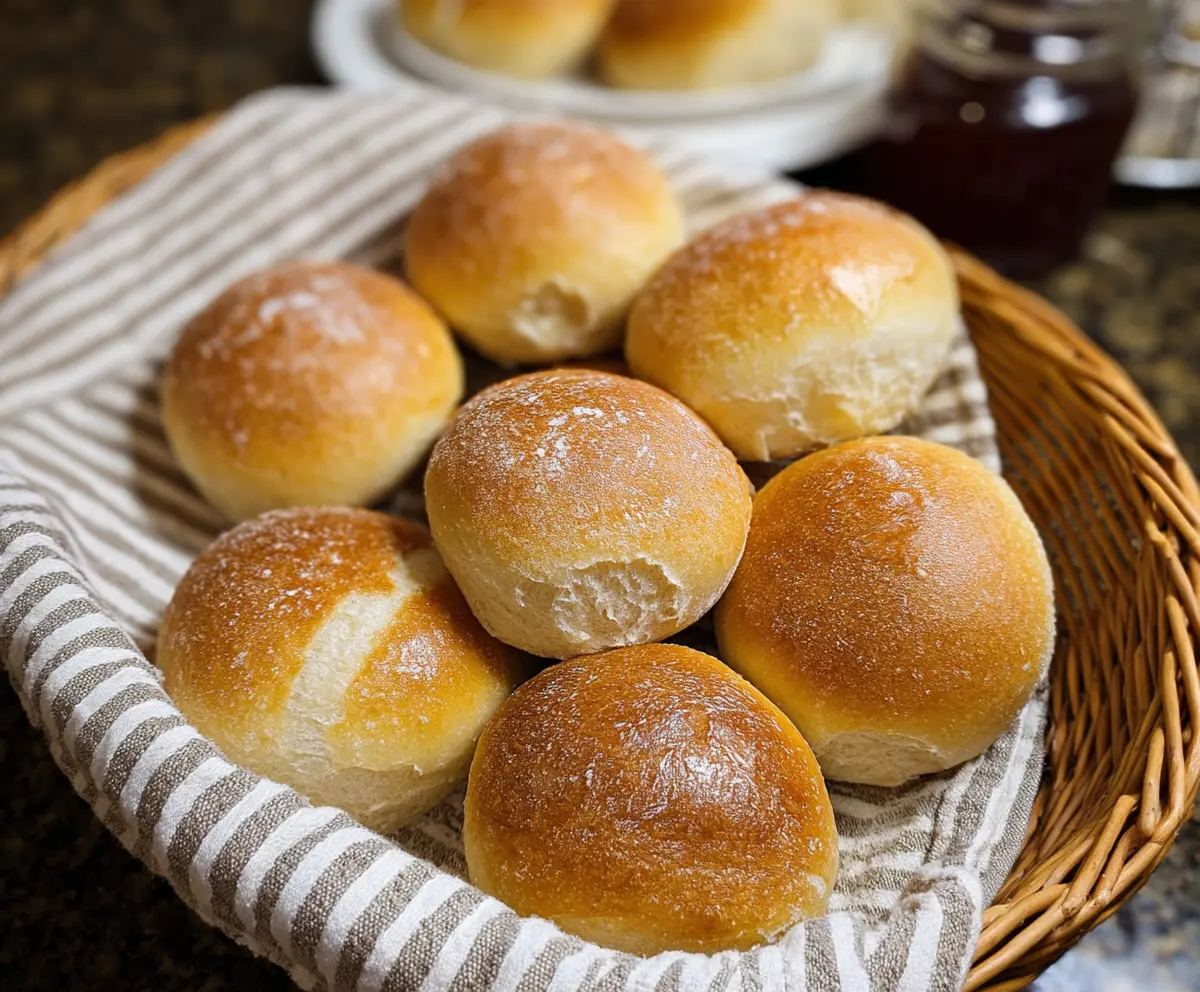
How to Make Crusty Sourdough Dinner Rolls
Ingredients You’ll Need:
For the Rolls:
- 2 cups (480 ml) sourdough starter (active and bubbly)
- 3 ½ cups (440 g) all-purpose flour
- 1 cup (240 ml) warm water (about 80°F or 27°C)
- 2 tsp salt
- 1 tbsp sugar or honey (optional, for a slight sweetness)
- 2 tbsp olive oil or melted butter (optional, for a softer crumb)
- Extra flour for dusting
How Much Time Will You Need?
This recipe will take about 15-20 minutes for prep (mixing and kneading) and 5-6 hours in total, including the rise and proofing time. You’ll need to let the dough rise for 3-5 hours, then shape and proof the rolls for about 1-1.5 hours before baking. The results are well worth the wait!
Step-by-Step Instructions:
1. Mix Your Ingredients:
Start by combining the active sourdough starter, warm water, and sugar or honey (if you’re using it) in a large mixing bowl. Stir gently to mix everything together until it’s well incorporated.
2. Form the Dough:
Gradually add the flour and salt into the bowl, mixing until a rough dough starts to form. You want it to be a bit sticky but manageable. Don’t worry if it’s not perfectly smooth just yet!
3. Knead the Dough:
On a lightly floured surface, knead the dough for about 8-10 minutes until it becomes smooth and elastic. You can also do this with a stand mixer equipped with a dough hook if you prefer. Remember: a well-kneaded dough is key to fluffy rolls!
4. First Rise:
Shape the dough into a ball and place it in a lightly oiled bowl. Cover it with a clean kitchen towel or plastic wrap and let it rise at room temperature for 3-5 hours, or until it has doubled in size. The time may vary depending on how strong your sourdough starter is and the temperature of your kitchen.
5. Shape the Rolls:
After the dough has risen, gently punch it down to release the air. Divide the dough into 6 to 8 equal pieces, shaping each piece into a tight ball with your hands.
6. Prepare for Proofing:
Place the dough balls on a baking sheet lined with parchment paper or a silicone mat, making sure there’s space between each roll. Lightly dust the tops with some extra flour and cover them with a towel. Let them proof for 1 to 1.5 hours until they puff up nicely.
7. Preheat the Oven:
While the rolls are proofing, preheat your oven to 450°F (230°C). To create a crusty exterior, place a shallow pan filled with water on the bottom rack of the oven. This will introduce steam while they bake.
8. Optional Brushing:
If you’d like a softer crust, you can brush the rolls with olive oil or melted butter just before baking. This adds extra flavor and helps them brown nicely!
9. Bake the Rolls:
Bake the rolls in the preheated oven for 15-20 minutes, or until they are golden brown and sound hollow when tapped on the bottom.
10. Cooling and Serving:
Remove the rolls from the oven and transfer them to a cooling rack. Let them cool slightly before serving. These crusty sourdough dinner rolls are best enjoyed warm with butter, soups, or your favorite spreads. Enjoy!
Can I Use a Different Type of Flour?
Yes, you can substitute part of the all-purpose flour with whole wheat flour for a heartier taste. Keep in mind that it may change the texture slightly, and you might need to adjust the water content to achieve the right dough consistency.
What if My Dough Isn’t Rising?
If your dough isn’t rising as expected, check the temperature of your kitchen. Sourdough thrives in a warm environment, so if it’s too cool, consider placing it in a slightly warm oven (turned off) or near a heating source.
How Do I Store Leftover Rolls?
Store any leftover rolls in an airtight container at room temperature for up to 3 days. To keep them fresh, you can also wrap them well in plastic wrap or aluminum foil and freeze them for up to a month. Just thaw in the fridge or at room temperature when you’re ready to enjoy!
Can I Make the Dough in Advance?
Absolutely! You can prepare the dough up to the first rise, then refrigerate it overnight. Just remember to let it come back to room temperature before shaping and proofing the rolls for the best results.