Pink, tender layers with bright strawberry and lime in every bite make this cake feel playful without tipping into gimmick territory. The crumb stays soft and fine, the frosting lands tangy and creamy, and the fresh berries tucked between layers give each slice a little burst of juice. It’s the kind of dessert that disappears fast because it tastes like something special without being fussy.
What makes this version work is the balance. The strawberry puree brings color and fruit flavor, but the lime juice keeps it from tasting flat or candy-sweet. That same lime shows up again in the cream cheese frosting, which cuts through the richness and ties the whole cake back to the margarita idea without needing alcohol to carry the flavor.
Below, I’ve laid out the part that matters most: how to keep the cake layers tender, how to avoid a loose frosting, and what to swap if your strawberries aren’t at their peak. The little details matter here, and they’re the difference between a cute cake and one people ask for again.
The cake stayed super moist and the lime frosting set up beautifully, not too soft or runny. I loved how the strawberry slices between the layers added a fresh pop without making the cake soggy.
Bright lime frosting, juicy strawberry layers, and that pink sponge make this Strawberry Margarita Cake worth pinning for your next celebration.
The Reason This Cake Stays Tender Instead of Dense
The biggest risk with a fruit-forward layer cake is a heavy crumb that turns gummy around the edges. That usually happens when the batter gets overloaded with liquid or mixed too long after the flour goes in. Here, the strawberry puree is balanced with milk and the dry ingredients are added in stages, which keeps the batter light enough to rise cleanly while still carrying real strawberry flavor.
The lime juice does more than add brightness. It sharpens the fruit, but it also keeps the frosting from tasting like straight cream cheese and sugar. If your cakes usually come out flat or tight, the fix is in the mixing: cream the butter and sugar until the mixture looks pale and fluffy, then stop once the flour disappears. Once the batter looks smooth, it’s done. Extra beating only works against you.
What Each Ingredient Is Actually Doing in This Cake
- Fresh strawberry puree — This gives the cake its color and berry flavor without watering it down the way chopped strawberries can. If your berries are mild, reduce the puree a bit on the stove first and cool it before using it. That concentrates the flavor and keeps the batter from getting too loose.
- Lime juice and zest — The juice wakes up the strawberries, and the zest carries that sharper citrus note into the frosting. Bottled juice works in a pinch, but fresh lime makes the whole cake taste cleaner and brighter. Zest the limes before juicing them or you’ll fight a slippery fruit on the counter.
- Cream cheese — This frosting needs the tang and structure of cream cheese to hold up against the sweet cake layers. Use full-fat cream cheese, softened but not greasy, or the frosting can go soft and loose. If it’s too warm in your kitchen, chill the bowl for 10 minutes before assembling.
- Butter — Butter in both the cake and frosting gives richness and a smooth mouthfeel. For the cake, softened butter creams with the sugar and traps air; for the frosting, it rounds out the tang from the cream cheese. Don’t melt it to speed things up or the texture loses its lift.
- Whole milk — The milk loosens the batter just enough so the puree can spread evenly through it. Lower-fat milk will work, but the cake won’t taste quite as plush. Keep it at room temperature so the batter doesn’t seize when you alternate wet and dry ingredients.
Building the Layers Without Crushing the Crumb
Mix the Dry Ingredients First
Whisk the flour, baking powder, and salt together before anything else touches the bowl. That distributes the leavening evenly, which matters more than people think in a two-layer cake, because a pocket of baking powder can leave one side domed and the other side flat. A quick whisk now saves you from patchy rise later.
Cream Until the Batter Looks Light, Not Just Combined
Beat the butter and sugar until the mixture looks fluffy and a shade lighter in color. That step builds structure and helps the cake rise without turning heavy. Once the eggs go in, add them one at a time so the batter stays smooth instead of looking curdled. If it starts to look broken, keep mixing on medium for a few more seconds; it usually comes back together.
Alternate the Wet and Dry So the Batter Stays Smooth
Add the flour mixture and the strawberry-lime mixture in alternating additions, beginning and ending with flour. That keeps the batter from turning overworked and helps it hold the fruit puree evenly. Stop mixing as soon as the last streak of flour disappears. Overmixing here is what turns a tender cake into a chewy one.
Cool Completely Before the Frosting Goes On
Let the layers rest in the pans for 15 minutes, then move them to a rack until they’re fully cool. If you frost warm cake, the cream cheese frosting will slide, and the strawberry slices between layers will start to weep into the crumb. Pat the berries dry before layering them, too. That small step keeps the filling fresh instead of soggy.
Make It More Tangy
Add an extra teaspoon of lime zest to the frosting and reduce the powdered sugar slightly. The cake will taste sharper and less dessert-sweet, which is a good direction if you like margarita-style citrus over candy-like strawberry.
Turn It Into a Lighter Sheet Cake
Bake the batter in a greased 9×13-inch pan and start checking a few minutes early. You’ll get a slightly thinner crumb with less layering drama, and the frosting can be spread right over the top instead of stacked between rounds.
Dairy-Free Version
Use a plant-based butter and a dairy-free cream cheese that’s made for frosting. The cake itself adapts well, but the frosting needs a brand that holds its shape when beaten. Expect a slightly softer set, so chill the finished cake before slicing.
Make It Ahead for a Party
Bake the layers a day early, wrap them tightly once cool, and frost the next day. The flavor settles in overnight, and the crumb slices more neatly after it rests. If you want the best presentation, add the strawberry garnish right before serving so it stays fresh.
Storage and Reheating
- Refrigerator: Store covered for up to 4 days. The frosting stays stable, but the strawberries between the layers will soften a little.
- Freezer: Freeze the unfrosted cake layers tightly wrapped for up to 2 months. The fully frosted cake doesn’t freeze as cleanly because cream cheese frosting can crack and turn grainy after thawing.
- Reheating: There’s no reheating needed. Serve slices chilled or let them sit at room temperature for 20 to 30 minutes so the frosting softens slightly. Don’t microwave it, or the frosting will melt and the cake will lose its clean layers.
Answers to the Questions Worth Asking
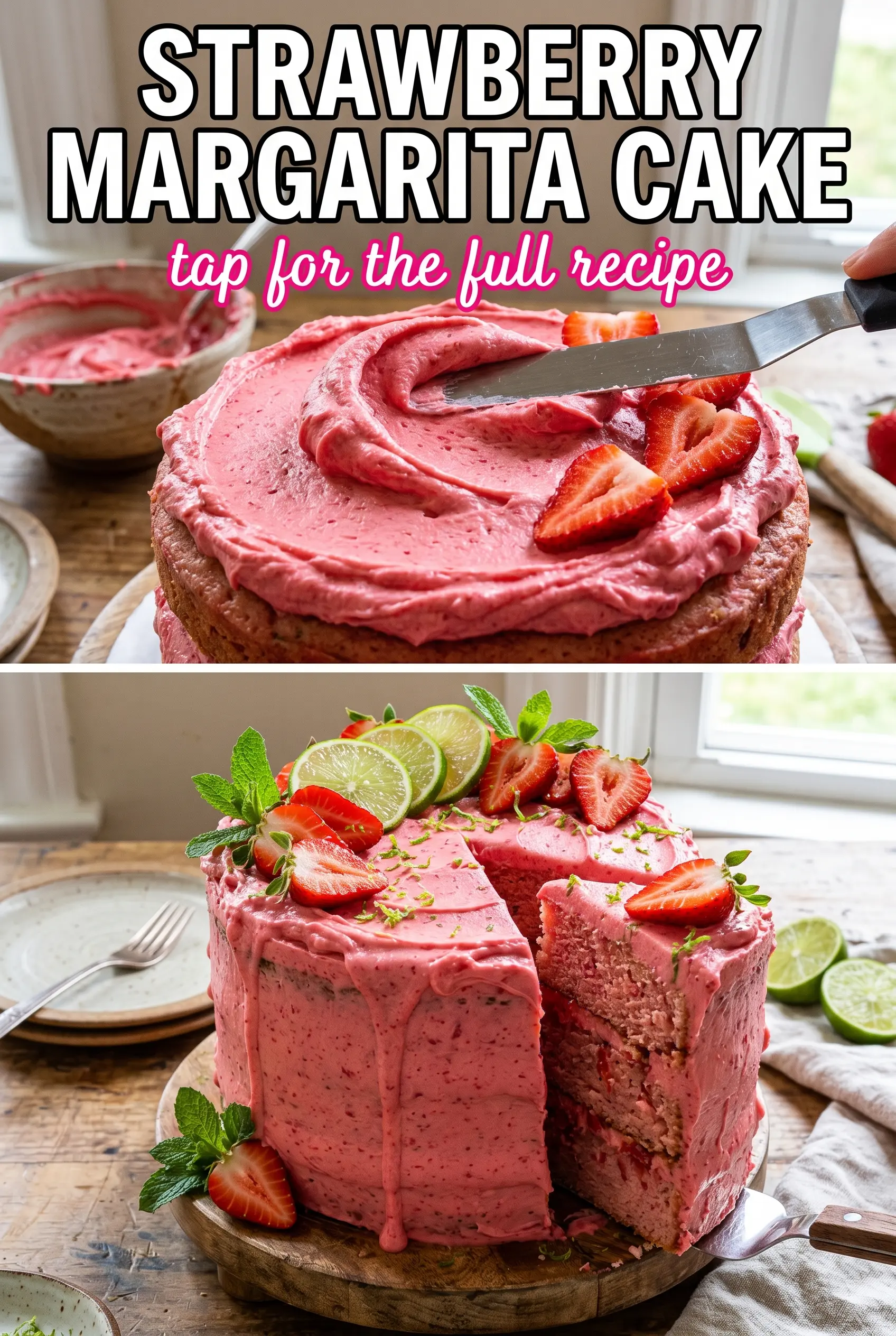
Strawberry Margarita Cake
Ingredients
Equipment
Method
- Preheat the oven to 350°F and grease two 8-inch round cake pans. This helps the pink sponge release cleanly after baking.
- Whisk together all-purpose flour, baking powder, and salt in a mixing bowl. Break up any flour lumps so the rise stays even.
- Beat softened butter and granulated sugar until fluffy. Continue until the mixture looks lighter in color and holds air.
- Add eggs one at a time, beating after each addition. This keeps the batter smooth instead of curdling.
- Combine fresh strawberry puree with lime juice. Stir until fully blended.
- Alternate adding the flour mixture and the strawberry-lime mixture with whole milk, beginning and ending with flour. Mix just until each addition disappears to avoid dense cake.
- Stir in vanilla extract. Mix only until uniform.
- Divide the batter between the two prepared pans. Tap the pans lightly to release large air bubbles.
- Bake at 350°F for 28-30 minutes, until the centers spring back when touched. A toothpick should come out mostly clean.
- Cool in the pans for 15 minutes, then turn out onto racks to cool completely. Letting the layers cool fully prevents frosting from melting.
- Beat softened cream cheese and softened butter until smooth. Stop and scrape the bowl so there are no lumps.
- Add powdered sugar and mix until combined. Beat just enough to create a thick, spreadable frosting.
- Beat in lime juice and lime zest. Mix until the frosting looks bright and smooth.
- Place one cake layer on a plate and spread frosting on top. Use an offset spatula to make the layer even.
- Add sliced fresh strawberries over the frosting layer. Arrange in a single, fairly even layer.
- Place the second cake layer on top and press gently. This helps the layers stack without sliding.
- Frost the top and sides of the cake. Smooth with a flat edge for clean coverage.
- Garnish with fresh strawberries and fresh mint. Add right before serving so the mint stays fresh.
- Rest the assembled cake for 1 hour before slicing. This sets the frosting and makes clean layers when cut.