Foil packet sausage and peppers comes out with the kind of built-in payoff that makes a campfire dinner worth the effort: juicy sausage, softened peppers, and onions that turn sweet at the edges without needing a skillet. The foil traps just enough steam to cook everything evenly, but it still lets the sausage pick up a little color where the heat hits hardest. Open the packet and you get that big, satisfying burst of savory aroma right away.
The trick is keeping the vegetables sliced evenly and arranging them so they sit around the sausage instead of burying it under a heavy pile. That helps the peppers and onions soften at the same pace the sausage cooks through. Heavy-duty foil matters here too, because thin foil is much more likely to tear when you flip the packets over a hot grate. If you’ve ever ended up with dry sausage and crunchy peppers, it usually means the heat was too aggressive or the packet wasn’t sealed tightly enough.
Below, I’ve included the little details that matter most: how to keep the packets from leaking, what to do if you want to serve everything on rolls, and a few easy swaps if you’re cooking over a grill instead of a campfire.
The peppers came out soft but not mushy, and the sausage stayed juicy all the way through. I flipped the packets halfway like suggested and they cooked evenly over the fire without any burnt spots.
These foil packet sausage and peppers are a campfire dinner you can open straight onto a roll, with juicy sausage and sweet vegetables in every bite.
The Packet Seal That Keeps the Sausage Juicy
Foil packet meals fail when the seal is loose or the vegetables are packed too tightly against the foil. In that case, the sausage steams unevenly and the peppers end up watery instead of tender. A tight fold around the edges keeps the heat and moisture where they belong, and that trapped steam is what softens the onions without turning them into mush.
The other thing that matters is spacing. Give each packet enough room so the sausage sits in a single layer with the peppers and onions draped around it. If everything is stacked into a thick mound, the vegetables take forever to cook and the sausage loses the chance to brown even a little where it touches the foil.
- Heavy-duty foil — This is what keeps the packet intact over direct heat. Regular foil can work in a pinch, but it tears more easily when you flip it.
- Italian sausage — Sweet or hot both work. Raw sausage is the right choice here because it seasons the vegetables as it cooks and stays juicy inside the packet.
- Bell peppers and onions — Slice them into similar-sized pieces so they finish together. Thin slices soften faster; thick slices need a little longer and can stay firmer in the center.
- Olive oil — It helps the vegetables cook without drying out and carries the seasoning across the whole packet. A different neutral oil will work, but olive oil gives the best match for the Italian-American flavor.
Building the Foil Packets So Everything Cooks at the Same Pace
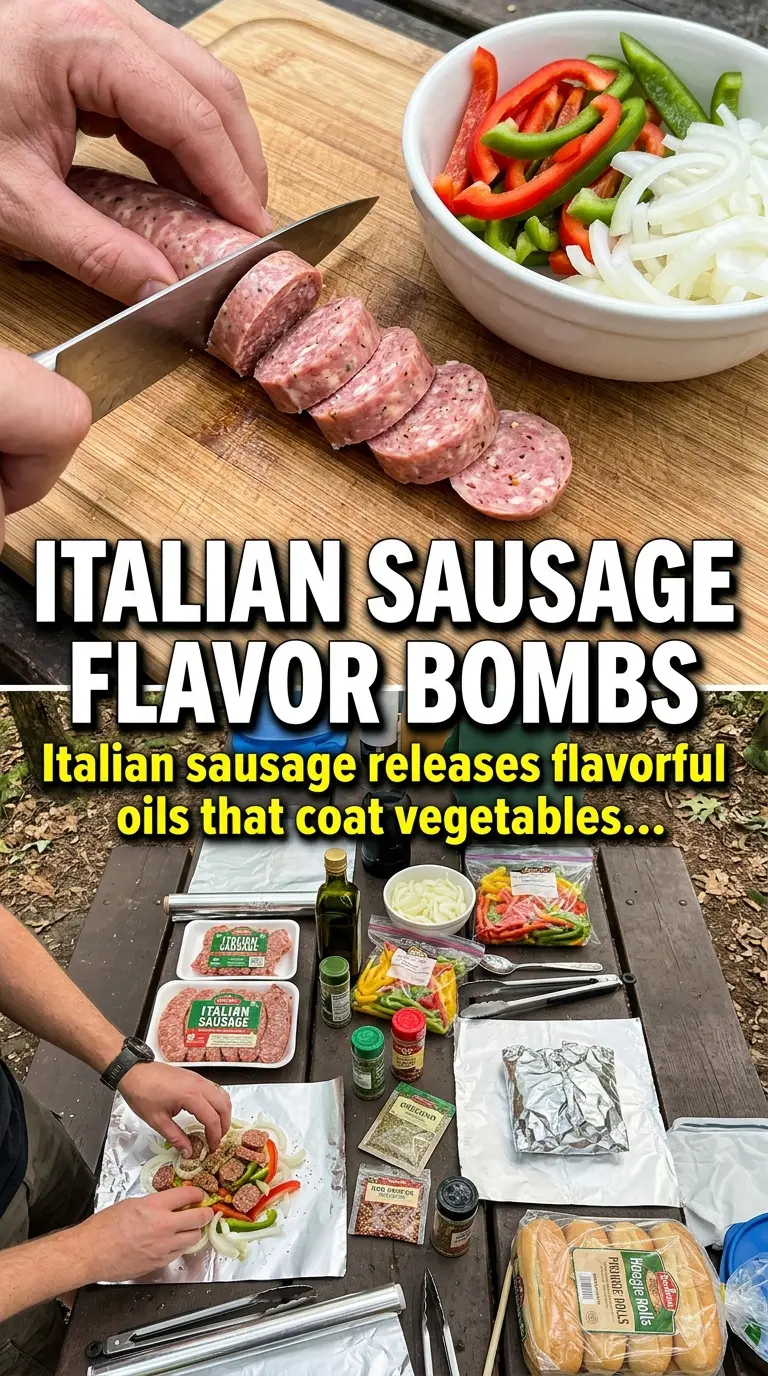
Divide the sausages first so each packet gets an even share. Then pile the peppers and onions around them, not underneath in one dense layer. Drizzle with olive oil and season right on top so the seasoning coats the vegetables as the packet heats. If the packet isn’t sealed tightly, steam escapes and the vegetables dry out before the sausage finishes cooking.
Loading the Packets
Lay each sheet of foil flat and place one portion of sausage in the center. Spoon the peppers and onions around the sausage so the heat can move through the packet evenly. Don’t mound the vegetables high in the middle, or the top will overcook before the sausage is hot all the way through.
Sealing for the Fire
Fold the foil over the filling and crimp the edges well, leaving enough room for a little steam to circulate inside. A packet that’s pressed too flat can stick to the sausage and tear when you open it. The goal is a snug seal, not a vacuum-tight wrapper.
Cooking Over Medium Heat
Set the packets on a campfire grate over medium heat and cook for 20 to 25 minutes, flipping once halfway through. You’ll know they’re close when the packets puff slightly and the vegetables look glossy through the foil. If the fire is running hot, move the packets to a cooler edge so the bottoms don’t scorch before the sausage cooks through.
Opening and Serving
Let the packets sit for a minute before opening them. The steam inside is hot enough to burn, and that short rest also helps the juices settle back into the sausage and vegetables. Serve them as-is or tuck everything into hoagie rolls for a messier, better sandwich.
What to Change When You Need a Different Setup
Gluten-Free Serving Style
Skip the hoagie rolls and serve the sausage and peppers straight from the foil or over rice, potatoes, or polenta. The packet itself is naturally gluten-free as long as your sausage doesn’t contain fillers with wheat.
Dairy-Free and Pantry-Friendly
This dish already fits dairy-free cooking, which is one reason it works so well for campfire dinners. If you’re missing Italian seasoning, use a mix of dried oregano, basil, and a pinch of thyme for a similar herbal finish.
Using Chicken Sausage
Chicken sausage works, but it won’t release the same rich drippings into the vegetables. The flavor stays lighter and a little cleaner, so add an extra drizzle of olive oil if you want the peppers and onions to feel fuller and less dry.
Storage and Reheating
- Refrigerator: Store leftovers in an airtight container for up to 4 days. The peppers soften a bit more after chilling, but the flavor stays good.
- Freezer: It freezes well for about 2 months, though the peppers will be softer after thawing. Cool completely before freezing in a sealed container.
- Reheating: Warm gently in a skillet over medium-low heat or in a covered oven dish at 325°F until hot. Microwaving works, but it can make the sausage rubbery if you blast it too long.
Answers to the Questions Worth Asking
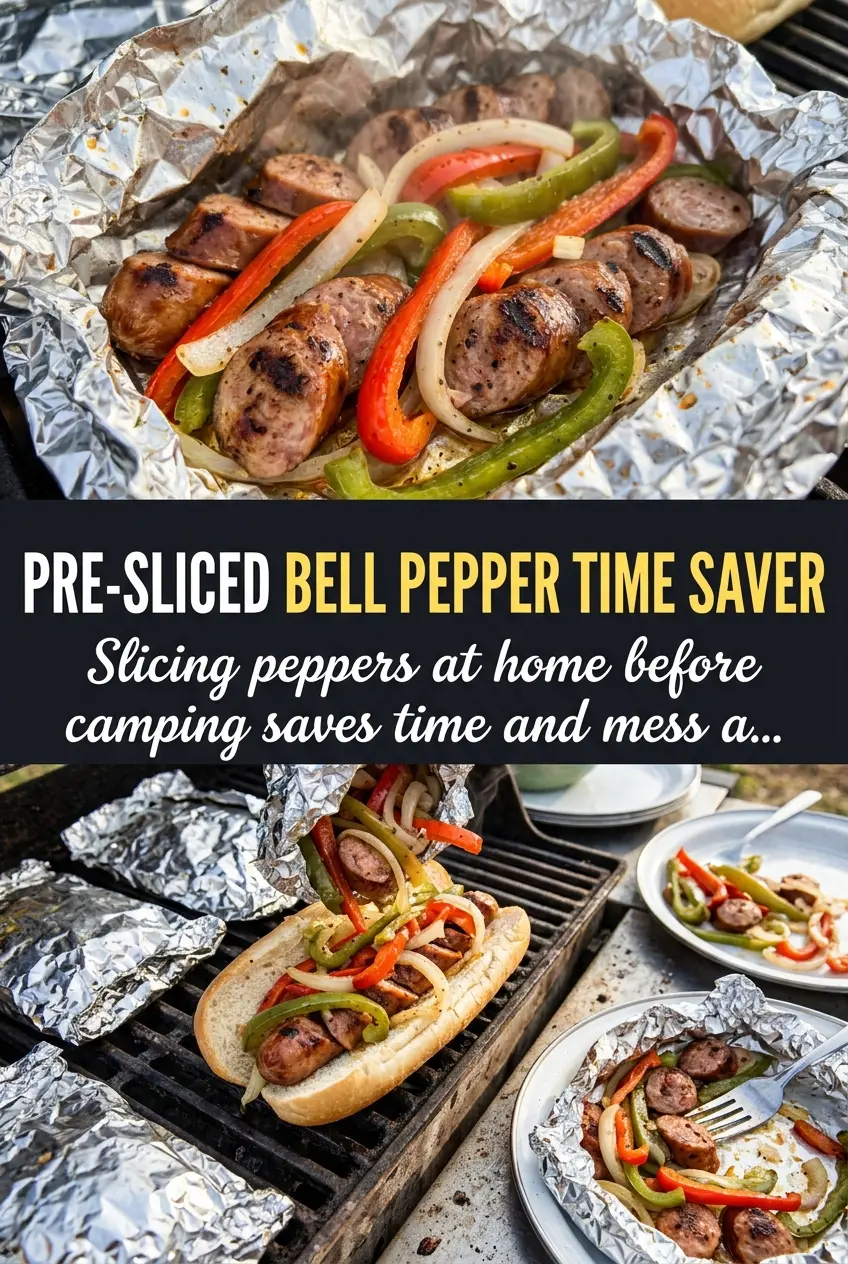
Foil Packet Sausage and Peppers
Ingredients
Equipment
Method
- Divide Italian sausages (sweet or hot) among 4 sheets heavy-duty aluminum foil, placing one portion in the center of each foil sheet. Spread them into an even layer so they heat through consistently.
- Top each foil packet with bell peppers (various colors), sliced and onions, sliced. Arrange the vegetables so they sit over and around the sausages.
- Drizzle each packet with olive oil, then sprinkle with Italian seasoning, salt and pepper to taste. Lightly coat the vegetables so they steam and season as they cook.
- Fold heavy-duty aluminum foil into sealed packets, crimping the edges closed to trap steam. Leave no gaps so the peppers stay tender.
- Place the foil packets on a campfire grate over medium heat for 20-25 minutes, flipping halfway. Look for visible steam as the packets heat up.
- Open the foil packets carefully and serve sausages and peppers. The filling should be hot and steamy, with peppers softened.
- Serve on hoagie rolls (optional) if using, or as-is if skipping the buns. Add the juices from the packet to keep everything moist.