Hobo stew is the kind of meal that earns its place because it comes out hearty, smoky, and deeply satisfying with almost no fuss. The broth turns rich as the meat cooks with the potatoes and carrots, and the canned vegetables do exactly what they should here: add body, sweetness, and that old-fashioned campfire feel without asking for extra work. It’s the sort of pot you set over the fire and then keep coming back to because the smell alone pulls people in.
What makes this version work is the order. Browning the meat first gives the stew a stronger base, and adding the potatoes and carrots before the softer vegetables keeps everything from collapsing into mush. The canned tomatoes and broth create enough liquid for a proper simmer, but not so much that the stew turns thin. A little paprika and garlic powder go a long way here, especially when the stew is cooking over open heat and needs seasoning that can stand up to smoke.
Below, I’ll walk through the small details that matter most, including how to keep the vegetables tender without overcooking them and what to swap if you only have ground beef or need to stretch the pot for a bigger crowd.
The potatoes stayed tender without falling apart, and the broth picked up such a good smoky flavor from the Dutch oven. My kids even ate the carrots without complaining, which never happens.
Save this hobo stew for your next campfire dinner — the kind with tender potatoes, smoky broth, and a pot full of easy comfort.
The Trick to Keeping Hobo Stew Brothy Instead of Muddy
Hobo stew can go wrong when everything gets dumped in and left to cook too hard. The potatoes break down, the carrots soften too early, and the broth turns cloudy without tasting richer. The fix is simple: build the flavor with browned meat first, then let the stew simmer gently instead of boiling hard the whole time. That slow simmer keeps the vegetables intact and gives the broth time to absorb the seasoning and meat drippings.
Open-fire cooking adds another wrinkle. Heat can swing from too low to a rolling boil in minutes, so the pot needs attention. If the stew starts churning aggressively, pull it to a cooler part of the fire. A steady bubble is what you want; that’s what gives you tender vegetables with edges that still hold their shape.
What Each Ingredient Is Actually Doing in This Dish
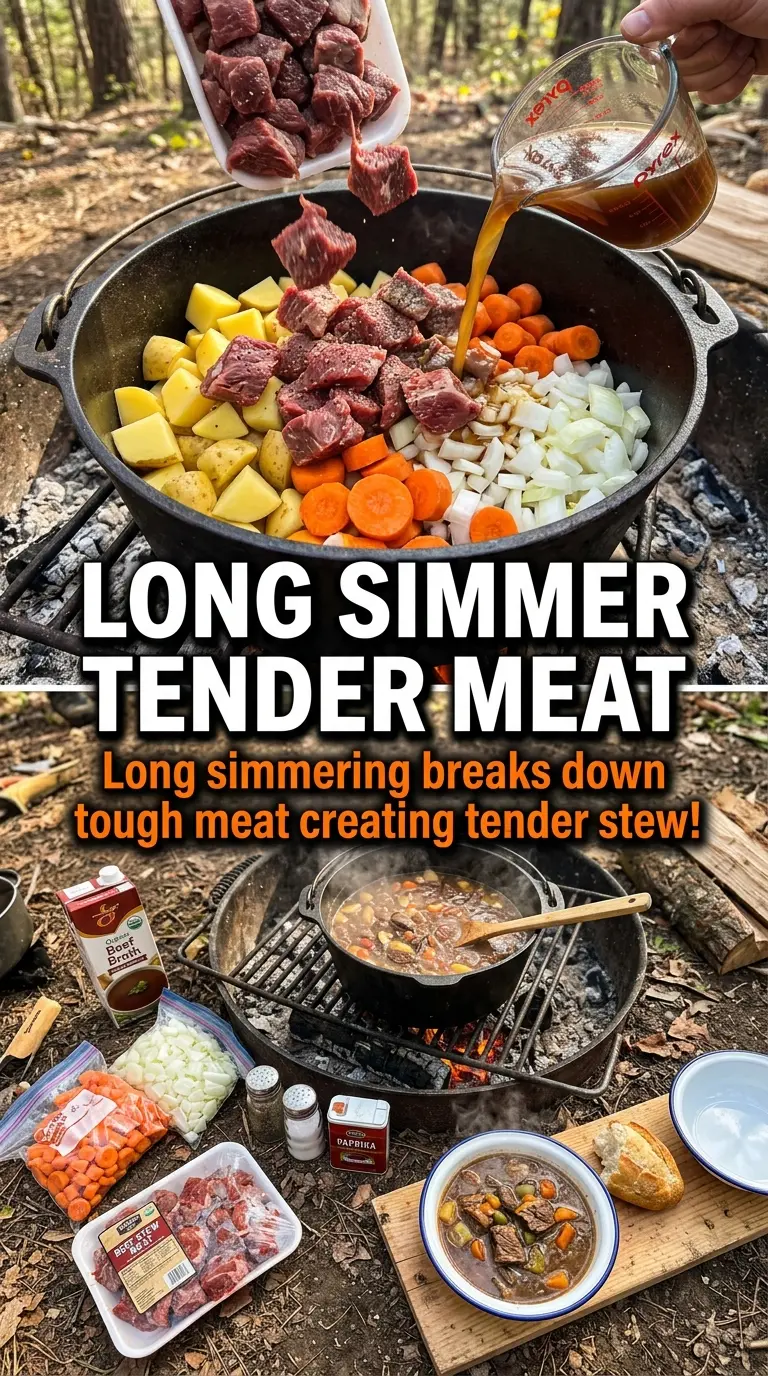
- Stew meat or ground beef — Stew meat gives you bigger, chewier bites and a more classic pot-roast feel, while ground beef makes the stew faster and a little easier to eat around a campfire. If you use stew meat, brown it well so the pot has enough flavor to carry the broth. If you use ground beef, drain off excess fat or the broth can taste greasy.
- Potatoes — These thicken the stew naturally as they simmer, which is why this dish feels filling without needing flour. Waxy potatoes hold their shape best, but russets work if you don’t mind some softening around the edges. Cube them evenly so they cook at the same rate as the carrots.
- Carrots and onion — Onion builds the savory base, and carrots add sweetness that balances the tomatoes and beef. Dice the onion small enough that it disappears into the broth, but cut the carrots on the thicker side so they don’t turn bland and mushy. If you only have onion powder, use it in a pinch, but fresh onion gives the pot more depth.
- Canned corn, green beans, and diced tomatoes — These pantry ingredients are what make hobo stew practical. The corn adds sweetness, the green beans stay pleasantly firm, and the tomatoes give the broth body and a little acidity. Drain the corn and green beans so the stew doesn’t get watery, but use the tomatoes with their juices because that’s part of the liquid you need.
- Beef broth and seasonings — Broth is the difference between a pot of vegetables and a real stew. Garlic powder and paprika season the whole pot without needing a long sauté, which matters over a campfire. If your broth tastes flat, the stew needs salt more than anything else; add it in small pinches and taste again after the vegetables soften.
How to Build the Pot So Everything Cooks at the Same Pace
Browning the Meat First
Start with the meat in a hot Dutch oven and let it take on real color before anything else goes in. You’re not just cooking it through; you’re building the savory base that makes the broth taste like more than broth. If the pot is crowded and the meat steams, work in batches or use a little more heat so it can actually brown. Gray meat gives you a flatter stew.
Adding the Vegetables in the Right Order
Potatoes, carrots, onion, corn, green beans, tomatoes, and broth all go in after the meat is browned, but the simmer is what does the real work. Stir once the seasoning is in, then bring the pot just to a boil before lowering the heat. If you keep it boiling hard, the potatoes will split and the green beans will lose their bite. A gentle simmer is the line between hearty and overcooked.
Finishing the Simmer
Cover the Dutch oven and let the stew cook until the vegetables are tender and the broth has taken on a deeper color, about 35 to 40 minutes. Stir once or twice during the simmer so nothing sticks to the bottom, especially if the fire is hot on one side. When it’s done, the potatoes should slide off a knife but not collapse when you scoop them. Taste the broth at the end and adjust salt and pepper before serving.
Three Ways to Make Hobo Stew Work for Your Pantry
Ground Beef Shortcut
Use ground beef instead of stew meat when you want a faster, softer-textured stew. It browns quickly and gives the broth a rich base, though it won’t have the same chunky bite as cubed beef. Drain the excess fat after browning so the finished pot stays clean and savory.
Dairy-Free and Gluten-Free as Written
This stew is naturally dairy-free and gluten-free if your broth is certified gluten-free. That’s one reason it works so well for camping meals and mixed crowds. Just check the broth label, since that’s the ingredient most likely to hide gluten.
Stretching It for a Bigger Group
Add another can of tomatoes, another cup of broth, and an extra potato or two if you need more servings. The stew scales well because the broth has enough body to handle more vegetables without turning thin. Keep the seasoning balanced as you go, since a bigger pot needs more salt than a small one.
What to Swap When You’re Missing a Can
If you’re out of green beans or corn, add another potato or extra carrots instead of trying to replace them with something delicate. This stew works best with sturdy vegetables that can handle a long simmer. Softer vegetables can turn to paste before the rest of the pot is done.
Storage and Reheating
- Refrigerator: Store in an airtight container for up to 4 days. The potatoes soften a little as it sits, but the flavor gets even better.
- Freezer: It freezes well for up to 3 months, though the potatoes can turn a bit softer after thawing. Cool completely before freezing in portions.
- Reheating: Reheat gently on the stove over medium-low heat with a splash of broth or water if needed. Don’t boil it hard, or the potatoes will break apart and the broth can turn overly thick.
Answers to the Questions Worth Asking
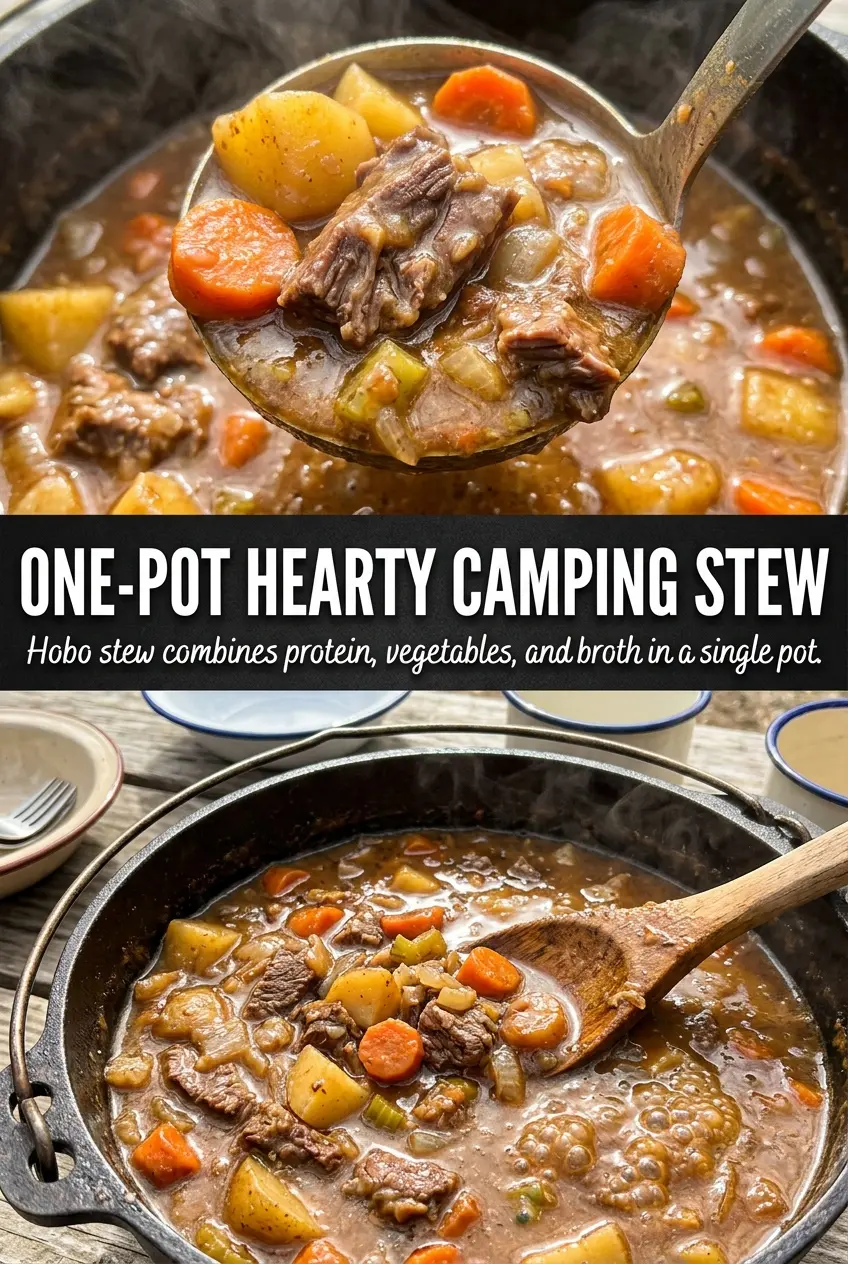
Hobo Stew
Ingredients
Equipment
Method
- Heat your Dutch oven over campfire and brown the stew meat or ground beef until it’s browned all over. You should see a dark, sizzling crust forming at the bottom of the pot.
- Add potatoes, carrots, onion, corn, green beans, diced tomatoes, and beef broth to the Dutch oven. Stir so the broth coats the vegetables and you don’t leave any browned bits stuck to the bottom.
- Sprinkle in garlic powder, paprika, salt, and black pepper, then stir to combine. The surface should look evenly speckled with seasoning.
- Bring the stew to a boil, then reduce heat to maintain a steady bubble. Cover the Dutch oven and keep the stew simmering for 35-40 minutes until the vegetables are tender.
- Ladle the hobo stew into bowls and serve hot. Look for thickened broth and soft vegetable chunks when you scoop.