Campfire bread comes out with a crackly golden shell and a soft, steamy center that makes it worth the little bit of patience the fire asks for. The spiral shape gives you more browned edges than a plain loaf, and that means every bite has a mix of toasted crust and tender bread. It’s the kind of side dish people reach for before the rest of dinner is even ready.
The trick is keeping the dough just sticky enough to cling to the stick without sliding or tearing. Baking powder does the heavy lifting here, since there’s no yeast or rising time to wait on, and powdered milk gives the dough a little extra body and a warmer, more bread-like flavor. The fire matters too: hot coals cook the bread through without scorching the outside before the center sets.
Below, I’ve included the small details that keep the dough easy to wrap, plus a few smart ways to change up the flavor if you want to serve it with something sweet or savory.
The dough wrapped around the sticks without falling apart, and it turned golden and fluffy in about 15 minutes over the coals. We served it with butter and everyone kept pulling off “just one more piece.”
Like this campfire bread? Save it to Pinterest for the nights when you want golden, fluffy stick bread around the fire.
The Reason Campfire Bread Burns Outside Before It Cooks Through
Campfire bread fails for one main reason: people hold it too close to the flames. Flames char the outside fast, but they don’t give the dough time to set in the middle. Coals are steadier and gentler, which is why this bread gets that browned crust without turning gummy inside.
The other thing that matters is dough thickness. If the rope is too fat, the outside looks done long before the center loses its raw, paste-like texture. A rope that’s about 1 inch thick cooks evenly and stays easy to wrap around the stick. Rotating constantly is not optional here; it’s what keeps one side from scorching while the other side still needs heat.
What Each Ingredient Is Doing in This Dough
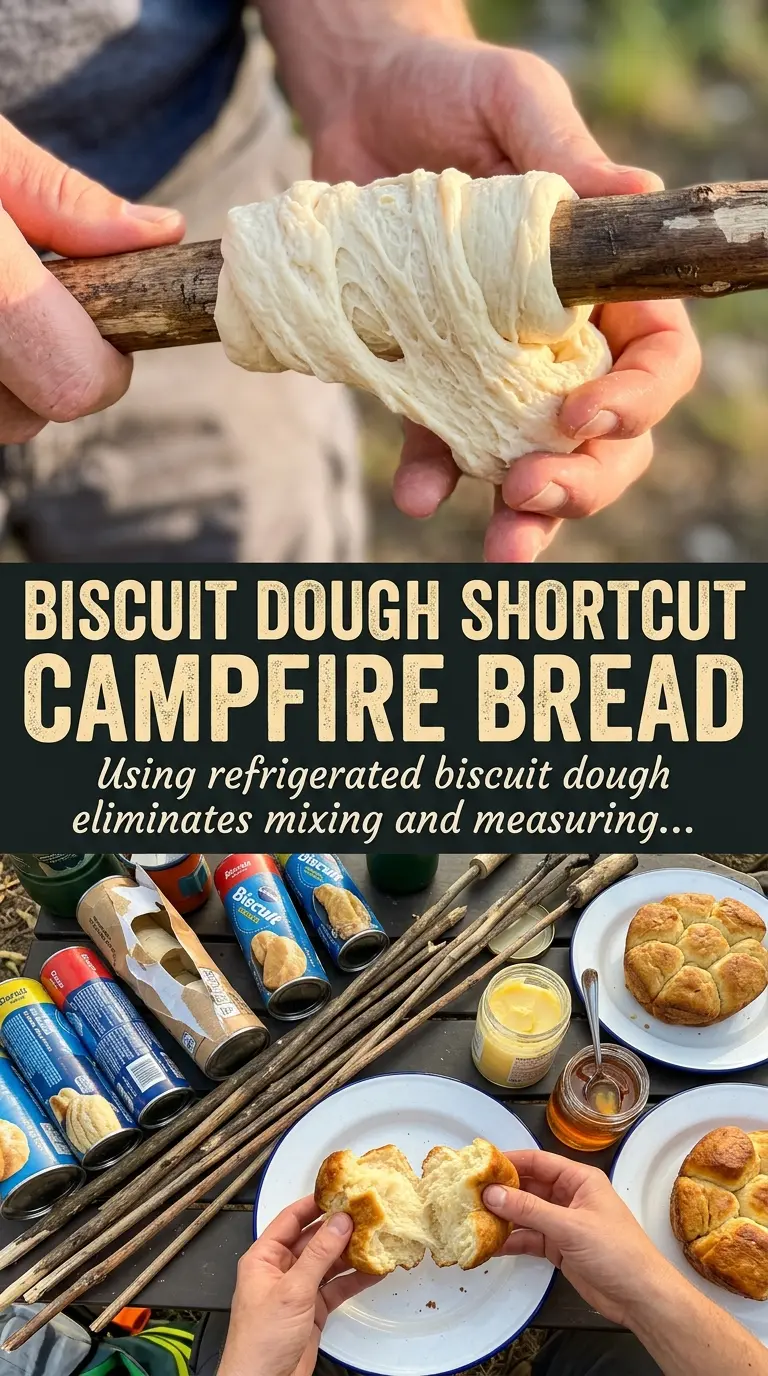
- All-purpose flour — This gives the bread enough structure to hold around the stick without collapsing. Bread flour isn’t necessary here; all-purpose keeps the texture lighter and a little less chewy, which works better over an open fire.
- Baking powder — This is the lift. Since there’s no yeast or rising time, baking powder gives the dough its puff and helps the finished bread turn soft instead of dense.
- Powdered milk — This adds a subtle richness and helps the dough brown a little better. If you don’t have it, you can leave it out, but the bread will taste a bit plainer.
- Sugar — Just enough to round out the flavor and encourage browning. You don’t taste sweetness the way you would in dessert bread; it mainly supports the crust.
- Roasting sticks — Use clean, sturdy sticks or skewers that can handle the heat. If you’re using wooden sticks, soak them first so they don’t scorch before the bread is done.
The Part Where the Dough Goes from Sticky to Perfectly Roastable
Mixing the Dry Ingredients First
Combine the flour, baking powder, salt, sugar, and powdered milk before adding the water. That keeps the leavening evenly distributed, which matters because pockets of baking powder can leave a bitter bite. If you’re using a zip-top bag, shake the dry ingredients together until everything looks uniform before you pour in the water.
Bringing the Dough Together
Add the water a little at a time and stop once the dough comes together into a soft, slightly sticky mass. Dry dough will crack when you try to spiral it around the stick, and that’s the most common reason people get frustrated with this recipe. If it feels too wet, dust your hands lightly with flour; if it feels dry and ragged, add a teaspoon of water and knead again.
Shaping the Ropes
Divide the dough into 10 equal portions and roll each one into a rope about 1 inch thick. You want a rope that stretches, not one that tears, so use gentle pressure instead of forcing it thin in one pass. A little unevenness is fine, but huge lumps will cook at different speeds and leave raw spots tucked inside the thicker sections.
Roasting Over the Coals
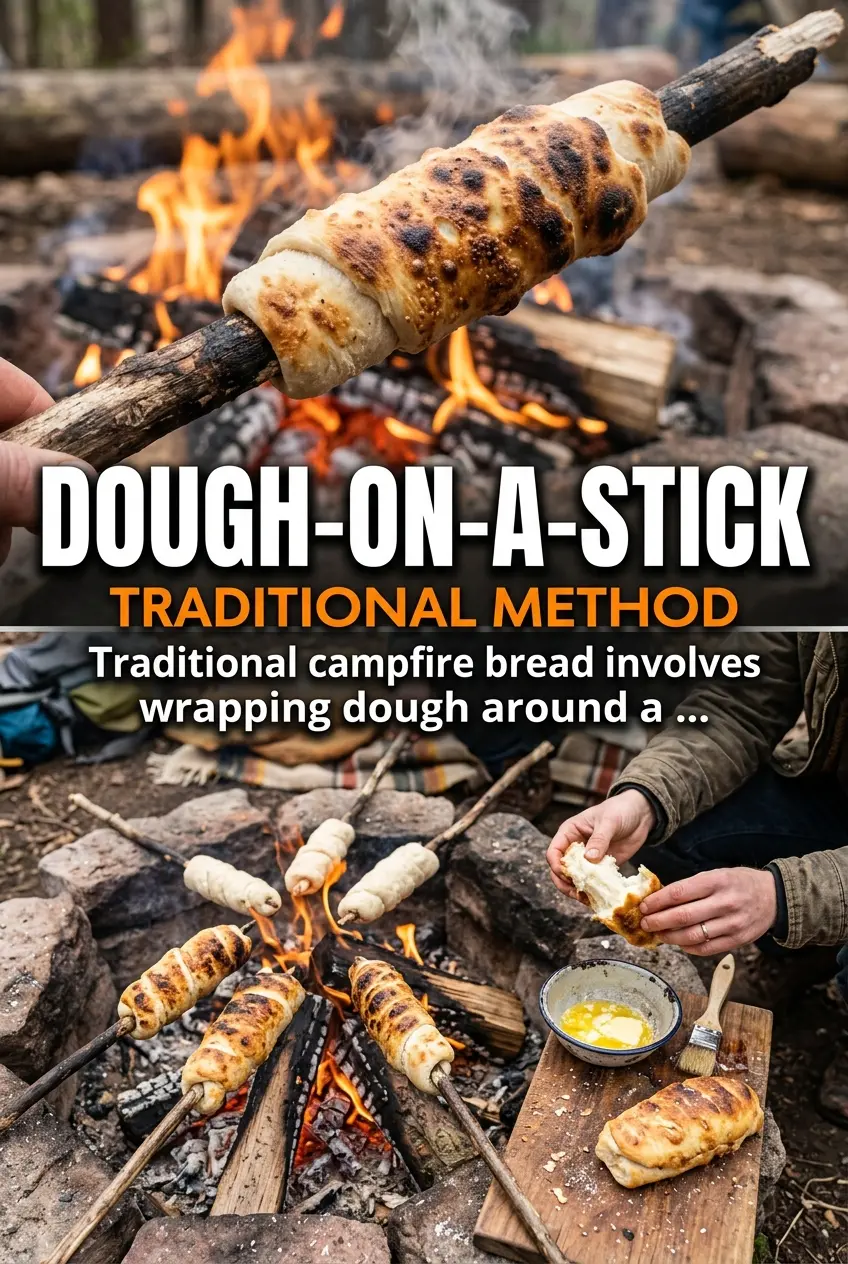
Wrap the dough around the end of the roasting stick in a spiral, leaving small gaps so heat can reach all sides. Hold it over hot coals, not active flames, and rotate constantly so the bread browns evenly. When it’s done, the outside will be deep golden and feel dry to the touch, and the bread will slide off the stick without any gummy resistance.
How to Adapt This Campfire Bread for Different Tastes and Setups
Garlic Herb Campfire Bread
Add 1 to 2 teaspoons garlic powder and 1 tablespoon dried herbs to the dry ingredients. The bread comes out more savory and works especially well beside soup or grilled meat, but the garlic can brown faster than plain dough, so keep the bread moving over the coals.
Sweet Campfire Bread
Increase the sugar to 3 tablespoons and serve it with butter, honey, or jam. That gives you a softer, slightly sweeter bread that leans toward breakfast territory, but it also browns faster, so watch the color closely.
Dairy-Free Version
Leave out the powdered milk and add an extra tablespoon of flour. The bread still works, but it will be a touch less rich and less browned. If you want a little more flavor back, brush the finished bread with dairy-free butter as soon as it comes off the stick.
Storage and Reheating
- Refrigerator: Store leftovers in an airtight container for up to 2 days. The crust softens as it sits, but the bread stays usable.
- Freezer: This bread freezes well once baked. Cool completely, wrap tightly, and freeze for up to 1 month.
- Reheating: Warm in a 300°F oven for 5 to 8 minutes or over low heat on a grate. High heat will dry it out before the center warms through.
Answers to the Questions Worth Asking
Campfire Bread
Ingredients
Method
- Mix all-purpose flour, baking powder, salt, sugar, and powdered milk in a large bowl or zip-top bag until evenly combined.
- Add water and mix until dough forms; the dough should be slightly sticky.
- Divide the dough into 10 portions.
- Roll each portion into a long rope about 1 inch thick.
- Wrap each dough rope around the end of a roasting stick in a spiral pattern, leaving a little spacing between turns if the dough puffs.
- Hold the stick over campfire coals (not flames), rotating constantly so it browns evenly, for 12-15 minutes until golden brown and cooked through.
- Slide the bread off the stick and serve warm with butter or jam.