Crispy hash browns turn into the best kind of breakfast wrapper here: golden on the outside, tender in the middle, and sturdy enough to hold eggs, cheddar, bacon, and peppers without falling apart. The skillet does two jobs at once, building a crust and cooking the filling, which is why this feels bigger and more satisfying than a regular omelet.
The trick is giving the hash browns enough time to brown before the eggs go in. If they hit the pan too wet or too cold, they steam and go soft instead of crisping into that deep golden layer you want. A cast iron skillet helps a lot because it holds heat steady over the fire, and the butter around the edges encourages the top layer to crisp instead of just drying out.
Below, I’ll walk you through the timing that keeps the eggs set without scorching the bottom, plus a few easy swaps if you want to change up the filling or make it work with what you’ve got on hand.
The hash browns got crisp around the edges and the eggs set perfectly underneath without turning rubbery. I made it for camping and everyone kept picking at the cheesy middle before I could even slice it.
Loaded grilled hash brown omelets deliver a crisp crust, melty cheese, and a campfire breakfast that slices cleanly.
The Hash Brown Layer Is What Keeps This Omelet Together
The biggest mistake with hash brown omelets is rushing the first layer. If the potatoes don’t get a head start, they absorb moisture from the eggs and turn soft before they have a chance to crisp. That bottom layer needs to look deeply golden and release from the skillet with a little resistance before anything else goes on top.
Cast iron helps because it holds heat evenly over a campfire, but the real payoff comes from patience. Let the hash browns sit undisturbed so the starches can set and the edges can brown. Once the eggs go in, the crust should already be strong enough to support the filling without collapsing into a scramble.
What Each Ingredient Is Actually Doing in This Dish

- Frozen hash browns — Thawed hash browns are the backbone of the recipe. Frozen potatoes straight from the bag usually carry too much moisture, which keeps them from crisping. If yours still feel damp after thawing, press them in a clean towel before they hit the skillet.
- Eggs — The eggs bind the filling and give the middle its soft, custardy bite. Beat them until the whites and yolks are fully combined so the omelet cooks evenly instead of setting in streaks. Six eggs is enough to fill the pan without making the omelet too thick to flip or fold.
- Cheddar cheese — Cheddar melts smoothly and adds the salty, sharp finish that keeps the filling from tasting flat. Pre-shredded works fine here, though freshly grated cheese melts a little faster and gives you fewer clumps. Don’t pile it only in the center or it can leak out before the top sets.
- Bacon, peppers, and green onions — These are the built-in seasoning and texture boosters. The bacon brings salt and smoke, the peppers stay a little sweet and firm, and the green onions cut through the richness at the end. Keep the pieces small so the omelet slices cleanly.
- Butter or oil — Fat is what helps the hash browns fry instead of dry out. Butter gives better flavor, but oil tolerates campfire heat a little more easily. If the fire is running hot, use oil for the main cook and finish with a little butter for flavor.
Building the Omelet Without Burning the Crust
Start with a steady skillet
Set the cast iron over medium campfire heat and let the butter melt until it foams and starts to quiet down. That’s the signal the pan is hot enough to brown potatoes without scorching them immediately. If the butter turns dark fast, pull the skillet off the hottest part of the fire and let it settle before adding the hash browns.
Brown the first layer before the eggs go in
Spread half the hash browns in an even layer and press them down lightly so they contact the pan. Leave them alone for about 5 minutes until the underside is golden and crisp at the edges. If you stir them too soon, they break apart and never form the crust that holds the whole omelet together.
Cook the eggs until the center is just set
Pour the beaten eggs over the potatoes, then scatter the cheese, bacon, peppers, and green onions across the surface. Add the remaining hash browns on top and spoon or drizzle the extra butter around the outer edge so the top layer gets fried as the eggs cook. Cover the skillet and cook until the eggs are set but still tender; the center should no longer look wet, but it shouldn’t bounce back dry and tight either.
Flip, fold, and serve while the cheese is still soft
When the bottom is crisp and the top is set, slide a spatula underneath and flip carefully, or fold the omelet in half if that feels safer. A clean flip depends on a crust that’s fully browned, not just pale and flimsy. Cut into wedges right away so the steam doesn’t soften the hash brown exterior before it reaches the plate.
Three Ways to Change the Filling Without Losing the Crunch
Make It Meatless
Skip the bacon and add a handful of sautéed mushrooms or extra bell peppers. You’ll lose the smoky saltiness, so add a little extra cheese and a pinch of salt to keep the filling balanced. The texture stays hearty, and the crust still does all the heavy lifting.
Make It Dairy-Free
Use oil instead of butter and swap in your favorite dairy-free shredded cheese. The cheese won’t melt quite as smoothly as cheddar, so keep the layer thinner and let the covered skillet do more of the work. The result is still crisp and filling, just a little less rich.
Use What’s in the Fridge
Swap in cooked sausage, diced ham, jalapeños, spinach, or leftover roasted vegetables. Keep the total filling about the same so the omelet still sets in the center before the bottom overcooks. Wet vegetables should be cooked off first, or they’ll steam the eggs from underneath.
Storage and Reheating
- Refrigerator: Store leftovers in an airtight container for up to 3 days. The hash brown crust softens a bit, but the flavor holds up well.
- Freezer: It freezes, but the potatoes lose some crispness after thawing. Wrap individual wedges tightly and freeze for up to 1 month if you don’t mind a softer texture.
- Reheating: Reheat in a skillet over medium-low heat or in a 350°F oven until warmed through. The microwave works in a pinch, but it softens the crust fast and makes the eggs rubbery if you heat them too long.
Questions I Get Asked About This Recipe
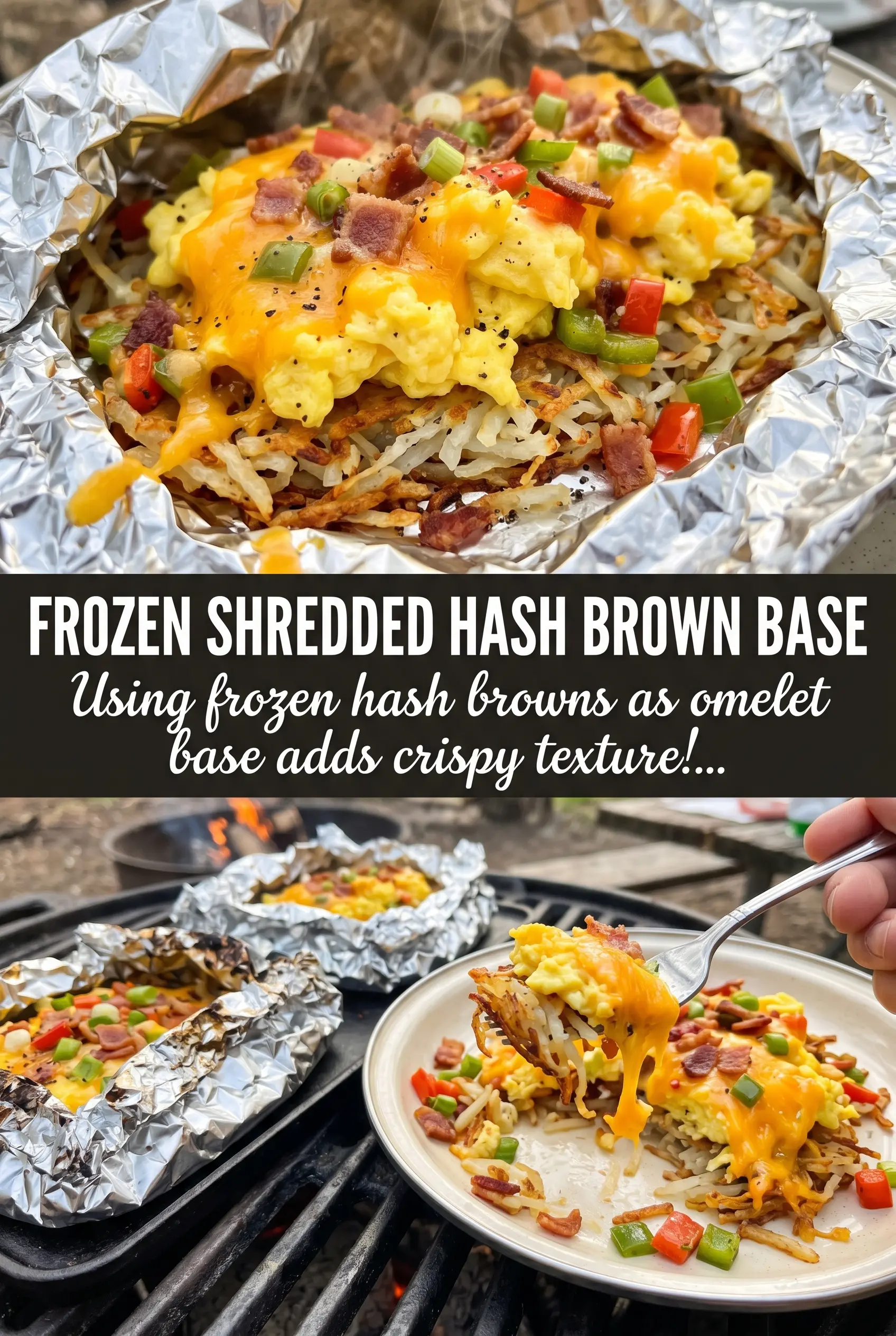
Loaded Grilled Hash Brown Omelets
Ingredients
Equipment
Method
- Heat 2 tablespoons butter or oil in a large cast iron skillet over campfire until shimmering.
- Spread half the hash browns in the skillet and cook for 5 minutes until golden on the bottom.
- Pour the beaten eggs over the hash browns and add the cheddar cheese, cooked bacon, bell peppers, and green onions.
- Top with the remaining hash browns and add the remaining butter or oil around the edges.
- Cover and cook for 12-15 minutes until the eggs are set and the bottom is crispy.
- Flip carefully or fold in half, then cut into wedges and serve while hot.