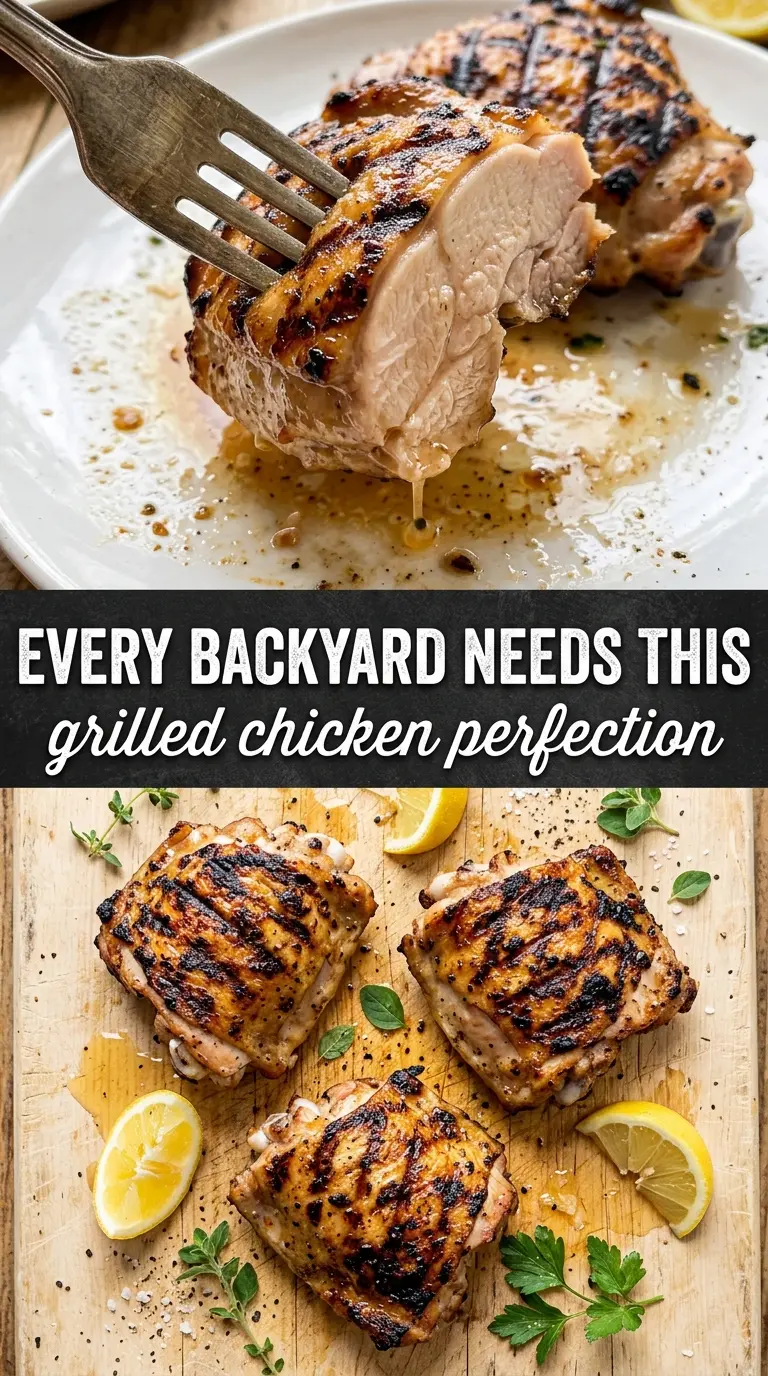
All-star grilled chicken earns its name when the skin picks up those deep grill marks and the meat stays juicy all the way through. The marinade hits a sweet spot between savory, tangy, and lightly smoky, so the chicken tastes seasoned instead of just salted. It’s the kind of main dish that disappears fast at a cookout and still feels simple enough for a weeknight.
The balance matters here. Soy sauce and Worcestershire bring the salty backbone, lemon juice sharpens everything up, and brown sugar helps the surface caramelize without turning sticky or burnt. Dijon mustard pulls the marinade together so it clings to the chicken instead of sliding off, and a short marinating window is enough to change the flavor without making the texture soft.
Below, I’ll walk through the part that matters most: getting the marinade right, then grilling the chicken so it cooks through evenly without drying out. There’s also a quick note on how long to marinate, because this is one of those recipes that can go from great to mushy if you leave it in the fridge too long.
The marinade gave the chicken such a good balance of tangy and savory, and it stayed juicy on the grill instead of drying out. I let it go about 4 hours and the flavor was perfect.
Save this grilled chicken marinade for the nights when you want juicy chicken, crisp grill marks, and bold BBQ-style flavor.
The Marinade Ratio That Keeps Chicken Juicy Instead of Stringy
Grilled chicken usually goes wrong in one of two places: the marinade is too weak to matter, or it’s so acidic that it starts tightening the meat before it ever hits the grill. This version avoids both problems by keeping the lemon juice in balance with oil, soy sauce, and brown sugar. You get flavor that penetrates the surface without turning the chicken mealy.
The other key is marinating long enough to season the meat, but not so long that the texture suffers. Two to eight hours is the sweet spot. Past that, the lemon starts doing more work than you want, especially if you’re using thinner pieces or boneless cuts.
- Olive oil — It carries the seasonings and helps the chicken brown instead of sticking to the grates. A plain, mid-range olive oil is fine here.
- Soy sauce — This is the salt and umami backbone. Low-sodium soy sauce works well if you want a little more control over the final seasoning.
- Lemon juice — Fresh is best because the brightness is cleaner, but bottled works in a pinch. Don’t push the marinating time too far if you use extra lemon.
- Dijon mustard — It helps emulsify the marinade so the oil and acid stay blended. Yellow mustard won’t give the same depth.
- Brown sugar — It softens the edges of the marinade and helps with caramelization. White sugar will work, but you lose a little of that molasses note.
How to Grill It So the Outside Browns Before the Inside Overcooks
Whisking the marinade until it looks unified
Mix the olive oil, soy sauce, lemon juice, Worcestershire, Dijon, garlic, brown sugar, pepper, and paprika until the sugar dissolves and the marinade looks glossy, not separated. If you rush this part, the seasoning sinks to the bottom and the first piece of chicken gets all the flavor while the rest taste plain. Whisking well also helps the mustard do its job and hold everything together.
Letting the chicken soak without overdoing it
Coat the chicken pieces evenly and refrigerate them for 2 to 8 hours. The shorter end works for smaller pieces or boneless cuts, while thicker bone-in chicken benefits from the full window. If you leave it overnight, the lemon can start to dull the texture, so don’t treat longer marinating as better marinating.
Cooking over medium-high heat with a little patience
Preheat the grill before the chicken goes on. A hot grill gives you those clean marks and helps the surface set before the juices run out. Cook the chicken, turning occasionally, until the thickest part reaches 165°F. If the outside is browning too fast, move the pieces to a cooler part of the grill instead of lowering the heat across the board.
Resting before you cut into it
Let the chicken rest for 5 minutes after grilling. That short pause keeps the juices where they belong instead of spilling onto the cutting board. If you slice too soon, even perfectly cooked chicken can seem dry. Resting is the last step that protects all the work you just did.
Three Ways to Adapt This Chicken Without Losing the Good Parts
For bone-in chicken pieces
Use the same marinade, but give the chicken the full 8 hours if you can. Bone-in pieces cook a little more slowly, so the flavor has time to work into the meat without drying it out. Keep the grill at medium-high, then use the temperature of the thickest part to guide you, not the clock alone.
For a dairy-free, gluten-free version
This one already fits naturally if you choose a gluten-free soy sauce or tamari and check that your Worcestershire sauce is gluten-free. There’s no dairy in the marinade, so the flavor stays bold without any extra changes. The result tastes just as savory and balanced as the original.
For a smokier BBQ-style finish
Add a little extra paprika or swap in smoked paprika for part of it. That change deepens the grill flavor without making the chicken taste like barbecue sauce. It’s the easiest way to push this toward a cookout-style chicken while keeping the clean marinade flavor intact.
Storage and Reheating
- Refrigerator: Store leftover chicken in an airtight container for up to 4 days. It stays juicy, but the grilled exterior softens as it sits.
- Freezer: Freeze cooked chicken for up to 2 months. Wrap portions tightly and thaw in the fridge so the texture doesn’t turn watery.
- Reheating: Warm it gently in a covered skillet over low heat or in a 300°F oven until just heated through. High heat is the mistake that dries grilled chicken out.
Questions I Get Asked About This Recipe

All-Star Grilled Chicken
Ingredients
Equipment
Method
- Whisk olive oil, soy sauce, lemon juice, Worcestershire sauce, Dijon mustard, minced garlic, brown sugar, black pepper, and paprika together until evenly combined and glossy.
- Pour the marinade over the chicken pieces, turning to coat thoroughly, then cover.
- Refrigerate the covered chicken for 2-8 hours so the flavor penetrates; the longer time gives deeper seasoning.
- Preheat the grill to medium-high heat, aiming for a steady sizzle when the chicken hits the grates.
- Place chicken on the grill and cook, turning occasionally, until the internal temperature reaches 165°F, about 25 minutes depending on piece thickness.
- Watch for clear grill marks and juices to run lightly as the chicken finishes, indicating the exterior is properly seared.
- Transfer chicken to a plate and let rest for 5 minutes before serving so the juices reabsorb for a moist bite.
Notes