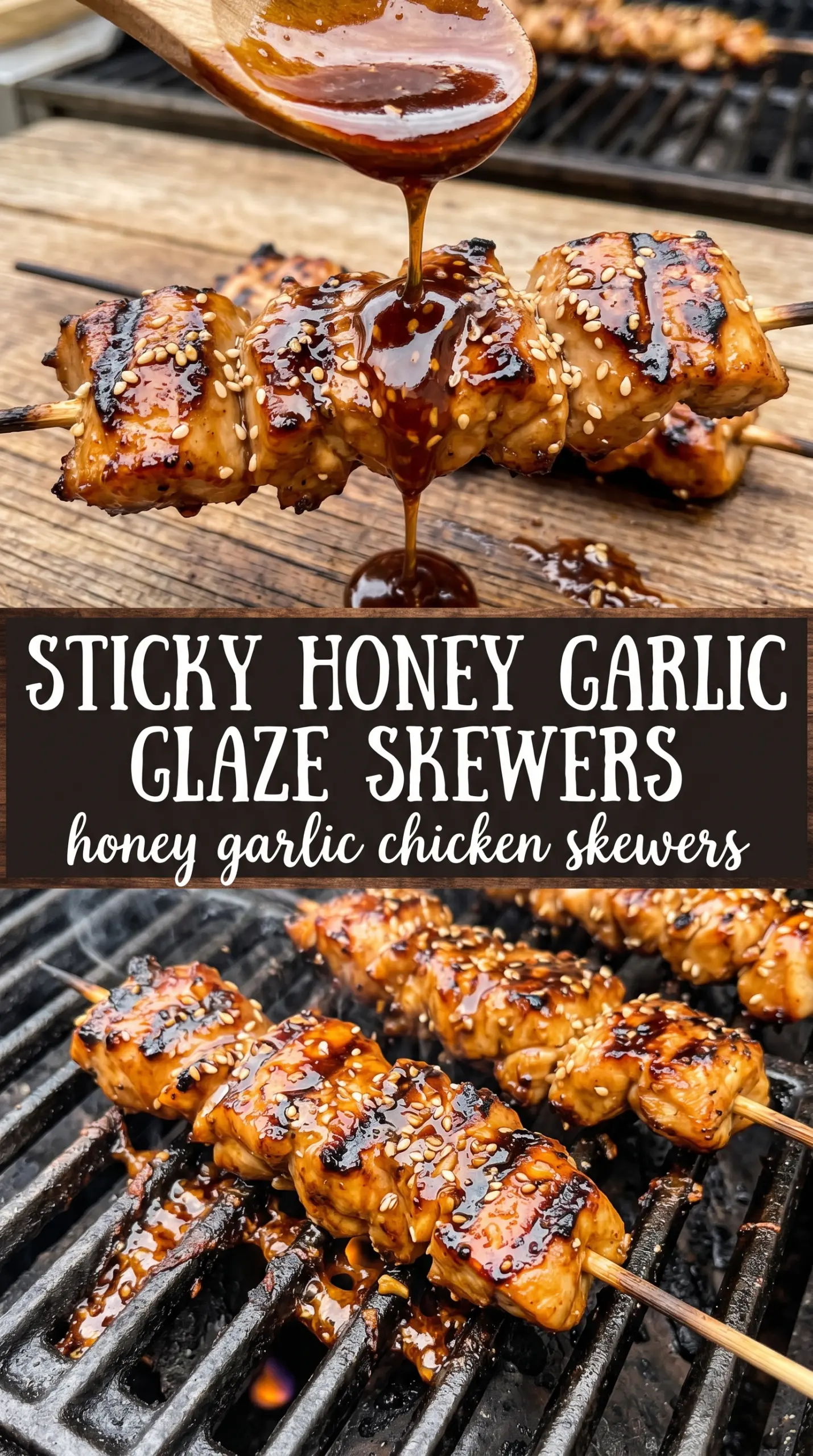
Sticky, glossy honey garlic chicken skewers hit that sweet spot between fast weeknight dinner and cookout food that people hover around the grill for. The chicken turns juicy inside while the edges pick up caramelized spots from the honey, and the garlic-lemon soy marinade gives each bite a punchy, savory balance that keeps the sweetness from getting heavy. When they come off the grill with a little char and a shiny glaze, they disappear fast.
The trick is in the marinade balance and the basting timing. Honey burns if you start with too much heat or brush on every bit of marinade too early, so this version saves some for the end and lets the chicken soak up the rest first. Cutting the chicken into even chunks matters too, because it keeps the skewers cooking at the same pace instead of leaving you with dry edges and undercooked centers.
Below you’ll find the timing that keeps the glaze sticky instead of scorched, plus a few smart swaps if you want to grill these with thighs, make them gluten-free, or prep them ahead for a crowd.
The marinade made the chicken so flavorful, and the glaze went sticky and caramelized on the grill without burning. I used the reserved basting sauce at the end like suggested and the skewers came out perfect.
Love the sticky char on these Honey Garlic Chicken Skewers? Save them for the next time you want a quick grill recipe with a glossy glaze and big flavor.
The Reason the Glaze Stays Sticky Instead of Burning
Honey garlic chicken skewers can go wrong fast because the same sauce that tastes great on raw chicken also scorches if it sits over hard heat for too long. The fix is simple: let the chicken marinate for flavor, then keep a portion of the marinade back for basting near the end. That gives you the glossy finish without turning the sugars bitter.
Even-sized chicken pieces matter more here than on a lot of other grilled recipes. When the chunks are close in size, they finish at the same time and the glaze has a chance to tighten on the surface instead of clinging to some pieces while others dry out. If your chicken tends to overcook on the grill, the issue is usually uneven cutting or too much heat, not the marinade itself.
- Marinade timing — One to four hours is the sweet spot. Less than that and the flavor stays on the surface; much longer and the lemon juice starts to work against the chicken’s texture.
- Reserved basting sauce — Keep it separate from the raw chicken marinade. That gives you a clean, safe sauce to brush on during the last few minutes of grilling.
- Medium-high heat — Hot enough to mark the chicken and thicken the glaze, not so hot that the honey burns before the centers cook through.
What the Honey, Soy, and Garlic Are Each Doing Here
- Honey — This is what gives you the lacquered finish and the caramelized edges. A darker honey will taste a little deeper, but any standard honey works. The one thing you can’t swap in cleanly is a sugar-free syrup; it won’t reduce and glaze the same way.
- Soy sauce — This brings salt and umami, and it keeps the marinade from tasting one-note sweet. Low-sodium soy sauce works well if that’s what you keep on hand. If you need gluten-free skewers, use tamari or coconut aminos; tamari gives the closest flavor.
- Garlic and lemon juice — Garlic gives the marinade its bite, while lemon juice keeps the sweetness in check and helps the chicken taste brighter after grilling. Fresh garlic matters here more than jarred because it holds up better against the heat.
- Olive oil — This helps the marinade coat the chicken evenly and keeps the surface from drying out on the grill. You don’t need an expensive oil, just one with a clean taste.
Building the Skewers So the Glaze Finishes Cleanly
Mix the Marinade First
Whisk the honey, soy sauce, olive oil, garlic, lemon juice, and black pepper until the honey loosens and the marinade looks smooth. If the honey still sits in streaks, it won’t coat the chicken evenly. That uneven coating is what leaves you with some pieces sweet and others bland.
Marinate Before You Thread
Let the chicken sit in the marinade for 1 to 4 hours so the flavor can move past the surface. Keep the reserved 1/4 cup separate from the chicken before it goes in the bowl. If you skip that split, you won’t have a safe basting sauce later, and you’ll be tempted to overcook the skewers just to build flavor on the grill.
Grill and Baste at the End
Thread the chicken onto soaked wooden skewers and grill over medium-high heat for 5 to 6 minutes per side. The chicken should turn opaque with clear grill marks, and the glaze should look glossy and slightly thickened. Brush on the reserved marinade during the last couple minutes of cooking, not at the start, or the honey can darken too quickly before the chicken is done. Finish with fresh parsley and serve them hot.
How to Make These Skewers Fit Your Table
Swap in chicken thighs for a juicier result
Chicken thighs handle grill heat a little better than breasts and stay more forgiving if your timing runs long. Cut them into the same size chunks and cook until they’re just done through; they’ll bring a richer, slightly more savory bite and won’t dry out as quickly.
Make it gluten-free with one clean swap
Use tamari in place of soy sauce and keep everything else the same. The flavor stays balanced and savory, with only a slight difference in depth. Coconut aminos also work, but the glaze will be a little sweeter and lighter in color.
Use an oven broiler when the grill isn’t an option
Set the skewers on a foil-lined sheet pan and broil them close to the heat source, turning once and basting near the end. The broiler gives you the caramelized edges, but it works faster than the grill, so watch the honey closely. If you walk away, the sugars go from glossy to burnt in minutes.
Storage and Reheating
- Refrigerator: Store leftovers in an airtight container for up to 3 days. The glaze will thicken as it cools, and the chicken may lose a little of its grilled edge.
- Freezer: Freeze the cooked chicken off the skewers for up to 2 months. Wrap it well so the honey sauce doesn’t pick up freezer burn, and thaw in the fridge before reheating.
- Reheating: Warm gently in a covered skillet over low heat or in the oven at 300°F until heated through. High heat dries out the chicken and can make the glaze sticky in the wrong way.
Answers to the Questions Worth Asking

Honey Garlic Chicken Skewers
Ingredients
Equipment
Method
- Whisk together honey, soy sauce, olive oil, minced garlic, lemon juice, and black pepper until combined and glossy. Visual cue: the mixture should look evenly tinted golden-brown.
- Reserve 1/4 cup marinade for basting and set aside. Visual cue: you should have a small measured portion separate from the rest.
- Marinate the chicken in the remaining marinade for 1-4 hours. Visual cue: chunks should be well coated with visible honey-garlic sheen.
- After marinating, remove chicken from the marinade (do not discard the reserved basting). Visual cue: excess marinade should drip back into the container.
- Thread chicken onto soaked skewers, leaving a little space between chunks. Visual cue: the chicken should sit securely and show streaks of marinade.
- Grill over medium-high heat for 5-6 minutes per side, basting with the reserved marinade during grilling. Visual cue: edges should caramelize and the glaze should look sticky and glossy.
- Garnish with fresh parsley and serve hot. Visual cue: a fresh green topping contrasts with the golden glaze.