Campfire potatoes come out the way outdoor cooking should: tender in the middle, edged with a little chew, and packed with buttery onion flavor that tastes like it spent far longer over the fire than it actually did. When the foil opens and the steam rolls out, the slices are soft enough to scoop with a fork but still hold their shape, and that little hit of paprika and garlic makes the whole packet smell irresistible.
The trick here is layering the potatoes thinly and keeping the foil packet sealed tight, so the steam does the first part of the cooking before the direct heat finishes the edges. Butter melts down through the onions and seasonings, coating every slice instead of sitting in one greasy puddle at the bottom. Heavy-duty foil matters more than fancy seasoning here; a good seal keeps the packet from leaking and helps the potatoes cook evenly over a campfire grate.
Below, I’m walking through the one detail that keeps foil packet potatoes from turning patchy or underdone, plus the small timing adjustment that makes them work just as well in a backyard fire pit as they do at a campsite.
The potatoes were tender all the way through and the onion slices melted right into the butter. I flipped the packet halfway like the directions said, and there wasn’t a single burnt spot.
Save these buttery campfire potatoes for the next cookout when you want a simple foil packet side with crispy edges and soft, smoky centers.
The Reason Foil Packet Potatoes Cook Evenly Over Fire
The biggest mistake with campfire potatoes is giving them direct heat before the packet has a chance to build steam. Thin slices cook through faster and more evenly than chunks, and the foil trap turns that moisture into the cooking medium. If the potatoes are cut too thick, the outside gets soft before the center is tender, and you end up waiting forever over a fire that keeps changing temperature.
Butter also does more than add richness. As it melts, it carries the paprika and garlic powder across the potatoes and helps keep the slices from drying out at the edges. Flipping the packet halfway matters because campfire heat is rarely even; one side of the grate usually runs hotter, and a quick turn keeps the bottom from overcooking before the top catches up.
What Each Ingredient Is Doing Inside the Foil Packet
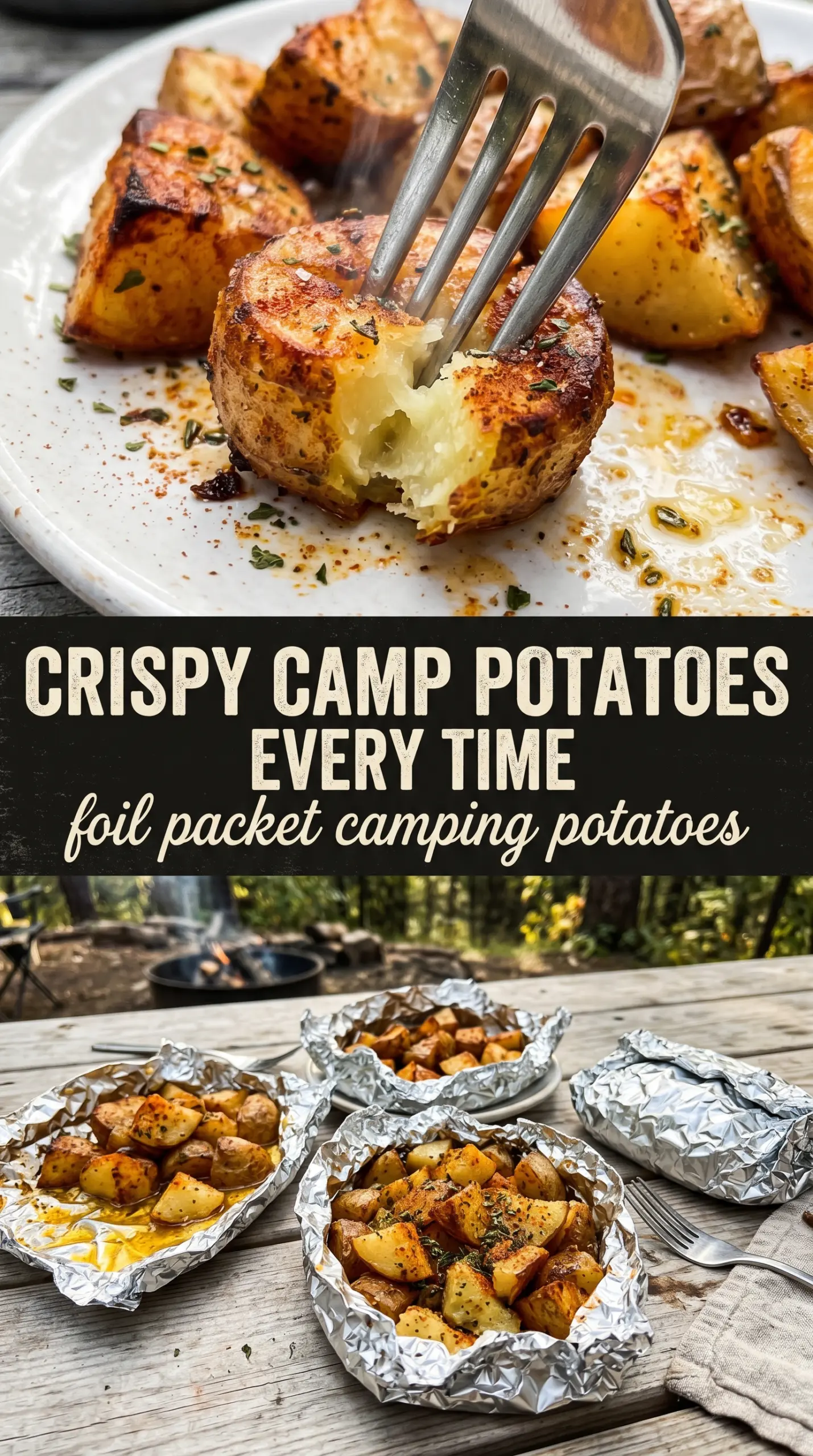
- Potatoes — Medium potatoes give you enough starch to turn tender and creamy without collapsing. Slice them thin and keep the pieces close in size so they finish at the same pace. Russets will go softer and fluffier, while Yukon Golds stay a little more velvety and hold their shape nicely.
- Onion — The onion softens in the steam and turns sweet, which is what keeps this from tasting like plain potatoes with seasoning on top. Slice it thin enough that it can melt into the packet; thick wedges stay firm longer than the potatoes and can throw off the texture.
- Butter — Cubed butter melts slowly and coats the packet evenly. If you swap in oil, you’ll still get tenderness, but you lose the rich, round finish that makes these taste like campfire comfort food. Salted or unsalted both work; just taste carefully with the salt.
- Garlic powder and paprika — These season the potatoes without burning the way fresh garlic can over direct heat. Paprika adds color and a little warmth, not strong spice. Smoked paprika works well if you want a more fire-kissed flavor.
- Cheddar cheese — Optional, but worth adding if you want a more loaded-potato finish. Stirring it in at the end keeps it from turning greasy or separating in the heat. Pre-shredded cheese melts fine here, though a freshly grated block gives you a smoother finish.
- Heavy-duty foil — This is one place the cheap stuff can fail you. Thin foil tears when you flip the packet or when the butter starts to bubble, and once steam escapes, the potatoes dry out before they’re done.
The Part of the Cook That Matters Most
Building a Tight Packet
Lay out a double layer of foil and mound the potatoes and onions in the center so the edges stay clean enough to seal properly. Fold the packet tightly, leaving a little room for steam to circulate inside, then crimp the seams well so melted butter doesn’t leak onto the coals or grate. If the packet is loose, the potatoes will dry out before they soften.
Cooking Over Medium Heat
Set the packet over medium heat on the grate, not directly in the hottest flames. You want steady heat, not a blast of fire, because too much direct heat scorches the bottom foil before the center of the potatoes cooks through. Flip the packet halfway through the cook so both sides get an even turn over the heat source.
Finishing With Cheese and Steam
When the potatoes are tender and the packet puffs with steam, open it carefully away from your face. If you’re adding cheese, sprinkle it over the hot potatoes, reseal the packet, and give it a couple of minutes to melt. That quick rest lets the cheese soften without overcooking the potatoes into mush.
Make Them Dairy-Free
Swap the butter for olive oil or a plant-based butter and skip the cheddar. You’ll lose a little of the rich, creamy finish, but the potatoes still cook up tender with crisped edges if the packet is sealed well.
Turn It Into a Loaded Potato Packet
Add cooked bacon bits and green onions after opening the packet, then reseal for a minute or two. The bacon stays crispier if you add it at the end instead of cooking it inside the foil, where it can soften in the steam.
Use Yukon Golds for a More Buttery Texture
Yukon Gold potatoes stay creamy and slice cleanly, which gives you a softer, more velvety bite. Russets work too, but they break down a little more and can turn fluffier instead of neatly sliced.
Storage and Reheating
- Refrigerator: Store leftovers in an airtight container for up to 3 days. The potatoes will soften a bit as they sit, but the flavor holds up well.
- Freezer: Freezing isn’t ideal. The potatoes turn grainy after thawing, and the onion loses its texture.
- Reheating: Reheat in a skillet over medium heat with a little butter, or warm them wrapped in foil in a 350°F oven until hot. The biggest mistake is microwaving them too long, which makes the potatoes gummy instead of tender.
Answers to the Questions Worth Asking
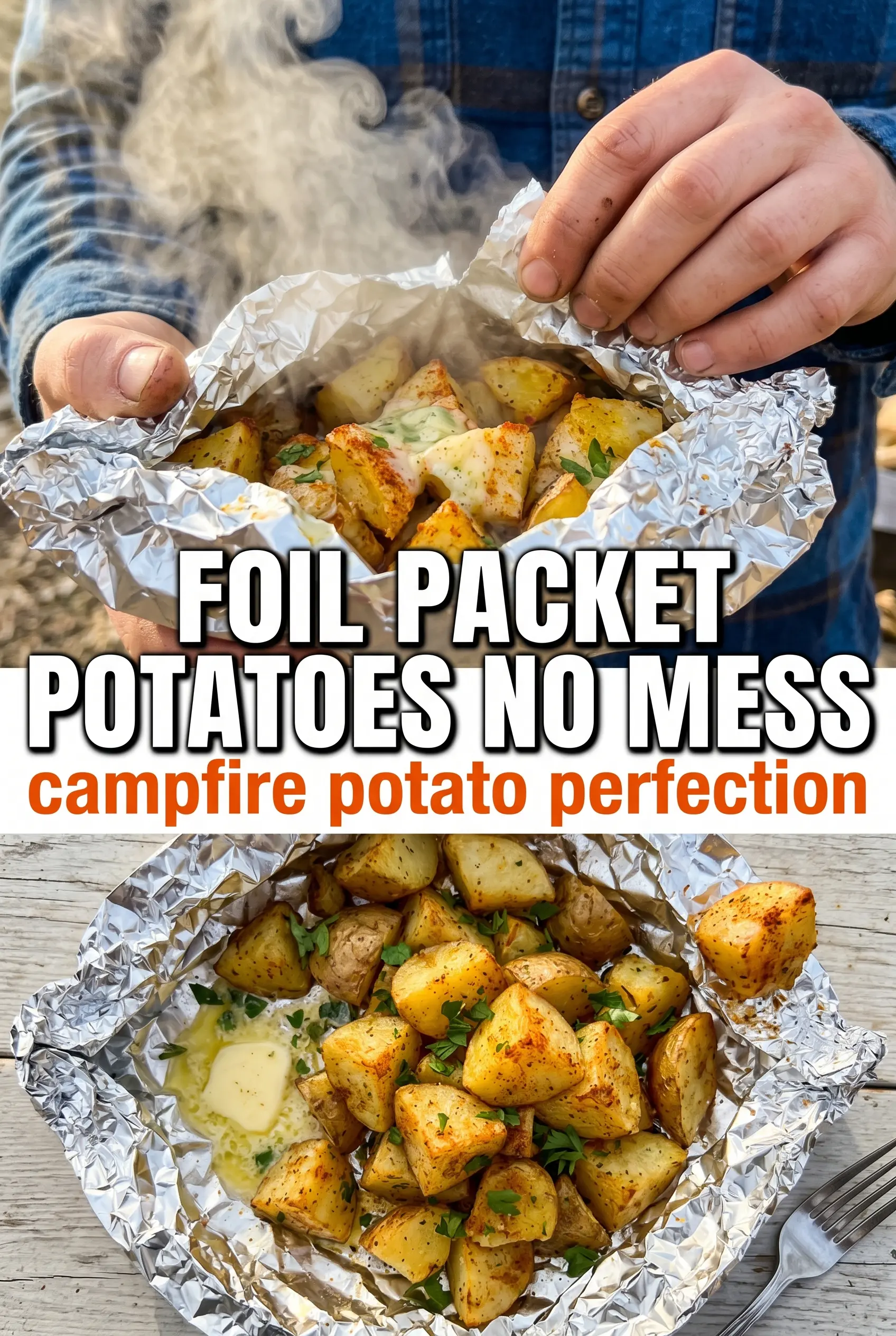
Campfire Potatoes
Ingredients
Equipment
Method
- Lay out 2 sheets heavy-duty aluminum foil as a double-layer and stack potato and onion slices on top, spreading into an even layer.
- Dot the potato-onion layer with cubed butter, then sprinkle evenly with garlic powder, paprika, salt, and black pepper.
- Fold the foil into a sealed packet so no steam can escape.
- Place the packet on a campfire grate over medium heat and cook for 25-30 minutes, flipping halfway, until the potatoes are fork-tender.
- Open the packet carefully, sprinkle shredded cheddar cheese if desired, then reseal and cook for 2 minutes to melt the cheese.
- Open the foil packet and serve the campfire potatoes hot directly from the packet.