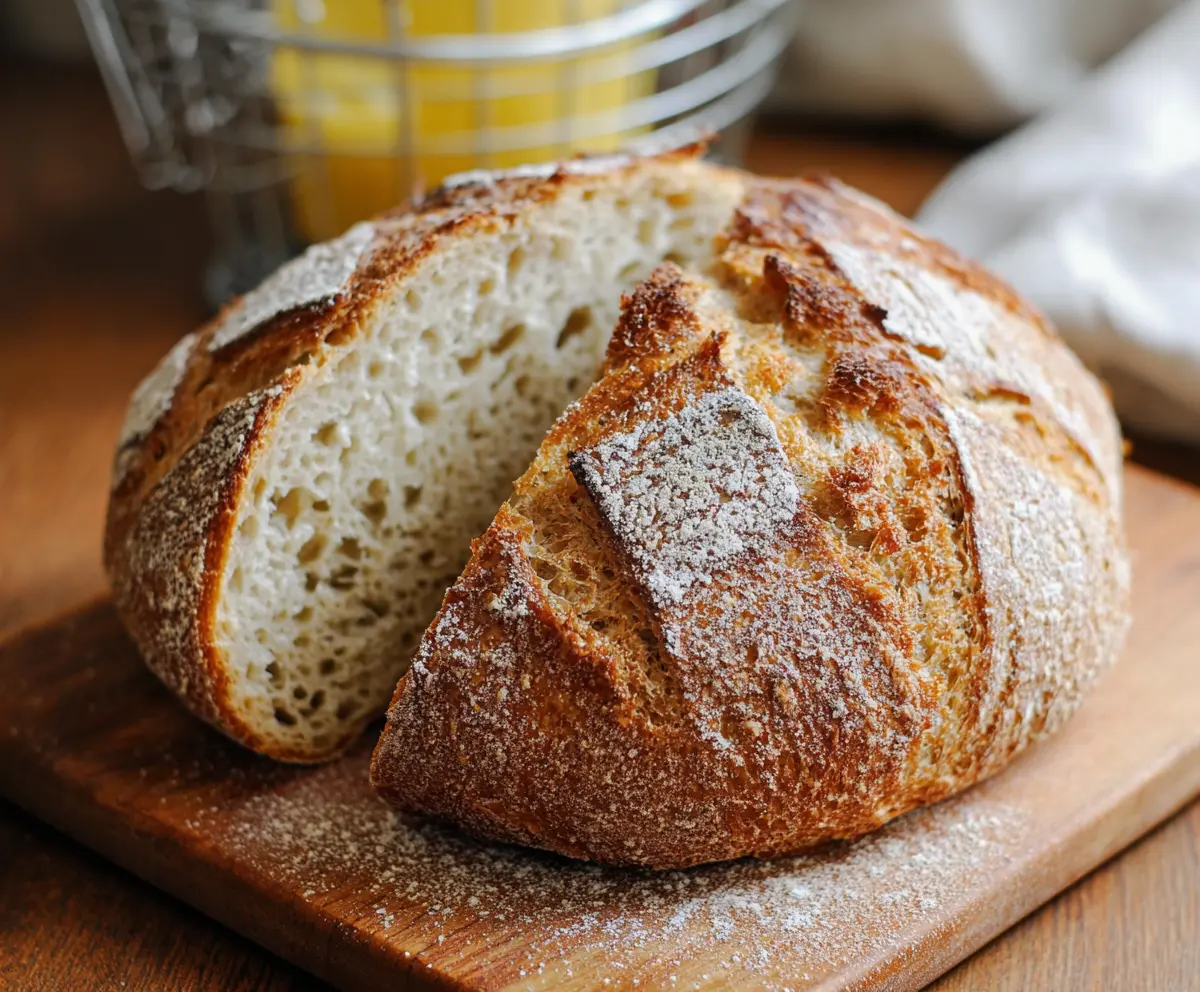
Artisan sourdough bread is a crusty loaf that’s soft and chewy inside. It gets its wonderful flavor from a natural starter, making each bite special!
There’s nothing like the smell of fresh-baked bread. I love slicing into a warm loaf and enjoying it with butter—it’s simply the best way to brighten any day! 🍞
Key Ingredients & Substitutions
Bread Flour: This type of flour has higher protein content, which creates a better structure for the bread. If you’re in a pinch, you can use all-purpose flour, but bread flour will result in a chewier texture.
Sourdough Starter: An active starter is crucial for that tangy flavor and rise. If you don’t have one, you can try using store-bought sourdough starter or even a bit of store-bought yeast, but the flavor will differ.
Water: Using lukewarm water helps activate the starter and yeast. If it’s too hot, it can kill the yeast, so aim for about 100°F (38°C). Filtered or bottled water is sometimes preferred to avoid chlorine taste.
Salt: Salt enhances flavor and strengthens the dough structure. If you’re on a low-sodium diet, consider reducing the amount, but keep some to preserve the bread’s taste.
How Do You Get Great Gluten Development with Stretch and Folds?
The stretch and fold method is a gentle way to develop gluten without heavy kneading. Here’s how to do it effectively:
- After the initial mixing and resting, take one corner of the dough, stretch it up, and fold it over the other side.
- Rotate the bowl and repeat this about 4 times, covering the dough between folds.
- Do this every 30 minutes for 2 hours. The dough should feel elastic and slightly bubbly after each session. Be gentle to avoid deflating the dough!
This technique helps to create a beautiful crumb structure without overworking the dough. It’s a game changer for sourdough!
Why Is Overnight Fermentation Important?
Allowing your dough to ferment overnight enhances the flavor and texture of your bread. The longer rise period allows for the development of complex flavors and makes the dough easier to handle. Here’s how to time it:
- After shaping the dough, place it in the fridge overnight. This slow fermentation helps the dough rise while developing that characteristic sourdough taste.
- The next day, just bake it straight from the fridge—no need to let it come to room temperature!
This will give you a wonderfully tangy taste and a beautiful crust!
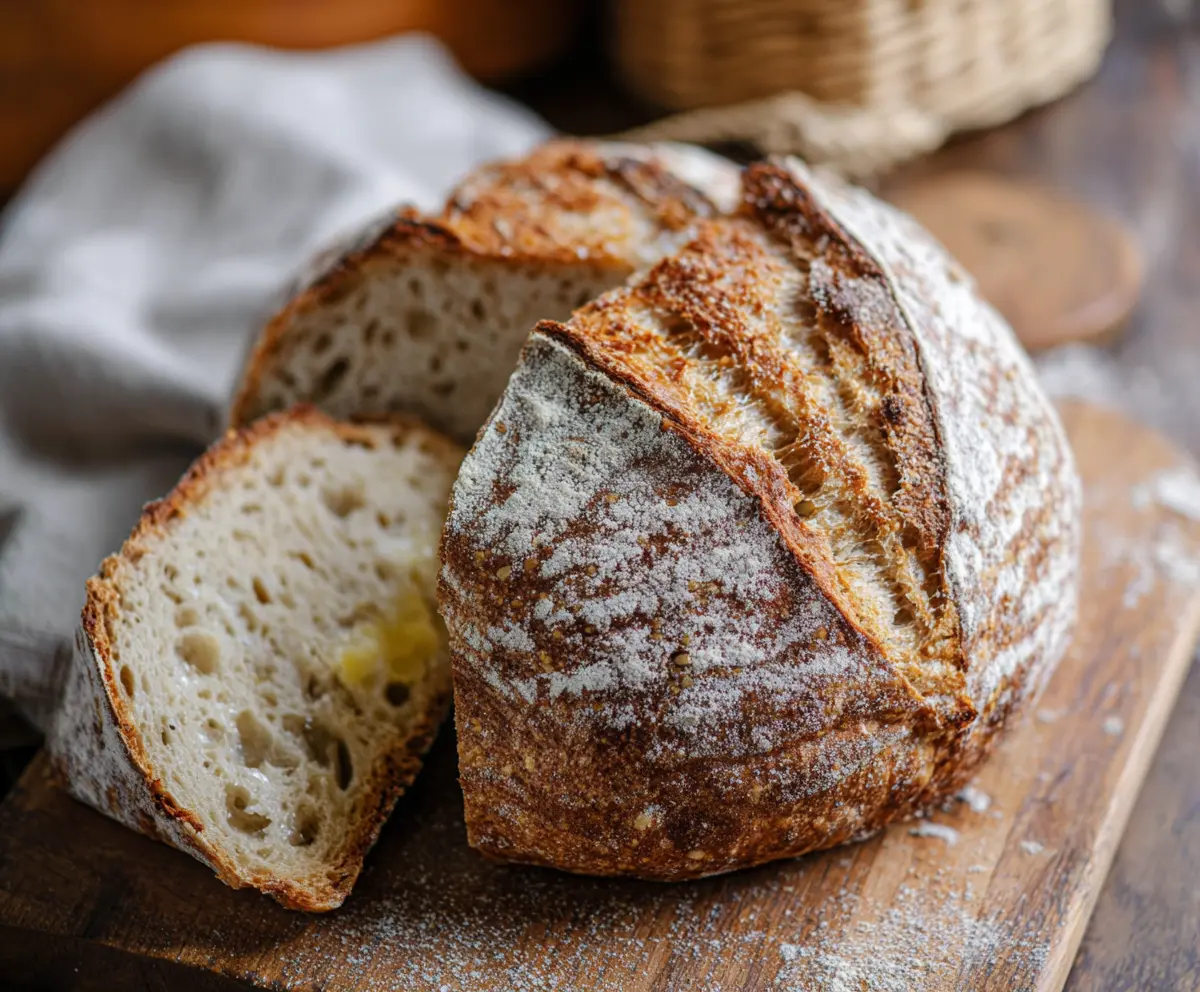
How to Make Artisan Sourdough Bread
Ingredients You’ll Need:
- 500g (about 4 cups) bread flour
- 350g (1 1/2 cups) water, lukewarm
- 100g active sourdough starter (fed and bubbly)
- 10g (2 tsp) salt
- Additional flour for dusting
How Much Time Will You Need?
Making artisan sourdough bread takes a bit of time but is well worth it! You’ll need about 30 minutes for preparation, then 4-6 hours for fermentation, plus around 12-16 hours for the overnight resting and 1 hour of baking. Plan for a total of about 18-24 hours from start to finish, but most of that time is just waiting for your dough to rise!
Step-by-Step Instructions:
1. Mixing the Dough:
In a large bowl, combine your active sourdough starter and lukewarm water. Stir until they are well mixed together. Next, add the bread flour and mix everything together until a rough dough appears. Once combined, cover the bowl with a clean towel and let it rest for about 30-45 minutes. This resting period is called autolyse and helps to develop the dough!
2. Adding the Salt:
After the dough has rested, sprinkle the salt over the top. Using your hands, mix the salt into the dough by folding and squeezing until it’s evenly distributed. Don’t worry if it’s a bit sticky—this is normal!
3. Stretch and Fold Technique:
To develop the gluten structure, perform a series of stretch and folds. Every 30 minutes for about 2 hours, gently lift one side of the dough, stretch it upward, and fold it over itself. Rotate the bowl and repeat this process a few times. Cover the dough between folds to help it stay warm and moist.
4. Bulk Fermentation:
After the final stretch and fold, cover the dough tightly. Let it ferment at room temperature for 4-6 hours, or until it has roughly doubled in size. You’ll notice it becoming more elastic and bubbly, which is what you’re looking for!
5. Shaping the Loaf:
Once your dough has risen, dust a clean work surface lightly with flour. Gently turn the dough out onto the floured surface. Shape it into a round loaf by tucking the edges under, creating surface tension over the top. Be careful not to deflate your loaf too much!
6. Proofing the Dough:
Place the shaped dough seam-side up into a well-floured banneton basket or a bowl lined with a floured towel. Cover it with a towel or plastic wrap, and refrigerate overnight or for up to 12-16 hours. This slow fermentation is key for flavor and texture!
7. Prepping for Baking:
When you’re ready to bake, preheat your oven to 475°F (245°C) with a Dutch oven (or a heavy lidded pot) inside for at least 30 minutes. Getting the pot hot helps create a steamy environment for a beautiful crust!
8. Baking the Bread:
Carefully take the hot Dutch oven out of the oven. Using parchment paper, invert the dough onto it. Score the top with a sharp knife or a bread lame—this allows for expansion during baking. Carefully transfer the dough (with parchment) into the hot Dutch oven, cover with the lid, and bake for 20 minutes.
9. Final Baking:
After 20 minutes, remove the lid and continue baking for another 20-25 minutes, until the crust is beautifully golden and crisp. The aroma will be irresistible!
10. Cooling:
Once baked, take the bread out of the oven and cool it completely on a wire rack before slicing. This helps to ensure the inside is the perfect texture!
Enjoy your freshly baked artisan sourdough bread—perfect for sandwiches, toast, or just with a bit of butter!
Can I Use All-Purpose Flour Instead of Bread Flour?
Yes, you can use all-purpose flour, but keep in mind that the texture may be slightly different. Bread flour has a higher protein content, which contributes to better gluten development and a chewier crust. If using all-purpose flour, look for the highest protein content available!
What If My Dough Doesn’t Rise?
If your dough isn’t rising, it might be due to an inactive starter or temperature. Make sure your starter is bubbly and fed before use. For optimal rising, keep your dough in a warm, draft-free environment during the fermentation process.
How Should I Store Leftover Sourdough Bread?
Store your sourdough bread at room temperature in a paper bag to maintain its crust. Avoid plastic bags as they trap moisture and soften the crust. For longer storage, wrap it securely in plastic wrap and freeze it for up to 3 months. Just remember to thaw it at room temperature before slicing!
Can I Add Mix-Ins Like Seeds or Cheese?
Absolutely! You can add seeds, herbs, or cheese during the mixing step after the autolyse phase. Just be cautious not to overload the dough, as too many add-ins can affect its ability to rise properly. Aim for about 1/2 to 1 cup of mix-ins for best results!