Charred edges, juicy meat, and that deep allspice heat are what make Jamaican jerk chicken worth firing up the grill for again and again. The marinade clings to the chicken and turns glossy as it cooks, giving you smoky spice on the outside and tender meat underneath. When it’s done right, every bite hits with peppery heat, thyme, lime, and just enough sweetness to round it out.
The key is building a marinade that tastes bold before it ever hits the chicken. Scotch bonnet peppers bring the real jerk fire, but habaneros work when that’s what’s available. Brown sugar helps with browning on the grill, while soy sauce adds salt and depth that keeps the chicken from tasting flat after all that spice. Scoring the chicken isn’t optional here; it gives the marinade a path into the meat so the flavor doesn’t just sit on the skin.
Below, I’ll walk through the part that matters most: how to get that char without drying out the chicken, plus a few smart swaps and storage notes for when you want to make a bigger batch.
I marinated the chicken overnight and it grilled up with those sticky, charred edges everyone fights over. The allspice and thyme came through beautifully, and the meat stayed juicy even after being turned a lot on the grill.
Save this Jamaican jerk chicken for the night you want smoky char, fiery spice, and a marinade that clings to every bite.
The Marinade Has to Taste Too Loud Before It Hits the Chicken
Jerk chicken fails when the seasoning is timid. Once it hits the heat, some of that punch softens, so the marinade needs to taste a little aggressive in the bowl: salty, spicy, fragrant, and bright. That’s why the blend leans on allspice, thyme, scotch bonnet, lime, and a small amount of brown sugar. If you hold back on the pepper or spice, the chicken ends up tasting like grilled chicken with seasoning instead of jerk.
Scoring the chicken is doing more work than people think. Those shallow cuts let the marinade reach deeper into the meat and help the skin and edges catch more flavor as they char. Marinating longer than a quick hour matters here too; even four hours gives you a better result, and overnight is where the flavor really settles in.
What Each Ingredient Is Actually Doing in the Marinade

- Scotch bonnet peppers — This is the heat source that gives jerk its signature burn and fruity bite. Habaneros are the closest easy swap, and they work well here, but don’t use a milder pepper if you want the chicken to taste like jerk instead of generic barbecue spice.
- Fresh thyme — Dried thyme can step in in a pinch, but fresh thyme gives a greener, sharper flavor that holds up against the grill. It’s one of the flavors that tells you this chicken is Jamaican from the first bite.
- Allspice — This is the backbone of the marinade. There isn’t a real substitute that tastes the same, because allspice is what makes the rub warm, woodsy, and unmistakably jerk.
- Brown sugar and soy sauce — These balance the heat and help the chicken char instead of drying out. The sugar encourages browning, while the soy sauce deepens the savory base so the spice doesn’t taste harsh.
- Lime juice — This brightens everything and keeps the marinade from feeling heavy. Fresh lime matters more than bottled here because the flavor has to stay clean and sharp.
Getting the Char Without Drying Out the Chicken
Blending the Marinade Smooth
Blend everything until the peppers, herbs, and garlic are fully broken down and the mixture looks thick and speckled, not chunky. A smooth marinade coats the chicken evenly and gets into the scored cuts instead of falling off in bits. If the mixture looks dry, add a tiny splash of water or another squeeze of lime, but don’t thin it so much that it turns runny.
Working the Seasoning Into the Chicken
Score the chicken pieces with a few shallow cuts, then rub the marinade all over, pressing it into the cuts and under the skin where you can. The surface should look fully covered and tinted dark green-brown. If you rush this part, the flavor stays on the outside and you lose the whole point of the marinade.
Grilling Over Medium Heat
Preheat the grill and keep it at medium heat so the sugars in the marinade can caramelize without burning. Turn the chicken often; jerk chicken should build color in stages, not sit in one spot until the outside chars too fast. If the edges blacken before the center cooks through, the heat is too high and the fire needs to be backed off.
Knowing When It’s Done
The chicken is ready when the juices run clear and the thickest pieces register 165°F in the center. You want deep char in spots, not a fully black crust, and the meat should still feel juicy when pressed. Let it rest a few minutes before serving so the juices settle instead of running out onto the cutting board.
How to Adapt This for a Milder Grill Night or a Bigger Batch
Milder Heat, Same Jerk Character
Use one seeded habanero instead of two, or keep the full pepper amount and remove the seeds and ribs completely. You’ll still get the fruity pepper flavor and the classic jerk backbone from the thyme and allspice, just without the same burn.
Gluten-Free Jerk Chicken
Swap the soy sauce for a gluten-free tamari or coconut aminos. Tamari keeps the savory depth closest to the original, while coconut aminos will taste a little sweeter and softer, so you may want an extra pinch of salt.
Chicken Thighs Instead of Mixed Pieces
Bone-in thighs are the easiest cut to manage if you want even cooking and lots of flavor. They stay juicy on the grill and handle a strong marinade well, though you’ll still want to turn them frequently so the sugar in the jerk paste doesn’t scorch.
Storage and Reheating
- Refrigerator: Store leftovers in an airtight container for up to 4 days. The spice deepens a little overnight, which is a bonus.
- Freezer: Cooked jerk chicken freezes well for up to 2 months. Wrap portions tightly and thaw in the fridge before reheating so the meat stays juicy.
- Reheating: Reheat covered in a 325°F oven with a spoonful of water or broth in the pan. The biggest mistake is blasting it in the microwave until it dries out, which is especially unforgiving with grilled chicken.
Answers to the Questions Worth Asking
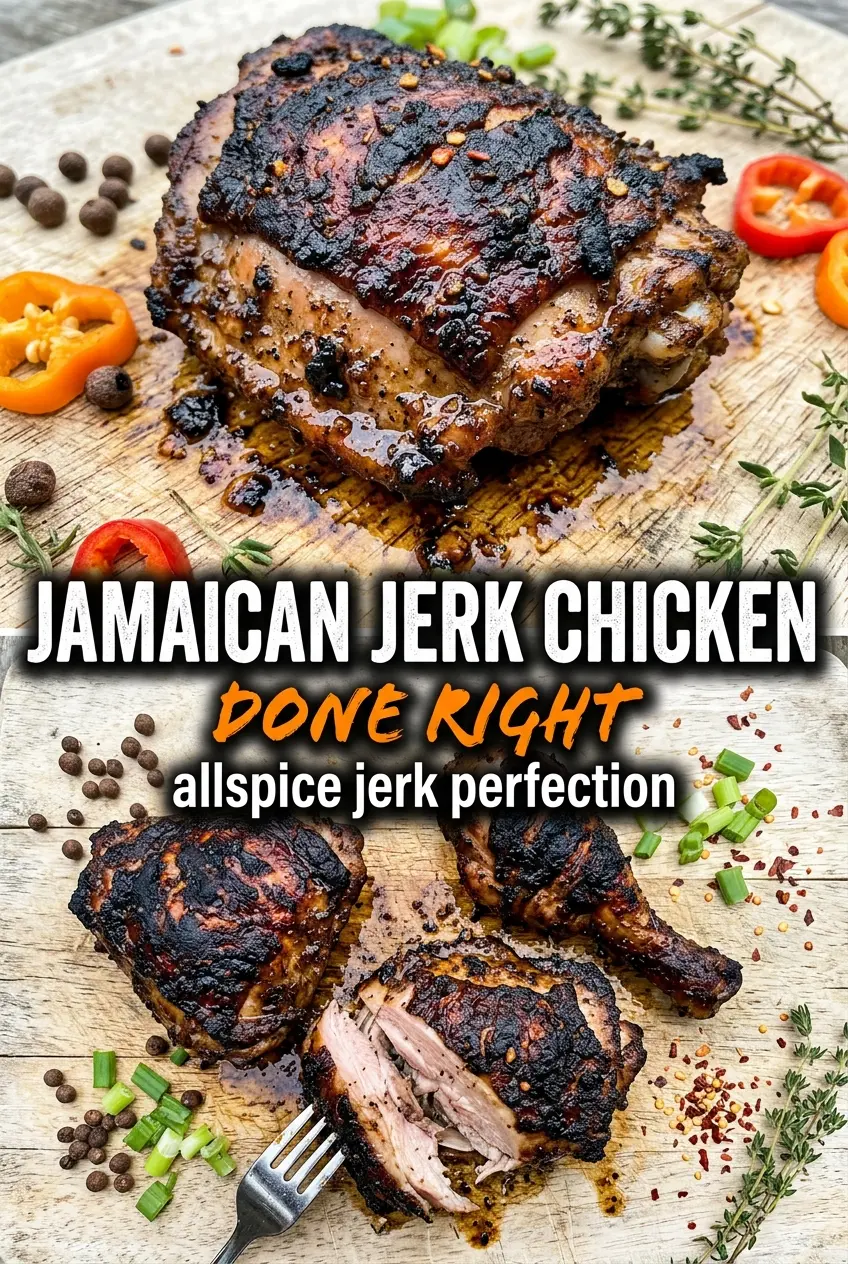
Jamaican Jerk Chicken
Ingredients
Equipment
Method
- Blend green onions, scotch bonnet peppers, garlic, fresh thyme, brown sugar, soy sauce, lime juice, allspice, black pepper, cinnamon, nutmeg, and salt until smooth, with no visible green or pepper pieces.
- Score chicken pieces and rub the jerk marinade all over, making sure it gets into the cuts so the flavor penetrates.
- Marinate the chicken in the refrigerator for 4-24 hours, turning once if possible so the color and spice coat evenly.
- Preheat the grill to medium heat, aiming for steady heat that can char the outside without burning the sugars.
- Grill chicken, turning frequently, for 30-40 minutes until charred on the outside and cooked through in the thickest pieces.
- Serve Jamaican jerk chicken with rice and peas, and add lime wedges on top for a bright finish.