Charred chicken thighs with a spoonful of bright chimichurri on top hit that sweet spot between bold and fresh. The chicken gets crisp at the edges and stays juicy in the middle, while the herb sauce cuts through the richness with garlic, vinegar, and just enough heat to keep every bite interesting.
What makes this version work is the split use of the chimichurri. Half goes on the chicken before it cooks, where it seasons the meat and helps build flavor, and the rest stays fresh for serving so the herbs keep their sharp, green bite. I also like the sauce blended just enough to be spoonable but still a little textured; that keeps it from turning into a flat puree.
Below, I’ve included the little timing details that keep the thighs from drying out, plus a few smart swaps if you’re working with what you have on hand.
The chimichurri stayed bright even after marinating, and the chicken skin got crisp without burning the herbs. I served it with rice and there wasn’t a bite left.
Save these chimichurri chicken thighs for the nights when you want grilled chicken with a sharp, herby sauce that stays bright instead of heavy.
The Trick to Keeping Chimichurri Bright on the Grill
The biggest mistake with chimichurri chicken is treating the sauce like a marinade only and then cooking it until the herbs go dull. Fresh parsley and oregano can handle a short soak, but they don’t want a long, acidic bath. Thirty minutes to two hours is the sweet spot here: enough time for the garlic, vinegar, and salt to season the meat without flattening the sauce.
Medium-high heat matters too. Too low, and the thighs steam and turn rubbery before the skin or edges ever pick up color. Too hot, and the herb bits on the outside can scorch before the chicken cooks through. You’re looking for deep char at the edges, a crisp exterior, and juices that run clear when the thickest part hits 165°F.
What Each Ingredient Is Doing in This Dish
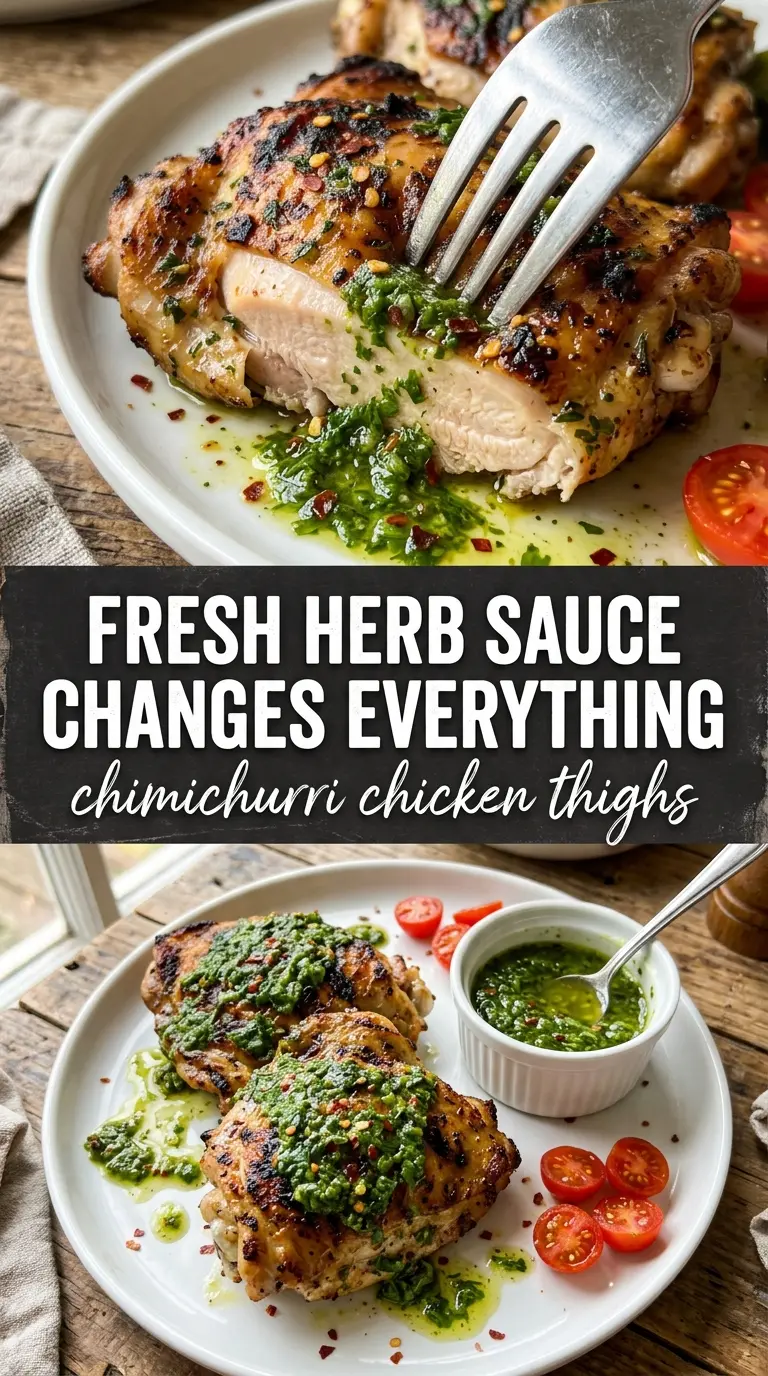
- Chicken thighs — Thighs stay juicier than breasts on the grill, which matters because chimichurri brings a punchy, acidic topping that should complement the meat, not rescue it. Bone-in thighs take a little longer and give you a slightly richer result; boneless cook faster and are easier for weeknights.
- Parsley — This is the backbone of the sauce. Flat-leaf parsley gives you that clean, grassy freshness that keeps the chimichurri from tasting like garlicky oil.
- Fresh oregano — Dried oregano won’t give the same lift here. Fresh oregano adds a sharper, more aromatic edge, and it’s what makes the sauce taste properly alive.
- Red wine vinegar — The vinegar wakes up the herbs and cuts through the fat from the chicken. If you swap in another vinegar, use one with real tang; a soft, sweet vinegar makes the sauce taste muddled.
- Olive oil — Good olive oil gives the sauce body and helps it cling to the chicken. You don’t need your fanciest bottle, but avoid anything so bland that the sauce tastes thin.
- Garlic and red pepper flakes — Garlic gives the sauce its bite, and pepper flakes add a low, steady heat. If you like it sharper, leave the garlic slightly coarse instead of blending it into a paste.
Grilling the Thighs Without Losing the Sauce
Blending the Chimichurri
Pulse or blend the parsley, oregano, garlic, vinegar, olive oil, red pepper flakes, and salt until the sauce is smooth but still has a little texture. If you take it all the way to a puree, the flavor can feel muted and the sauce looks muddy instead of bright green. Taste it before it hits the chicken; it should be punchy and a little aggressive because the meat will soften it.
Coating and Marinating the Chicken
Season the thighs with salt and pepper first, then brush on about half the chimichurri. That layer seasons the surface and helps the chicken pick up flavor fast, but don’t drown it. A long soak isn’t the goal here; marinate just long enough for the vinegar and herbs to do their work without turning the texture soft.
Grilling to a Crisp Finish
Preheat the grill to medium-high and lay the thighs on the grates once the heat is steady. You want sizzle right away, not a lazy hiss. Cook for 6 to 7 minutes per side, depending on thickness, until the skin is crisp and the internal temperature reaches 165°F. If the outside browns too fast, move the chicken to a cooler part of the grill and let it finish gently so the herbs don’t burn.
Resting and Saucing at the Table
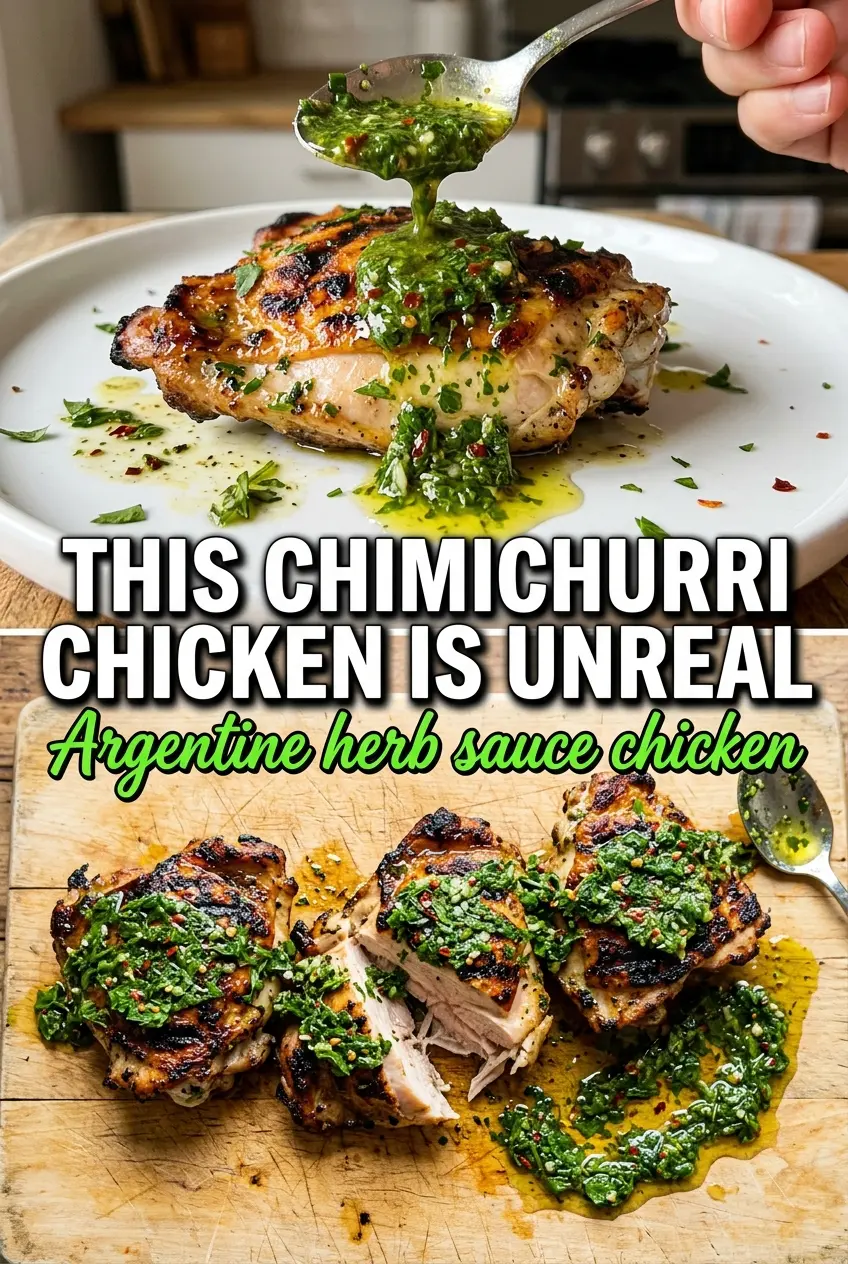
Let the chicken rest for 5 minutes before serving. That short rest keeps the juices where they belong instead of running onto the cutting board. Spoon the remaining chimichurri over the top right before serving so the herbs stay bright and the sauce tastes fresh, not cooked.
How to Adapt These Chicken Thighs for Different Kitchens
Boneless Thighs for Faster Grilling
Use boneless thighs if you want dinner on the table a little quicker. They usually cook in less time and are easier to serve, but they don’t get quite the same deep, juicy bite as bone-in thighs. Pull them as soon as they hit 165°F so they stay tender.
Dairy-Free and Naturally Gluten-Free
This recipe is already dairy-free and gluten-free as written, which is part of why it’s such a good grilling dinner. Just check your vinegar and spice labels if you’re cooking for someone sensitive to cross-contamination. The flavor stays just as bold without any extra changes.
Swap in Cilantro for a Different Herb Sauce
If parsley isn’t your thing, replace part of it with cilantro for a looser, more citrusy herb sauce. That change pushes the chimichurri away from classic Argentine flavor and into a brighter, more herbal direction. Keep the vinegar and garlic the same so the sauce still has structure.
Storage and Reheating
- Refrigerator: Store leftovers for up to 3 days. The chicken stays juicy, though the chimichurri will darken a little as it sits.
- Freezer: Freeze the cooked chicken for up to 2 months. Freeze the sauce separately if you can; the herbs lose some of their brightness after thawing, but the flavor still works.
- Reheating: Reheat the chicken gently in a covered skillet over low heat or in a 300°F oven until warmed through. High heat dries out thighs fast, and that’s the one thing that can turn this from great to just okay.
Questions I Get Asked About This Recipe
Chimichurri Chicken Thighs
Ingredients
Equipment
Method
- Blend fresh parsley, fresh oregano, garlic, red wine vinegar, olive oil, red pepper flakes, and salt until smooth but slightly chunky, about 30-60 seconds. Stop once the mixture is cohesive with visible herb bits.
- Season the chicken thighs with salt and pepper and brush them with half the chimichurri. Use a thin, even coating so the herbs adhere to the skin.
- Marinate the chicken for 30 minutes to 2 hours in the refrigerator. Keep it covered so the surface stays moist while absorbing flavor.
- Preheat the grill to medium-high heat. Aim for a steady heat so the thighs char without drying out.
- Grill the chicken thighs for 6-7 minutes per side until the internal temperature reaches 165°F and the skin is crispy. Flip once and continue grilling until both sides are deeply browned with charred spots.
- Let the chicken rest for 5 minutes before serving. This helps the juices redistribute so the thighs stay tender.
- Serve the grilled chicken topped with the remaining fresh chimichurri. Spoon it generously so the bright green sauce contrasts with the charred surface.