Charred zucchini and yellow squash get a big lift from a Dijon marinade that clings to every slice, turns glossy on the grill, and leaves behind a tangy, lightly sweet crust instead of the bland, soft vegetables people too often expect. The trick here is letting the mustard do more than season the vegetables — it helps the oil and vinegar stay emulsified long enough to coat the planks evenly, so each one hits the grates with actual flavor on board.
That little rest before grilling matters. Thirty minutes gives the marinade time to seep into the surface without softening the squash into mush, and the honey is just enough to encourage browning without burning fast. I also like a mix of Dijon and whole grain mustard because the smooth mustard brings sharpness and the seeds leave behind little pockets of texture that stand up to the smoke.
Below you’ll find the exact grill timing that keeps the slices tender instead of soggy, plus the small finishing move that makes the marinade taste brighter right before serving.
The Dijon marinade caramelized into the prettiest glossy coating, and the squash stayed tender with actual grill marks instead of going soft and watery. I brushed the extra marinade on at the end like you said, and that little bit made the whole platter taste finished.
Save this grilled zucchini and squash with Dijon marinade for the nights when you want a fast side dish with real char and a tangy mustard finish.
The Reason These Vegetables Grill Well Instead of Turning Limp
Zucchini and yellow squash are full of water, which is why they can go from nicely charred to floppy in a hurry. The solution isn’t to drown them in marinade or blast them with heat forever. It’s to slice them thick enough to hold their shape, give them a short soak, and grill them hot enough that the surface browns before the center gives up its texture.
The other thing people miss is the order of operations. If the vegetables sit in a watery marinade too long, they start leaking before they ever hit the grill. Thirty minutes is the sweet spot here. Enough time for the mustard, vinegar, and garlic to season the slices, not so long that the squash starts cooking in the bowl.
- Diagonal planks give you more surface area for grill marks and a sturdier shape than thin rounds.
- Whole grain mustard adds little bursts of texture that keep the coating from tasting flat.
- Honey helps the edges caramelize, but too much will darken the vegetables before they cook through.
- Oiled grates matter because mustard marinades can stick if the grill isn’t clean and hot.
What Each Ingredient Is Doing in the Marinade
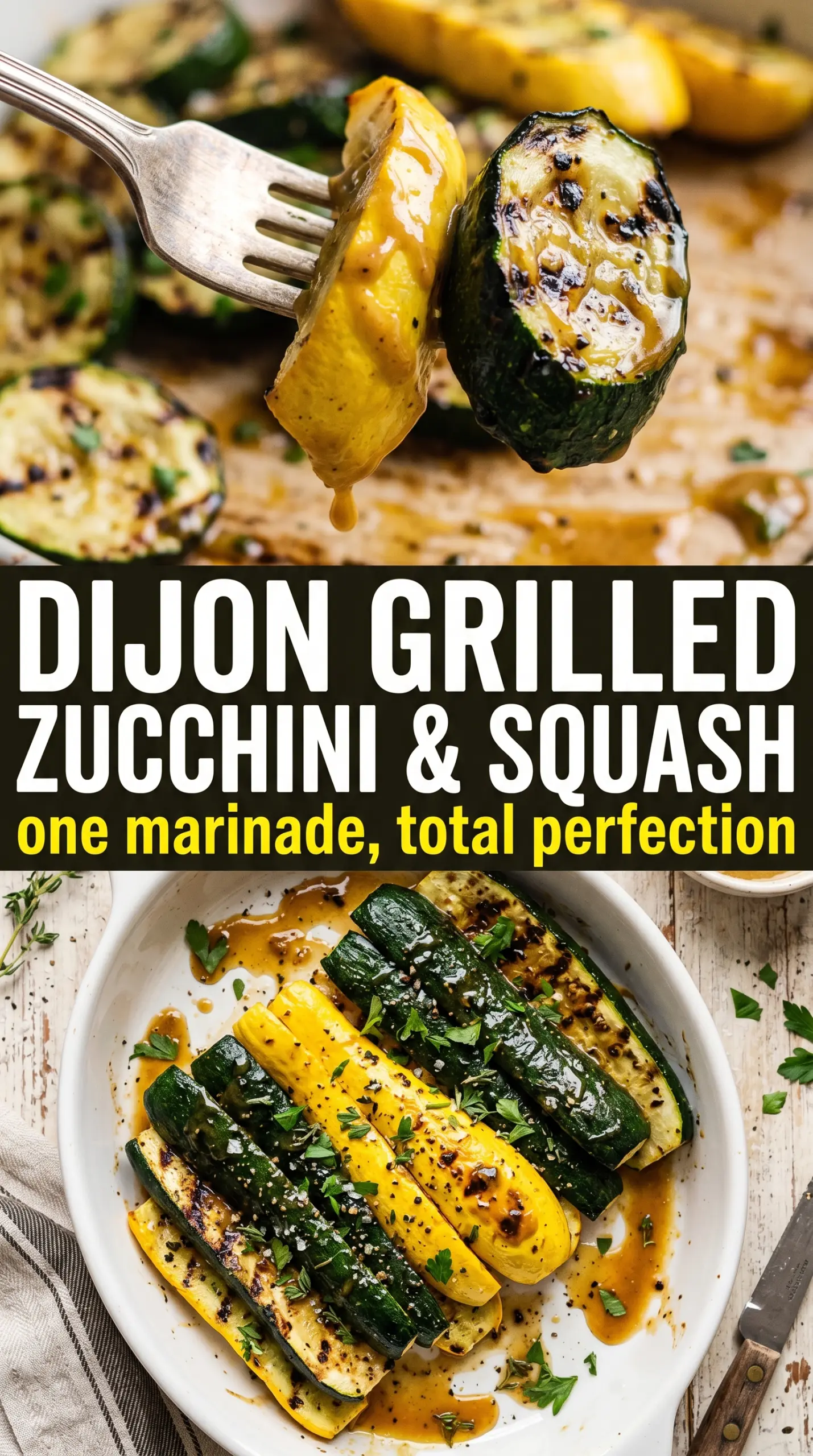
Dijon mustard is the backbone. It brings sharpness and also helps the oil and vinegar emulsify, which is why the marinade coats the vegetables instead of sliding off in a thin puddle. Whole grain mustard is optional in theory, but I like it here because it adds body and a little texture after grilling.
White wine vinegar gives the marinade its clean bite. Lemon can work in a pinch, but it tastes brighter and less rounded, so the result changes. Olive oil carries the flavor and helps the squash brown instead of drying out, and honey softens the sharp edges just enough to help the grill do its job.
Use fresh thyme if you have it. Dried thyme won’t ruin the dish, but the fresh herb gives a cleaner, greener finish that plays better with the char. For serving, lemon isn’t just garnish — a quick squeeze wakes up the mustard and cuts through the richness of the oil.
How to Get Glossy Grill Marks Without Overcooking the Squash
Whisk the marinade until it looks unified
Start by whisking the Dijon, whole grain mustard, vinegar, oil, garlic, thyme, honey, salt, and pepper until the mixture turns thick and glossy. If it looks separated, keep whisking; you want the mustard to hold the oil in suspension so every slice gets coated evenly. A broken marinade leaves you with oily patches and bland spots on the grill.
Let the vegetables sit, but not too long
Toss the zucchini and squash in the marinade and let them rest for 30 minutes. That gives the seasoning time to grab onto the surface without draining water from the vegetables. If they sit for much longer, they start to soften and release liquid, which makes grilling harder and the final texture dull.
Grill hot, turn once, and stop fussing
Preheat the grill to medium-high and oil the grates before the vegetables go on. Lay the planks across the grates and leave them alone until you see deep grill marks and the edges start to look slightly translucent, about 3 to 4 minutes. Flip once, cook the other side, and brush on the reserved marinade in the last minute so it warms through without burning.
Finish while the surface is still hot
Move the vegetables to a platter as soon as they’re tender with some bite left in the center. Drizzle over any remaining marinade and finish with thyme and a squeeze of lemon. If you wait too long before serving, the glaze loses its shine and the charred edges stop tasting fresh.
How to Adapt This for Different Meals and Dietary Needs
Make it dairy-free and gluten-free without changing the method
This recipe already fits both of those needs as written, which is part of why I like it for mixed tables. Just check your mustard to be sure it doesn’t contain any added thickeners or flavorings you don’t want, then keep the rest of the method exactly the same. The vegetables still get the same charred edges and tangy finish.
Swap in oregano or basil when thyme isn’t around
Fresh thyme gives the most classic result, but basil or oregano changes the dish in a good way. Basil makes the finish softer and sweeter, while oregano pushes it a little more savory and punchy. Use the same amount and add the herb at the end so it stays bright.
Use a grill pan if you don’t have an outdoor grill
A hot grill pan gives you good color and keeps the squash from steaming, as long as you don’t crowd the pan. Work in batches if needed so the slices sit directly on the hot metal instead of trapping steam around each other. The flavor stays the same; the marks just come in a bit neater and more uniform.
Store leftovers for a fast lunch bowl
Leftover grilled squash works well chilled or warmed and tucked into grains, salads, or wraps. The texture softens a little after refrigeration, but the mustard marinade keeps it from tasting flat. Save any extra lemon to freshen it up again right before eating.
Storage and Reheating
- Refrigerator: Store in an airtight container for up to 3 days. The vegetables will soften a bit, but the flavor holds up well.
- Freezer: I don’t recommend freezing this dish. Zucchini and squash lose their texture and turn watery after thawing.
- Reheating: Reheat in a hot skillet or on a sheet pan in a 400°F oven for a few minutes until warmed through. Don’t microwave it if you want to keep any of the grill texture; the vegetables will steam and go limp.
Answers to the Questions Worth Asking
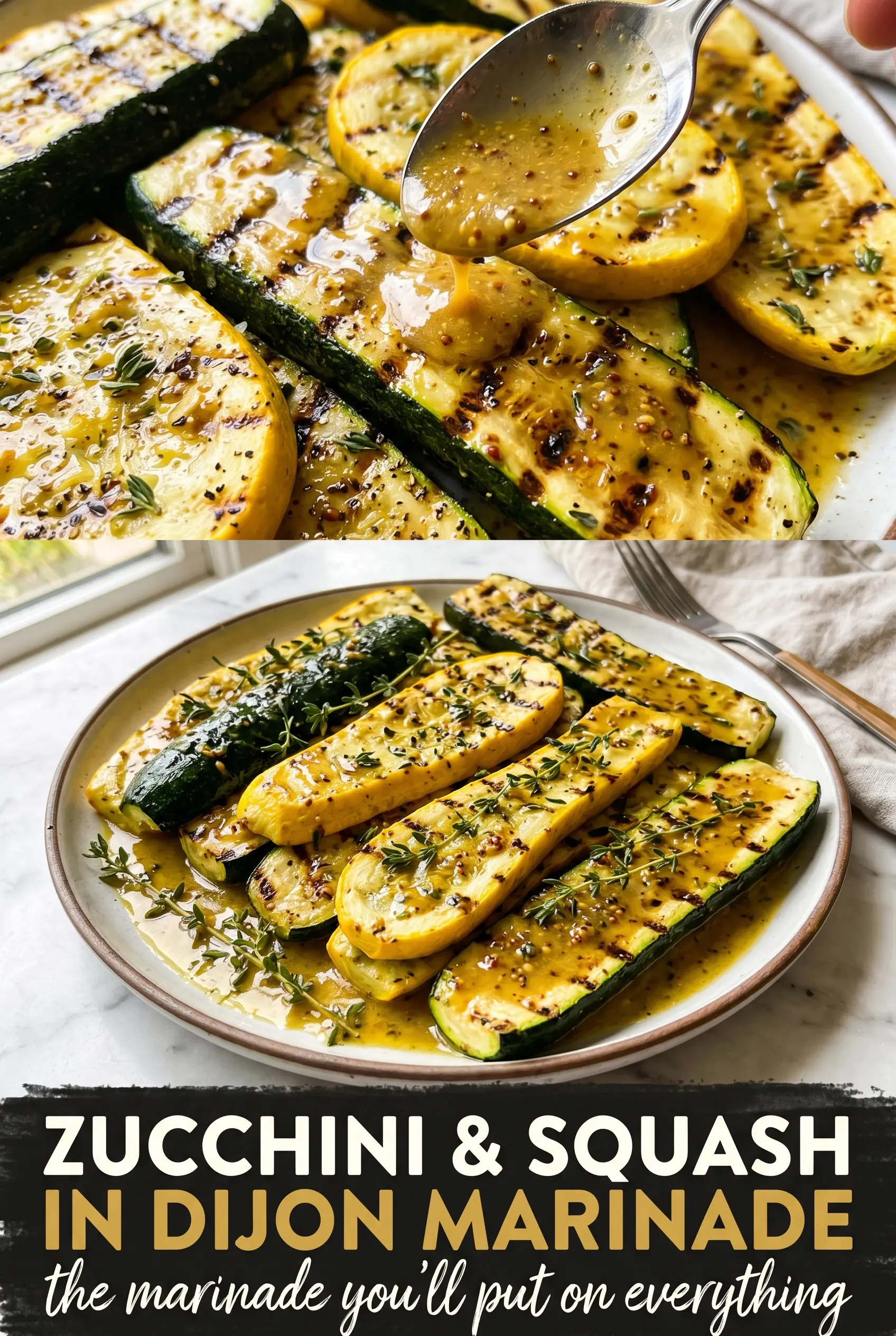
Grilled Zucchini and Squash in Dijon Marinade
Ingredients
Equipment
Method
- Whisk olive oil, Dijon mustard, whole grain mustard, white wine vinegar, minced garlic, fresh thyme, and honey until smooth.
- Season with salt and black pepper to taste.
- Toss the zucchini and yellow squash planks with the Dijon marinade, then let sit for 30 minutes to coat.
- Preheat the grill to medium-high and oil the grates to prevent sticking.
- Remove the vegetables from the marinade (reserve remaining marinade) and grill for 3–4 minutes per side until caramelized and visibly charred.
- Brush the vegetables with the reserved marinade during the last minute of cooking for a glossy finish.
- Arrange on a platter, drizzle any remaining marinade over, and garnish with fresh thyme before serving with lemon.