Thick zucchini pecan bars bring the kind of soft, spiced crumb that stays moist for days without turning soggy, and the toasted pecans give every bite a little crunch to keep it interesting. The cream cheese frosting on top settles into the bars just enough to make each square feel like dessert, not just a clever way to use up zucchini.
What makes these work is simple: the zucchini gets squeezed dry before it goes into the batter, which keeps the bars tender instead of wet, and the pecans are toasted so they taste buttery and deep instead of flat. The batter itself is built like a quick cake, so you get lift from the baking soda and powder without needing any complicated mixing.
Below, I’ve included the parts that matter most: how dry the zucchini should be, why the bars need a full cool before frosting, and a few smart ways to adapt them if you want a slightly different finish.
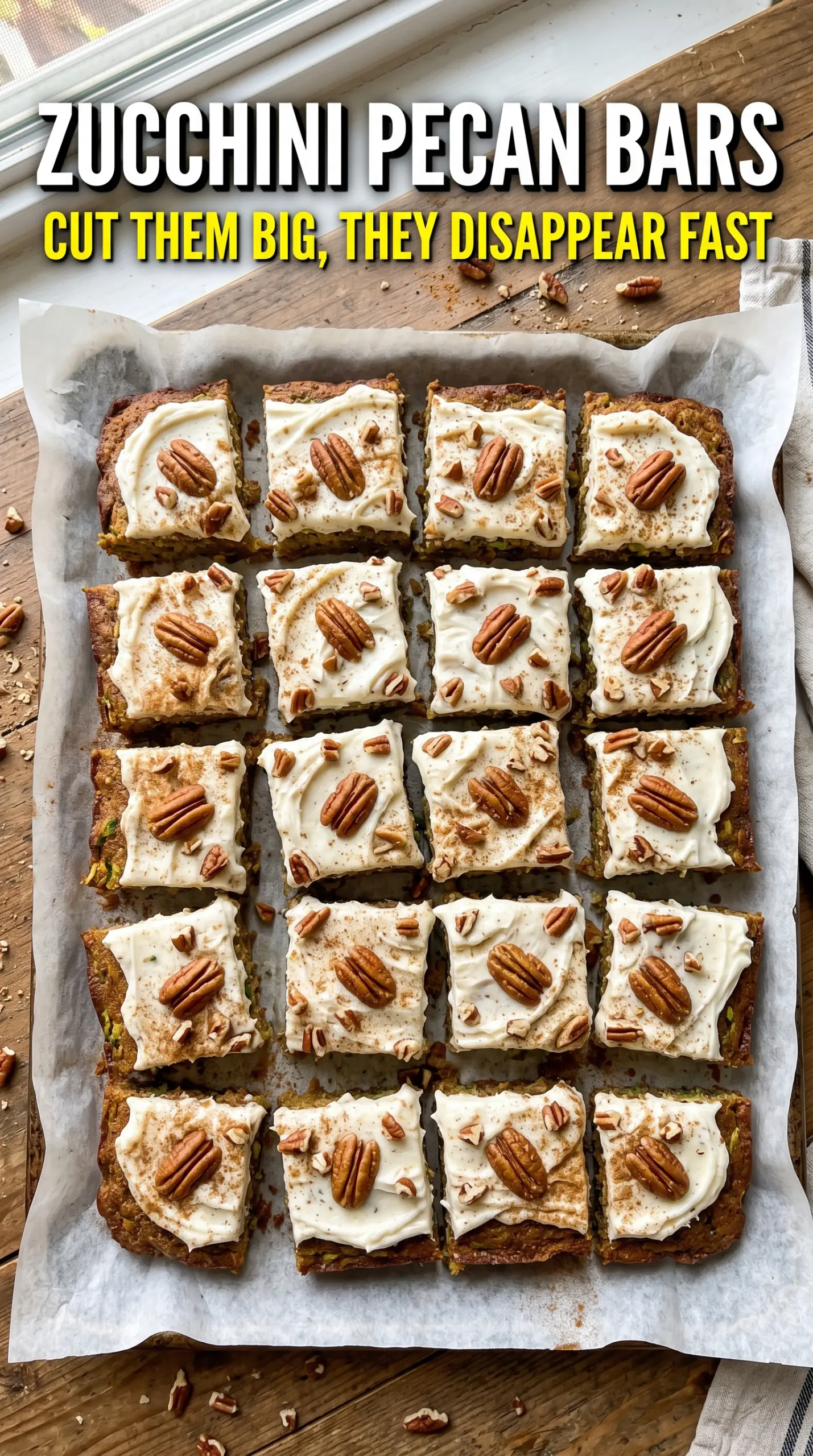
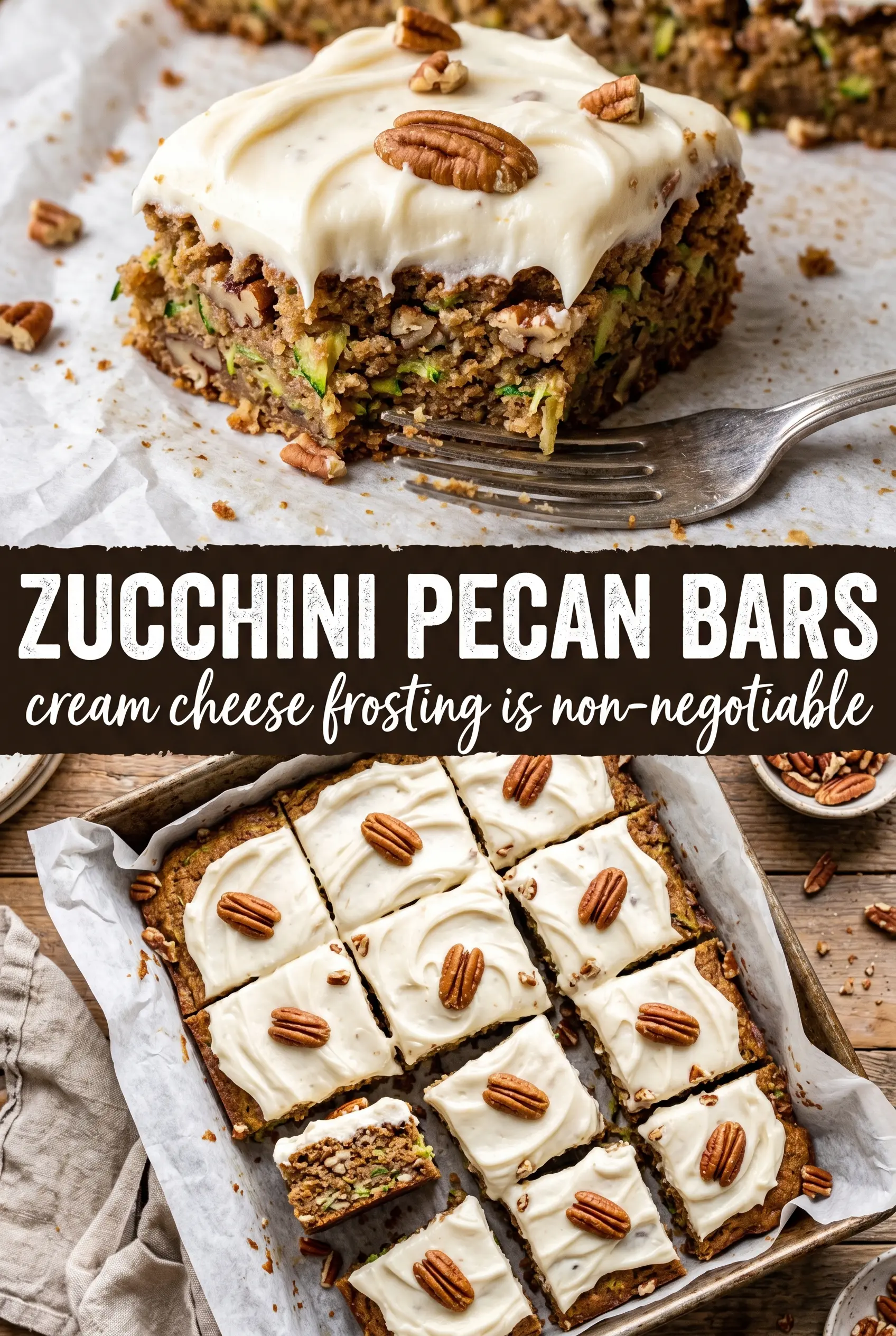
The bars baked up soft but not dense, and squeezing the zucchini dry made all the difference. The frosting spread smoothly once they were cool, and the toasted pecans on top gave them the best little crunch.
These zucchini pecan bars bake up soft, spiced, and sturdy enough to frost cleanly, then they slice into neat squares with that cream cheese topping on top.
The reason zucchini bars go gummy instead of tender
The biggest mistake with zucchini bars is treating the vegetable like it’s just a mild add-in. Zucchini carries a lot of water, and if that moisture stays in the batter, the bars bake up heavy in the center and can even slump after cooling. Squeezing it dry is not optional here. It’s the difference between a clean, cake-like crumb and a pan of soft paste.
The other thing that matters is folding, not beating, once the flour goes in. Overmixing pushes these bars from tender to tough fast, especially with a batter this size. Stop as soon as the dry streaks disappear, then add the pecans at the end so they stay evenly distributed instead of sinking.
- Zucchini — Grate it on the fine or medium side, then squeeze it in a clean kitchen towel until it feels damp, not wet. You don’t need it bone-dry, but it should no longer drip.
- Pecans — Toasting them first brings out the buttery flavor and keeps them from tasting raw in the finished bars. Raw pecans work in a pinch, but the bars lose a lot of depth.
- Cream cheese — This is what gives the frosting its tang and body. Full-fat cream cheese spreads best and holds its shape; low-fat versions can go soft and a little loose.
- Vegetable oil — Oil keeps the bars moist longer than butter would. It also gives a softer crumb that works well with the zucchini.
- Powdered sugar — Use enough to make the frosting fluffy and spreadable, not runny. If it seems thick, add milk a teaspoon at a time so you don’t overshoot.
What Each Ingredient Is Actually Doing in This Zucchini Bread or Baked Good
- Zucchini (the moisture keeper) — Grate finely and squeeze out excess moisture. The remaining moisture adds tenderness without sogginess.
- Flour (the structure base) — Don’t overmix or the baked good becomes tough. Mix just until dry ingredients are incorporated.
- Sugar (the sweetness and browning) — This tenderizes and helps create browning. Adjust based on other ingredients.
- Oil or butter (the richness) — This creates tender crumb. Oil makes moister; butter makes richer.
- Eggs (the binder) — These hold everything together and add structure. Use room temperature eggs.
- Leavening (baking powder or soda) — This creates rise and light crumb. Too much makes it taste bitter.
- Spices (cinnamon, nutmeg, or allspice) — These warm up zucchini flavor. Layer so no single one overpowers.
- Optional mix-ins (nuts, chocolate, or dried fruit) — These add texture and prevent bland taste.
Building the batter and frosting without losing the texture
Mix the dry ingredients first
Whisk the flour, cinnamon, baking soda, baking powder, salt, and nutmeg together until the spices look evenly speckled through the flour. That first mixing step matters because it keeps the leavening from clumping, which would leave uneven pockets in the baked bars. If you skip it, you can end up with dense corners and little bitter bites of baking soda.
Whip the wet ingredients until smooth
Beat the sugar, oil, eggs, and vanilla until the mixture looks glossy and combined. You’re not trying to build volume like a cake batter; you’re dissolving the sugar enough that the bars bake up even and slice cleanly. Once the zucchini goes in, the batter will look looser and a little shaggy before it comes together again.
Fold, don’t stir, once the flour goes in
Add the dry mixture and fold just until the last streak of flour disappears, then fold in the toasted pecans. If you keep mixing after that point, the bars can turn tight and chewy instead of soft. Spread the batter into the pan right away so the leavening starts working in the oven, not on the counter.
Cool completely before the frosting hits the pan
Beat the cream cheese, powdered sugar, butter, vanilla, and milk until smooth and fluffy, then spread it only over fully cooled bars. If the bars are even slightly warm, the frosting will melt and slide instead of sitting in a thick layer. For the cleanest squares, chill the frosted pan for a short time before cutting.
Three ways to adjust these bars without losing what makes them good
Make them gluten-free with a 1:1 baking blend
Use a cup-for-cup gluten-free flour blend in place of the all-purpose flour. The bars will still be soft and sliceable, but the crumb may be slightly more delicate, so let them cool fully before cutting. Pick a blend that already contains xanthan gum for the best structure.
Skip the frosting for a lighter finish
The bars are sweet enough to stand on their own, especially if you dust the top with a little powdered sugar after cooling. You’ll lose the tangy cream cheese layer, but the zucchini, cinnamon, and pecans come through more clearly.
Swap walnuts for pecans
Walnuts bring a slightly sharper, more earthy flavor and a firmer bite. They work well here if that’s what you have, though they won’t taste as buttery as toasted pecans.
Use a dairy-free topping when needed
For a dairy-free version, skip the cream cheese frosting and top the cooled bars with a simple glaze made from powdered sugar, vanilla, and a little non-dairy milk. It won’t have the same tang, but it keeps the bars tender and still gives them a finished look.
Storage and Reheating
- Refrigerator: Store in an airtight container for 4 to 5 days. The frosting stays best chilled, and the bars actually slice a little cleaner after a night in the fridge.
- Freezer: These freeze well without the frosting. Wrap the unfrosted bars tightly and freeze for up to 2 months, then thaw and frost after they come back to room temperature.
- Reheating: These are best served at room temperature, not warmed. If they’ve been chilled, let them sit out for 20 to 30 minutes so the frosting softens and the crumb loses its cold, firm texture.
Questions I Get Asked About This Recipe
Zucchini Pecan Bars
Ingredients
Equipment
Method
- Preheat the oven to 350°F, then grease a 9x13 baking pan.
- Whisk together all-purpose flour, cinnamon, baking soda, baking powder, salt, and nutmeg until evenly combined.
- Beat granulated sugar, vegetable oil, eggs, and vanilla extract until smooth.
- Stir in grated zucchini that has been squeezed dry.
- Fold the dry ingredients into the wet ingredients just until combined.
- Fold in toasted pecans until the batter is uniform with visible nut pieces.
- Spread the batter into the prepared pan.
- Bake at 350°F for 25–30 minutes, until a toothpick comes out clean.
- Cool completely before frosting.
- Beat cream cheese, powdered sugar, butter, vanilla, and milk until smooth and fluffy.
- Spread the frosting over the cooled bars, then cut into squares.