Classic zucchini bread earns its place by staying tender for days without tasting heavy or overly sweet. The crumb stays soft and moist, the top turns deeply golden, and every slice gives you that warm cinnamon smell that makes the loaf disappear faster than you planned. It’s the kind of quick bread that works for breakfast, snacks, or a late-night slice with coffee, and it doesn’t need any fancy tricks to come out right.
The key is balance. Zucchini brings moisture, but the batter still needs enough flour and structure to hold a tall loaf with a crackly top. Oil does a better job than butter here because it keeps the crumb soft even after the loaf cools. I also like a full tablespoon-style cinnamon presence with just a little nutmeg in the background, because zucchini bread should taste warmly spiced, not like cake with green flecks.
Below, I’ve laid out the parts that matter most: why the zucchini goes in un-squeezed, how to keep the loaf from baking up dense, and what to change if you want to add nuts or make a second loaf for the freezer.
The loaf stayed unbelievably moist for three days, and the edges baked up with that deep golden crust I always hope for. I didn’t squeeze the zucchini like the note said, and the texture came out perfect instead of gummy.
Save this classic zucchini bread for the days when you want a moist, cinnamon-spiced loaf with a crackly golden top.
The zucchini bread mistake that turns a moist loaf into a dense one
The biggest problem with zucchini bread is overworking the batter. Once the wet and dry ingredients come together, the flour starts building structure fast. Stirring too long makes the loaf tight and tough instead of soft and tender. Stop as soon as you no longer see dry streaks, even if the batter looks a little rough.
The second trap is squeezing the zucchini dry. That seems logical, but it leaves you with a drier loaf and a weaker crumb. The grated zucchini melts into the batter while it bakes, which is exactly what gives this bread its plush texture. The batter should look thick, spoonable, and a little glossy before it goes into the pans.
- Don’t chase a perfectly smooth batter. A few small streaks of flour are better than a loaf that’s been stirred into submission.
- Use the zucchini as grated, not chopped. Fine shreds disappear into the crumb and keep the texture even.
- Bake until the center is set, not just the top. The top can look done before the middle is ready, especially in a deep loaf pan.
What each ingredient is actually doing in this loaf
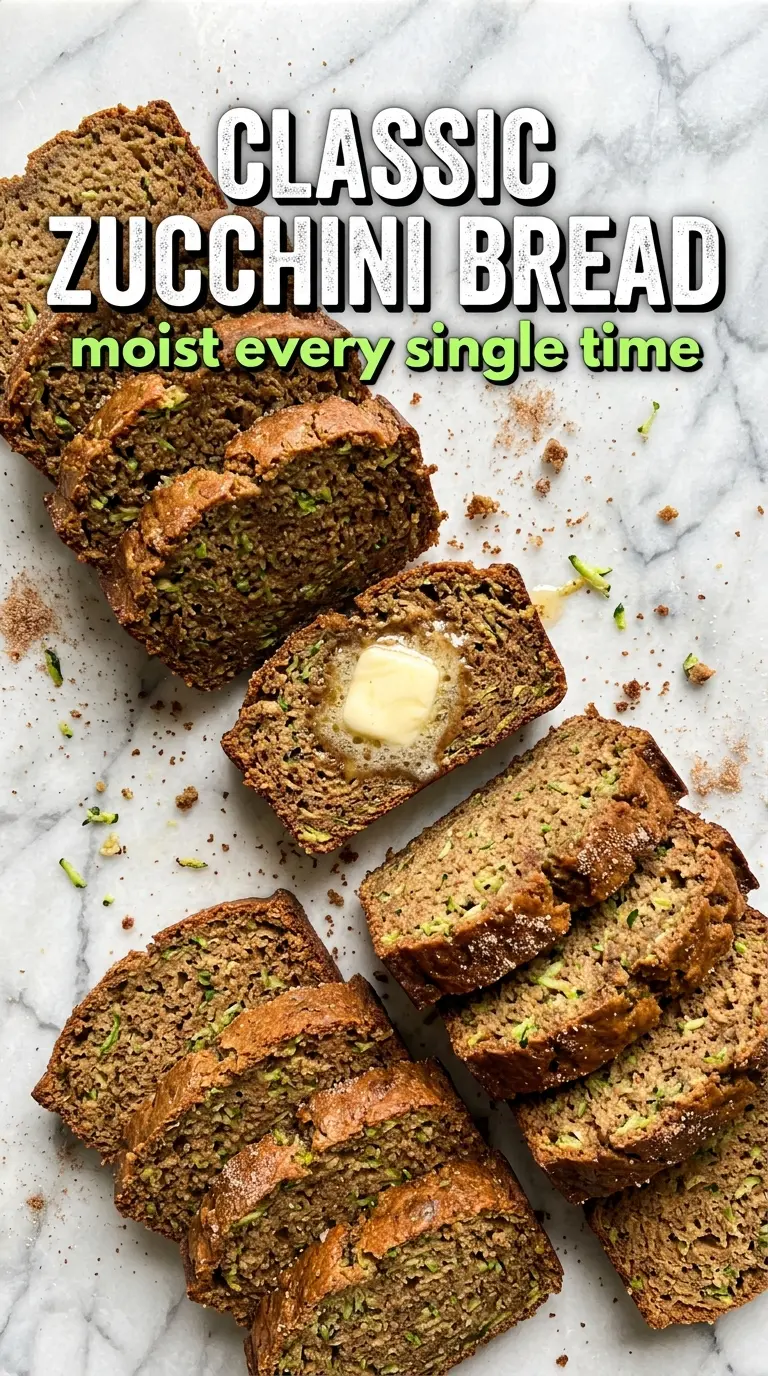
Zucchini is the moisture source here, and this is one place where fresh matters. You want it grated on the fine side so it blends into the batter instead of showing up as hard shreds. Don’t squeeze it dry; the liquid in the zucchini keeps the crumb soft and helps the loaf stay tender for days.
Vegetable oil gives a softer, longer-lasting crumb than butter. Butter tastes great, but it firms up more as the loaf cools, which works against the plush texture zucchini bread should have. Any neutral oil works here, but avoid anything with a strong flavor unless you want it to show up in the finished loaf.
Cinnamon and nutmeg make the loaf taste warm and rounded without pushing it into pumpkin bread territory. The cinnamon should be noticeable, and the nutmeg should stay in the background. If you want a stronger spice note, add another 1/2 teaspoon cinnamon rather than overloading the nutmeg.
Walnuts or pecans are optional, but they add a little structure and a toasty bite that plays nicely with the soft crumb. Use them raw or lightly toasted. If you skip them, the loaf will still hold together beautifully; it just bakes up a little smoother and more uniform.
How to build a zucchini loaf with a crackly top and a soft center
Getting the dry mix evenly blended
Whisk the flour, baking soda, baking powder, salt, cinnamon, and nutmeg until the mixture looks even in color. This step matters more than it sounds, because spice clumps or uneven leavening can give you patchy flavor and a loaf that rises unevenly. A quick whisk also aerates the flour slightly, which helps the bread bake up lighter.
Mixing the wet ingredients without whipping too much air in
Beat the sugar, oil, eggs, and vanilla until they look smooth and fully combined. You’re not trying to build volume like a cake batter; you just want the sugar dissolved enough that it blends cleanly into the flour later. Stir in the zucchini last so it’s evenly distributed before the dry ingredients go in.
Folding the batter to keep the crumb tender
Add the wet mixture to the dry ingredients and fold just until no dry flour remains. If you’re using nuts, add them at the very end and stop stirring once they’re scattered through the batter. Overmixing at this stage is the fastest way to get a chewy loaf instead of a soft one.
Baking until the center sets cleanly
Divide the batter between the pans and bake until the tops are deeply golden and the center tests clean with a toothpick. If the top browns too quickly, loosely tent it with foil for the last part of baking so the middle can catch up. Let the loaves cool in the pans for 20 minutes; that rest helps them set so they don’t fall apart when you move them to a rack.
How to adapt this zucchini bread for different kitchens and different appetites
Dairy-Free as Written
This loaf is already dairy-free if you use a neutral vegetable oil, which makes it an easy fit for that kind of baking. The crumb stays soft without butter, so you don’t lose anything by keeping the recipe exactly as written.
Nut-Free Loaf
Leave out the walnuts or pecans and bake as usual. You’ll get a smoother, more uniform slice with a softer bite, which is nice if you’re packing it for lunchboxes or serving it to a crowd with nut allergies.
A Sweeter, Dessert-Like Version
Add 1/2 cup chocolate chips or dried cranberries after the batter comes together. Chocolate turns it into more of a snack loaf, while cranberries add tart pops that cut through the sweetness. Don’t add too much extra mix-in or the loaf can sink in the middle.
Storage and Reheating
- Refrigerator: Store tightly wrapped at room temperature for up to 3 days, or refrigerate for up to 5 days if your kitchen is warm. The crumb stays moist, though the top crust softens a little.
- Freezer: This loaf freezes well. Wrap individual slices or the whole cooled loaf tightly in plastic, then foil, and freeze for up to 3 months.
- Reheating: Thaw at room temperature, then warm slices briefly in a toaster oven or low oven. Microwaving too long makes the crumb rubbery, so use short bursts if that’s the fastest route.
Answers to the questions worth asking
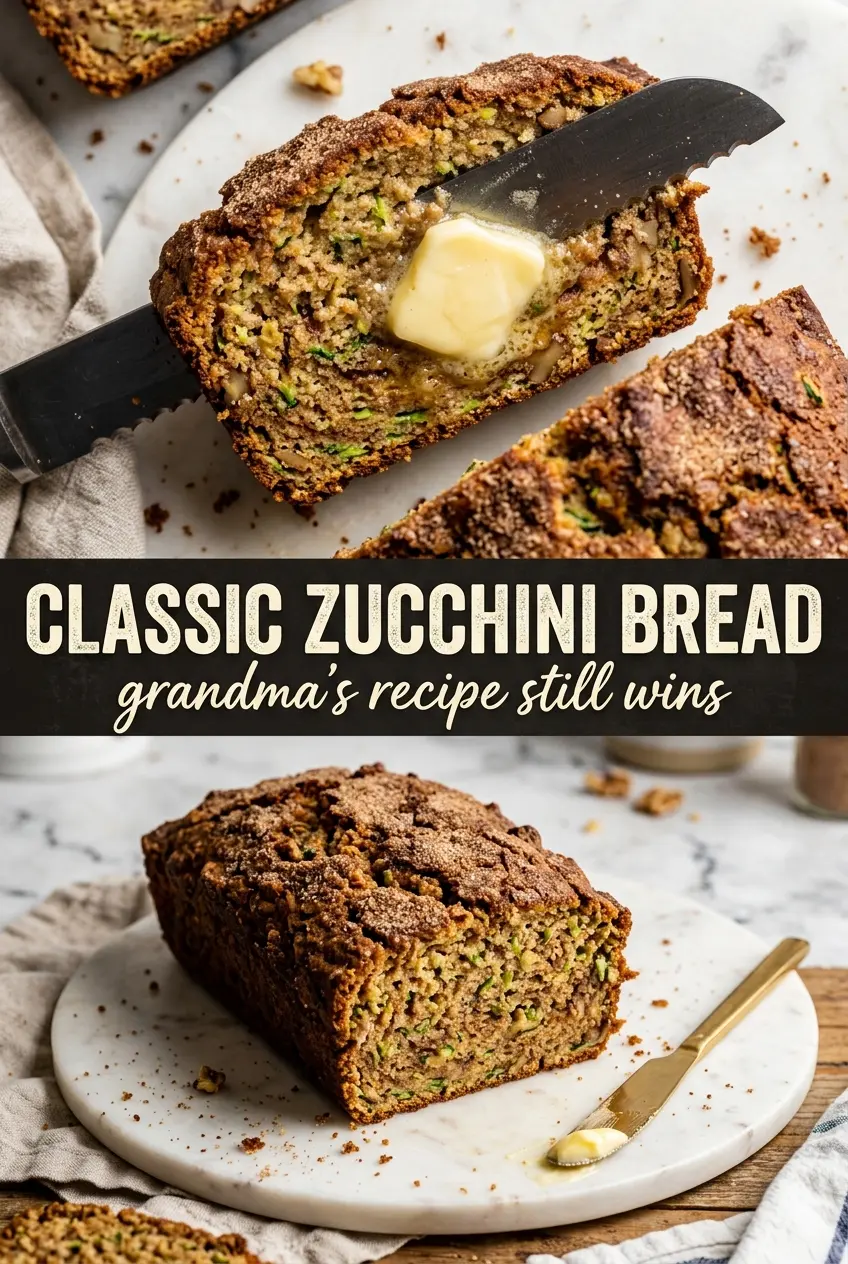
Classic Zucchini Bread
Ingredients
Equipment
Method
- Preheat oven to 350°F and grease two 9x5 loaf pans (or one large loaf pan). Lightly coat all sides so the loaves release cleanly after baking.
- In a large bowl, whisk all-purpose flour, baking soda, baking powder, salt, cinnamon, and nutmeg until evenly combined. Stop when the color looks uniform with no dry spice streaks.
- In a separate bowl, beat granulated sugar, vegetable oil, eggs, and vanilla extract until well combined. Mix just until the batter looks glossy and homogeneous.
- Stir in grated zucchini without squeezing it first. Fold until the zucchini is distributed through the batter.
- Add wet ingredients to dry ingredients and fold until just combined. Stop as soon as you no longer see dry flour to keep the crumb tender.
- Fold in walnuts or pecans if using. Mix gently so the nuts stay evenly suspended.
- Divide batter between the loaf pans and bake at 350°F for 55–65 minutes. Bake until a toothpick comes out clean and the top is deeply golden with a cracked look.
- Cool in the pan for 20 minutes before transferring to a wire rack. This cooling step helps the loaf set so it slices without crumbling.