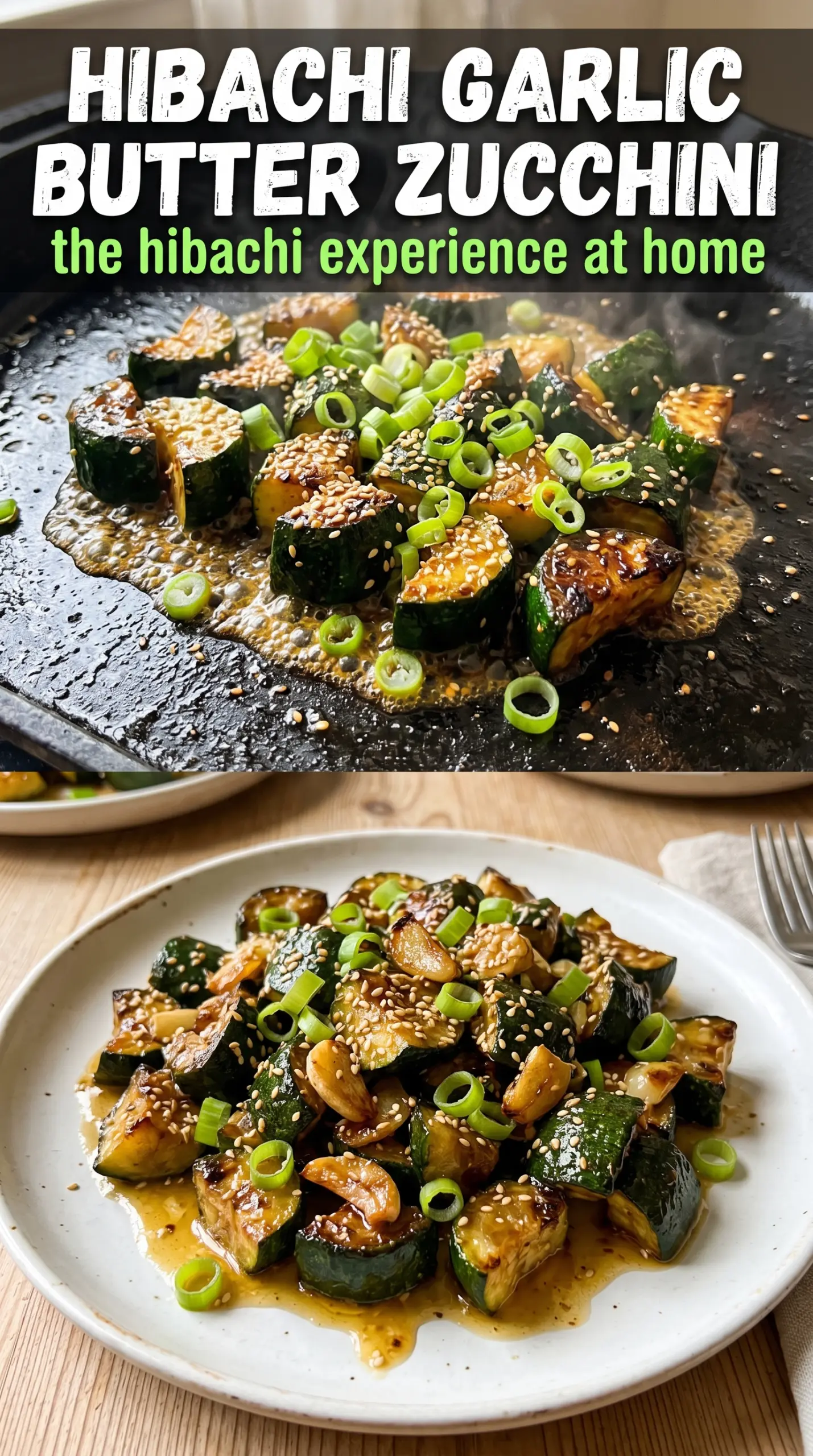
Garlic-butter hibachi grilled zucchini gets the kind of char that turns a simple side dish into the thing everybody reaches for first. The edges go deep golden and a little smoky, the centers stay tender with just enough bite, and that hit of soy sauce and sesame oil gives it the same savory finish you expect from a Japanese steakhouse grill. It tastes like it came off a screaming-hot flat top because that’s exactly the idea.
The trick is heat. Zucchini throws off a lot of moisture, so if the pan isn’t hot enough, it softens and steams before it can caramelize. A wide skillet, griddle, or Blackstone lets the rounds sit in a single layer long enough to brown before you flip them. The garlic goes in after the first side is set, not at the beginning, so it doesn’t burn in the butter.
Below, I’ve laid out the little timing details that keep the zucchini from going limp, plus a few smart swaps if you want to adjust the seasoning or make it fit a different meal. The end result is fast, bold, and dependable.
The zucchini stayed crisp-tender and the soy-butter glaze actually clung to every piece instead of pooling in the pan. I served it with grilled chicken and my husband went back for the last spoonful straight from the skillet.
Save this garlic-butter hibachi zucchini for the nights when you want steakhouse-style vegetables with smoky edges and almost no cleanup.
The Secret to Hibachi Zucchini That Browns Instead of Steaming
Zucchini can go from crisp-tender to soft in a hurry, and the difference usually comes down to surface area and heat. Cut it into thick rounds, not thin half-moons, so it holds its shape long enough to develop color before the inside collapses. Then give the pan room. If the zucchini is crowded, it releases moisture faster than the heat can evaporate it, and you end up with a pale skillet of vegetables sitting in their own liquid.
The other trap is adding garlic too early. Garlic in butter over high heat burns before the zucchini has a chance to brown, and once it turns bitter there’s no saving it. That’s why the butter goes in first for color, then the garlic joins later for just a short bloom, followed by the soy sauce and sesame oil to finish the glaze.
- Zucchini — Medium zucchini work best because they’re firm enough to sear without turning watery. If yours are very large, scoop out the seedy center before slicing; those seeds hold extra moisture and soften faster.
- Butter — This gives you the rich hibachi-style flavor and helps the zucchini brown. Use real butter here, not a spread, because you want the milk solids to toast and add that nutty edge.
- Soy sauce — This is the seasoning and the browning agent. A regular all-purpose soy sauce is perfect; low-sodium works too if you want more control, but the dish needs enough salt to help the glaze darken.
- Sesame oil — Use toasted sesame oil for the nutty finish. It’s strong, so measure it carefully; too much can take over the whole dish.
- Garlic — Fresh minced garlic gives the strongest steakhouse-style aroma. Pre-minced garlic from a jar will work in a pinch, but it browns more quickly and tastes flatter.
- Sesame seeds and green onions — These are the finish, not decoration. The seeds add texture and the onions bring a clean bite that cuts through the butter.
What Each Ingredient Is Actually Doing in This Grilled Zucchini
- Zucchini (the vegetable base) — Slice lengthwise or into spears. Pat completely dry so it grills instead of steams.
- Oil (the grilling medium) — High-heat oil essential for grill marks and caramelization. Brush on zucchini directly.
- Salt and pepper (the base seasoning) — Apply generously before grilling. Builds flavor foundation.
- Garlic (the aromatics) — Mince fine or use powder so it sticks. Creates flavor depth.
- Acid (lemon, balsamic, or vinegar) — This brightens and prevents flatness. Drizzle after grilling.
- Optional cheese (feta or parmesan) — Adds richness and umami. Crumble or grate over warm zucchini.
- Fresh herbs (basil, oregano, or mint) — These add freshness and aroma. Add after cooking so they stay bright.
- High grill heat (medium-high to high) — Creates grill marks and caramelization. Don’t move too much.
Building the Glaze in the Pan Without Losing the Sear
Get the Pan Hot Enough First
Heat your griddle, cast iron skillet, or Blackstone until it’s genuinely hot before the zucchini goes in. You should hear a sharp sizzle the second the butter hits the surface. If the butter just melts quietly and spreads, the pan isn’t ready and the zucchini will soak up fat instead of browning. Use a wide pan so the rounds can sit in one layer.
Brown the First Side Without Fussing
Add the zucchini and leave it alone for 3 to 4 minutes. That stillness is what gives you the deep golden bottom that makes this taste like hibachi. If you move the slices too early, they smear and stick before the crust has formed. When you flip them, look for a browned ring around the edges and a surface that releases cleanly from the pan.
Finish With Garlic, Soy, and Sesame Oil
Once the second side is on its way, add the remaining butter and garlic and cook just until fragrant. You’re looking for the garlic to smell sweet and sharp, not toasted brown. Stir in the soy sauce and sesame oil, then toss for 2 to 3 minutes until the liquid turns glossy and clings to the zucchini instead of pooling. If it looks watery, the heat is too low; keep cooking until the glaze tightens and darkens slightly.
Serve It the Moment the Green Onions Go On
Scatter on the garlic powder, sesame seeds, and green onions right before serving. That last-minute finish keeps the onions bright and the seeds crisp. This dish loses its best texture as it sits, so move it to the plate as soon as the zucchini is coated and hot.
What to Change When You Want a Different Kind of Hibachi Zucchini
Make It Dairy-Free
Swap the butter for a neutral oil plus a small spoonful of vegan butter if you want some of that hibachi richness back. You’ll lose a little of the browned, nutty flavor from milk solids, but the high heat and soy sauce still give you a strong savory finish.
Make It Gluten-Free
Use tamari or a certified gluten-free soy sauce in place of regular soy sauce. The flavor stays close, and the glaze still caramelizes the same way, which matters more here than the exact brand you use.
Turn It Into a Mixed Vegetable Hibachi Side
Add sliced mushrooms or onions only if you’re working on a very hot surface with plenty of space. Both vegetables give off moisture, so crowding them with the zucchini will soften the sear, but if you cook them in batches they bring extra steakhouse-style depth.
Storage and Reheating
- Refrigerator: Store leftovers in an airtight container for up to 3 days. The zucchini softens as it sits, so expect a more tender texture the next day.
- Freezer: I don’t recommend freezing this one. Zucchini turns mushy after thawing, and the glaze loses the fresh hibachi-style finish.
- Reheating: Reheat in a hot skillet over medium-high heat for just a few minutes until the excess moisture cooks off. The mistake most people make is microwaving it until steaming, which erases the sear and leaves the zucchini limp.
Answers to the Questions Worth Asking
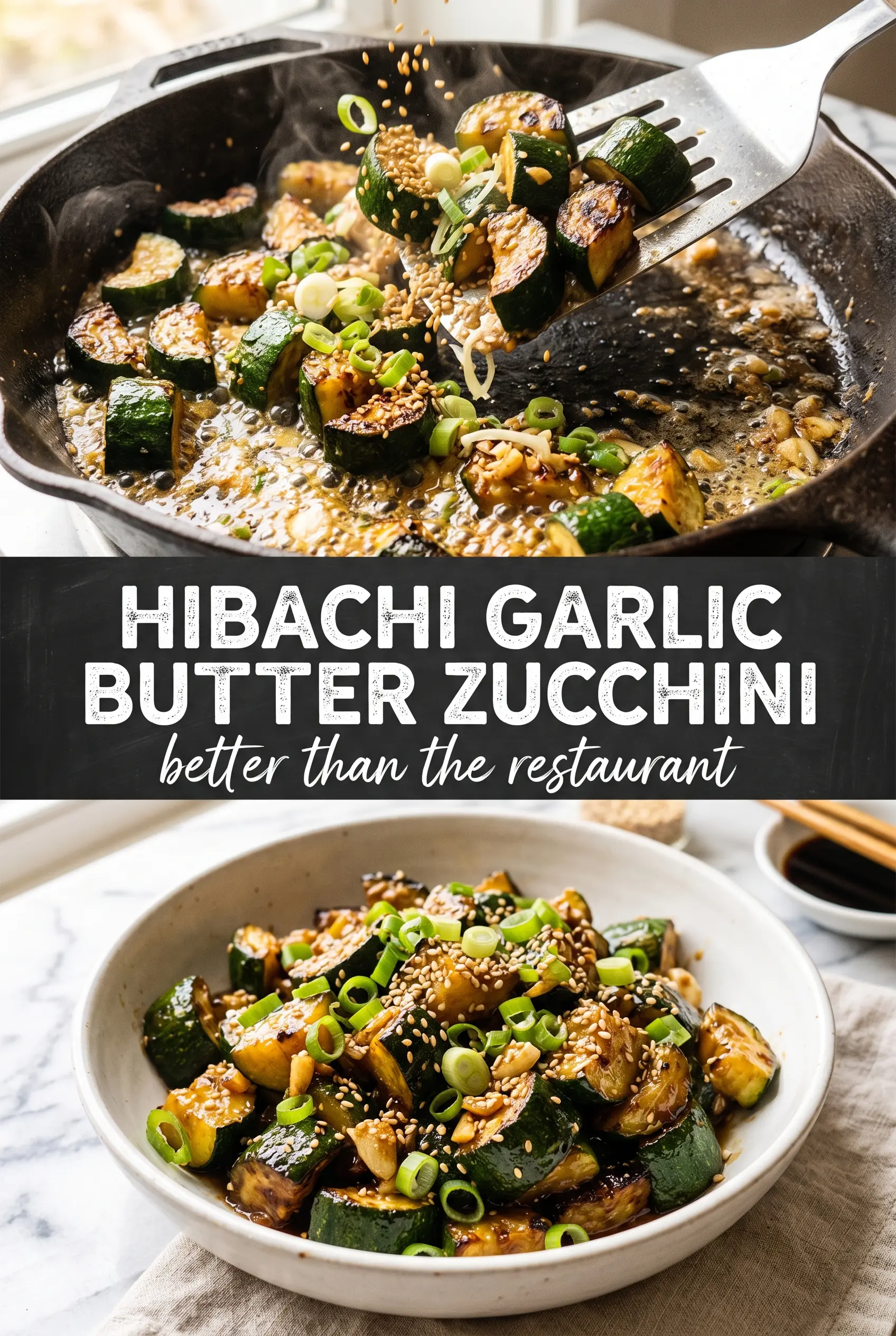
Savory Garlic-Butter Hibachi Grilled Zucchini
Ingredients
Equipment
Method
- Heat a large flat-top griddle, cast iron skillet, or Blackstone to high heat until sizzling-hot.
- Add 2 tablespoons butter and let it melt and begin to brown, watching for golden flecks and a nutty aroma.
- Add zucchini rounds in a single layer and cook without moving for 3–4 minutes until the bottoms are deeply golden.
- Flip each round so the second side can take on color.
- Add the remaining butter and garlic to the pan and cook for 30 seconds until fragrant.
- Drizzle soy sauce and sesame oil over the zucchini and toss to coat, cooking 2–3 more minutes until the soy caramelizes and looks glossy.
- Sprinkle with garlic powder, sesame seeds, and green onions, then serve immediately with hibachi dipping sauce.