Puffy, custardy baked French toast casserole is the kind of brunch dish that disappears fast because it gives you the best parts of French toast without standing over the stove. The top bakes into a crackly cinnamon-sugar layer while the inside stays soft and rich, with brioche that soaks up the custard and bakes into spoonable bites instead of soggy bread. It feels special, but the work happens mostly the night before.
The trick is using sturdy bread like brioche or challah and giving the custard time to soak all the way through. That resting time matters more than most people think. It gives the eggs, milk, and cream a chance to move into every cube so the casserole bakes up evenly instead of leaving dry pockets in the middle. The cold butter on top is worth keeping in the recipe too — it melts into the brown sugar and cinnamon and helps form those crisp, golden spots across the surface.
Below, you’ll find the exact method for getting that balance of crisp top and soft center, plus a few practical swaps if you need to work with what’s already in the kitchen. This is the kind of breakfast that rewards a little planning and makes the morning feel easy.
The custard soaked into every brioche cube overnight and the top turned crisp instead of soggy. I served it with maple syrup and my kids went back for seconds before I even sat down.
Save this overnight baked French toast casserole for the brunches where you want a crisp cinnamon top and a soft custardy center without morning stress.
The Secret to a Casserole That Bakes Custardy, Not Wet
The biggest mistake with baked French toast casserole is treating it like a bread pudding that can be rushed. If the bread never gets enough time to absorb the custard, you end up with dry chunks on top and a greasy, eggy puddle underneath. Overnight resting fixes that by giving the liquid time to move through the bread evenly.
Brioche and challah both work because they’re rich enough to stay tender after soaking, but they also hold their shape. Plain sandwich bread turns soft too fast and can collapse into mush. The other thing that matters is the oven timing: you want the center set and slightly springy, not sloshing. If the top browns before the middle is done, lay a loose piece of foil over it for the last stretch so the custard can finish without burning the sugar.
What Each Ingredient Is Actually Doing in This Dish
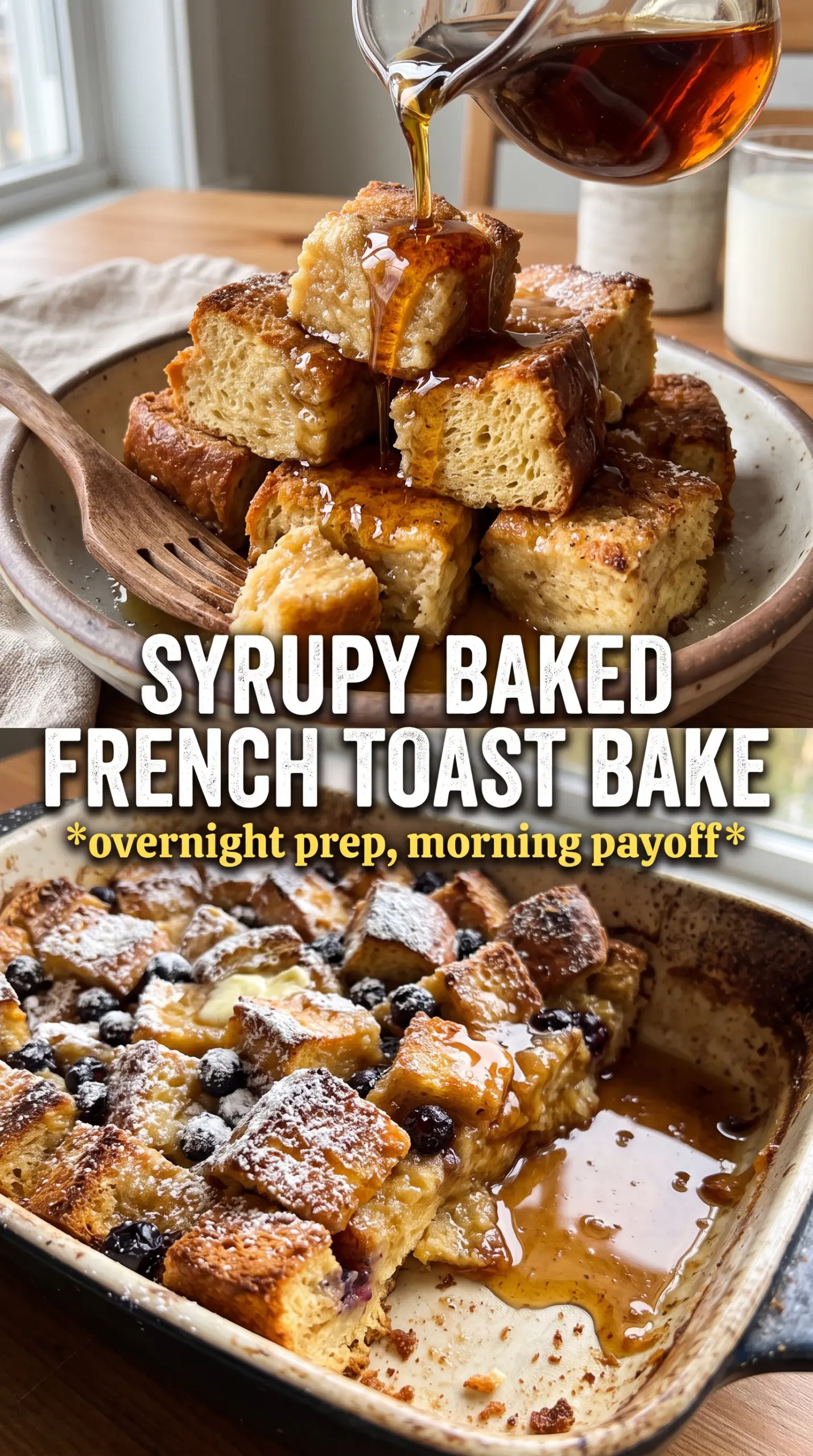
- Brioche or challah — This is the backbone of the casserole. You want a loaf that’s sturdy, slightly rich, and a little dry so it can soak without falling apart. If your bread is very fresh, cube it and leave it out for a few hours first.
- Eggs, milk, and heavy cream — The eggs set the custard, the milk loosens it, and the cream gives the finished casserole a softer, more luxurious middle. Whole milk is the minimum I’d use here; lower-fat milk still works, but the texture won’t be as plush.
- Sugar, vanilla, cinnamon, and nutmeg — These season the custard all the way through. The vanilla rounds out the eggs, cinnamon gives the familiar French toast note, and the nutmeg adds warmth without taking over. Freshly grated nutmeg tastes better, but a pinch of ground nutmeg is fine.
- Cold butter, brown sugar, and cinnamon for the topping — The butter melts in pockets and helps the topping turn crisp and caramelized instead of just sandy. Brown sugar brings a deeper molasses note than white sugar would. Keep the butter cold so it doesn’t dissolve before baking.
Building the Soak, Then Letting the Oven Finish the Job
Layer the bread in the dish
Grease the baking dish well, then spread the bread cubes in an even layer. A loose pile leaves some pieces under-soaked and others floating on too much custard, so take the minute to distribute them evenly. The cubes should sit high enough to catch the topping later, but not so packed that the custard can’t move between them.
Whisk the custard until it looks completely smooth
Combine the eggs, milk, cream, sugar, vanilla, cinnamon, and nutmeg until the mixture is uniform and no streaks of egg white remain. Pour it over the bread slowly, aiming for coverage across the whole pan. Press the cubes down with the back of a spoon so they drink up the liquid instead of sitting on top of it.
Let it rest overnight
Cover the dish and refrigerate it for at least 4 hours, though overnight gives the best texture. This is when the bread finishes absorbing the custard. If you skip this step, the casserole bakes unevenly and the center can taste raw even when the top looks done.
Add the topping and bake until puffed
Scatter the cold butter cubes over the top, then sprinkle on the brown sugar and cinnamon. Bake at 350°F until the top is deep golden and the center springs back lightly when touched, about 40 to 45 minutes. If the top darkens too quickly, tent it with foil for the last 10 minutes so the middle can catch up.
Finish with the right last touch
Let the casserole sit for a few minutes after it comes out of the oven. That short rest helps the custard settle so it serves in clean, spoonable portions instead of breaking apart. Powdered sugar and maple syrup go on right before serving, not before baking, or they’ll disappear into the crust.
How to Adapt This for Different Pans, Diets, and Timing
Dairy-Free Version
Use full-fat canned coconut milk in place of the heavy cream and a rich unsweetened non-dairy milk for the rest. The casserole will still set, but the flavor leans a little more coconut-forward and the topping won’t be quite as buttery unless you use a plant-based butter with a decent fat content.
Using Sandwich Bread Instead of Brioche
White sandwich bread works in a pinch, but it soaks faster and turns softer. Cut the custard back slightly if your loaf is very soft, and don’t let it sit too long once assembled or the texture can get overly dense. You’ll lose some richness, but it still bakes up nicely.
Making It Ahead for a Crowd
Assemble it the night before and bake it straight from the refrigerator while the oven preheats. If it goes into the oven very cold, it may need a few extra minutes in the center, so watch for a puffed top and a set middle rather than relying on the clock alone.
Storage and Reheating
- Refrigerator: Store leftovers covered for up to 4 days. The top softens as it sits, but the custard stays rich and sliceable.
- Freezer: It freezes well in individual portions. Wrap tightly and freeze for up to 2 months, then thaw in the refrigerator before reheating.
- Reheating: Warm in a 325°F oven until heated through, or use the microwave for single servings. The oven keeps the texture closest to fresh; the microwave works, but too much time makes the custard rubbery.
Answers to the Questions Worth Asking
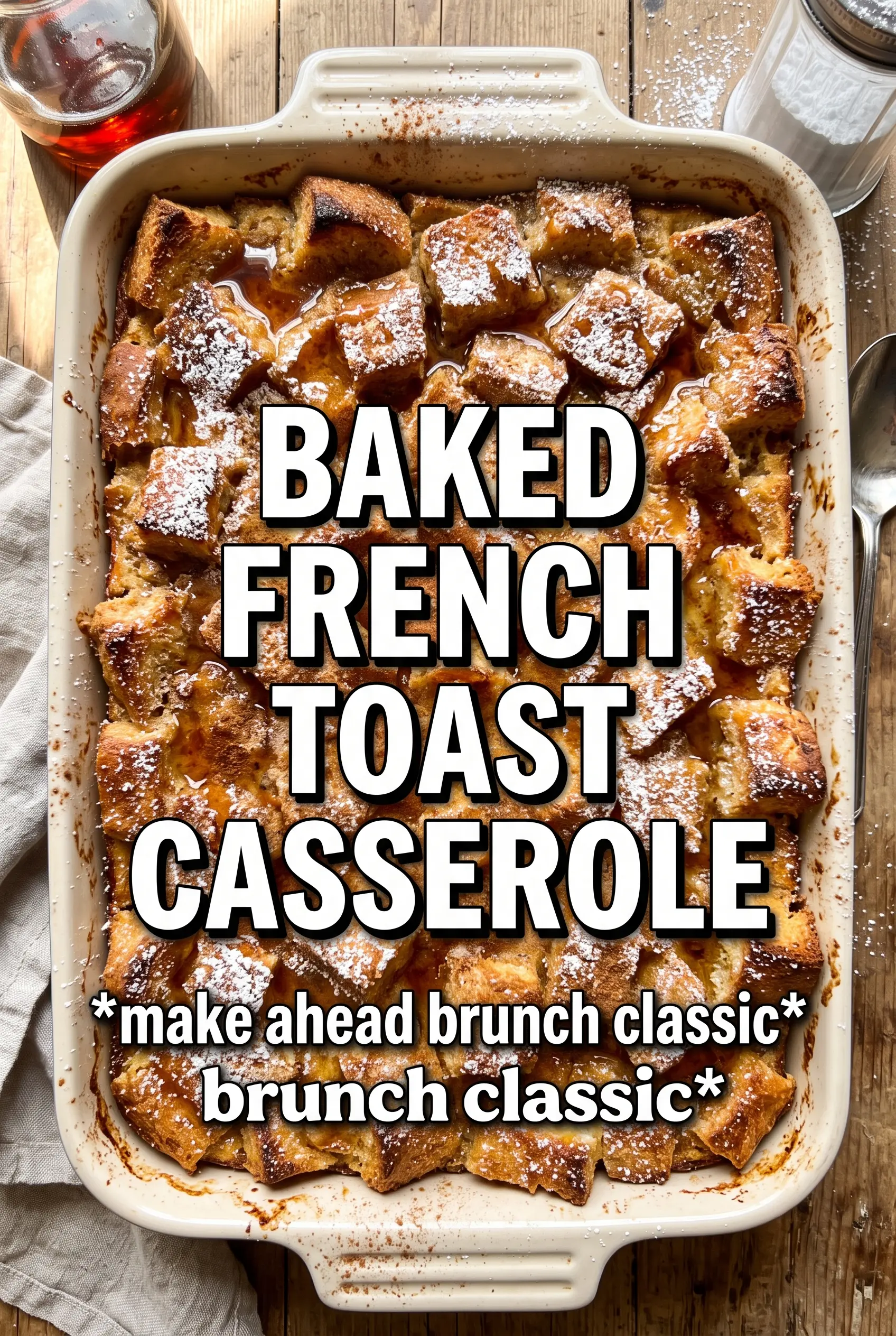
Baked French Toast Casserole
Ingredients
Equipment
Method
- Grease a 9x13 dish, then arrange the brioche or challah cubes in an even layer so they sit flat with minimal gaps.
- In a bowl, whisk the eggs, whole milk, heavy cream, sugar, vanilla extract, cinnamon, and nutmeg until smooth, with no dry sugar pockets.
- Pour the custard over the bread and press down so every cube soaks up the liquid.
- Cover the dish and refrigerate overnight or at least 4 hours so the bread turns custardy throughout.
- Scatter the cold butter cubes on top, then sprinkle with brown sugar and cinnamon for a crisp, caramelized surface.
- Bake at 350°F for 40–45 minutes until the casserole is golden and puffed with set custard.
- Dust with powdered sugar, then drizzle maple syrup over the top right before serving.