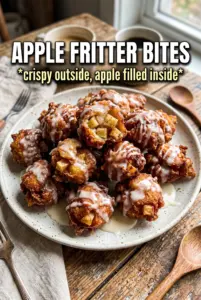
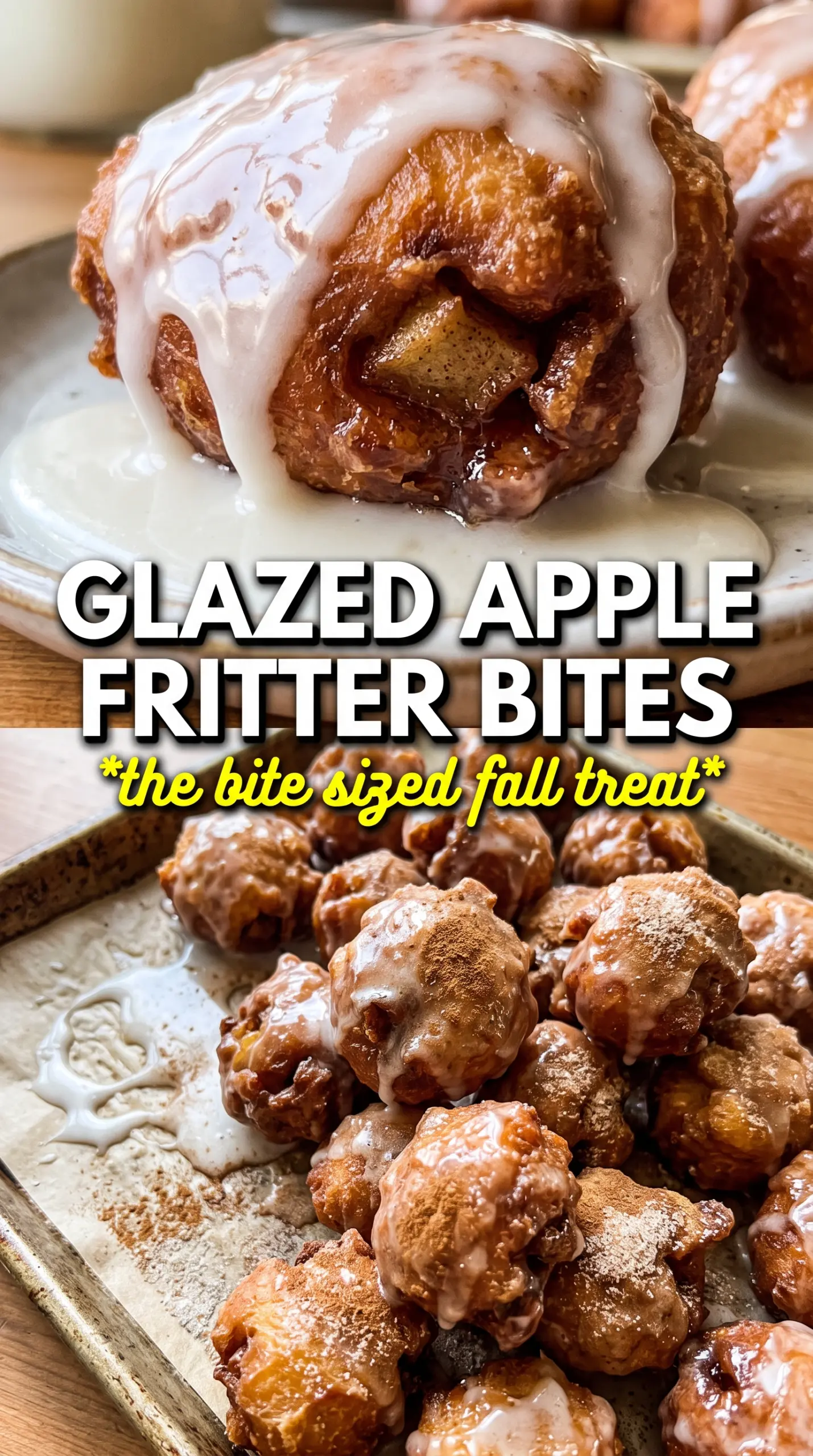
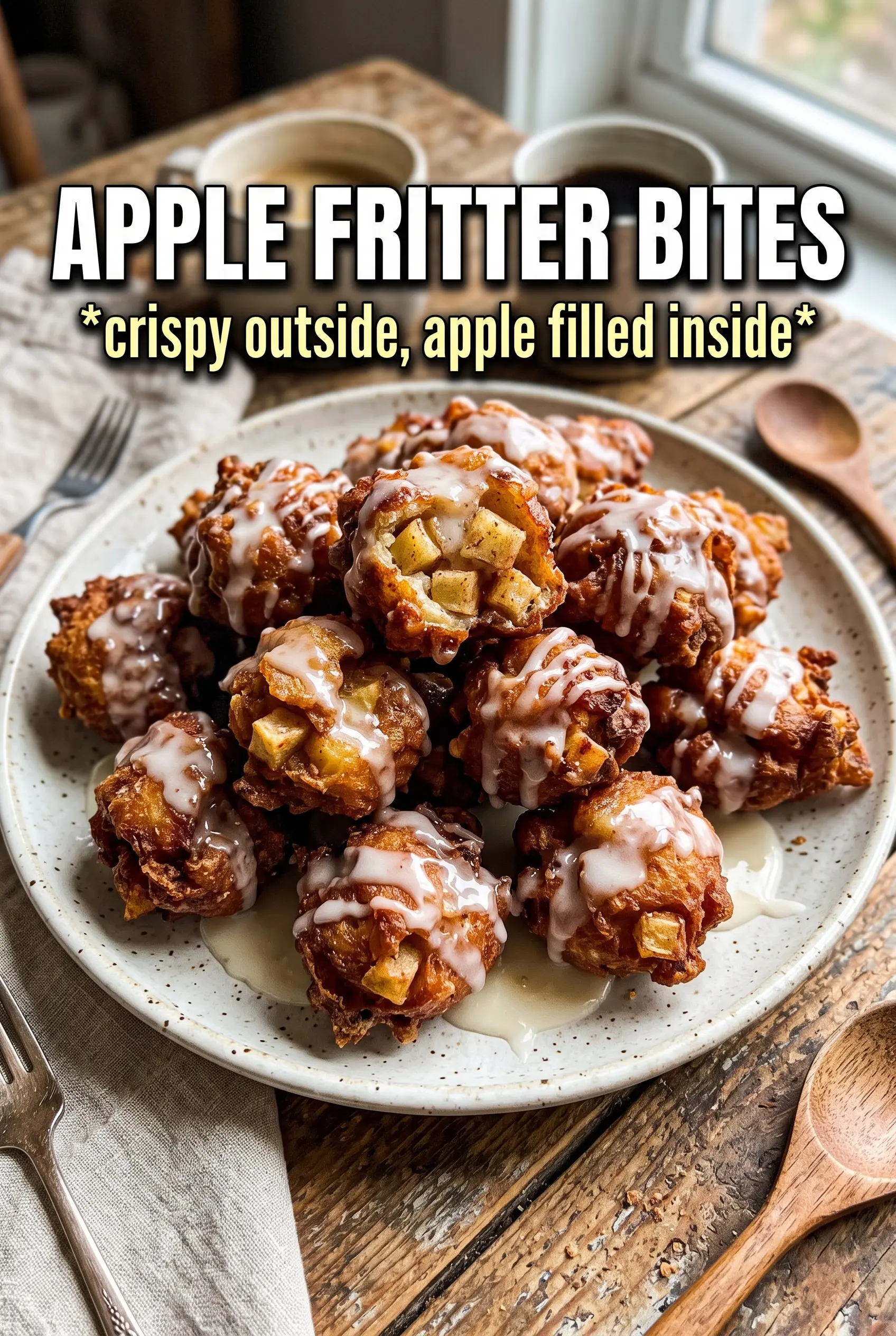
Apple fritter bites hit the sweet spot between a donut and a warm apple cake, with crisp edges, tender centers, and little pockets of cinnamon-spiced fruit in every bite. The best batches have a crackled glaze on the outside and a soft, almost custardy middle that stays moist without turning heavy. That contrast is what makes these disappear fast.
The trick is keeping the batter thick enough to hold the apples in place but loose enough to drop cleanly into the oil. A hot fry at 350°F gives the bites time to puff and brown before the centers overcook, and using diced apples instead of shredded fruit keeps the texture clear and snappy. I also like these with a simple glaze instead of a thick frosting, because it settles into the rough edges and gives you that true fritter finish.
Below, I’ll walk through the frying cues that matter most, plus the small changes that help if your apples are extra juicy or you want to make these a little more your own.
The glaze set up with that shiny crackled finish I was hoping for, and the apple pieces stayed tender without making the fritters soggy. I fried the first batch a little too cool and they soaked up oil, but once I hit 350°F they turned out perfectly crisp.
These apple fritter bites fry up with crisp, craggy edges and a soft apple-studded center, so they’re perfect when you want bakery-style fritters without shaping a whole batch.
The Secret to Crisp Apple Fritter Bites That Don’t Turn Greasy
Greasy fritters usually come from oil that’s too cool or batter that’s too wet. In this recipe, the batter needs to drop from a spoon in thick mounds, not pour like cake batter. That thicker texture helps the fritters hold their shape long enough to brown on the outside before the apples give off too much moisture.
The other thing that matters is batch size. Crowding the pan drops the oil temperature fast, and that’s when fritters start soaking instead of frying. Keep the batches small and let the oil come back to 350°F between rounds. The fritters should be deeply golden, with rough little ridges that feel firm when you lift them out.
What Each Ingredient Is Doing in These Apple Fritter Bites
- All-purpose flour gives the fritters enough structure to hold the diced apples without becoming bread-like. Don’t swap in cake flour here unless you want a softer, less sturdy bite.
- Baking powder is what lifts the batter as it fries. If it’s old, the fritters will fry up dense instead of puffed.
- Whole milk adds richness and helps the batter come together smoothly. Lower-fat milk works, but the bites won’t taste as full or tender.
- Diced apple is the whole point here, so cut the pieces small and even. Big chunks can make the batter fall apart, while tiny bits disappear into the dough.
- Powdered sugar glaze sets into that thin crackly shell that makes fritters taste finished. Milk gives a clean sweet glaze, while apple cider adds a little sharper fruit note.
Frying Them So the Centers Cook Before the Outside Gets Too Dark
Mix the Batter Only Until It Comes Together
Whisk the dry ingredients first so the cinnamon and baking powder are evenly distributed, then stir in the eggs, milk, and vanilla just until no dry flour remains. A few streaks are fine. Overmixing makes the batter gummy and tight, which shows up later as a heavy fritter instead of a light one.
Fold in the Apples at the End
Add the diced apples after the batter is mixed. That keeps them from breaking down and turning the bowl wet before they ever hit the oil. The batter should look thick and scoopable, with the apple pieces suspended through it rather than sinking to the bottom.
Watch the Oil, Not the Clock
Heat the oil to 350°F and keep checking it as you fry. Drop tablespoon-sized mounds in carefully; they should sizzle right away but not explode around the edges. If the fritters darken in under two minutes, the oil is too hot. If they look pale after three minutes, the oil needs to come back up before the next batch.
Glaze While They’re Still Warm
Drain the fritters briefly, then glaze or dip them while they’re still warm enough to soften the glaze just a little. That’s how you get the shiny, slightly uneven coating that clings to the crags. If they cool completely first, the glaze sits on top in a dry shell instead of melting into the surface.
How to Adapt Apple Fritter Bites for Different Pans, Diets, and Cravings
Make Them with Pears Instead of Apples
Ripe pears can step in for the apples if that’s what you have, but use firmer ones so they don’t melt into the batter. The flavor turns a little softer and more floral, and the fritters will be slightly more delicate because pears release more juice as they fry.
Gluten-Free Version
A good 1:1 gluten-free baking blend works here if it contains xanthan gum. The fritters may spread a little more, but the texture stays close if you rest the batter for 5 minutes before frying so the starches hydrate.
Cider Glaze for More Apple Flavor
Swap the milk in the glaze for apple cider and reduce it to a thick drizzling consistency. That gives the finished bites a brighter apple note and a slightly tangier finish that cuts through the sweetness.
No-Fry Shortcut in the Oven
You can bake spoonfuls of this batter on a lined sheet pan at 400°F, but they’ll taste more like apple muffin tops than fritters. You lose the crisp exterior and crackled glaze, so this version is better for convenience than for texture.
Storage and Reheating
- Refrigerator: Store in an airtight container for 2 days. The glaze softens and the crust loses some crunch, but they still taste good.
- Freezer: Freeze unglazed fritters in a single layer, then pack them into a freezer bag for up to 2 months. Glaze after reheating so the coating stays crisp.
- Reheating: Warm in a 325°F oven or air fryer until the centers are hot, about 6 to 8 minutes. Skip the microwave if you want to keep the outside from turning rubbery.
The Things That Trip People Up With This Dish
Apple Fritter Bites
Ingredients
Equipment
Method
- Heat 2 inches of oil to 350°F in a deep skillet or pot so it stays steady for frying.
- Whisk all-purpose flour, baking powder, sugar, cinnamon, nutmeg, and salt together until evenly combined.
- Beat eggs, whole milk, and vanilla extract together, then stir into the dry ingredients until just combined.
- Fold in diced apple until evenly distributed through the batter.
- Drop tablespoon-sized balls of batter into the hot oil and fry for 2–3 minutes per side until deeply golden.
- Drain the fried bites on paper towels to remove excess oil.
- Drizzle or dip the apple fritter bites in glaze while still warm for a glossy, crackled exterior.